The Historica Nigeria

Politics

Kano, National, Politics

Kwankwaso Officially Joins ADC After Quitting NNPP

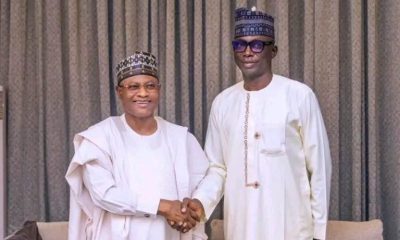
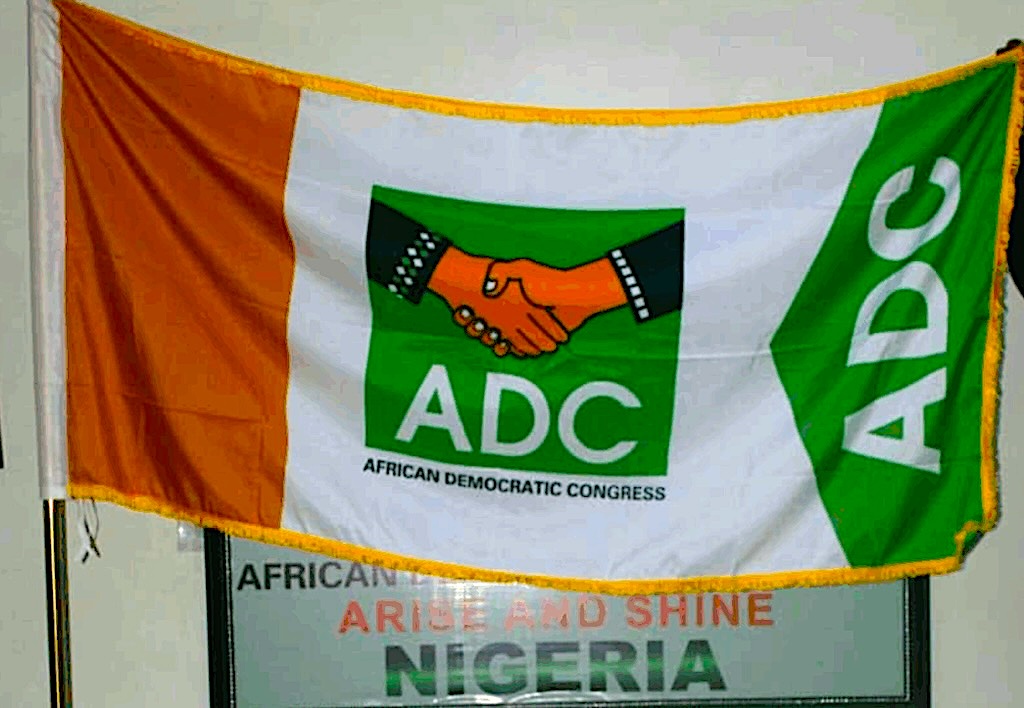
By Umar Idris Shuaibu Former presidential candidate of the New Nigeria Peoples Party (NNPP) and ex-Governor of Kano State, Rabi’u Musa Kwankwaso, has formally joined the African Democratic Congress (ADC), marking a significant development in Nigeria’s evolving political landscape ahead of the 2027 general elections. Kwankwaso completed his registration with the party on Monday at Gidan Kwankwasiyya, Miller Road, Bompai, Kano, where he was issued his membership card in the presence of top opposition figures. Among those who attended the event were ADC National Chairman and former Senate President, David Mark; former Sokoto State Governor, Aminu Tambuwal; former Minister of Transportation, Rotimi Amaechi; former Labour Party presidential candidate, Peter Obi; Dino Melaye; and former National Chairman of the All Progressives Congress (APC), John Odigie-Oyegun, among others. The defection follows Kwankwaso’s resignation from the New Nigeria People’s Party (NNPP), which he announced on Sunday, citing the need for strategic political realignment. Read Also: Gawuna Resigns as FMBN Board Chairman, Signals Political Move Ahead of Defection “I wish to formally announce my resignation from the New Nigeria Peoples Party with immediate effect,” he said in a statement. The former Minister of Defence described his decision as difficult, given his longstanding role within the party, but emphasised that prevailing political realities necessitated a new direction. “As a committed and bona fide member of the party, this was not an easy decision to make. However, considering the current trajectory of the nation’s political landscape, which calls for strategic realignment, I have found it necessary to identify with another political platform that offers the best opportunity to effectively change the nation,” Kwankwaso stated. He expressed appreciation to the NNPP leadership, including National Chairman Ajuji Ahmed, as well as members of the party’s National Working Committee, Board of Trustees, and supporters across all levels. Kwankwaso also acknowledged the commitment of members of the Kwankwasiyya Movement, noting that their shared political vision would continue to shape future engagements. “We shall continue to collaborate and work together towards charting a better and more prosperous future for our dear nation,” he added. Political observers say the move signals a major shift in opposition dynamics, as key figures continue to realign in preparation for the 2027 general elections, potentially reshaping the balance of power across the country.

Kano, National, Politics

Gawuna Resigns as FMBN Board Chairman, Signals Political Move Ahead of Defection

By Umar Idris Shuaibu A chieftain of the All Progressives Congress in Kano State and Chairman of the Governing Board of the Federal Mortgage Bank of Nigeria (FMBN), Nasiru Yusuf Gawuna, has resigned from his position, citing compliance with directives linked to Nigeria’s electoral laws. Gawuna’s resignation, conveyed in a letter dated March 27, 2026, takes immediate effect. The former governorship candidate of the APC in Kano is reportedly set to complete his defection to the African Democratic Congress on Tuesday, amid ongoing political realignments involving Rabi’u Musa Kwankwaso. In the letter, Gawuna stated that his decision was in line with a presidential directive requiring political appointees to step down ahead of political activities. “My resignation is in strict compliance with the President’s directive requiring all political appointees to step down in accordance with the provisions of the Electoral Act,” he said. Read Also: Gawuna Missing from Political Radar as APC Battles to Stop Defection Rumours He expressed appreciation to Bola Ahmed Tinubu for the opportunity to serve, describing his tenure as both an honour and a privilege. “I am profoundly grateful to His Excellency, President Bola Ahmed Tinubu, for the opportunity to serve. It has been a privilege to contribute to the growth and development of the Federal Mortgage Bank of Nigeria and our country,” Gawuna noted. The former FMBN board chairman also reflected on his next political steps, stating that he has entrusted his future to divine guidance. “I place my future in the hands of Allah (SWT), and I seek His guidance on my next course of action,” he added. Gawuna further assured of a smooth transition process, pledging to hand over responsibilities in line with established procedures. “I remain committed to ensuring a seamless transition and will hand over all responsibilities in accordance with established procedures and directives,” he said. His resignation is expected to further reshape the political landscape in Kano as alignments intensify ahead of the 2027 general elections.

Feature, Kano, Politics

The Godfather Who Mistook Democracy for Personal Ownership

By Murtala Muhammed Rijiyar Zaki Democracy is, at its most essential, an act of trust. Citizens go to the polls, cast their votes, and place in the hands of an elected individual the authority to govern on their behalf. That authority is borrowed, not given. It is conditional, not absolute. It belongs, in the final and irreducible sense, to the people who granted it, and it must be exercised in their interest, not in the interest of whoever helped engineer its acquisition. This elementary principle, the very foundation upon which every credible democracy in the world is constructed is the principle that Rabi’u Musa Kwankwaso has spent the better part of three decades systematically, deliberately, and quite unapologetically violating. His violation of it is not accidental. It is not the product of ignorance or misunderstanding. It is the logical expression of a political philosophy that has always placed personal ownership above democratic accountability, and godfather authority above the sovereign will of the people. To understand the full weight of this charge, one must first understand what godfatherism actually means in the Nigerian political context, and why it is not merely an inconvenient feature of our democracy but a fundamental corruption of it. Read Also: APC Founded to Drive Change, Reduce Poverty — Tinubu APC Unveils Full NWC List as Yilwatda, Basiru Retain Top Positions Why Engr. Abba Ganduje is Still Needed in Dawakin Tofa Federal Constituency A political godfather, in the Nigerian tradition, is a figure who uses his resources, his organization, and his influence to install candidates in elective office, with the understanding that those candidates, once elected, will govern not primarily in the interest of the electorate but in the interest of the godfather. The elected official becomes, in this arrangement, less a representative of the people and more a proxy for the man who put him there. The voters, in this model, are not principals whose mandate the elected official is obligated to honor. They are a mechanism, a crowd to be mobilized and demobilized at the godfather’s discretion. This is the model that Kwankwaso has perfected, refined, and deployed with extraordinary effectiveness across his political career. He did not invent godfatherism in Nigerian politics. But he has practiced it at a scale, with a sophistication, and with a degree of institutional embedding that sets him apart. Kwankwasiyya is not simply a network of political supporters. It is a parallel governance structure, a shadow system that has operated alongside formal government in Kano State. In this system, real decisions, appointments, and policy directions are filtered through one central authority. The most instructive way to understand this model is to examine what happens when loyalty gives way to independence. The case of Dr. Abdullahi Umar Ganduje is perhaps the most telling. Once a trusted deputy and successor, his decision to govern independently triggered a prolonged political conflict that destabilised Kano’s political environment. That conflict consumed years of political energy, distorted governance, and deepened divisions within the state. Now, the same pattern appears to be repeating itself with Abba Kabir Yusuf. Having risen through the Kwankwasiyya structure, his emergence as governor came with expectations of loyalty and alignment. But governance demands independence and that independence has again been interpreted as betrayal. Yet, what is described as betrayal is, in reality, democracy functioning as it should. The people of Kano did not elect a movement. They elected a man. That mandate belongs to the electorate not to any political benefactor. Kwankwaso’s reaction reflects a deeper issue: the confusion between influence and ownership. When influence begins to demand obedience, democracy begins to erode. To claim betrayal in such a context is to suggest that public office is privately owned, a notion fundamentally incompatible with democratic principles. The scholarship programme, often cited as a major achievement, must also be viewed within this framework. While it delivered real educational benefits, it also created a structure of political loyalty and expectation. Beneficiaries were not just students, they became part of a political machinery, bound by obligation as much as opportunity. There is also the broader impact on governance. Where loyalty to a political patron outweighs accountability to the people, decision-making becomes distorted. Appointments reflect allegiance rather than competence. Policies serve networks rather than citizens. Over time, these distortions accumulate into systemic underdevelopment. Kano’s structural challenges ranges from unemployment, industrial decline, and dependence on federal allocations, cannot be separated from this governance model. They reflect the long-term consequences of a system that has been accountable to the wrong authority. True political mentorship offers a different model. A mentor builds leaders who can stand independently, govern effectively, and serve the public interest without external control. By that standard, the pattern observed here reflects not mentorship, but dependency. The people of Kano have a right to leadership that is accountable solely to them. They have a right to a governor whose primary obligation is the mandate they granted at the ballot box. Anything less undermines the very essence of democracy. Governor Abba Kabir Yusuf’s insistence on governing independently is not a betrayal. It is a reaffirmation of democratic principles. It is the system working as it should. For decades, Kwankwaso has built a political movement, but in doing so, appears to have mistaken that movement for a mandate. Organisational strength is not the same as democratic legitimacy. Mobilising support is not equivalent to owning authority. Nigeria’s democracy remains under pressure from forces that seek to convert public office into private control. But each assertion of independence by elected officials represents a step away from that model. Kano does not belong to any individual. It belongs to its people. And the continued insistence on that truth is what will ultimately define the state’s democratic future.

Feature, Politics

Gov’s Spokesperson Bature Blasts Kwankwaso’s Exit from NNPP

Ahmad Hamisu Gwale The Director General Media and Publicity to the Kano State Government House, Sunusi Bature Dawakin Tofa, has criticised former Kano State Governor, Rabiu Musa Kwankwaso, over his decision to leave the NNPP. Bature, in a reaction posted on his official Facebook page on Sunday, described Kwankwaso’s decision as a betrayal of Mr. Boniface. “Since I joined politics, I have never seen a greater lesson than this. The only reason people say we were betrayed is because we left the NNPP. “We did not say we left the Kwankwasiyya movement, nor did we abandon its ideology, and we did not stop wearing the red cap. “It has now become necessary for us to pray for the Leader, because today he has betrayed himself by leaving the NNPP,” Bature said. Read Also: Radiographers Oppose Health Bills, Warn of Threat to Professional Autonomy Gawuna Missing from Political Radar as APC Battles to Stop Defection Rumours Kano Deputy Governor Resigns Amid Political Storm He added that they are now all in the same position, stating that everyone has in one way or another, betrayed Mr. Boniface, and prayed for God’s guidance and forgiveness. On Sunday, former Kano State Governor and the 2023 presidential candidate of the New Nigeria People’s Party (NNPP), Rabiu Musa Kwankwaso, announced his resignation from the party with immediate effect. In a statement he personally signed, Kwankwaso said his decision followed careful consideration of the country’s political direction and the need to align with a platform offering better prospects for national transformation. He described his time in the party as an honour, noting that the decision to leave was difficult. Last month, the Kano State Governor, Abba Kabir Yusuf, a known loyalist of Kwankwaso, also left the NNPP for the APC, a move widely interpreted as a betrayal of his political mentor.

Feature, National, Politics

Defection: Kwankwaso’s Legacy Under Scrutiny; A Critical Look at his Political Journey Since 1999

When Nigeria returned to democratic rule in 1999, the people of Kano embraced the moment with hope and expectation after years of military governance. Among the prominent figures who emerged at the time was Rabiu Musa Kwankwaso, whose leadership inspired confidence among many citizens eager for progress and representation. More than two decades later, however, Kwankwaso’s political legacy continues to generate debate, with supporters highlighting his achievements and critics questioning the long-term impact of his leadership on Kano’s development. Kwankwaso’s first tenure as governor (1999–2003) was marked by visible infrastructure projects, including roads and public buildings, which were widely welcomed by residents. At a time when tangible government presence was limited, these developments symbolised a new beginning. Yet, some analysts argue that while these projects addressed immediate needs, they did not sufficiently tackle deeper structural challenges, particularly the decline of Kano’s once-thriving industrial economy. Historically a major commercial hub, Kano’s economy had been weakening due to years of policy neglect and infrastructural decay. Critics maintain that a more comprehensive economic strategy might have helped revive industries and reduce dependence on federal allocations. Kwankwaso’s defeat in 2003 by Ibrahim Shekarau marked a turning point. Observers note that while the loss strengthened his political network and grassroots appeal, it also raised questions about the sustainability of the systems established during his administration. Many of the projects, though impactful, were seen as lacking the institutional depth needed for long-term continuity. Read Also: Kwankwaso Resigns from NNPP, Signals New Political Direction Gawuna Missing from Political Radar as APC Battles to Stop Defection Rumours Kano Deputy Governor Resigns Amid Political Storm Returning to office in 2011, Kwankwaso expanded his development agenda with increased infrastructure and an ambitious foreign scholarship programme that benefited thousands of Kano youths. The initiative is widely regarded as one of his most significant contributions, opening educational opportunities for many. However, critics argue that despite these efforts, broader economic transformation remained limited. Rising population growth, unemployment, and declining industrial capacity continued to challenge the state’s development trajectory. Beyond governance, Kwankwaso’s political influence has also shaped Kano’s power dynamics. His role in building a strong political movement popularly known as the Kwankwasiyya has been praised for mobilising grassroots support, but criticised by some for reinforcing a personality-driven political structure. Political analysts further point to the tensions surrounding the Kano Emirate as a significant episode in the state’s recent history. The controversial removal of Muhammadu Sanusi II highlighted deep divisions within the state’s political and traditional institutions, with varying opinions on the factors that led to the crisis. In recent years, Kwankwaso’s shifting political alliances from the PDP to the APC and later to the NNPP, have also drawn mixed reactions. While such moves are common in Nigeria’s political landscape, critics argue that they have contributed to instability and uncertainty within Kano’s political structure. The 2023 elections brought another dimension to the discourse, with the emergence of Abba Kabir Yusuf as governor under the NNPP platform. Subsequent political developments, including evolving relationships between state and federal actors, have further shaped public debate about governance priorities and political strategy. Today, Kwankwaso remains one of Kano’s most influential political figures, with a legacy that reflects both notable achievements and enduring controversies. While many credit him with expanding access to education and improving infrastructure, others believe that the state’s long-term economic and institutional challenges require deeper reflection. As Kano continues to navigate its future, the assessment of past leadership including Kwankwaso’s role, remains central to ongoing conversations about development, governance, and political direction.

Kano, National, Politics

Kwankwaso Resigns from NNPP, Signals New Political Direction

By Umar Idris Shuaibu A former Governor of Kano State and the 2023 presidential candidate of the New Nigeria Peoples Party, Rabiu Musa Kwankwaso, has formally resigned from the party with immediate effect. In a press statement dated March 29, 2026, Kwankwaso said his decision followed ongoing political developments in the country, which he noted require “strategic realignment” to effectively address national challenges. He described his time in the party as a privilege, expressing appreciation for the opportunity to serve as the party’s National Leader and presidential flagbearer during the 2023 general elections. “As a committed and bonafide member of the party, this was not an easy decision to make,” he stated. Read Also: APC Founded to Drive Change, Reduce Poverty — Tinubu Gawuna Missing from Political Radar as APC Battles to Stop Defection Rumours Radiographers Oppose Health Bills, Warn of Threat to Professional Autonomy Kwankwaso, however, explained that the current trajectory of Nigeria’s political landscape necessitated his identification with another platform that offers a better opportunity to bring about meaningful change. He expressed gratitude to the National Chairman of the party, Ajuji Ahmed, the National Working Committee, Board of Trustees, National Executive Committee, and party leaders at all levels for their support during his time in the NNPP. The former governor also acknowledged members of the Kwankwasiyya movement for their loyalty and commitment to the party’s ideals. He noted that despite his resignation, there remains a need for continued collaboration among stakeholders in pursuit of national development and a more prosperous future for Nigeria. Kwankwaso’s exit from the NNPP is expected to further reshape political alignments ahead of the 2027 general elections, amid growing consultations among opposition leaders.

National, News, Politics

APC Founded to Drive Change, Reduce Poverty — Tinubu

By Umar Idris Shuaibu President Bola Ahmed Tinubu has said that the All Progressives Congress (APC) was established as a platform to bring about national transformation, reduce poverty, improve security, and revitalise key government institutions. Tinubu made the remark on Friday in Abuja during the party’s national convention, where he emphasised that the APC was not formed merely to win elections but to build a functional and united Nigeria. According to the President, the party remains a home for all Nigerians committed to strengthening governance, ensuring security, and addressing socio-economic challenges facing the country. Read Also: Radiographers Oppose Health Bills, Warn of Threat to Professional Autonomy “The APC is a platform for those who believe in building a nation where government works effectively, security is guaranteed, and every citizen lives with dignity and hope,” he said. Tinubu recalled that the party was formed 13 years ago through a coalition of political actors who came together to rescue the country from prevailing economic challenges at the time. He reaffirmed that the APC continues to uphold democratic principles aimed at promoting justice, development, and the overall welfare of Nigerians. The President reiterated the party’s commitment to its founding ideals, noting that its vision remains anchored on national unity, inclusive governance, and sustainable development.

Kano, News, Politics

Kwankwaso to Join ADC Monday, Meets Atiku Ahead of Move

By Umar Idris Shuaibu A former Governor of Kano State and national leader of the New Nigeria Peoples Party, Senator Rabi’u Musa Kwankwaso, has met with former Vice President Atiku Abubakar ahead of his planned defection to the African Democratic Congress on Monday. The meeting, which comes amid intensifying political consultations, is believed to be part of broader opposition efforts to realign ahead of the 2027 general elections. Photos from the engagement, shared by media platforms, indicated that both northern political heavyweights discussed key national and political issues as opposition leaders continue to strategise on possible coalitions. Kwankwaso is expected to formally join the ADC during a registration event scheduled for Monday at Kwankwasiyya House, Miller Road, Bompai, Kano. A former Kano State Commissioner for Science and Technology and ADC Caucus Secretary, Yusuf Ibrahim Kofar-Mata, in a statement, invited the general public to attend the event, noting that it would be led by the former governor. Read Also: Radiographers Oppose Health Bills, Warn of Threat to Professional Autonomy Gawuna Missing from Political Radar as APC Battles to Stop Defection Rumours APC Unveils Full NWC List as Yilwatda, Basiru Retain Top Positions “I am inviting the general public to the registration event of the African Democratic Congress (ADC), which will be led by Sen. Dr. Rabiu Musa Kwankwaso, on Monday, March 30, 2026, at about 12:00 noon,” he said, expressing optimism for a successful exercise. The anticipated defection follows weeks of consultations involving Kwankwaso, members of his Kwankwasiyya movement, and key stakeholders within the ADC. In recent weeks, the former presidential candidate has held a series of high-level meetings with prominent opposition figures, including the ADC National Secretary, Rauf Aregbesola; the Labour Party’s 2023 presidential candidate, Peter Obi; Governor of Oyo State, Seyi Makinde; and the senator representing Bayelsa West, Seriake Dickson. Sources within political circles said the move is part of a wider opposition strategy aimed at challenging the ruling All Progressives Congress (APC) in the next electoral cycle. The development also comes amid a reported rift between Kwankwaso and his political protégé, Governor of Kano State, Abba Kabir Yusuf. Yusuf, widely regarded as a major beneficiary of the Kwankwasiyya political structure, recently defected from the NNPP to the APC alongside several lawmakers and political appointees. Kwankwaso had opposed the move and publicly distanced himself from it, describing it as a betrayal. Political observers say the former governor’s expected defection to the ADC could significantly reshape political alignments in Kano and across the northern region, as opposition forces intensify preparations ahead of the 2027 general elections.

National, News, Politics

APC Unveils Full NWC List as Yilwatda, Basiru Retain Top Positions

By Umar Idris Shuaibu The All Progressives Congress (APC) has concluded its 8th National Convention in Abuja, reaffirming Nentawe Yilwatda as National Chairman and Ajibola Basiru as National Secretary. The convention, held at Eagle Square, also produced a new National Working Committee (NWC) through a consensus arrangement endorsed by party stakeholders. A notable development was the emergence of Benjamin Obi Nwoye as Deputy National Chairman (South), replacing Emma Eneukwu following consultations within the party. Party sources indicated that zoning considerations and high-level consultations influenced the composition of the new leadership, with Peter Mbah playing a key role in Nwoye’s emergence. Read Also: Mustapha Bala Dawaki and the Prospect of a 2027 Political Comeback Kano Deputy Governor Resigns Amid Political Storm Gawuna Missing from Political Radar as APC Battles to Stop Defection Rumours In his acceptance speech, Yilwatda described his re-election as a call to greater service, pledging unity and commitment to strengthening the ruling party. “We are ready to serve, ready to lead, and ready to build the party together with the nation,” he said, assuring that the leadership would not “fail or falter” in delivering on its mandate. The convention was attended by President Bola Ahmed Tinubu, Vice President Kashim Shettima, governors, lawmakers, and other party leaders. Full List of APC National Working Committee (NWC) National Chairman — Nentawe Yilwatda Deputy National Chairman (North) — Ali Bukar Dalori Deputy National Chairman (South) — Benjamin Obi Nwoye National Secretary — Surajudeen Ajibola Basiru Deputy National Secretary — AbdulKarim Abubakar Kana National Legal Adviser — Murtala Aliyu Kankia National Treasurer — Uguru Mathew Ofoke National Financial Secretary — Haruna Ginsau Deputy National Financial Secretary — Hammam Adamu Ali Kumo National Organising Secretary — Muhammad Sulaiman Argungu Deputy National Organising Secretary — Emeka Okafor National Welfare Secretary — Donatus Enyinnah Nwankpa Deputy National Welfare Secretary — Christopher Michael Akpan National Publicity Secretary — Felix Morka Deputy National Publicity Secretary — Meseko Durosinmi Josiah National Auditor — Abubakar Maikafi Deputy National Auditor — Olugbenga Olayemi National Women Leader — Mary Idele Deputy National Women Leader — Zainab Abubakar Ibrahim National Youth Leader — Dayo Israel Deputy National Youth Leader — Jamaludeen Kabiru National Leader (Persons With Disabilities) — Durotolu Oyebode Bankole Deputy National Legal Adviser — Ibrahim Salawu Deputy National Treasurer — Ben Akak National Ex-Officio (North-Central) — Opawoye Oluwatoyin Bunmi National Ex-Officio (North-East) — Adamu Jallah National Ex-Officio (North-West) — Kano Muhammed Jamu Yusuf National Ex-Officio (South-East) — Ikechukwu Umeh National Ex-Officio (South-South) — Francis Kolokolo National Ex-Officio (South-West) — Bunmi Orinowo

Abuja, National, News, Politics

Tinubu Leads APC Heavyweights as Party Retains Yilwatda at National Convention

By Umar Idris Shuaibu President Bola Ahmed Tinubu on Friday led top chieftains of the All Progressives Congress (APC) to its 8th National Convention held at Eagle Square, where Prof. Nentawe Yilwatda was returned as the party’s National Chairman. The high-profile gathering drew key political figures, including Vice President Kashim Shettima, former APC National Chairman Bisi Akande, First Lady Oluremi Tinubu, Senate President Godswill Akpabio, and Speaker of the House of Representatives Tajudeen Abbas. Also in attendance were Governor of Kwara State and Chairman of the Nigeria Governors’ Forum, AbdulRahman AbdulRazaq, as well as Governor of Imo State and Chairman of APC Governors’ Forum, Hope Uzodimma, among other party stakeholders. Yilwatda’s return emerged through a consensus arrangement, with all members of the National Working Committee (NWC) reaffirmed via an affirmative voice vote during the convention. Read Also: Kano Deputy Governor Resigns Amid Political Storm Gawuna Missing from Political Radar as APC Battles to Stop Defection Rumours APC Northwest Congress: Ganduje Attends Key Party Gathering in Kaduna The revalidated NWC includes Deputy National Chairman (North), Ali Dalori; Deputy National Chairman (South), Emma Eneukwu; National Secretary, Surajudeen Basiru; National Financial Secretary, Bashir Gumel; and National Legal Adviser, Murtala Kankia, among others. The newly endorsed leadership was sworn in immediately and is expected to steer the affairs of the ruling party for the next four years. In his acceptance speech, Yilwatda pledged to build a stronger, more inclusive, and disciplined party, while deepening internal democracy and expanding the APC’s reach across the country. “Our mission is clear: to build a pan-Nigerian party that is transparent, united, and responsive to the aspirations of our people,” he said. He also assured members of an open-door leadership style and expressed optimism that the party would emerge victorious in the 2027 general elections. Yilwatda commended President Tinubu for his leadership, noting that ongoing economic reforms and infrastructure investments under the Renewed Hope Agenda were already yielding positive signs. The convention, which attracted thousands of delegates and party supporters, is widely seen as a defining moment for the APC as it consolidates its internal structure ahead of the next electoral cycle.

Scroll to Top