The Historica Nigeria

Politics

News, Politics

Gantsa Cautions Obasanjo to Steer Clear of ADC Politics

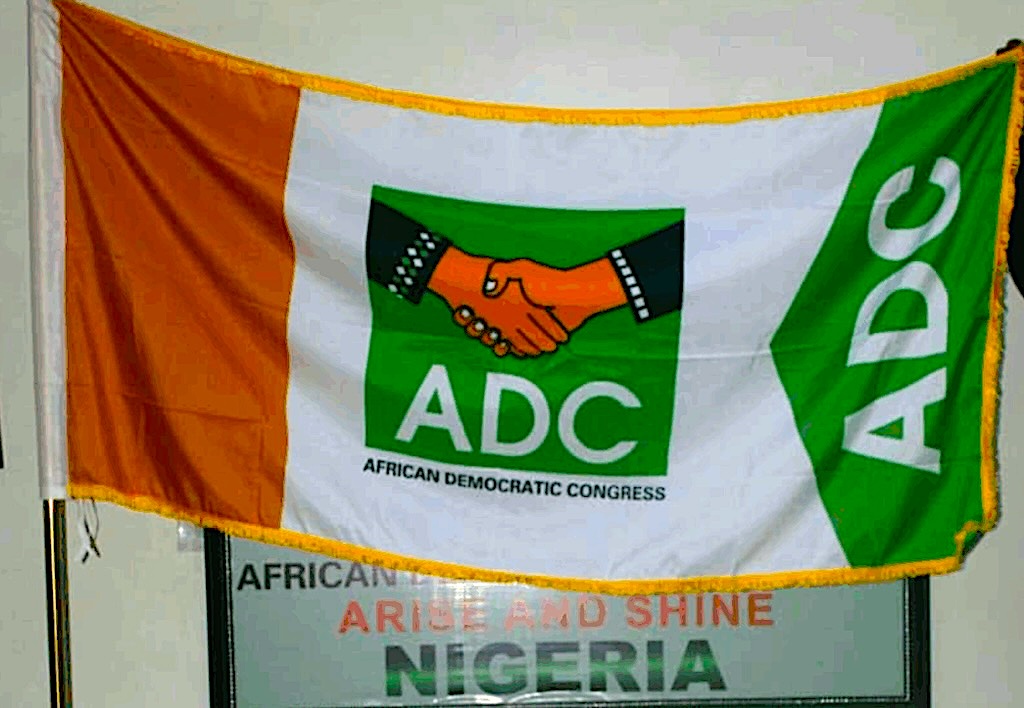
The African Democratic Congress (ADC) has strongly rejected a call by former President Olusegun Obasanjo for suggesting leadership roles within the party, describing the move as an intrusion into its internal affairs. The National Assistant Organising Secretary of the ADC and North-West Zonal Organising Secretary, Ali Tukur Gantsa, made this known in a statement on Wednesday. Gantsa said Obasanjo, who is not a card-carrying member of the ADC, had no moral or constitutional basis to interfere in the party’s internal processes, let alone suggest presidential flag bearers. According to him, he is not a member of the party, making any attempt to project his candidature “misplaced and an affront to the independence of the ADC.” Read Also: APC Appoints Bichi as Chairman, Dan Agundi Co-Chairman of E-Registration Committee He further alleged that Obasanjo played a key role in the defeat of former President Goodluck Jonathan in the 2015 general election, attributing it to what he described as “insincere and misleading political suggestions.” “The ADC is a people-centred party with credible and committed members. It should not be dragged into anti-democratic tendencies that could breed chaos, confusion and stagnation,” Gantsa said. He warned that the party was aware of what he termed “interlopers” who were allegedly working to disorganise the ADC for personal and self-centred political interests as ADC will only entertain registered members. Gantsa advised the former president to respect the party’s autonomy and maintain a dignified distance from its affairs. He stressed that when the time is ripe, bona fide members of the party, guided by democratic principles, would chart the political direction of the ADC. “The future of the ADC will be determined by its members, not by external influences,” he added. He advised Peter Obi to remain focused and keep a distance from the former president to achieve desired results. The statement comes amid growing political realignments ahead of future electoral contests in Nigeria.

Kano, News, Politics

APC Appoints Bichi as Chairman, Dan Agundi Co-Chairman of E-Registration Committee

Umar Idris Shuaibu, Kano The All Progressives Congress (APC) in Kano State has appointed Rabi’u Sulaiman Bichi as Chairman and Baffa Babba Dan Agundi as Co-Chairman of its E-Registration Membership Committee. The appointments were announced during the inauguration of the 14-member committee by the Kano State APC Chairman, Alhaji Abdullahi Abbas. Other members of the committee include Abdul Adamu Fagge, Musa Ali Kachako, Shafi’u Abdullahi Darma, Ahmad Aruwa, Sanusi Sa’idu Kiru Majidadi, Khalid Ishaq Diso, Auwalu Ubale Minjibir, Fa’iz Alfindiki, Binta Rabi’u Spikin, Umar Muhammad Rabiu and Muhammad Tudun Wada, popularly known as Tweeter. Aminu Umar Dawakin Kudu was appointed as Secretary of the committee. Read Also: The Ganduje Equation: How Kano’s Power Map Leaves Governor Yusuf with Few Options In his remarks, Alhaji Abdullahi Abbas explained the mandate of the committee and urged members to discharge their duties with commitment and diligence to ensure the success of the electronic membership registration exercise. He said the project would be implemented across all wards in the 44 local government areas of Kano State. The APC chairman noted that the e-registration initiative is aimed at strengthening the party’s membership database, enhancing internal organisation and improving coordination ahead of future political engagements.

National, News, Politics

Court Sacks Julius Abure as Labour Party Chairman, Recognises Nenadi Usman

The Federal High Court sitting in Abuja, on Wednesday, removed Julius Abure as the National Chairman of the Labour Party (LP). In a judgment delivered by Justice Peter Lifu, the court relied on the April 4, 2025, verdict of the Supreme Court to declare a former Minister of Finance, Senator Esther Nenadi Usman, as the valid leader of the party. Consequently, the court ordered the Independent National Electoral Commission (INEC) to immediately recognise the Senator Nenadi Usman-led Caretaker Committee as the only valid authority to represent the Labour Party, pending the conduct of a national convention. The judgment followed a suit marked THC/ABJ/CS/2262/2025, which was instituted by the former minister. Apart from Abure, the Nigerian Labour Congress (NLC) was also listed as a defendant in the suit. Justice Lifu held that evidence before the court clearly showed that Abure’s tenure as National Chairman of the Labour Party had elapsed. He dismissed Abure’s argument that the matter was an internal party affair and therefore non-justiciable, ruling instead that the constitution of the LP Caretaker Committee was a necessity arising from the Supreme Court’s directive. Read Also: Emir Sanusi II Resumes Studies, Attends First Law Lecture in Kano The Ganduje Equation: How Kano’s Power Map Leaves Governor Yusuf with Few Options Gov. Abba Yusuf Meets Tinubu as APC Defection Talks Gain Momentum The court recalled that following a protracted leadership crisis within the party, the National Executive Committee (NEC) resolved to remove Abure as National Chairman. To address the leadership vacuum, a 29-member caretaker committee was constituted, with Senator Usman appointed as its chairperson. The decision followed an expanded stakeholders’ meeting of the party held in Umuahia, Abia State, and hosted by Governor Alex Otti. The meeting, at which Abure was removed, was chaired by the party’s 2023 presidential candidate, Mr Peter Obi. Dissatisfied with the decision, Abure approached the Federal High Court in Abuja, seeking validation of his position as National Chairman. In an affidavit deposed to in support of the suit marked FHC/ABJ/CS/1271/2024, Abure maintained that he was lawfully elected Acting National Chairman at a NEC meeting held in Benin City, Edo State, on March 29, 2021, following the death of the party’s former chairman. He further told the court that at the April 18, 2023 NEC meeting held in Asaba, Delta State, and monitored by INEC, the party resolved to renew the tenures of state chairmen whose terms had expired, expelled some members for alleged anti-party activities, and filled vacant positions. Abure argued that based on resolutions reached at the meeting, the party subsequently held its National Convention on March 27, 2024, in Nnewi, Anambra State, where he was elected National Chairman. He added that under his leadership, the party fielded candidates in the Edo and Ondo governorship elections. While both the Federal High Court and the Court of Appeal initially ruled in Abure’s favour and ordered INEC to recognise him, the Supreme Court later overturned the decisions of the two lower courts. In its lead judgment delivered by Justice Inyang Okoro, the apex court upheld the appeal filed by the Chairperson and Secretary of the Caretaker Committee, Senator Nenadi Usman and Hon. Darlington Nwokocha, respectively. The Supreme Court also dismissed Abure’s cross-appeal and advised political parties to strictly adhere to their internal rules in appointing party officials. The apex court further urged party officials whose tenures have expired to vacate office in line with democratic principles and party constitutions.

Kano, Politics

Gov. Abba Yusuf Meets Tinubu as APC Defection Talks Gain Momentum

Political indications suggest that discussions surrounding a possible defection of Kano State Governor, Alhaji Abba Kabir Yusuf, to the All Progressives Congress (APC) have gained momentum following a high-level meeting with President Bola Ahmed Tinubu at the Presidential Villa, Abuja. Multiple political sources disclosed that the closed-door meeting, held amid rising speculation over the governor’s political future, focused on resolving lingering concerns linked to party alignment and long-term political stability ahead of the 2027 general elections. Although no official statement has been released by either party, insiders within the APC confirmed that President Tinubu’s intervention has significantly reduced earlier uncertainties that reportedly slowed negotiations between the governor and the ruling party. A senior APC source in the North-West told Politics Digest that the meeting addressed key issues surrounding internal party harmony in Kano State, including concerns over political accommodation and consensus-building within the APC structure. According to the source, Governor Yusuf was advised to intensify consultations with major party stakeholders in Kano rather than rely solely on federal-level assurances, in order to prevent internal discord within the party. Read Also: The Ganduje Equation: How Kano’s Power Map Leaves Governor Yusuf with Few Options “The emphasis was on political tact and stakeholder engagement,” the source said. “The President encouraged the governor to strengthen internal alliances while ensuring stability within the party ahead of 2027.” Political analysts note that APC power blocs in Kano, including interests aligned with the Deputy Senate President, Senator Barau Jibrin, remain influential in shaping the outcome of the ongoing discussions. The renewed momentum follows weeks of political uncertainty, during which negotiations were reportedly stalled over the absence of firm guarantees regarding the governor’s future political ambitions. Observers believe the Abuja meeting may represent a critical turning point that could culminate in a formal announcement, potentially reshaping Kano’s political configuration and altering party dynamics across the North-West. However, the evolving situation continues to cast uncertainty over the political relationship between Governor Yusuf and his long-time mentor, Senator Rabiu Musa Kwankwaso, amid reports that the former Kano governor may be exploring alternative political platforms. As consultations continue, political stakeholders within and outside Kano State are closely monitoring developments that could significantly influence the balance of power ahead of the 2027 elections.

Kano, News, Politics

Governor Yusuf Among First to Receive APC E-Membership Card in Kano – Party Chairman

Umar Idris Shuaibu, Kano The All Progressives Congress (APC) has announced that the Kano State Governor, Alhaji Abba Kabir Yusuf, will be among the first to receive his party e-membership card this January, signaling his active participation in the nationwide digital registration drive. The Kano State APC Chairman, Alhaji Abdullahi Abbas, disclosed this on Monday during a party meeting held to prepare for the commencement of the APC’s electronic membership registration and new member enrolment exercise. Abbas explained that the party has commenced a nationwide digital registration and revalidation exercise aimed at updating and authenticating its membership database. Read Also: The Ganduje Equation: How Kano’s Power Map Leaves Governor Yusuf with Few Options According to him, the initiative is designed to enhance transparency, strengthen internal party administration, and ensure that all members are properly captured and recognised within the APC’s structure. He noted that the adoption of electronic membership registration reflects the party’s commitment to modernising its operations and consolidating its organisational framework across the country. The APC chairman further revealed that the exercise has already commenced in some states. In Edo State, Governor Monday Okpebholo has been officially registered as a bona fide member of the APC following the launch of the e-membership platform. Similarly, the Sokoto State chapter of the party has also rolled out its electronic membership registration exercise, reaffirming the APC’s resolve to strengthen its grassroots base nationwide. Abbas reiterated that the APC remains focused on internal cohesion, credible membership management, and strategic positioning ahead of future political engagements, stressing that the digital registration exercise is central to achieving these objectives.

National, Politics

2027: Dogara, Kukah, Musa, Mutfwang Emerge in Tinubu’s VP Calculations

Fresh political discussions within Nigeria’s political space suggest that President Bola Ahmed Tinubu may be quietly assessing a number of prominent northern Christian leaders as possible running mates ahead of the 2027 presidential election. Reports monitored across print, broadcast and online media platforms have consistently mentioned former Speaker of the House of Representatives, Hon. Yakubu Dogara; Minister of Defence, Lt.-Gen. Christopher Musa (retd); Plateau State Governor, Caleb Mutfwang; and the Catholic Bishop of Sokoto Diocese, Most Rev. Matthew Hassan Kukah, as figures whose names are said to be in circulation within ruling All Progressives Congress (APC) circles. According to political observers, the considerations are believed to be part of early strategic thinking aimed at achieving religious and geographical balance, with all four personalities originating from predominantly Christian states in Northern Nigeria. Analysts note that President Tinubu, as the APC’s likely standard-bearer, is constitutionally empowered to select his running mate from any part of the country in line with provisions of the 1999 Constitution (as amended). Read Also: The Ganduje Equation: How Kano’s Power Map Leaves Governor Yusuf with Few Options Dr. Ganduje’s Political School and the Rise of Dr. Mariya Mahmoud Bunkure at 48 Group Backs Adamu Abdu Fanda for Kano Deputy Governorship, Cites Experience, Competence The renewed conversation follows sustained public criticism of the Muslim–Muslim ticket adopted by the APC during the 2023 general election, a development that sparked national debate and attracted attention beyond Nigeria’s borders. Some observers recall that the arrangement also drew comments from international actors, including officials of the United States government, who at the time encouraged broader inclusion and balance in Nigeria’s federal leadership structure. As of the time of filing this report, neither the Presidency nor the leadership of the APC has made any official statement regarding the 2027 vice-presidential permutations.

Feature, Kano, Politics

The Ganduje Equation: How Kano’s Power Map Leaves Governor Yusuf with Few Options

By Umar Idris Shuaibu, Kano In the complex and often unforgiving terrain of Kano politics, power does not merely change hands; it is negotiated, structured, and sustained through deeply rooted political networks. At the centre of this structure remains one figure whose relevance has endured beyond office, party shifts, and electoral cycles is the immediate past National Chairman of the All Progressives Congress (APC) and Chairperson of the Board of the Federal Airports Authority of Nigeria (FAAN), Dr. Abdullahi Umar Ganduje. As Governor Abba Kabir Yusuf grapples with the uncertainties surrounding his reported plan to defect from the New Nigeria People’s Party (NNPP) to the APC, the unfolding drama has exposed a fundamental reality that Kano’s political machinery still largely responds to Ganduje’s architecture of influence. Any attempt to bypass this reality has historically proven costly. Governor Yusuf’s alleged demands ranging from an automatic 2027 gubernatorial ticket to control over federal appointments have reportedly met firm resistance within the APC. This resistance is not merely procedural; it is structural. The APC in Kano is not a vacuum waiting to be occupied. It is a carefully layered organisation shaped over years by Ganduje’s leadership, political investments, and institutional loyalty. Ganduje’s enduring relevance is rooted in more than incumbency or past titles. As governor, he built a political ecosystem that fused grassroots mobilisation, party discipline, and strategic federal alignment. His transition from Government House to national party leadership only expanded that influence, giving him a rare blend of local legitimacy and national leverage. Read Also: Dr. Ganduje’s Political School and the Rise of Dr. Mariya Mahmoud Bunkure at 48 Ganduje Rallies Kano APC Members for Strategic E-Registration Push Group Backs Adamu Abdu Fanda for Kano Deputy Governorship, Cites Experience, Competence For Governor Yusuf, the dilemma is therefore not simply about changing party platforms; it is about navigating an existing power order. Unlike other governors who defected quietly or negotiated entry without preconditions, Yusuf is operating in a state where political memory is long and structures are not easily dismantled. Crucially, Ganduje represents stability to the APC hierarchy, a bridge between Kano’s political past and its future within the ruling party. His relationship with key national actors, combined with his firm grip on the Kano APC structure, positions him as both gatekeeper and guarantor. Any defection that does not pass through this prism is likely to remain stalled. The presence of strong APC aspirants, notably Deputy Senate President Senator Barau Jibrin, further complicates Yusuf’s calculations. Yet even within these internal dynamics, Ganduje’s role as balancer and consensus-builder remains pivotal. He is one of the few figures with the authority to manage ambition without fracturing the party. Beyond partisan considerations, Ganduje’s political philosophy has consistently emphasised order, institutional process, and gradual consolidation. This is precisely why APC leaders have resisted demands perceived as transactional or exceptional. The party’s insistence on primaries is not hostility; it is continuity and a principle Ganduje himself institutionalised. For Governor Yusuf, the most realistic pathway forward lies not in confrontation or conditional bargaining, but in strategic accommodation. Succumbing, in this context, does not imply political surrender; it implies political wisdom, recognising the limits of leverage and the value of alignment. History offers a sobering lesson in Kano politics, that those who swim against the dominant current rarely reach shore intact. Ganduje has outlasted administrations, redefined party loyalty, and remained relevant across political seasons because he understands this current better than most. As Kano approaches another defining electoral cycle, the question is no longer whether Ganduje remains relevant, because that has been answered by events themselves. The real question is whether Governor Yusuf will read the political map accurately and choose collaboration over collision. In Kano politics, structures matter more than sentiments, and alliances matter more than declarations. On this score, Ganduje remains the axis around which stability revolves, a reality that Governor Yusuf may yet be compelled to acknowledge, as events continue to unfold and political actors recalibrate their positions, a fact observers say the unfolding scenario has once again reiterated.

Abuja, Kano, News, Politics

Ganduje Rallies Kano APC Members for Strategic E-Registration Push

By Umar Idris Shuaibu The Kano State chapter of the All Progressives Congress (APC) has called for massive mobilisation of members to strengthen the ongoing e-registration exercise, describing it as a strategic move to secure victory in the next general elections. The call was made on Tuesday at the end of a marathon stakeholders’ meeting held in Kano. Speaking at the meeting, the immediate past National Chairman of the APC and Chairperson of the Board of the Federal Airports Authority of Nigeria (FAAN), Dr. Abdullahi Umar Ganduje, stressed that the e-registration exercise is critical to building a comprehensive, credible and verifiable membership database capable of enhancing the party’s electoral performance nationwide. Following briefings by the Kano APC Chairman, Abdullahi Abbas, and the state e-registration coordinator, Shafi’u Darma, the meeting resolved that all party members must ensure they are registered and actively encourage others to do so, especially given the party’s strong grassroots presence across the state. Read Also: Abba Yusuf’s Calculated Defection Leaves Old Loyalists Politically Exposed Kano Power Struggle Heats Up as Yusuf Reappears Without Kwankwaso Allies Group Backs Adamu Abdu Fanda for Kano Deputy Governorship, Cites Experience, Competence Stakeholders noted that accurate and comprehensive registration would further consolidate the APC’s political structure, expand voter outreach and maximise its chances in forthcoming elections, building on over one and a half decades of loyalty and organisational influence in Kano. Members were also urged to remain united and rally behind President Bola Ahmed Tinubu’s Renewed Hope Agenda. The meeting, chaired by Ganduje, was attended by several APC leaders, including the Deputy Senate President, Senator Barau Jibrin; Senator Abdulrahman Kawu Sumaila (Kano South); Hon. Kabir Abubakar Bichi; Hon. Alhassan Ado Doguwa; Prince Abdullahi Abbas; Dr. Nasiru Yusuf Gawuna; and Hon. Murtala Sule Garo, the party’s gubernatorial and deputy gubernatorial candidates in the 2023 elections. Others in attendance included Ministers of State Yusuf Abdullahi Ata (Housing Development) and Dr. Mariya Mahmud Bunkure (Federal Capital Territory); former Deputy Governor and former Minister of Housing Development, Alhaji Abdullahi Tijjani Muhammad Gwarzo; party elder, Alhaji Nasiru Aliko Koki; Managing Director of the Hadejia Jama’are River Basin Development Authority, Engr. Rabi’u Sulaiman Bichi; Director-General of the National Productivity Centre, Hon. Baffa Babban Dan’Agundi; Arch. Aminu Dabo; Bashir Maisango, deputy state secretary; Abdullahi Mahmud Gaya; Hon. Ma’aruf Maiwake; Hon. Nasiru Aminu Bala Ja’oji; and Comrade Muhammad Garba.

Kano, Politics

Group Backs Adamu Abdu Fanda for Kano Deputy Governorship, Cites Experience, Competence

A political advocacy group in Kano State has thrown its weight behind Hon. Adamu Abdu Fanda for the position of deputy governor, describing him as a neutral, experienced and credible figure suited for the state’s evolving political landscape. The group, led by its Chairman, Mukhtar Dahiru Gora, made this known in a statement made available to The Historica Nigeria, noting that the current political moment in Kano demands leadership anchored on experience, competence and proven service. According to the group, Hon. Fanda represents a rare blend of grassroots leadership, legislative exposure, executive competence and national political experience, with a public service record defined by consistency, loyalty and tangible results. They highlighted his extensive public service career, which includes serving as Chairman of Albasu Local Government Area; Member of the House of Representatives for Gaya/Ajingi/Albasu Federal Constituency; Commissioner for Finance in Kano State; National Treasurer of the All Progressives Congress (APC); Board Chairman of the Nigeria Export Processing Zones Authority (NEPZA); and his current role as National Commissioner at the Revenue Mobilization, Allocation and Fiscal Commission (RMAFC). Read Also: 2027 Politics: Kabir Abubakar Bichi as alternative Kano guber candidate Kano Power Struggle Heats Up as Yusuf Reappears Without Kwankwaso Allies APC Eyes Control of 30 States as Governor Yusuf Considers Defection The group further noted that Hon. Fanda is academically grounded, holding a degree in Political Science, which they said provides him with a strong intellectual foundation for governance and policy formulation. Beyond politics, they described him as a successful private-sector leader and entrepreneur, serving as Group Chairman of Fantel Nigeria Limited and Fantel Technology, a telecommunications firm with over 25 years of industry experience. Through these ventures, the group said he has facilitated the creation of over 100,000 direct and indirect jobs, empowering youths across Kano, Jigawa, Yobe, Katsina and other parts of Nigeria. “In an era where governance requires fiscal discipline, political maturity, grassroots acceptance and economic vision, Hon. Adamu Abdu Fanda stands out as a leader whose record speaks louder than rhetoric,” Mukhtar Dahiru Gora stated on behalf of the group. They added that Kano State deserves leadership that is experienced, balanced and forward-looking, stressing that Hon. Fanda embodies these qualities and remains a compelling figure in ongoing discussions about the future leadership architecture of the state.

Kano, Politics

Kano Power Struggle Heats Up as Yusuf Reappears Without Kwankwaso Allies

Loyalists of former Kano State governor, Rabiu Musa Kwankwaso, were conspicuously absent on Sunday as Governor Abba Kabir Yusuf made his first public appearance after days of speculation over a possible defection from the New Nigeria People’s Party (NNPP) to the All Progressives Congress (APC). The governor, who had been out of public view for more than a week and was reportedly in Abuja during the period, resurfaced at the graduation ceremony and empowerment package distribution for 2,260 beneficiaries drawn from various state-run institutes. The event, held at the Open Space Theatre within the Government House, Kano, was officially organised to showcase the administration’s empowerment drive, but it also exposed widening political fault lines within the NNPP in the state. Beneficiaries at the event were drawn from institutions including the Film Institute, Poultry Institute, Livestock Institute, Driving Institute, Fisheries Institute, Horticulture Institute, Informatics Institute and the Development Journalism Institute. Notably absent was the embattled NNPP state chairman and a close ally of Kwankwaso, Hashim Sulaiman Dungurawa. In a development that further highlighted shifting loyalties, Zubairu Abiya identified as a loyalist of Governor Yusuf was in attendance and was officially acknowledged as the new chairman of the party. Read Also: Former APC National Chairman Ganduje Back in Nigeria After Dubai Vacation Abba Yusuf’s Calculated Defection Leaves Old Loyalists Politically Exposed APC Eyes Control of 30 States as Governor Yusuf Considers Defection The absence of several prominent Kwankwaso loyalists deepened speculation of a growing rift within the party. Missing from the event were the Commissioner for Youth and Sports, Mustapha Rabiu Kwankwaso; the Commissioner for Science, Technology and Innovation, Yusuf Kofar Mata; and the Commissioner for Internal Security, AVM Ibrahim Umar (rtd), all of whom are reportedly opposed to the governor’s alleged defection plans. In contrast, many commissioners, local government chairmen, members of the Kano State House of Assembly and other political appointees were present, suggesting where much of the state’s political establishment currently aligns. Also in attendance were the Speaker of the House, Ismail Jibril Falgore, and the Secretary to the State Government, Umar Farouk Ibrahim. Although Governor Yusuf avoided any political remarks in his speech, tension was evident around the venue. Groups of party supporters were seen at the entrance of the theatre, openly expressing anger over the unfolding political developments. “Whoever among them comes here will live to remember what we will do to him. They dare not come here, betrayers,” one of the group leaders was overheard saying, as others echoed his sentiments. Meanwhile, amid speculation of an imminent political realignment in Kano, Senator Kwankwaso, leader of the Kwankwasiyya movement, has intensified efforts to consolidate his grassroots base following a reported fallout with Governor Yusuf. For over a week, Kwankwaso has been receiving delegations of ward-level political structures, youth organisations and grassroots groups at his residences in Kano and Abuja. During the visits, the groups publicly reaffirmed their loyalty to the Kwankwasiyya ideology, distancing themselves from what they described as elite-driven political manoeuvres. Most of the delegations comprise former campaign foot soldiers and local mobilisers who played key roles in the NNPP’s victory during the 2023 elections. Political observers say the engagements, though modest in number, are strategically aimed at reassuring core supporters that the Kwankwasiyya movement remains intact despite uncertainty surrounding Yusuf’s political future. While Kwankwaso appears to be tightening his grip on the grassroots, Governor Yusuf is believed to have secured the backing of a significant number of elected and appointed officials in the state, including commissioners, special advisers, lawmakers and local government chairmen. Sources within Kano’s political circle disclosed that most government appointees have aligned with the governor, citing his control of state power and resources as a decisive factor ahead of any possible defection. “The reality is that those holding offices tend to follow where power is. Kwankwaso still commands emotional loyalty at the grassroots, but the governor controls the machinery of government,” a senior NNPP source said. Although Governor Yusuf has not publicly confirmed a break from the party, statements from both camps point to widening differences, particularly over political control, appointments and future alignments ahead of the 2027 general elections. As the political tension unfolds, Kano appears to be standing at a familiar crossroads, where grassroots loyalty and institutional power once again compete to define the direction of the state’s political future.

Scroll to Top