From Waste to Wealth: Reflections from the National Plastic Summit 2026 – Umar Anka
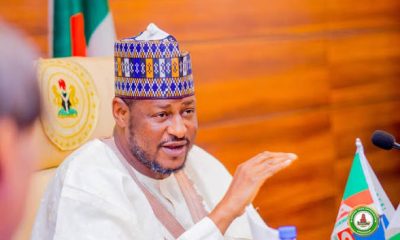
By Umar Saleh Anka Director of Climate Change, Kano State Ministry of Environment and Climate Change On the 4th of June 2026 the eve of World Environment Day I sat in a conference room in Abuja surrounded by policymakers, industry leaders, development partners, financiers, researchers, and voices from the informal sector, all gathered for one purpose: to confront Nigeria’s plastic crisis with the seriousness it deserves. The National Plastic Summit 2026, held under the theme “Innovation, Inclusion and Investment for a Circular Plastics Economy in Africa,” was convened by the Nigeria National Plastic Action Partnership, hosted by the Policy Innovation Centre, with the Government of Nigeria through the Federal Ministry of Environment, and with strategic support from the Global Plastic Action Partnership hosted by the World Economic Forum. It was, in every sense, a room that reflected the scale of the challenge and the breadth of the solution. Across Africa, an estimated 18 million tonnes of plastic waste is generated annually, much of it lost due to weak collection systems, limited recycling infrastructure, and fragmented policy implementation. In northern Nigeria, we see this reality daily in our waterways, our markets, our farmlands. Plastic pollution is not merely an aesthetic problem. It is a climate problem, a public health problem, and increasingly, a governance problem. What struck me most at the Summit, however, was not the scale of the crisis. It was the growing consensus that this crisis harbours an enormous opportunity if stakeholders rise to their respective responsibilities. Read Also: Photos: How Kano Government-Owned Television Station Became a Source of Commercial Firewood Stakeholders at the Summit called for urgent action, stronger partnerships, and innovative strategies to turn plastic waste into wealth and job creation, noting that with practical outcomes, stronger partnerships, and a clear national roadmap with measurable targets and accountability mechanisms, plastic waste could create significant economic opportunities. This is the circular economy argument in its most compelling form: what we have been discarding as waste is, in truth, a misallocated resource. The Summit’s priorities were anchored around three pillars: advancing circularity as an economic and industrial opportunity; strengthening policy implementation and financing mechanisms; and ensuring an inclusive and just transition that integrates informal sector actors into formal circular systems. The third pillar resonated deeply with me. In Kano, the informal waste sector the scrap dealers and recyclers who work without contracts or recognition are already practicing circular economy principles. They deserve policy frameworks that formalise, protect, and reward their contribution. UNCTAD’s presence at the Summit also added a critical regional dimension. A dedicated session explored regional approaches to single-use plastics controls in West Africa, material standards including biodegradation and compostability, and plastic substitution roadmaps for key sectors (UNCTAD) a conversation that underscores the need for Nigeria to not only act nationally, but to lead continentally. As I returned from Abuja, I carried with me both a sense of urgency and a renewed conviction. Kano State is not a bystander in Nigeria’s plastics transition. With our Climate Change Policy and Action and Implementation Framework, and our ongoing commitment to environmental governance at the sub-national level, we are positioned to translate the Summit’s ambitions into state-level action engaging manufacturers, empowering communities, incentivising recyclers, and building the institutional bridges that circularity demands. The plastics crisis will not be solved by government alone, nor by industry alone, nor by civil society alone. It will be solved when every stakeholder from the boardroom to the roadside understands their role in closing the loop. That conversation began, with renewed purpose, on the 4th of June in Abuja. Umar Saleh Anka