The Historica Nigeria

Economy

Economy, National, News

Nigeria’s Petrol Market Needs Competition, Says World Bank

The World Bank has called on the Nigerian government to reopen the petrol market to competition by reinstating import licences, warning that the current structure is fueling higher domestic prices. In its latest Nigeria Development Update, the Washington-based lender noted that the suspension of petrol import licences since January 2026 has reduced competition, allowing prices to exceed import-parity levels. According to the report, allowing qualified marketers to resume fuel imports would restore competition, reduce pricing distortions, and align domestic fuel prices more closely with global benchmarks. It added that a more competitive market would also enhance supply security by reducing reliance on a single refinery while supporting broader sourcing options. The recommendation comes amid rising global oil prices, which have impacted Nigeria’s domestic fuel market. The report observed that the Dangote Refinery, currently the dominant supplier following the halt in import licences, raised its ex-depot petrol price to about ₦1,275 per litre as of March 23, 2026. This figure, the World Bank noted, is approximately 12 percent higher than the estimated import-parity price of ₦1,122 per litre, highlighting the cost implications of limited competition in the market. Read Also: Nigeria Must Integrate Innovation, Policy, and Research for Growth — Bindir The report further stressed that reinstating import licences would dismantle the emerging supply monopoly and help lower fuel costs for consumers, while maintaining the country’s long-term domestic refining objectives. Meanwhile, reactions from Nigerians have remained mixed, with many expressing concern over the current market structure. Some stakeholders argue that restricting fuel imports has negatively affected traditional marketers, many of whom employ thousands of workers. Others noted that Nigeria’s large population and energy demand may be difficult to sustain through a single refinery, warning that over-reliance on one supplier could pose risks to supply stability in the event of disruptions. The development, as highlighted in a report by The Africa Report, underscores the growing debate over the future of Nigeria’s petroleum market and the balance between promoting local refining and ensuring competitive pricing for consumers.

Economy, National, News

WAEC Releases 2026 CB-WASSCE Results, Records Improved Performance

By Umar Idris Shuaibu The West African Examinations Council (WAEC) has announced the release of the 2026 First Series Computer-Based West African Senior School Certificate Examination (WASSCE) for private candidates, reporting improved performance and increased participation nationwide. The examination was conducted across Nigeria from January 28 to February 14, while coordination and marking of scripts took place between February 26 and March 13. In a statement issued by WAEC’s Public Affairs Department in Lagos and signed by Moyosola Adesina, Acting Head of Public Affairs, the council disclosed that 608 examiners participated in the marking process. According to the council, a total of 10,523 candidates registered for the examination, representing an 11.49 per cent increase compared to 2025. Out of this figure, 10,480 candidates eventually sat for the examination nationwide. Read Also: Kano State Polytechnic Takes Step Toward University-Affiliated PGD Programmes New VC Unveils Plan to Modernise Curriculum, Introduce Tech-Driven Degrees Why Science College Dawakin Kudu Remains a Pride of Kano’s Educational Heritage Performance analysis showed that 30.95 per cent of candidates obtained credit passes in at least five subjects, while 26.96 per cent secured credits in five subjects, including English Language and Mathematics. This represents a marginal improvement of 5.76 per cent compared to the previous year. The council further revealed that 43 candidates with special needs including visually impaired, hearing impaired, and albino candidates registered for the examination and were adequately supported throughout the process. Gender distribution indicated that female candidates slightly outnumbered males, with 5,374 females (51.28 per cent) compared to 5,106 males (48.72 per cent). WAEC stated that out of the 10,480 candidates who sat for the examination, 8,418 (80.32 per cent) have fully processed results, while 2,062 (19.68 per cent) still have some subjects under processing. It added that 4,598 candidates obtained credits in five subjects, while 3,429 secured credits including English Language and Mathematics, reflecting measurable improvement in overall performance. The council also disclosed that the results of 75 candidates have been withheld over alleged examination malpractice, noting that the cases are currently under investigation and will be reviewed by the appropriate committee. Candidates were advised to access their results through official WAEC platforms and proceed with necessary steps, including online applications for certificate printing. The council reiterated its commitment to upholding the integrity of its examinations and congratulated successful candidates nationwide.

Economy, National, News

Nigeria’s Financial Reforms Earn Global Validation — NFIU

The Nigerian Financial Intelligence Unit (NFIU) has welcomed Nigeria’s removal from the European Union’s list of high-risk third countries, describing it as a strong validation of the country’s financial integrity reforms implemented since 2023. In a statement issued in Abuja on Sunday, the NFIU said the development followed Nigeria’s exit from the Financial Action Task Force (FATF) Grey List in October 2025, as well as the European Union’s decision to delist the country in January 2026. According to the agency, the decisions by the FATF and the EU reflect the success of a coordinated national effort to strengthen Nigeria’s anti-money laundering, counter-terrorism financing and counter-proliferation financing frameworks. Commenting on the development, the Chief Executive Officer of the NFIU, Hafsat Bakari, said the delisting demonstrated the credibility and sustainability of Nigeria’s reforms, as well as the effectiveness of consistent implementation across government institutions. She noted that the milestone underscored Nigeria’s commitment to global standards on financial integrity while reinforcing international confidence in the country’s financial system. Read Also: Banks, Fintechs to Begin 7.5% VAT Deduction on Electronic Service Charges Monday Tinubu Returns to Abuja After Signing Major Trade Deal with UAE Nigerian Navy Launches High-Tech Agricultural Initiative to Boost Food Security Bakari explained that the reforms were carried out under the guidance of President Bola Ahmed Tinubu and supported by strategic leadership from the Attorney-General of the Federation and Minister of Justice, the Minister of Finance and Coordinating Minister for the Economy, the Minister of Interior, and the Minister of State for Finance, through the Inter-Ministerial Committee on AML/CFT/CPF. She added that the contributions of other ministries, security agencies, regulators and law enforcement bodies helped strengthen supervision of both financial and non-financial sectors, improve corporate transparency, and enhance investigations and prosecutions related to illicit financial activities. According to her, significant progress was also recorded in prosecutorial outcomes and international cooperation, particularly through the Federal Ministry of Justice, which played a key role in securing convictions, facilitating mutual legal assistance, and enabling the recovery and repatriation of illicit assets. Bakari further commended the judiciary, especially the Federal High Court, for timely adjudication and the imposition of proportionate sanctions that serve as effective deterrents against financial crimes. She disclosed that Nigeria is now consolidating the gains achieved and has begun preparations for its next AML/CFT/CPF Mutual Evaluation, reaffirming the country’s commitment to sustained collaboration and the protection of its financial system.

Economy, National, News

Banks, Fintechs to Begin 7.5% VAT Deduction on Electronic Service Charges Monday

The Federal Government has directed commercial banks, microfinance institutions and fintech platforms to commence the collection and remittance of a 7.5 per cent Value Added Tax (VAT) on selected electronic banking service charges with effect from Monday, January 19, 2026. The directive applies strictly to service fees charged on electronic transactions and not to the actual amount transferred by customers. The Nigerian Revenue Service (NRS), formerly the Federal Inland Revenue Service, said the move is aimed at standardising tax collection within Nigeria’s rapidly expanding digital economy and ensuring uniform compliance across the financial services sector. ‘The Historica Nigeria‘ reports that under the directive, financial institutions are required to deduct VAT solely from the transaction service fee. For instance, a transfer charge of ₦100 will now attract an additional ₦7.50 as VAT. Read Also: Inflation to Fall Below 10% as Nigeria’s Economy Rebounds — Tinubu Confirming the development in a notice to customers, fintech firm Moniepoint said it would begin implementing the directive from the stipulated date. The company explained that the VAT would be remitted to the Nigerian Revenue Service in line with government regulations. Moniepoint disclosed that the tax would apply to specific banking services, including electronic transfer charges, USSD transaction fees, mobile banking services and card issuance fees. According to details of the directive, VAT will be charged on mobile money transfers, USSD sessions and card-related fees, while interest earned on savings and deposit accounts remains exempt. The NRS further directed financial institutions to ensure transparency by clearly itemising VAT charges on transaction receipts and account statements to enable customers easily track deductions. The enforcement of VAT on electronic banking service charges follows the implementation of the new Tax Act, under which banks recently reinstated the ₦50 stamp duty formerly known as the Electronic Money Transfer Levy on electronic transfers of ₦10,000 and above. Although VAT on banking services is not entirely new, the NRS said the renewed enforcement is intended to ensure that both fintech platforms and traditional banks comply with the same remittance framework, thereby closing existing revenue gaps. As the January 19 commencement date approaches, customers are expected to receive similar notifications from other banks and fintech platforms detailing how the VAT deductions will apply to eligible electronic banking services.

Agriculture, Economy, National, News

FG Promotes Market-Driven Agriculture Under $500m AGROW Initiative

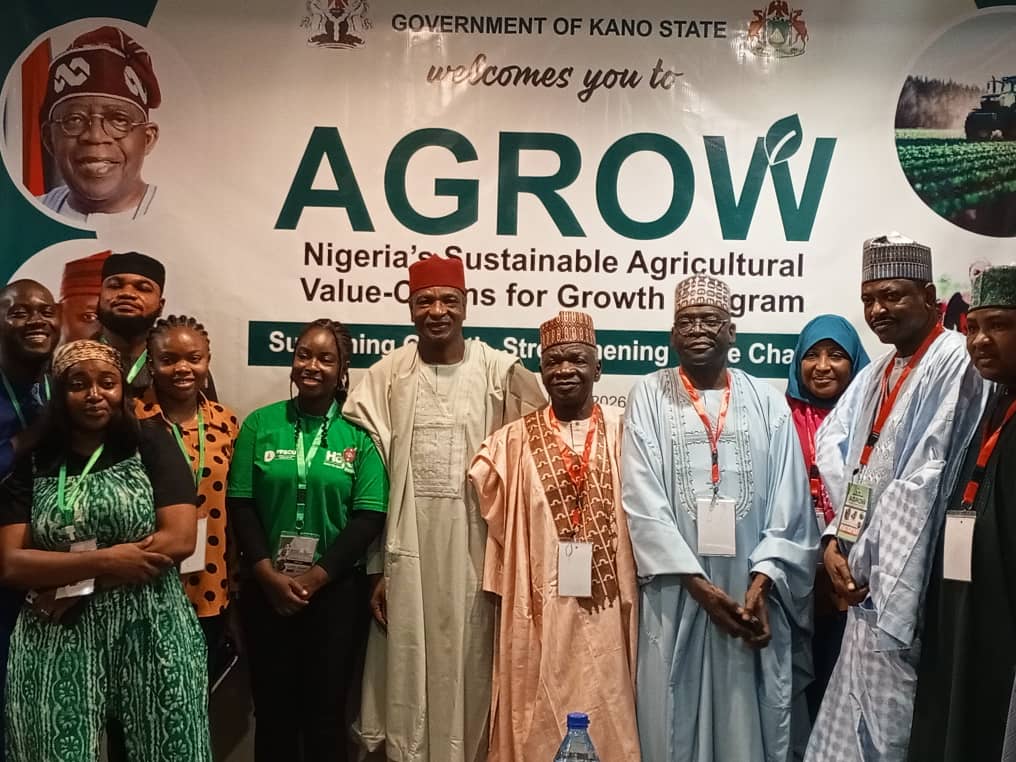
The Federal Government has reiterated its commitment to ensuring that farmers are actively involved in policy decisions aimed at boosting agricultural productivity and strengthening national food security. The Manager, Research, Data and Impact Assessment at the Presidential Food Systems Coordinating Unit (PFSCU), Mr. Eniola Akindele, stated this during the Nigeria Sustainable Agricultural Value Chains for Growth Programme (AGROW) Agroecological Zonal Workshop held in Kano. Akindele said the current administration is prioritising farmer-driven, market-oriented and results-based agricultural interventions, stressing that policies must respond to realities on the ground rather than follow a top-down approach. According to him, AGROW focuses on strategic value chains including rice, wheat, tomato, sesame and sorghum, which are critical to Nigeria’s food security and economic development. He explained that AGROW is a $500 million homegrown initiative led by Nigeria, co-created across the three tiers of government, and shaped in partnership with the private sector and development partners, with technical support from the World Bank. Read Also: Tinubu Says Nigeria to Generate Up to $3bn Yearly From Carbon Market 300-Year-Old Kano Farming Settlement Faces Extinction Over Sand Mining Govt Girls’ School Maga Reopens After Bandit Attack Akindele noted that past agricultural programmes were hindered by fragmented public spending, blanket input subsidies, government-driven implementation models, opaque land administration systems and multiple informal trade levies. He said the AGROW framework introduces a new approach centred on state-level agricultural support, financial incentives tied to market outcomes and targeted public investment. Other pillars include institutionalised private sector engagement, transparent and secure land administration, as well as efficient and predictable interstate agricultural trade. The PFSCU official added that the programme is built on three major components: strengthening private sector linkages with smallholder farmers, modernising on-farm production systems, and effective project coordination, monitoring and evaluation. He further outlined eligibility requirements for states seeking to participate in AGROW, including sustainable land-based investment processes, digital farmer registries, increased transparency in fees and levies for interstate trade, reduced reliance on input subsidies and stronger support for agricultural cooperatives. In his remarks, the Permanent Secretary, Kano State Ministry of Agriculture and Natural Resources, Alhaji Bashir Sunusi, said the workshop aligns with the Kano State Government’s agenda to improve agricultural productivity and strengthen food systems. He disclosed that the state government has recruited 1,038 agricultural extension workers, provided farming equipment such as tractors and power tillers, and established three mechanisation centres in Gaya, Dambatta and Kadawa. Participants at the workshop were drawn from Sudan Savannah agroecological states of Kano, Katsina, Bauchi, Gombe, Kebbi, Sokoto and Zamfara.

Business, Economy, National

Inflation to Fall Below 10% as Nigeria’s Economy Rebounds — Tinubu

President Bola Ahmed Tinubu has projected that Nigeria’s inflation rate will fall below 10 per cent in 2026, expressing optimism that the development will translate into improved living standards and accelerated economic growth. The projection was conveyed by the Special Adviser to the President on Information and Strategy, Mr. Bayo Onanuga, in a statement praising corporate Nigeria and key stakeholders in the capital market for surpassing the N100 trillion market capitalisation milestone on the Nigerian Exchange (NGX). According to the statement, the President expressed confidence that ongoing economic reforms would yield greater returns for investors, assuring that 2026 would be a better year for both local and foreign investments. Data from the NGX showed that the market achieved the N100 trillion capitalisation target on Monday, closing at N101.80 trillion. Market capitalisation represents the total value of all outstanding shares listed on the Exchange. President Tinubu described the milestone as an inspiration for investors operating within the money and capital markets, urging Nigerians to deepen their investments in the domestic economy. He assured that 2026 would deliver even stronger outcomes as reforms continue to gain traction. Onanuga said the crossing of the N100 trillion mark signified the birth of a new economic reality and a rejuvenation of investor confidence in Nigeria. Read Also: 300-Year-Old Kano Farming Settlement Faces Extinction Over Sand Mining Nigerian Navy Launches High-Tech Agricultural Initiative to Boost Food Security Fixing the Forgotten Crisis: Solutions to Nigeria’s Herders-Farmers Conflict He noted that while many global markets struggled with stagnation or weak recovery in 2025, the NGX All-Share Index recorded strong growth, closing the year with a 51.19 per cent return, higher than the 37.65 per cent recorded in 2024. He added that year-to-date returns had outpaced those of major global indices, including the S&P 500 and FTSE 100, as well as several emerging market peers. According to him, the performance underscored Nigeria’s growing appeal as an investment destination, reflecting renewed confidence in the broader economy. The President further highlighted strong performances across sectors on the NGX, including industrial firms that have localised supply chains and a banking sector noted for resilience and technological innovation. Tinubu said his administration was only getting started, revealing that the pipeline for new listings remained robust, with indigenous energy firms, technology companies, telecom operators and infrastructure-heavy entities seeking access to the public market to fund expansion. He noted that such listings would further boost market capitalisation and deepen democratic ownership of the economy. He stressed that the government was not celebrating stock market performance in isolation but also the broader microeconomic effects of its reforms, particularly the gradual easing of inflationary pressures after initial headwinds. On inflation, Tinubu projected a sharper decline than earlier forecasts, contrasting his outlook with the Central Bank of Nigeria’s 12.9 per cent projection for 2026. Onanuga explained that monetary tightening and the removal of distortionary Ways and Means financing had helped restore stability to the naira. He added that increased investments in agriculture had contributed to a consistent decline in inflation over the past eight months, from a 24-month high of 34.8 per cent in December 2024 to 14.45 per cent in November 2025, with further moderation expected in 2026. The President also highlighted improvements in Nigeria’s current account position, noting that the country posted a surplus of $16 billion in 2024, with projections indicating a rise to $18.81 billion in 2026. According to him, non-oil exports recorded significant growth, rising by 48 per cent by the third quarter of 2025, while exports to Africa increased by 97 per cent. Manufacturing exports also grew by 67 per cent year-on-year in the second quarter of 2025. Tinubu further disclosed that Nigeria’s foreign reserves had crossed the $45 billion mark, with projections indicating they would exceed $50 billion in the first quarter of 2026, giving the Central Bank increased capacity to maintain macroeconomic stability. He also pointed to ongoing infrastructure expansion, including rail networks, major highways and port revitalisation projects, as part of efforts to strengthen the productive base of the economy and sustain long-term growth.

Business, Economy, National

FG Debunks Claims Poor Nigerians Will Bear New Tax Burden

The Federal Government has clarified that low-income earners will not pay personal income tax under the new tax regime that took effect on January 1, dismissing claims that the reforms impose additional burdens on the poor. Director-General of the Budget Office of the Federation, Tanimu Yakubu, provided the clarification in a statement responding to criticisms he described as based on “stage-managed arithmetic, selective accounting, and misrepresentation of the law.” Yakubu explained that the most critical feature of the new personal income tax structure is the zero per cent tax rate on the first ₦800,000 of annual income, a provision he said critics deliberately ignored. Under the new framework, only income above that threshold is taxable. Using an illustrative example, Yakubu said a worker earning ₦75,000 monthly would have an annual income of ₦900,000, leaving only ₦100,000 above the tax-free band. At a 15 per cent rate on the excess, the worker’s gross tax exposure would amount to ₦15,000 annually, or ₦1,250 per month, before deductions. Read Also: Nigeria Pushes Blue Economy Agenda with Seabed Mapping, Hydrography Initiatives Nigerian Navy Launches High-Tech Agricultural Initiative to Boost Food Security ITF Wraps Up SUPA Skill-Up Artisans Training in Kano, Targets Sustainable Livelihoods He added that once statutory pension contributions are applied, the taxable portion reduces significantly. At an eight per cent pension contribution rate, ₦72,000 would be deducted annually, leaving just ₦28,000 subject to tax, translating to ₦4,200 per year or ₦350 monthly. With additional allowable deductions such as health insurance, the taxable income could fall entirely below the ₦800,000 threshold, resulting in zero personal income tax liability. Yakubu stressed that pension and health insurance contributions should not be misrepresented as taxes, noting that pensions are deferred wages owned by workers and lodged in their Retirement Savings Accounts, while health insurance payments secure defined benefits. He faulted the use of global poverty benchmarks in the criticism, explaining that the World Bank’s $4.20-a-day poverty line is a purchasing power parity measure and not a nominal wage threshold that can be converted directly into naira using market exchange rates. On claims that expanding the tax base would inevitably target the poor, Yakubu described the argument as misleading, stating that tax base expansion focuses on improving compliance among high earners, closing loopholes, capturing affluent segments of the digital and informal economy, and strengthening employer withholding systems. He added that while governance and accountability concerns were legitimate, they did not invalidate the structure of a tax schedule designed to reduce Nigeria’s reliance on borrowing and improve its historically weak tax-to-GDP ratio. According to Yakubu, the narrative branding the reform as a policy designed to tax subsistence incomes ignored clear legal thresholds meant to protect low-income earners, describing such claims as driven more by emotive framing than by facts grounded in law.   (The Nation)

Economy, National, News

New Nigeria Revenue Service Takes Off as 2026 Begins

The Nigeria Revenue Service (NRS) has officially commenced operations, replacing the former Federal Inland Revenue Service (FIRS) as the country’s new national tax authority. The transition follows the signing of the Nigeria Revenue Service Establishment Act 2025 by President Bola Ahmed Tinubu in June. The commencement of operations coincided with the beginning of the new year. The official launch was marked by the unveiling of the NRS logo and brand identity at an event held in Abuja, signalling a new phase in Nigeria’s revenue administration framework. Speaking on the development, the Executive Chairman of the NRS, Zacch Adedeji, described the rebranding as a major milestone in the ongoing efforts to modernise Nigeria’s revenue system. Read Also: Tax Reforms on Track as Tinubu Dismisses Suspension Rumours In a statement issued by his Special Adviser on Media, Dare Adekanmbi, Adedeji said the new identity reflects a renewed commitment to building a unified, efficient, and service-oriented revenue system aligned with Nigeria’s broader economic transformation agenda. He explained that the establishment of the NRS represents continuity of purpose, enhanced operational capacity, and a forward-looking approach aimed at supporting taxpayers while strengthening national development. Adedeji further reaffirmed the agency’s commitment to transparency, partnership, and service excellence, stressing that the NRS is focused on building public trust and promoting shared prosperity across the country.

Business, Economy, National

Banks to Deduct N50 Stamp Duty on Electronic Transfers from Jan. 1, 2026

Commercial banks in Nigeria will begin deducting a N50 stamp duty on electronic transfers of N10,000 and above starting January 1, 2026, following the implementation of the Tax Act. The charge, officially referred to as the Electronic Money Transfer Levy (EMTL), is a one-off fee applied to any electronic receipt or transfer in commercial banks or financial institutions, regardless of account type. United Bank for Africa (UBA) disclosed the development in an email notification sent to its customers on Tuesday. The bank clarified that the N50 EMTL will now be uniformly applied as stamp duty across all financial institutions. Read Also: Tax Reforms on Track as Tinubu Dismisses Suspension Rumours FG Announces 50 Tax Exemptions, Reliefs for Low-Income Earners, SMEs, Effective January 2026 Beyond Betrayal: The Real Politics Behind Abba Kabir Yusuf’s Calculated Move According to UBA, salary payments and intra-bank self-transfers will be exempt from the stamp duty. The bank also noted that the sender of the funds will now bear the charge, whereas previously the fee was deducted from the beneficiary or recipient. UBA reiterated its commitment to transparency, ensuring that customers are informed of any changes affecting their banking transactions. The move aligns with previous announcements by Nigerian fintech firms on September 7, 2024, which indicated compliance with Federal Inland Revenue Service (FIRS) regulations and applied to both personal and business accounts.

Economy, National, News

Tax Reforms on Track as Tinubu Dismisses Suspension Rumours

President Bola Ahmed Tinubu has reaffirmed that the newly enacted tax laws will be implemented as scheduled, dismissing speculations about any suspension or reversal of the reforms. The President stated that the tax laws, which took effect on June 26, 2025, alongside other related Acts scheduled to commence on January 1, 2026, will proceed as planned. In a statement personally signed on Tuesday, Tinubu described the tax reforms as a once-in-a-generation opportunity to build a fair, competitive, and resilient fiscal foundation for Nigeria. According to him, the new laws are not designed to increase taxes but to support a comprehensive structural reset of the tax system, promote harmonisation, protect taxpayer dignity, and strengthen the social contract between the government and citizens. The President urged all stakeholders to support the implementation phase, noting that the reform agenda has now firmly entered the delivery stage. Read Also: FIRS Declares NIN as Automatic Tax ID for Individual Nigerians Tinubu Begins End-of-Year Break, Heads to Europe Kano APC Reiterates Unity, Ready to Receive Governor Yusuf He acknowledged ongoing public discourse over alleged changes to certain provisions of the laws but maintained that no substantial issues have been identified that would justify disrupting the reform process. Tinubu stressed that trust in governance is built over time through responsible decision-making rather than through premature or reactive measures, while reaffirming his administration’s commitment to due process and the integrity of laws already enacted. He further pledged that the Presidency would work closely with the National Assembly to ensure the timely resolution of any issues that may arise during implementation. The President assured Nigerians that the Federal Government would continue to act in the overriding public interest to establish a tax system that supports prosperity, equity, and shared responsibility.

Scroll to Top