The Historica Nigeria

Economy

Agriculture, Economy, National, News

Tinubu Approves 6-Month Ban on Raw Shea Nut Exports to Boost Local Processing

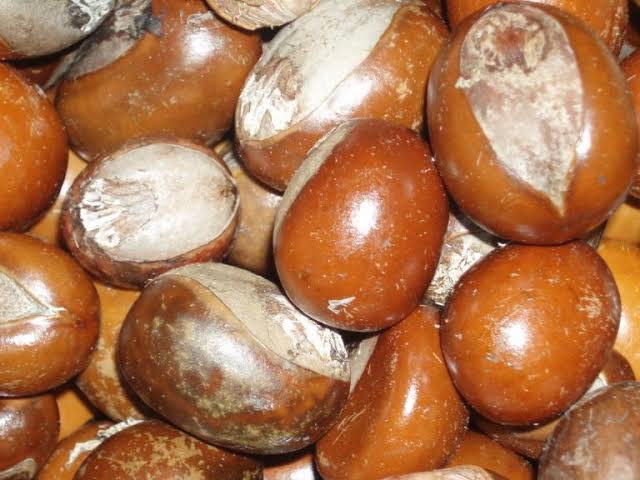
President Bola Ahmed Tinubu has approved a six-month temporary ban on the export of raw shea nuts in a bid to curb informal trade, strengthen local processing, and grow Nigeria’s shea industry. The ban, which takes immediate effect, is subject to review at the end of its duration and is projected to help Nigeria generate about $300 million annually in the short term through value addition. Vice President Kashim Shettima announced the directive on Tuesday at a multi-stakeholder meeting in the Presidential Villa. He directed the Federal Ministry of Finance and other relevant agencies to fast-track enforcement. Read Also: FG to Establish Cattle Breeding Centres Across Six Geopolitical Zones “This is not an anti-trade policy but a pro-value addition policy designed to secure raw materials for our factories and enable industries to run at full capacity, thereby boosting rural income and jobs for our people,” Shettima said. The Vice President stressed that the move would transform Nigeria from an exporter of raw shea nuts to a global supplier of refined shea butter, oil, and derivatives. He described the policy as being about industrialisation, rural transformation, gender empowerment, and expanding Nigeria’s global trade footprint. “Nigeria produces nearly 40 percent of the global shea product, yet we account for only one percent of the $6.5 billion global market. This is unacceptable,” he said. “We project to earn about $300 million annually in the short term, with a ten-fold increase by 2027. That is our target.” Shettima further revealed that the directive was a joint decision between the Federal Government and sub-nationals, adding that Nigeria had also secured an agreement with Brazil to prioritise access for Nigerian shea butter and oil into its market within the next three months. Highlighting the gender dimension of the policy, he noted that protecting the shea industry meant safeguarding the livelihoods of millions of women who make up the bulk of its workforce. Earlier, Minister of Agriculture and Food Security, Senator Abubakar Kyari, explained that despite producing an estimated 350,000 metric tonnes of shea annually across 30 states, Nigeria captures less than one percent of the multi-billion-dollar global shea economy. He said a rapid assessment carried out by the Federal Government showed that more than 90,000 metric tonnes of raw shea are lost yearly to informal cross-border trade, while domestic processors operate at only 35–50 percent of their installed capacity of 160,000 metric tonnes. According to him, countries such as Ghana, Burkina Faso, Mali, and Togo have already imposed restrictions to protect their industries, leaving Nigeria vulnerable as a major outlet for unregulated buyers. Kyari argued that investing in the shea value chain would directly empower women, create rural jobs, and enhance Nigeria’s non-oil exports. “With over five million hectares of wild-growing shea trees, Nigeria has both a comparative and absolute advantage. This temporary ban will secure domestic supply, enable processors to operate at full capacity, curb informal trade, and lay the foundation for the country to move from raw exports to high-value derivatives,” he said.

Economy, National, News

Tinubu Signs Insurance Industry Reform Bill into Law, Sets Stage for $1 Trillion Economy

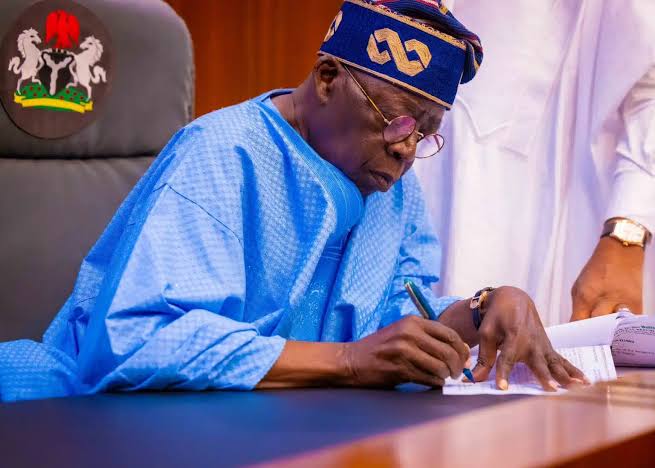
President Bola Ahmed Tinubu has signed into law the Nigerian Insurance Industry Reform Bill, 2025, a landmark legislation aimed at strengthening Nigeria’s financial sector and fast-tracking the nation’s ambition to build a $1 trillion economy. This was conveyed in a statement signed by Bayo Onanuga, Special Adviser to the President on Information and Strategy. The statement noted that the reforms are expected to catalyse new investments, boost consumer confidence, and position Nigeria as a leading insurance hub in Africa. The Nigerian Insurance Industry Reform Act (NIIRA) 2025 repeals and consolidates multiple outdated insurance laws into a single modern legal framework. It introduces robust regulation and oversight of all insurance and reinsurance businesses operating in the country. Read Also: Tinubu Has Transformed FCT Within Two Years – Dr. Mariya Bunkure The Act reflects the Tinubu administration’s commitment to financial stability, inclusive growth, and sustainable economic development under its Renewed Hope Agenda. Some of the key highlights of the new law include stricter capital requirements for operators, mandatory enforcement of compulsory insurance policies, digitisation of the insurance market, and zero tolerance for delays in claims settlement. It also provides for the creation of policyholder protection funds in cases of insolvency and expands Nigeria’s participation in regional insurance schemes such as the ECOWAS Brown Card System. The National Insurance Commission (NAICOM) has been mandated to implement the provisions of the Act in a way that unlocks the sector’s full potential and significantly improves insurance coverage across the country.

Agriculture, Economy, National, News

FG to Establish Cattle Breeding Centres Across Six Geopolitical Zones

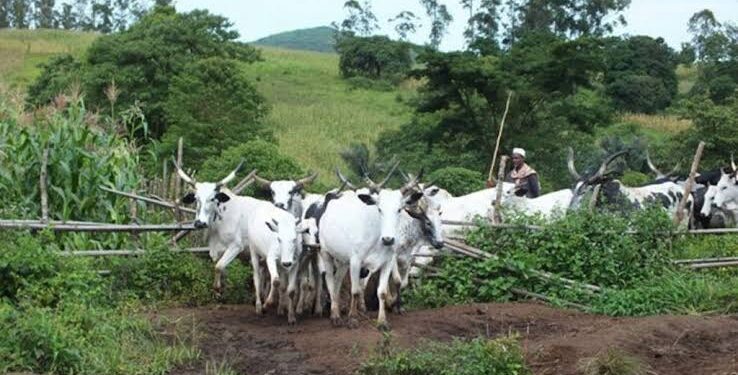
In a strategic move to modernize livestock production and bolster food security, the Federal Government has announced plans to establish cattle breeding centres in each of Nigeria’s six geopolitical zones. The Minister of State for Agriculture and Food Security, Senator Aliyu Sabi Abdullahi, made the disclosure on Tuesday during the Citizens-Government Engagement and Midterm Performance Assessment of the Tinubu administration, held in Kaduna. The event was organised by the Sir Ahmadu Bello Memorial Foundation. According to Abdullahi, the initiative aligns with President Bola Ahmed Tinubu’s Renewed Hope Agenda and aims to transition Nigeria’s livestock sector from subsistence-based methods to structured, technology-driven practices. He noted that the new centres would serve as regional livestock hubs to enhance meat and dairy output while reducing tensions between farmers and herders. Read Also: Fixing the Forgotten Crisis: Solutions to Nigeria’s Herders-Farmers Conflict “The synergy among the ministries of agriculture, environment, water resources, livestock development, and marine and blue economy is crucial for achieving this national goal,” Abdullahi stated. Minister of Information and National Orientation, Mohammed Idris, who also attended the event, shared updates about the programme on his official X (formerly Twitter) handle. He described the breeding centres as a cornerstone in the administration’s efforts to reform agricultural production and promote sustainable livelihoods. The Federal Government believes the project will help curb farmer-herder conflicts, improve yields, and contribute meaningfully to national food sufficiency targets. The initiative follows concerns raised earlier in April by the National Economic Council (NEC), which described Nigeria’s current livestock rearing practices as outdated and unsustainable. The council had called for urgent reforms, citing escalating violence in parts of the country—including Benue, Plateau, and Kwara states—where farmer-herder clashes have resulted in loss of lives and property. Briefing State House Correspondents after the NEC meeting, Bayelsa State Governor, Douye Diri, stressed the need for a complete overhaul of the sector. “We cannot continue to live in the past. The time has come to embrace modern livestock production in Nigeria,” Diri stated. The cattle breeding centres are expected to form part of a broader roadmap toward achieving food security and rural development across Nigeria.

Economy, National, News

NNPCL Drills Four Oil Wells in Kolmani, Constructs Gas Plants in Kogi

The Nigerian National Petroleum Company Limited (NNPCL) has disclosed that it has successfully drilled four oil wells in the Kolmani area of Bauchi State as part of its ongoing exploration and development initiatives in northern Nigeria. This was revealed by the company’s Director, Yusuf Usman, during a two-day interactive session on Government-Citizens Engagement, organised by the Sir Ahmadu Bello Memorial Foundation in Kaduna on Wednesday. Read Also: NNPC Rules Out Sale of Port Harcourt Refinery, Reaffirms Commitment to Rehabilitation “So far, the NNPCL has drilled four wells in the Kolmani area of Bauchi State,” Usman stated. “We are currently evaluating the appropriate technology to be deployed for the next phase of drilling operations.” He also highlighted the company’s broader efforts to expand oil and gas infrastructure in the northern region, including the construction of five gas processing facilities in Kogi State. “In support of President Tinubu’s Compressed Natural Gas (CNG) Initiative, five CNG and Liquefied Natural Gas (LNG) plants are under construction in Kogi,” he said. “These plants are expected to significantly boost gas supply and accessibility across northern Nigeria.” Usman noted that the projects align with NNPCL’s mission to drive energy development nationwide, especially in previously under explored region.

Scroll to Top