
Environment
Illegal mass felling of trees ongoing at Kano government-owned institution – Report

By Umar Idris Shuaibu, Kano
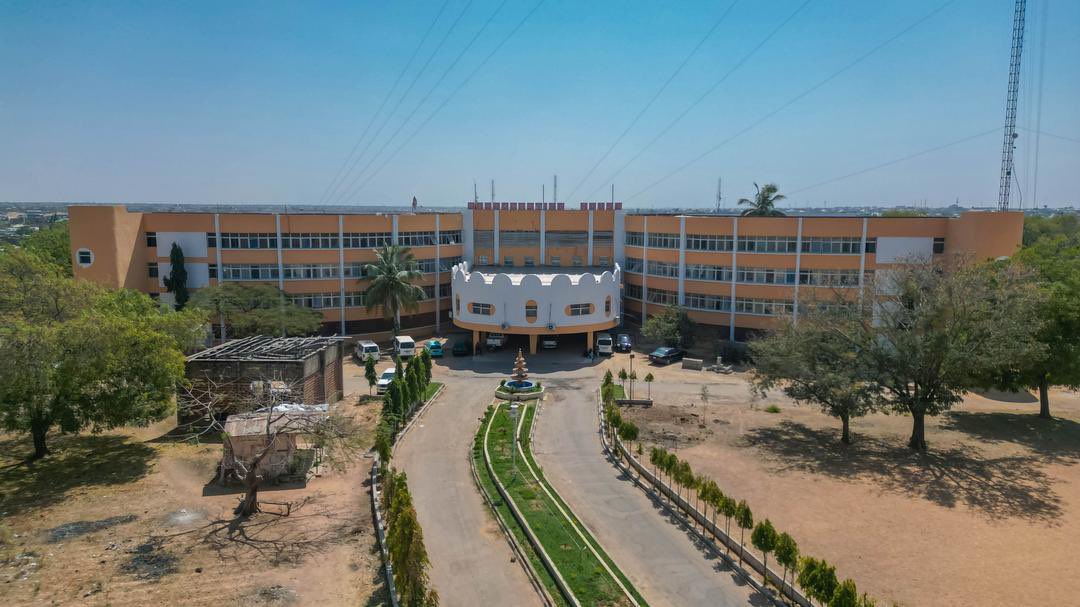
Despite ongoing efforts by the Kano State Government to combat deforestation and strengthen environmental protection laws, residents around Hotoro area of Tarauni Local Government Area have raised alarm over illegal mass felling of trees within the premises of the state-owned Abubakar Rimi Television.
The development, observed by ‘The Historica Nigeria‘ during separate visits to the area, has generated growing concern among residents and environmental observers who fear the situation could undermine the state’s broader environmental protection campaign.
For decades, the television station’s premises remained one of the greenest public environments within Kano metropolis, housing different varieties of indigenous and exotic trees that contributed significantly to environmental preservation, climate moderation and improved air quality around the surrounding communities.
However, residents says that large numbers of those trees have recently been cut down and evacuated from the premises.
Associate Professor Amina Ganduje’s Quiet March into Nigeria’s Intellectual Elite
.Why Gobirawa’s Centuries-Old Agrarian Life is at Risk in Kano
CITAD Distributes School Materials to Nomadic Pupils in Kano, Urges Increased Govt Intervention
During interviews conducted by ‘The Historica Nigeria‘, some residents living close to the station expressed disappointment over what they described as the failure of the institution’s leadership to halt the illegal deforestation activities.
One of the residents, Malam Ibrahim Adamu, claimed that they repeatedly witnessed heavy-duty trucks and vehicles transporting large quantities of wood felled from historic trees within the television station.
“We saw big lorries and other vehicles specifically used to evacuate large chunks of wood from the premises of Abubakar Rimi Television,” he says.
The resident linked the situation to the increasing heat currently being experienced around Hotoro and neighbouring communities, noting that the environment behind the ARTV quarters was previously more conducive due to the dense tree cover within the area.
“We directly link the issue to negligence on the part of the management. To our knowledge, the Managing Director reportedly said she was not aware of the incident and claimed that her personal assistant was the one involved in the deforestation activities despite the existing state laws prohibiting such acts,” he stated.
Malam Ibrahim Adamu further disclosed that the station previously housed different categories of trees, including large mahogany trees, neem trees, Delonix regia, acacia species, gum Arabic, eucalyptus trees and several economic trees such as mango and guava trees.
According to him, the continued destruction of the trees is already negatively affecting the environmental condition of the entire area.
“The deforestation that the management has failed to stop is seriously affecting the entire area. We are calling on the Kano State Government and the Ministry of Environment and Climate Change to urgently intervene and stop this negative development,” he lamented.
The concerns emerge barely months after the Kano State Government introduced stricter measures against illegal tree felling across the state.
In September 2025, the government announced a ban on indiscriminate tree cutting and the unlicensed use of chainsaws as part of broader efforts to combat environmental degradation and climate change.
The Commissioner for Environment and Climate Change, Dahiru Muhammad Hashim, had warned that violators risk fines of up to N500,000, confiscation of equipment and possible imprisonment.
The state government also introduced the Chainsaw Usage Permit Framework (CUPF) aimed at regulating logging activities and strengthening reforestation compliance.
Similarly, in March 2026, the government commenced a comprehensive review of the state’s forestry law originally enacted in 1959 to strengthen environmental protection and align Kano’s environmental regulations with modern realities.
Efforts by ‘The Historica Nigeria‘ to obtain official reaction from the Kano State Commissioner for Environment and Climate Change, Dahiru Muhammad Hashim, were unsuccessful as calls and voice messages sent through WhatsApp were not responded to as of the time of filing this report.
Environmental stakeholders maintain that government institutions should serve as examples in preserving environmental standards rather than becoming centres of ecological destruction.
Environmentalists believe the situation at the government-owned television station raises broader questions regarding environmental accountability, institutional compliance and enforcement of forestry regulations within public establishments.
Experts have consistently warned that unchecked urban deforestation contributes to rising temperatures, flooding, poor air quality and worsening climate conditions, particularly in densely populated cities such as Kano.
For many residents around Hotoro and neighbouring communities, the issue represents more than the loss of trees alone; it reflects growing concerns over environmental sustainability and the future ecological safety of the area if urgent intervention is not undertaken.
As Kano continues its wider campaign against environmental degradation, many residents believe the same environmental standards and policies promoted by government must also be fully enforced within government-owned institutions and agencies across the state.

Tinubu’s Kaduna Campaign Eve: Dan’agundi leads thousands of supporters to governor Uba Sani in Massive show of solidarity

Gwarzo’s exclusion: NDC races against time as INEC deadline nears

2027: Mariya Bunkure takes key women affairs role in Kano APC campaign

2027: Kano Governor Names Former Education Commissioner Kiru Campaign Spokesperson II

Sa’adatu Rimi College of Education Hosts NCCE Training as Experts Push Practical Agricultural Education
ABCOAD Unveils Journal, Bids Farewell to Provost

Nigerian Army Begins DSSC 29/2026 Recruitment, Outlines Eligibility Criteria

2027: NDC Releases Full List of Consensus Candidates in Kano

Gaya Polytechnic Opens Recruitment, Advertises 46 Academic, Non-Academic Positions