The Historica Nigeria

Politics

Kano, News, Politics

Kano APC: Yilwatda Reiterates 60/40 Sharing, Applauds Party Unity

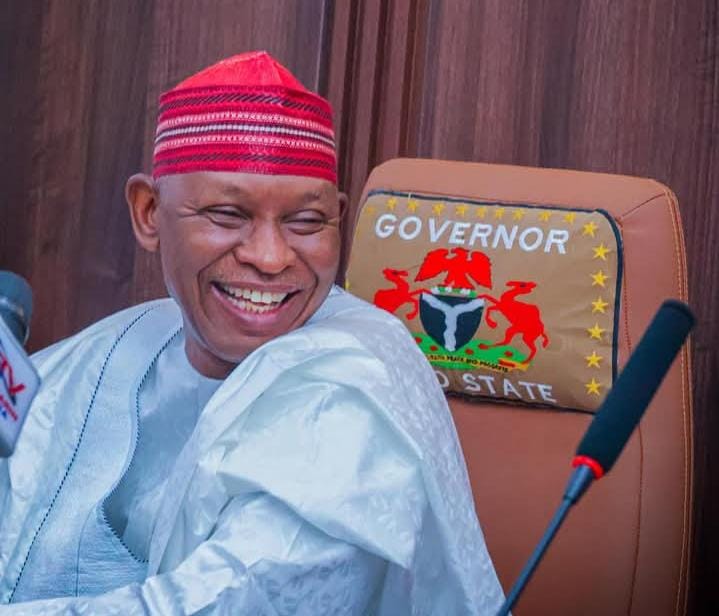
The National Chairman of the All Progressives Congress (APC), Nentawe Yilwatda, on Monday paid a courtesy visit to the Governor of Kano State, Abba Kabir Yusuf, reaffirming the party’s 60/40 leadership-sharing formula in the state. This was disclosed in a statement issued by the governor’s spokesperson, Sunusi Bature Dawakin Tofa. During the visit, Yilwatda expressed satisfaction with the large turnout of party supporters and leaders, describing it as a clear demonstration of unity within the APC in Kano State. “I am deeply impressed by the turnout of our members and leaders. It reflects unity, enthusiasm, and a shared commitment to the progress of our great party in Kano State,” he said. The APC national chairman explained that the 60/40 leadership-sharing arrangement between new decampees and existing members is designed to promote inclusiveness and effective participation in party affairs. Read Also: Murtala Still Inspires 50 Years After – Bauchi Deputy Gov, Ogomudia Kano Market Fire Destroys N5bn Goods, Claims Seven Lives Ganduje Applauds Dan’amu, Cites Tinubu’s Impact According to him, the formula would further consolidate support for President Bola Ahmed Tinubu ahead of the forthcoming general elections. “The 60/40 formula is about fairness and inclusivity. It ensures that both longstanding members and new entrants have a sense of belonging and responsibility in moving the party forward,” Yilwatda added. He also commended Nasiru Yusuf Gawuna and Barau I. Jibrin for setting aside personal ambitions in the interest of party unity and aligning with the broader vision for the APC in Kano State. Yilwatda further praised Abdullahi Umar Ganduje for his leadership and contributions to strengthening party cohesion in the state. In his response, Governor Yusuf thanked the party’s national leadership for the visit and its continued support in fostering unity and stability in Kano. He reaffirmed his administration’s commitment to working closely with party stakeholders to ensure the state remains united, prosperous, and aligned with the Federal Government’s Renewed Hope Agenda. The governor noted that the strong turnout and show of solidarity at the meeting underscored the readiness of APC members in Kano to work collectively for the progress of the party and the development of the state.  

Feature, Kano, Politics

The Chair of Merit: Smashing The Delusion of Administrative Sabotage and the Arrogance of the Unlearned

​By Hon. Muhammad Sanusi Kiru (Former Commissioner for Education, Kano State) The recent commentary titled “The Administrative Sabotage – Two Captains in One Boat” is not merely an exercise in poor logic; it is a frantic scream of intellectual insecurity. While the author attempts to weave a tale of “strategic humiliation,” he has only succeeded in exposing a staggering ignorance of how serious governments function. To suggest that a sitting Commissioner is “castrated” because he serves on a committee chaired by a veteran is a weak, infantile argument that reeks of the very “ego-driven” sickness it claims to oppose. It is a direct insult to the supreme discretion of His Excellency, Governor Abba Kabir Yusuf, and it is time to dismantle this hollow narrative with the cold, hard facts of administrative reality. Let us address the professional disparity that these defenders of mediocrity are so desperate to ignore. Professional pedigree is earned in the furnace of decades, not granted by the stroke of an appointment letter. Malam Muhammad Garba is a journalist of global stature, a man who rose from the newsrooms to lead the Nigeria Union of Journalists (NUJ) and the West African Journalists Association (WAJA). He is a master of the craft with eight years of executive experience in this specific portfolio. In contrast, while Comrade Ibrahim Abdullahi Waiya is a legal practitioner, he is a guest in the house of media management. In any civilized governance structure, when a technical task is required, you put the subject-matter expert at the helm. For a lawyer to be mentored by a world-class journalist on a communications committee is not an “insult”; it is a privilege. To suggest otherwise is to argue that a student is “humiliated” by being taught by a professor. ​The “Two Captains” metaphor is the hallmark of a mind that lacks wider experience. Read Also: Kano APC Transition Committees: Why Competence Trumps Ego Those echoing this betray a fundamental inability to distinguish between Executive Line Authority and Technical Ad-Hoc Committees. In the Ministry, the Commissioner is the head; in a transition committee, the Chairman is the specialist. This is a global gold standard, practiced from the hallowed halls of the United Nations to the cabinets of the United States and the United Kingdom, where sitting ministers frequently serve under retired veterans to tap into “institutional memory.” Are we to believe that these global powers are also practicing “governance suicide”? Or is it simply that the authors of this discourse are too professionally shallow to grasp the concept of technical hierarchy? Those rising in defense of Comrade Waiya must stop their dangerous games. Let us be clear: most of those attacking the government’s decision are simply uncomfortable with the new political realignment in Kano. They are terrified because the government they failed to showcase or protect for nearly three years is finally gaining public visibility and professional traction. Having held the state’s information machinery to ransom under the dictates of their own incompetency, they now fear the arrival of authoritative experts who actually understand the terrain of journalism. ​By labeling the Governor’s strategic alliances as “sabotage,” these individuals have effectively unmasked themselves as political sycophants, individuals who claim to serve the Governor while simultaneously suggesting he is too incompetent to structure his own administration. Their loyalty is fragile and conditional, rooted only in the hope of personal aggrandizement. They are not “protecting the office”; they are protecting their own vanity because they were not allowed to chair a temporary committee. This is the height of hypocrisy: claiming to support the Governor’s “New Kano” vision while attacking the very handshake he has authorized to consolidate the APC merger. ​The era where positions were held by those who fear being overshadowed by competence is over. Kano State is in a phase of sophisticated political evolution that demands broad-based inclusion. If these self-appointed defenders are so pained by the sight of a veteran taking the lead, it is because they know their own lack of depth cannot survive the scrutiny of a master. Administrative decorum demands that the veteran leads and the appointee learns. It is time to drop the petty, amateurish gymnastics and realize that the mission is far greater than the fragile egos of political interns.

News, Politics, Rivers

Fubara Dissolves Rivers Executive Council

Rivers State Governor, Siminalayi Fubara, has dissolved the State Executive Council with immediate effect. The dissolution was announced on Thursday, marking a significant development in the state’s political landscape. Following the directive, all commissioners and special advisers have been instructed to hand over to the permanent secretaries or the most senior officers in their respective ministries pending further decisions. Read Also: El-Rufai Alleges Attempted Arrest at Abuja Airport Governor Fubara expressed appreciation to the outgoing members of the Executive Council for their service to the state and wished them well in their future endeavours. The development was conveyed in a statement issued on Thursday by the Chief Press Secretary to the Governor, Onwuka Nzeshi.

Kano, News, Politics

Kwankwasiyya Applauds Ex-Appointees for Standing on Principle

The Kwankwasiyya Movement has commended former political appointees who resigned their positions in the Kano State Government in solidarity with its leader, Senator Rabiu Musa Kwankwaso, describing the action as a demonstration of courage, loyalty, and commitment to principle. In a statement issued on Sunday and signed by its spokesperson, Habibu Sale Mohammed, PhD, the movement said the resignations reflected the foundational values and enduring ideals upon which the Kwankwasiyya Movement was established. The movement expressed appreciation to the affected officials, noting that their decision to voluntarily relinquish their positions underscored a willingness to sacrifice personal comfort and privilege in defence of honour, conviction, and political integrity. “The Kwankwasiyya Movement wishes to express its profound appreciation and heartfelt gratitude to all patriots who have demonstrated uncommon courage, loyalty, and commitment by voluntarily resigning their respective positions in solidarity with our leader and principal, Senator Rabiu Musa Kwankwaso,” the statement read. Read Also: APC is a Living Party, Ganduje Says as Kano Govt Joins Ruling Platform Yusuf did not leave NNPP for self interest but Kano development and prosperity – NNPP 2026 Convention: APC Appoints Masari, Reassigns Uzodimma Those who resigned include former commissioners, special advisers, special assistants, managing directors, and executive secretaries. According to the movement, the decisions were taken with full awareness of the benefits and opportunities being forfeited. “These actions stand as a powerful testament to integrity, conviction, and selfless service,” it added. The statement further disclosed that Senator Kwankwaso had earlier appealed to the former appointees to reconsider their decisions, explaining that the advice was borne out of appreciation for their contributions to governance and institutional development in Kano State. “Our principal, Senator Rabi’u Musa Kwankwaso, in his characteristic humility and statesmanship, earlier advised those who resigned to reconsider their decisions, not out of weakness, but out of deep appreciation for their roles in public service and governance,” the movement stated. However, it noted that the former appointees maintained their stance, citing irreconcilable differences between their personal convictions and what they described as the prevailing directives and orientation of the Gandujiyya-led Kano State Government. The movement also commended members who resigned from local government councils, including council secretaries, supervisory councillors, and personal assistants, describing their actions as evidence of grassroots commitment to justice, fairness, and accountable governance. Reaffirming its philosophy, the Kwankwasiyya Movement stated that it “is not built on positions or privileges, but on sacrifice, service, and the pursuit of good governance and social justice.” It assured members and supporters that the movement remains united and resolute, reiterating that no pressure or inducement would derail its cause or weaken its commitment to its ideals.

National, News, Politics

INEC Expands Political Space, Laments Declining Voter Turnout

The Independent National Electoral Commission (INEC) has registered two new political parties, the Democratic Leadership Alliance (DLA) and the Nigeria Democratic Congress (NDC) ahead of the 2027 general election, increasing the total number of registered political parties in the country to 21. INEC Chairman, Prof. Joash Amupitan, SAN, announced the development on Thursday during the Commission’s first regular consultative meeting with political parties. According to Amupitan, the DLA successfully emerged from a rigorous verification process, while the NDC was registered in compliance with an order of the Federal High Court. Despite the expansion of Nigeria’s political landscape, the INEC chairman expressed concern over persistent leadership crises within several political parties, describing them as a threat to constitutional democracy. “Our collective commitment to the integrity of the electoral process is being challenged by the unfortunate and increasingly frequent leadership disputes within political parties,” Amupitan said. Read Also: APC is a Living Party, Ganduje Says as Kano Govt Joins Ruling Platform INEC Finalises Timetable for 2027 General Elections Why the Killing of Saif al-Islam Gaddafi Matters for Libya He noted that such conflicts often result in protracted litigations that overburden the judicial system and distract the Commission from its core responsibilities, including voter mobilisation and election management. “Sometimes, one wonders whether it is even necessary to continue registering or retaining some political parties, given the recurring leadership struggles and court orders recognising different individuals as party leaders,” he added. Amupitan also lamented the steady decline in voter turnout during presidential elections, revealing that participation dropped from 53.7 per cent in 2011 to 43.6 per cent in 2015, further declining to 34.7 per cent in 2019 and hitting a record low of 26.7 per cent in the 2023 general election. He stressed that technology alone could not address voter apathy, noting that public trust is often undermined by perceptions of poor democratic dividends and doubts about the value of citizens’ votes. INEC also reaffirmed its readiness to conduct the Federal Capital Territory (FCT) Area Council elections scheduled for February 21, 2026, with 1,680,315 registered voters expected to participate across 2,822 polling units. Looking ahead, the Commission confirmed preparations for the Ekiti State governorship election slated for June 20, 2026, and the Osun State governorship election scheduled for August 8, 2026. To safeguard the integrity of upcoming elections, INEC announced plans to conduct a nationwide Voter Revalidation Exercise aimed at cleaning up the voters’ register of 93.4 million entries by removing duplicate and deceased records. In his remarks, the National Chairman of the Inter-Party Advisory Council (IPAC), Dr Yusuf Mamman Dantalle, urged INEC to maintain neutrality and strictly adhere to party constitutions to avoid perceptions of bias. Dantalle also renewed calls for major electoral reforms, including the abolition of State Independent Electoral Commissions (SIECs) and the empowerment of INEC to conduct all elections nationwide. He further advocated for mandatory real-time transmission of election results to the IReV portal and suggested that all elections be held on the same day to reduce costs, prevent bandwagon effects and curb voter fatigue.

Benue, News, Politics

Suswam Joins APC After Dumping PDP

Former Benue State Governor and Senator, Gabriel Suswam, has officially joined the ruling All Progressives Congress (APC), hours after resigning his membership of the Peoples Democratic Party (PDP). Suswam’s defection followed his earlier resignation from the PDP, which he attributed to prolonged internal crises within the party. In his resignation letter, Suswam said the PDP, once known for internal democracy and cohesion, had become plagued by persistent leadership, structural and ideological conflicts with no clear path to resolution. He, however, expressed gratitude to the party for the opportunities it gave him to serve in various capacities, including as a member of the House of Representatives, governor of Benue State and senator of the Federal Republic of Nigeria. Report says that Suswam officially joined the APC on Wednesday after picking up his membership card at Mbagber Council Ward in Logo Local Government Area of Benue State. Read Also: APC is a Living Party, Ganduje Says as Kano Govt Joins Ruling Platform Speaking after receiving his membership card, Suswam urged his supporters to immediately register with the APC and called on the people of Benue State to support Governor Hyacinth Alia in the discharge of his mandate. He also disclosed that a formal ceremony to welcome him and his supporters into the party would be held at a later date. Suswam, a two-term governor of Benue State and former senator representing Benue North-East Senatorial District between 2019 and 2023, is a founding member of the PDP and had remained with the party for 27 years before his defection. The APC membership card was presented to Suswam by the party’s Benue State Organising Secretary, James Ornguga, on behalf of the state chairman.

National, News, Politics

APC Unveils 73-Member Committee For March National Convention

The All Progressives Congress (APC) has unveiled Imo State Governor, Hope Uzodimma, as Chairman, and Yobe State Governor, Mai Mala Buni, as Secretary of the party’s National Convention Central Coordination Committee, as preparations intensify for its forthcoming national convention scheduled for March 27 and 28. The APC National Secretary, Ajibola Basiru, disclosed this in a statement on Monday, announcing that the Governor of Kwara State and Chairman of the Nigeria Governors’ Forum, AbdulRahman AbdulRazaq, will serve as Vice Chairman of the 73-member committee for the party’s 2026 National Convention. Basiru recalled that the party had earlier released a comprehensive timetable for its 2025/2026 ward, local government, state, and zonal congresses across the country, which will culminate in the national convention where new members of the National Working Committee are expected to emerge. Read Also: APC is a Living Party, Ganduje Says as Kano Govt Joins Ruling Platform Governor Yusuf Plans Cabinet Reshuffle After Defection to APC Military to Try 16 Officers Over Alleged Plot Against Tinubu Govt Governors named as members of the committee include Umo Bassey Eno of Akwa Ibom, Douye Diri of Bayelsa, Hyacinth Alia of Benue, Babagana Umara Zulum of Borno, Bassey Otu of Cross River, Sheriff Oborevwori of Delta, Francis Nwifuru of Ebonyi, Monday Okpebholo of Edo, Abiodun Oyebanji of Ekiti, Peter Mbah of Enugu, Muhammed Inuwa Yahaya of Gombe, Umar Namadi of Jigawa, Abba Kabir Yusuf of Kano, Uba Sani of Kaduna, Dikko Umaru Radda of Katsina, Nasir Idris of Kebbi, Ahmed Usman Ododo of Kogi, Babajide Olusola Sanwo-Olu of Lagos, Abdullahi Sule of Nasarawa, Mohammed Umar Bago of Niger, Abiodun Adedapo Oluseun of Ogun, Lucky Aiyedatiwa of Ondo, Caleb Manasseh Mutfwang of Plateau, Siminalayi Fubara of Rivers, Ahmed Aliyu of Sokoto, and Agbu Kefas of Taraba. Other members of the committee include APC Interim National Chairman, Bisi Akande; former party chairmen Adams Oshiomhole, Abdullahi Adamu, and the immediate past National Chairman of the APC and Chairperson of the Board of the Federal Airports Authority of Nigeria (FAAN), Dr. Abdullahi Umar Ganduje; Minister of Information and National Orientation, Mohamed Idris Malagi; and Minister of Defence, Christopher Musa (retd.). Also listed are Senate President Godswill Akpabio; Speaker of the House of Representatives, Tajudeen Abbas; Deputy Senate President, Barau Jibrin; Deputy Speaker, Benjamin Kalu; former Senate Presidents Anyim Pius Anyim, Ken Nnamani, and Ahmed Lawan; as well as former Speakers of the House of Representatives Aminu Bello Masari, Patricia Etteh, Dimeji Bankole, Yakubu Dogara, and Femi Gbajabiamila, alongside Senator Michael Opeyemi Bamidele and other party leaders.

Kano, News, Politics

Governor Yusuf Plans Cabinet Reshuffle After Defection to APC

Kano State Governor, Abba Kabir Yusuf, is reportedly planning a comprehensive reshuffle of his cabinet following his recent defection to the All Progressives Congress (APC), according to sources close to the state government. A source linked to the Governor’s office disclosed that the proposed reshuffle will affect all sectors of the State Executive Council and could lead to the replacement of a large number of commissioners and special advisers. “The Governor wants a cabinet that aligns fully with his vision for the state under the new political alignment,” the source said. “He is looking for people who will execute policies without hesitation and place the APC’s agenda first.” The source added that loyalty has become a critical factor in the new political phase, noting that some commissioners may be dropped not necessarily due to poor performance, but because allegiance now carries greater weight. Reports indicate that Governor Yusuf recently defected to the APC alongside 22 members of the Kano State House of Assembly, eight members of the House of Representatives, and all 44 local government chairmen in the state. The move marked a clear departure from his former political benefactor, Senator Rabiu Musa Kwankwaso, the national leader of the New Nigeria Peoples Party (NNPP) and the Kwankwasiyya movement. Read Also: APC is a Living Party, Ganduje Says as Kano Govt Joins Ruling Platform Political analysts say the defection and the anticipated cabinet reshuffle are strategic steps aimed at consolidating the Governor’s political authority ahead of future political contests. “This is about building loyalty and ensuring that the executive arm of government reflects his APC affiliation,” said Dr. Yusuf Sada of Partners Against Corruption. A senior government official, who spoke on condition of anonymity, added, “The Governor is sending a strong message: if you want to be part of this government, you must fully embrace the party’s ideals. There is no room for half-measures.” Following the defection, several commissioners and top government officials have resigned from the Kano State cabinet. Those who stepped aside include Ibrahim Umaru, Commissioner for Internal Security and Special Services; Nasiru Garo, Commissioner for Special Duties; Dr. Yusuf Kofarmata, Commissioner for Science, Technology and Innovation; Mustapha Rabiu Kwankwaso, Commissioner for Youth and Sports Development; and Hon. Adamu Aliyu Kibiya, Commissioner for Humanitarian Affairs and Poverty Alleviation. Others are Laminu Rabiu, Director-General of the Kano State Pilgrims Welfare Board; Hassan Danbappa, Managing Director of the Kano State Roads Maintenance Agency (KARMA); and Engr. Nura Jafar Shanono, Managing Director of the Water Resources Engineering Construction Agency (WRECA). The affected officials reportedly reaffirmed their loyalty to Senator Kwankwaso, stating that their resignations were in line with their commitment to realign with the NNPP. Efforts to reach the Governor’s media office for official confirmation of the planned reshuffle were unsuccessful as of the time of filing this report. Meanwhile, residents and political observers in Kano State are closely monitoring developments, with growing speculation over who will retain their positions and who may be replaced. “People are anxious, and everyone is trying to read the signals,” said Comrade Isyaku Ibrahim. “The next few weeks will reveal who is truly in the Governor’s inner circle.” (Kano Times)

Feature, Kano, Politics

Ganduje-Gov Yusuf Alignment Opening New Era of Effective Governance in Kano

By Umar Idris Shuaibu  The recent political alignment between Former Governor Abdullahi Umar Ganduje and Governor Abba Kabir Yusuf marks a critical turning point for governance in Kano State. Beyond the ever-present political headlines, the development presents an opportunity to restore, improve coordination and refocus governance on service delivery rather than political rivalry or power struggle, which have shaped the state for many years. Governance in Kano has never lacked ideas, but overlapping influence, informal power centres and quiet but prominent political vendettas slow down decision-making and cause unnecessary tension. The result is always abysmal when unelected actors or rival blocs attempt, at all cost, to impose themselves upon an administration. This is in essence what the Ganduje-Governor Abba alignment intends to weed out. Contrary to the fears often associated with political realignments, Dr Abdullahi Uamr Ganduje has not, and will never, positioned himself as a domineering force seeking to micromanage the present government. Instead, his posture reflects political dexterity, allowing constitutional authority to rest squarely with the sitting governor, while offering wealth of experience, networks and support where necessary. Read Also: Ganduje Describes Abba Yusuf’s Defection to APC as New Era for Kano This restraint is crucial, as governance works best when advice strengthens institutions, not when influence is allowed to override them. Gov Yusuf On the other hand, Governor Abba Kabir demonstrates a calm, respectful and people-oriented leadership style. His openness to dialogue, consensus and inclusive governance has earned him goodwill across political lines. Alignment in this context does not weaken this; it reinforces it by reducing friction and by forcefully isolating destabilizing elements that thrives on division. Why? Decision-making Decision-making becomes faster and clearer when there is no shadow power contesting authority. Policies move from conception to implementation without unnecessary bottlenecks, perhaps deliberate encumbrances, caused by internal resistance or loyalty checks. Institution Primacy Institutions regain their primacy. Kano ministries, departments and agencies can function better when directives come from one recognized centre of authority, backed by broad political support rather than competing interests. Alignment Alignment helps lower the political temperature of the state. Investors, development partners and civil servants all respond positively to signals of unity and predictability. In this regard, Kano state under the leadership of Governor Abba Kabir Yusuf will benefit from it politically and economically, being both political and economic. Significantly, the absence of imposed influence will allow the governor to fully govern to empower the people, rather than massage egos or settle scores. The energy that would have gone into managing clashes can now be redirected toward education, infrastructure, healthcare and economic opportunity. The current political realities in Kano state should not be misunderstood as the triumph of one individual over another; it represents a shared understanding that Kano’s progress matters more than factional dominance. Mature politics is not about who shouts the loudest behind the scenes, but about who allows institutions to work. If sustained, the Ganduje-Governor Yusuf alignment could well become a model for post-election reconciliation and cooperation, a juncture where experience supports leadership, respect replaces rivalry and governance is free from drag of imposed, or external, control. For Kano state, this alignment is not just good politics; it is good governance.

Kano, News, Politics

Ganduje Hosts Kano Governor’s Spokesperson, APC Leaders in Abuja

By Umar Idris Shuaibu The immediate past National Chairman of the All Progressives Congress (APC) and Chairperson of the Board of the Federal Airports Authority of Nigeria (FAAN), Dr. Abdullahi Umar Ganduje, over the weekend hosted the spokesperson to the Kano State Governor, Sunusi Bature Dawakin Tofa, alongside other APC leaders at his residence in Abuja. This was conveyed in a statement issued by Mohammed Garba, Chief of Staff to the former Governor of Kano State, who said the visit formed part of ongoing consultations with key party stakeholders from Kano State. According to the statement, those in attendance included the Chairman of Dawakin Tofa Local Government Area, Hon. Anas Mukhtar Bello Dan Maliki, among other APC leaders from the area. Garba explained that the meeting was aimed at strengthening unity within the APC and fostering closer cooperation among party leaders, particularly in Dawakin Tofa Local Government Area. Read Also: APC is a Living Party, Ganduje Says as Kano Govt Joins Ruling Platform He noted that Dawakin Tofa occupies a strategic position in the political landscape of Kano State, being the hometown of Dr. Ganduje and a critical base of support for the APC. The statement said discussions during the engagement focused on governance, local government development, and the need to sustain peace and stability for the benefit of the people. It added that the participants also reviewed prevailing political developments and examined ways to better align party activities with effective administration and improved service delivery. According to Garba, the meeting underscored the importance of experienced leadership, party loyalty, and collective responsibility in sustaining the APC’s relevance and strength in Kano State. He further stated that the engagement highlighted Dr. Ganduje’s continued role as a senior party leader and statesman, offering guidance and strategic direction to party members at both the state and local levels. The statement added that the visit ended with renewed commitments by the stakeholders to collaboration and strategic planning, with optimism that the consultations would contribute to sustained political stability and meaningful development in Dawakin Tofa Local Government Area and Kano State at large.

Scroll to Top