Feature
Ganduje: The political capital Tinubu’s APC cannot afford to ignore

By Umar Idris Shuaibu, Kano
In Nigerian politics, political influence is not always measured by the office a politician occupies. Sometimes, it is measured by the relationships accumulated over decades, the networks that survive changes in government and the ability to bring competing interests to the same table.
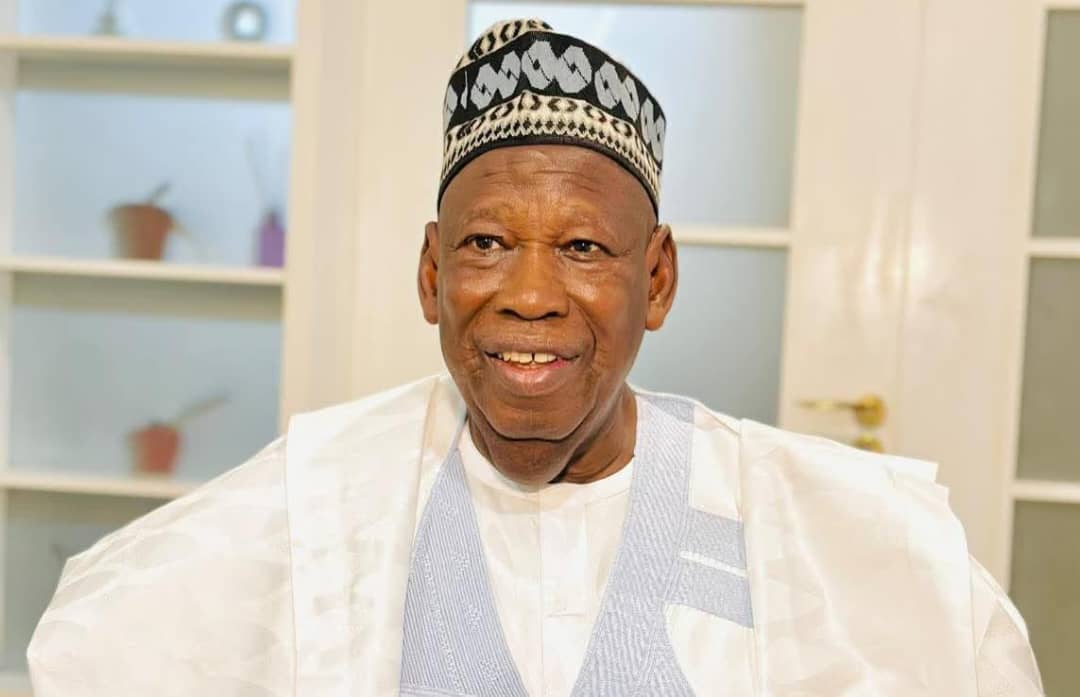
That is where the political story of former Kano State Governor and immediate past National Chairman of the All Progressives Congress, Dr Abdullahi Umar Ganduje, becomes particularly significant.
Ganduje no longer occupies the national chairmanship of the APC. But the end of that tenure does not automatically mean the end of his political relevance. If anything, the developments in Kano and the wider North ahead of the 2027 elections suggest that his political capital remains a factor that the ruling party has to reckon with.
The real question, therefore, is not whether Ganduje still holds the same office.
It is whether the political networks and experience he accumulated while serving as governor, national party chairman and one of President Bola Ahmed Tinubu’s prominent political allies can still influence the direction of the APC.
Read Also:
The Sun Confers Lifetime Achievement Award on Ganduje
X-Raying The Ganduje Political Powerhouse
Kano realignment puts Ganduje at centre of 2027 politics
The evidence so far suggests that the Ganduje factor has not disappeared. It has changed form.
Transition to national politics after Kano
Ganduje’s political journey has given him an unusual understanding of both government and party machinery.
As Kano governor between 2015 and 2023, he operated one of the country’s most important political structures. Kano’s size, population and electoral significance have historically made the state central to national political calculations.
His transition from the Kano Government House to the national leadership of the APC further expanded that experience.
As national chairman, Ganduje sat at the centre of the ruling party’s political administration at a particularly important period: the transition from the 2023 election to the preparation for another presidential contest.
His tenure eventually ended in 2025, after which he was appointed chairman of the Federal Airports Authority of Nigeria board. The appointment preserved a formal federal role for him, although it was different from the party-wide responsibilities attached to the APC national chairmanship.
But political capital accumulated over years does not necessarily disappear with an office.
A former governor who has spent years building relationships across local government areas, party structures, elected institutions and national political circles retains knowledge and connections that cannot easily be transferred to another politician.
That may be one of Ganduje’s most important assets as the APC approaches 2027.
The Kano factor
No discussion of Ganduje’s political relevance can be separated from Kano.
The state’s political importance extends beyond its borders, and developments within its political structure frequently attract national attention.
The political equation has also changed considerably.
Governor Abba Kabir Yusuf, who previously governed Kano under the New Nigeria Peoples Party, returned to the APC in January 2026. At the event welcoming him into the ruling party, Ganduje publicly assured Yusuf of support for his second-term bid and said APC governorship aspirants had agreed to support him.
That episode is important because it illustrates a different dimension of Ganduje’s political role.
Rather than simply positioning himself as a former governor defending an old political structure, he publicly embraced a new arrangement in which Yusuf became the serving governor and, under the APC’s convention described by Ganduje, the leader of the party in the state.
That requires political accommodation.
And accommodation is one of the central currencies of party politics.
From control to consensus
Ganduje’s importance may increasingly lie in his ability to operate within changing political circumstances.
The Kano APC of 2026 is not exactly the Kano APC of 2015 or 2023.
New political actors have emerged. Some former allies have moved into different political camps. Others have acquired greater influence through the National Assembly, government appointments or grassroots structures.
Yet Ganduje continues to participate in consultations around the state’s political future.
In May 2026, he was among Kano political figures who met Vice-President Kashim Shettima in Abuja for discussions centred on political developments in Kano North and broader party affairs.
The significance of such engagements should not be exaggerated into evidence of control. But they do demonstrate that Ganduje remains part of conversations involving important political actors in the Kano equation.
That is different from being politically irrelevant.
A political bridge
Perhaps Ganduje’s greatest value to the APC is his potential ability to serve as a bridge between different generations and centres of political influence.
He understands the perspective of former governors.
He understands party administration.
He understands the federal executive environment.
He understands Kano’s grassroots politics.
And he has worked closely with political figures whose interests do not always perfectly coincide.
That experience can become particularly valuable when a governing party attempts to reconcile competing ambitions.
The APC’s challenge before 2027 is not simply to mobilise supporters.
It is also to manage relationships.
Political parties are coalitions of interests. Aspirants want opportunities, serving politicians want continuity, former officeholders want relevance, grassroots leaders want recognition and national leaders want cohesion.
Someone with experience across these different layers can occupy an important negotiating space.
Ganduje and Tinubu
Ganduje’s relationship with President Tinubu has also been an important part of his political trajectory.
In January 2026, Ganduje publicly backed Tinubu’s 2027 bid and argued that northern voters would support the President.
Whatever political interpretation individual actors may attach to that position, the public record demonstrates that Ganduje has continued to associate himself with the President’s re-election project.
That places him within the broader network of northern politicians whose political activities are relevant to the APC’s attempt to consolidate support ahead of 2027.
But Ganduje’s significance should not be reduced to his support for one election.
His deeper political asset is the network behind that support.
The new role
The most interesting possibility, therefore, is that Ganduje’s political role is evolving from formal control to strategic influence.
The national chairmanship gave him institutional authority.
The post-chairmanship period requires something different: relationships, credibility, political judgement and the ability to operate without necessarily occupying the most powerful party office.
That can sometimes be less visible but still politically consequential.
His recent involvement in Kano consultations, his engagement with national leaders and his role in the political realignment surrounding Governor Yusuf’s return to the APC all point to a politician still participating in the evolving political conversation.
The question is how effectively that experience can be deployed.
Why Ganduje still matters
The temptation in politics is to equate office with influence.
But Nigeria’s political history repeatedly demonstrates that the two are not always identical.
Former officeholders can retain influence through networks. Party leaders can remain influential after leaving formal positions. Political actors can lose institutional authority and acquire a different kind of relevance through negotiation and coalition-building.
Related:
Ganduje’s Kano Gambit: The Political Realignment Shaping Tinubu’s 2027 Chances
AfSNET 2026: Ganduje, Otu move to upgrade Calabar airport
Ganduje: Tinubu’s Reforms Are Restoring Government’s Capacity to Deliver
Ganduje’s political career now appears to be entering precisely such a phase.
He is no longer the governor of Kano.
He is no longer the national chairman of the APC.
But he remains a former governor of one of Nigeria’s most politically significant states, a former national chairman of the governing party and a politician with decades of experience navigating Kano and national politics.
Those credentials constitute political capital.
The question for the APC is not whether Ganduje should reproduce the role he played in the past.
It is whether the party can effectively deploy the experience and relationships he has accumulated while allowing the political architecture to evolve.
2027 preparations
The closer Nigeria moves towards 2027, the more important political organisation, reconciliation and coalition management will become.
In Kano, where multiple political interests continue to compete and realign, those tasks will be particularly demanding.
Ganduje’s approach appears increasingly centred on working within the changing political configuration rather than attempting to recreate the exact structure of his years in government.
That distinction matters.
Political relevance does not always require occupying the biggest chair in the room.
Sometimes, it requires being the person who understands how the room works.
For Ganduje, the next phase of his political career may therefore be less about reclaiming a formal position and more about demonstrating what can be done with experience accumulated from Kano Government House, the APC national secretariat and years of political engagement across the North.
The 2027 political cycle will provide the clearest test of that influence.
But one thing is already evident is, writing Ganduje out of the APC’s northern political calculations simply because he no longer occupies the party’s national chairmanship would overlook the more enduring asset he possesses, and as well the political capital built over years, networks that extend beyond a single office and an understanding of Kano politics that remains relevant to the wider national equation.

FG sets up panel over deaths of 37 detainees, suspends 20 NSCDC officers

Gunmen kidnap traditional ruler in Kano community

Kano Social Protection Agency targets better data, coordination through Lagos model

FG suspends Niger NSCDC boss over deaths of 37 suspected miners
ABCOAD Unveils Journal, Bids Farewell to Provost

Nigerian Army Begins DSSC 29/2026 Recruitment, Outlines Eligibility Criteria
2027: NDC Releases Full List of Consensus Candidates in Kano

Gaya Polytechnic Opens Recruitment, Advertises 46 Academic, Non-Academic Positions