
Feature
Where is Salihu Sagir Takai? The political giant of Kano south

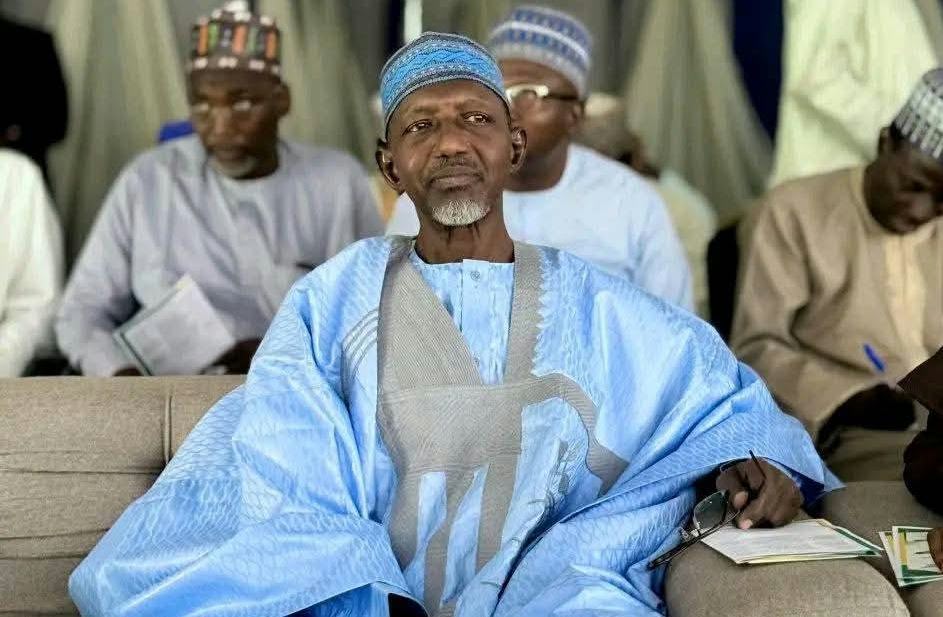
By Umar Idris Shuaibu, Kano
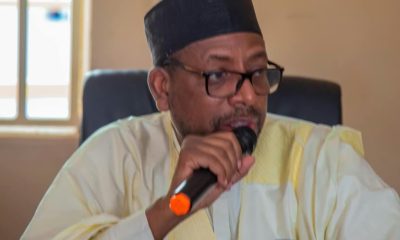
For years, Salihu Sagir Takai occupied a prominent position in Kano’s political landscape. A seasoned administrator, influential grassroots mobiliser and three-time gubernatorial candidate, he was once among the most recognisable political figures whose activities and decisions could shape political calculations across the state.
From his years in the administration of former Governor Malam Ibrahim Shekarau to his successive attempts at occupying the Kano Government House and eventual alignment with the All Progressives Congress (APC), Takai built a political identity around public service, electoral contests and grassroots engagement.
However, in recent years, his visibility in the corridors of political power has appeared considerably reduced. Unlike some of his contemporaries who have secured prominent state and federal appointments, Takai’s name has featured less frequently in discussions surrounding strategic political positions.
This has raised a recurring question among political observers and his supporters, particularly in Kano South: Where is Salihu Sagir Takai, and why has a politician of his experience and electoral standing remained relatively outside the mainstream of prominent political appointments?
To understand his present position, it is important to revisit the political journey and public service record that established him as one of Kano’s notable political figures.
The water project that became part of Takai’s public service record
Takai’s political relevance was not built exclusively on electoral contests. Before becoming a familiar face in Kano’s gubernatorial politics, he established himself as an administrator with experience in infrastructure development and grassroots governance.
Read Also:
Ex-Speaker Gani, Sanusi Bature Emerge as Kano Commissioner Nominees
Journalism suffered under Waiya, veteran tells Kano governor
Kano Govt Inaugurates Six Commissioners, 19 Permanent Secretaries, Three Advisers
He began his ministerial career under the Shekarau administration in 2003 as Commissioner for Water Resources, a position he held until 2007.
During this period, his ministry was involved in some of the administration’s major water infrastructure initiatives, particularly the ambitious Tamburawa Water Treatment Project, designed to supply approximately 150 million litres of water daily to Kano metropolis.
The multi-billion-naira project, one of the most significant water infrastructure investments of the Shekarau administration, was conceived to address the growing demand for potable water in the state capital and surrounding communities.
Takai’s tenure as Commissioner for Water Resources covered the project’s conceptualisation and early implementation, including the arrangements that culminated in the award of its construction contract in 2005. The facility was subsequently completed and commissioned in 2008.
His ministry also oversaw major water distribution and reticulation interventions intended to improve access to potable water across the state.
In 2007, he was redeployed to the Ministry of Local Government and Chieftaincy Affairs, where he served until 2010, when he resigned to pursue his gubernatorial ambition.
The new assignment brought him closer to traditional institutions, local government officials and grassroots political structures. It also provided an opportunity to strengthen the political relationships that would later become central to his electoral ambitions.
His experience across the two ministries gave him a combination of infrastructure administration and grassroots political engagement that distinguished his early public career.
Three gubernatorial contests that defined Takai’s political career
Takai’s ambition to govern Kano State became one of the defining features of his political journey.
His first major gubernatorial contest came in 2011 when he emerged as the candidate of the All Nigeria Peoples Party (ANPP), challenging former Governor Rabiu Musa Kwankwaso of the People’s Democratic Party (PDP).
Although Kwankwaso won the election, Takai finished second with 1,048,317 votes against the winner’s 1,108,345 votes.
Related:
Salihu Sagir Takai and Kano’s Succession Debate
Kawu Sumaila: I delivered on my promises, let Kano South judge me
2027: Kano Governor Names Former Education Commissioner Kiru Campaign Spokesperson II
The result demonstrated his considerable electoral following and established him as a major contender in Kano’s political equation.
In 2015, he returned to the contest under the PDP platform, facing Abdullahi Umar Ganduje of the All Progressives Congress.
Ganduje secured victory with 1,546,434 votes, while Takai again finished second, polling 509,726 votes.
His second-place finish in two consecutive gubernatorial elections reinforced his position as one of the state’s leading political challengers.
However, the 2019 election introduced another dimension to his political journey.
Following political realignments within the PDP and the emergence of Abba Kabir Yusuf as its gubernatorial candidate, Takai moved to the People’s Redemption Party (PRP), under which he contested the governorship for the third time.
He finished third behind Ganduje and Yusuf.
Thus, across three successive gubernatorial elections, Takai finished second in 2011, second in 2015 and third in 2019. His participation in these contests remains a significant part of his political legacy.
For a politician from Kano South, repeatedly emerging among the leading contenders in statewide elections was a demonstration of the political network and electoral support he had developed over the years.
Takai and Shekarau: The parting of political ways
Beyond his electoral contests, Takai’s relationship with his former political principal, Shekarau, also shaped his political evolution.
Around 2017, the two parted ways over political direction and party alignment.
While Shekarau’s political camp moved towards another political arrangement, Takai chose to remain within the PDP at the time, seeking to maintain his own political structure rather than automatically follow the direction of his former mentor.
The separation marked an important moment in his career. It demonstrated his determination to establish an independent political identity after years of operating within a political structure associated with the former governor.
His subsequent movement to the PRP ahead of the 2019 election further reflected his willingness to pursue his ambition outside the dominant political arrangements.
Although the move did not produce electoral victory, it reinforced the impression that Takai’s political identity was not entirely dependent on a single political platform or established political patron.
The Ganduje connection: Takai’s entry into the APC
Following the 2019 gubernatorial election, Takai made another major political decision by joining the APC under the leadership of then-Governor Dr Abdullahi Umar Ganduje.
The move marked a significant departure from his previous position as a leading opposition contender.
Having spent years challenging the ruling political establishment, he was now aligning with it, bringing his experience, political relationships and grassroots following into the governing party.
His decision was particularly relevant to Kano South, where his political network represented an important constituency in the state’s electoral calculations.
The alignment also created expectations that his experience and contribution would translate into a more prominent role within the party and government.
Yet, despite his political pedigree and support for the APC, the high-profile state and federal appointments many observers might have associated with his political standing have remained largely absent from his public profile.
This is where the question of Takai’s present political relevance becomes particularly interesting.
Kano south and its share of political opportunities
Takai’s relative absence from prominent appointments also brings into focus a wider conversation about Kano South’s representation in the state’s political power structure.
The zone is an important electoral constituency with substantial political significance. Nevertheless, discussions about its share of strategic appointments and influence in government have remained part of the broader debate surrounding political inclusion in Kano.
For many observers, Takai’s situation raises questions beyond his personal political ambition.
Here is a politician who served in two strategic ministries, contributed to major infrastructure initiatives, contested the governorship three times and finished among the leading candidates in all three elections. He subsequently aligned himself with the ruling APC, yet his experience has not translated into a similarly prominent executive appointment in recent years.
Political appointments are influenced by several considerations, including party structures, alliances, regional balancing, political negotiations and the priorities of those in government.
Consequently, electoral influence does not automatically guarantee access to executive positions.
Nevertheless, the absence of a more prominent role for a politician of Takai’s background provides an opportunity to examine how Kano South’s political contributions are recognised within the broader distribution of political opportunities.
For his supporters, the concern is not simply about securing an appointment for an individual. It is also about ensuring that experienced political figures from the zone are not overlooked in decisions that shape the state’s governance and political future.
So, where is Salihu Sagir Takai today?
Despite his reduced visibility in high-profile political appointments, Takai has not withdrawn from public life or disappeared from the political landscape.
He currently serves as the Kano State Coordinator of President Bola Ahmed Tinubu’s Renewed Hope Agenda, a responsibility that keeps him connected to political mobilisation, stakeholder engagement and grassroots activities in support of the President’s administration.
The assignment places him within the broader political framework supporting the Renewed Hope Agenda and provides an avenue for maintaining relationships with communities and political stakeholders across Kano.
In many respects, it reflects the grassroots foundation upon which his political career was built.
However, the question remains whether this assignment fully utilises the experience of a politician who has served in two important state ministries and contested the governorship on three occasions.
For someone who once emerged as the runner-up in two consecutive gubernatorial elections, his present political position naturally invites discussion about whether his experience could be deployed in a more influential state or federal capacity.
Whether he is satisfied with his current assignment or has other political ambitions is a matter that should be understood through his own public statements rather than speculation.
What is evident is that his political journey remains active, even if his current role does not attract the same public attention as his previous electoral contests.
The political giant Kano south cannot afford to forget
As Kano’s political landscape continues to evolve, the story of Salihu Sagir Takai remains relevant to discussions about political experience, representation and the changing dynamics of power.
His journey is not simply that of a politician who contested three elections and failed to become governor. It is also the story of a public administrator whose career included responsibility for major infrastructure projects, service in strategic ministries, the building of grassroots political structures and the ability to remain relevant through different political alignments.
From the Tamburawa Water Project to the Kano Government House campaigns of 2011, 2015 and 2019, Takai’s public record reflects different dimensions of his contribution to the state’s political and administrative development.
His subsequent movement into the APC and present involvement in the Renewed Hope Agenda represent further chapters in that journey.
As another political season approaches, questions about his future role, the utilisation of his experience and Kano South’s representation will inevitably remain part of the conversation.
Will Takai return to the centre of Kano’s political negotiations? Will his experience attract a more prominent public appointment, or will he continue to operate through grassroots political mobilisation?
These are questions whose answers will depend on future political decisions and developments.
But one thing remains clear: Salihu Sagir Takai is not an insignificant figure in Kano’s political history. His electoral record, administrative experience and years of grassroots engagement have secured him a place in the state’s political narrative.
Perhaps the more important question is not simply where he is today, but what role Kano’s political establishment intends to reserve for experienced figures such as him in the years ahead.




The making of the ‘jagora’: How Mukhtar Yakasai rose from local govt to Kano cabinet
KANO APC 2027: THE QUALITY OF PEOPLE ABBA KABIR YUSUF APPOINTED TO TINUBU’S CAMPAIGN COUNCIL IN KANO IS A PATHWAY TO VICTORY

Where is Salihu Sagir Takai? The political giant of Kano south

Ex-Speaker Gani, Sanusi Bature Emerge as Kano Commissioner Nominees
The reward for hard work is more work: A rejoinder to Dr Garba Ubale Danbatta
ABCOAD Unveils Journal, Bids Farewell to Provost

Nigerian Army Begins DSSC 29/2026 Recruitment, Outlines Eligibility Criteria
2027: NDC Releases Full List of Consensus Candidates in Kano

Gaya Polytechnic Opens Recruitment, Advertises 46 Academic, Non-Academic Positions

Gaya Polytechnic to Begin with Four Courses as Committee Eyes Year-End Take-Off
-
 Feature7 days ago
KANOPOLY: How a medically incapacitated Rector heads a Polytechnic with over 45 PhD holders
-
 Education2 days ago
KANOPOLY: Bello breaks silence on Registrar appointment u-turn, claims four-year tenure renewal
-

 Education5 days ago
KANOPOLY’s Leadership Puzzle: New Registrar Appointed, Former One Returns