The Historica Nigeria

Kano

National, News

Doguwa Warns: “Nigeria is at War With Itself” — Urges NASS to Shut Down if Insecurity Persists

The member representing Doguwa/Tudun Wada Federal Constituency, Alhassan Ado Doguwa, has issued a strong warning on the floor of the House of Representatives, saying the National Assembly should consider shutting down its operations if the Federal Government fails to urgently tackle the worsening insecurity across the country. Speaking during a debate on national security, Doguwa described the current situation as “tragic, horrific and unspeakable.” He said: “If the government is not prepared to do the right thing, I urge this Honourable House to stand up and shut this House down until the right thing is done.” While acknowledging the efforts of security agencies, he insisted their performance is “not good enough.” Read Also: Insecurity and School Closures in Northern Nigeria – By Comrade Wali, mni Doguwa noted that insecurity has no tribe, party, or religion. “It affects everyone,” he said, warning that Nigeria is slipping into a coordinated crisis aimed at destabilising the country before the 2027 elections. Quoting Bob Marley, he added: “War in the north, war in the west, war in the east and war down south… Today Nigeria is operating under a complete war against humanity.” He also expressed deep concern over rising kidnapping cases in parts of Kano State, especially around Falgore Forest, which he said has now become a hotspot for abductions. Doguwa urged lawmakers to support and lead community-based vigilante efforts, saying Nigerians expect nothing less than real protection from their government.

Education, Feature, National

Insecurity and School Closures in Northern Nigeria – By Comrade Wali, mni

The recent abductions of schoolgirls in Kebbi, Niger and Borno State, have brought to the forefront the urgent and worsening insecurity in Northern Nigeria. Today, we are witnessing the closure of Federal Unity Schools nationwide, while states such as Katsina, Niger, and Plateau have shut their schools. This situation threatens the educational foundation of millions of children. These attacks are not only a security catastrophe; they carry dangerous international implication. The abduction of Christian schoolgirls in Niger State, for example, risk feeding a global narrative especially the U.S. President Donald Trump’s controversial comments that Christians are being systematically targeted in Nigeria. This narrative is inaccurate. The truth is that insecurity affects children of all faiths across the North, Muslims and Christians alike and Nigeria must address this challenge collectively. But beyond condemning the criminals, the Northern Nigeria must also confront a difficult reality: we cannot continue depending entirely on Abuja. Other regions have taken their destinies into their own hands — the South-West established Amotekun, the South-East mobilised community security, and the South-South reinforced its local structures. The North must do the same. Northern Nigeria has produced the highest number of retired military generals, ex-police officers, intelligence experts, technocrats, wealthy business leaders, and respected traditional rulers. It is time for these assets to be mobilized. The region must take its destiny into its own hands. Read Also: Gunmen Kidnap Residents in Kano’s Tsanyawa Local Govt Food Waivers Threaten Northern Agriculture, Says Wali The Green Imperative Is Not Just a Federal Government Project — It Is a Lifeline for Northern Nigeria’s Agricultural Future State Governments, traditional institutions, community leaders, and Northern elites must collaborate to strengthen community policing, improved intelligence gathering, secure school environments, coordinated local vigilante structures, and united leadership across political, traditional, and religious lines. The Federal Government must continue its rescue efforts and accelerate the Safe Schools Programme. But long-term peace will only come when Northern leaders and communities work hand-in-hand to defend their land and protect their children. Let us stand together — not as Muslims or Christians, not as politicians or tribes — but as people united by a shared destiny. Our children deserve to go to school without fear. Our region deserves peace. And our nation deserves stability. This is the time to act with sincerity, courage, and unity. By Comrade Mustapha Nuhu Wali, mni Veteran Union Leader & Development Advocate mustiwalimni@gmail.com  

Kano, Kogi, News

Kogi Police Command Welcomes New Commissioner Naziru Bello Kankarofi 

The Kogi State Police Command has announced the assumption of duty by its newly appointed Commissioner of Police, CP Naziru Bello, who becomes the 40th officer to head the command. He succeeds CP Miller G. Dantawaye, who has been redeployed to the Federal Capital Territory (FCT) Command. The development was confirmed in a statement issued in Lokoja by the Command’s Public Relations Officer, CSP William Aya, on Wednesday. CP Naziru Bello, who hails from Kano Municipal Local Government Area of Kano State, brings over 30 years of distinguished service to his new role. He joined the Nigeria Police Force as a Cadet Assistant Superintendent of Police (C/ASP) on June 10, 1994, after training at the Police Academy, Wudil, Kano State. A versatile and well-educated officer, CP Bello holds a B.Sc. in Economics and Political Science (Combined Honours), Bachelor of Laws (LLB, BL), and a Master of Laws (LLM). He is currently pursuing a PhD in Law. Read Also: Meet Rear Admiral Idi Abbas From Kano, Nigeria’s New Chief of Naval Staff BUK Alumni Celebrate Kankarofi’s Elevation, Describe Him as Pride of 1992 Set Madrasatu Ansarul Islamiyya Graduates 24 Quranic Memorizers in Kano Throughout his career, he has served in various command, operational, and administrative capacities across multiple states. His previous assignments include Aide-de-Camp (ADC) to the Governor of Kwara State (1999–2003), Squadron Commander of the Police Mobile Force in Kano, Bauchi, and Rivers States, and Area Commander, Ikot Ekpene, Akwa Ibom (2019–2022). He also held senior leadership roles at the Zone 1 Headquarters in Kano and Zone 3 Headquarters in Yola. A graduate of the National Institute of Policy and Strategic Studies (NIPSS), Kuru, Jos, CP Bello completed the Senior Executive Course (SEC) 46/2024 and has attended numerous tactical and leadership training programmes, including the Combat Operations Course, Tactical Leadership Course, and Strategic Command Course. He is a member of several professional associations, including the International Association of Chiefs of Police (IACP), Nigerian Bar Association (NBA), Muslim Lawyers Association of Nigeria (MULAN), and the National Institute of Police Studies (MNIPS). According to CSP Aya, the new commissioner is renowned for his discipline, professionalism, and effective crime-fighting strategies, which have consistently led to improved security outcomes in his previous commands. Aya noted that CP Bello is poised to build on the successes of his predecessor while implementing innovative measures to strengthen policing and public safety in Kogi State. CP Bello, who enjoys reading and travelling, is married with children.

National, News, Niger

Niger Student’s Arrest Sparks Outrage as CITAD Calls for His Release

The Centre for Information Technology and Development (CITAD) has condemned the arrest of Abubakar Isah Mokwa, a postgraduate student of the Department of Agricultural Economy and Extension at Ibrahim Badamasi Babangida University, Lapai (IBBUL), allegedly on the orders of Niger State Governor Mohammed Umaru Bago, for criticising the governor on Facebook. According to reports, Abubakar was arrested at his off-campus residence in Lapai and later transferred to the Niger State Police Command Headquarters in Minna. The police claimed that his arrest was based on allegations of “cyber bullying and cyberstalking.” However, CITAD, in a statement signed by its Executive Director, Y.Z. Ya’u, described the arrest as an unlawful attempt to criminalise free expression and silence dissenting voices in the state. Read Also: Bauchi Governor Appoints Brother as New Emir “The arrest of a student for merely expressing his opinion online is a clear violation of Section 39 of the 1999 Constitution, which guarantees every citizen the right to freedom of expression and to hold opinions without interference,” the statement read. CITAD further expressed concern that the incident reflects a disturbing pattern of media repression and intolerance for criticism under Governor Bago’s administration. It recalled that in August 2025, the state government suspended Badegi 90.1 FM for alleged criticism of the governor, while journalists such as Yakubu Mustapha of Peoples Daily and Mustapha Nasiru Batsari of Voice of America (VOA) were harassed for performing their professional duties. The organisation demanded the immediate and unconditional release of Abubakar Isah Mokwa and called on the Federal Government, particularly President Bola Ahmed Tinubu, to caution the Nigeria Police Force against being used as a tool for political oppression. It also urged the Inspector-General of Police to investigate the incident and ensure that officers desist from arbitrary arrests of citizens for expressing their opinions in a democratic setting. CITAD appealed to Governor Mohammed Umaru Bago to respect the principles of free speech, desist from intimidating critics, and focus on addressing developmental challenges in Niger State. “Freedom of expression is the foundation of democracy. The continued misuse of state power to silence critics undermines civic trust and weakens democratic governance,” the statement added. The organisation reaffirmed its commitment to defending digital rights, promoting online safety, and ensuring that Nigeria remains a country where citizens can freely express their opinions without fear of intimidation or persecution.

Kano, Kogi, News

Zone One Headquarters Hails Promotion of DCP Kankarofi to Commissioner of Police

The Nigeria Police Force, Zone One Headquarters, Kano, has congratulated Deputy Commissioner of Police in charge of Finance and Administration, DCP Nazir Bello Kankarofi BL, psc, mni, on his elevation to the rank of Commissioner of Police. In a statement issued by the Zonal Police Public Relations Officer, CSP Bashir Muhammad, on behalf of the Assistant Inspector General of Police, the Zone described the promotion as well-deserved and a reflection of Kankarofi’s dedication, discipline, and outstanding service to the Force. The statement noted that DCP Kankarofi’s professionalism and commitment to duty had contributed immensely to the efficiency of Zone One operations, particularly in administrative and financial management. Read Also: PSC Appoints DIG, Elevates Kankarofi to CP, 481 Other Senior Officers While commending the Police Service Commission for recognizing his contributions, the Zone expressed confidence that Kankarofi would bring the same level of excellence and leadership to his new role. “The Zone One Headquarters congratulates him on this outstanding achievement and looks forward to his continued service to the Nigeria Police Force. Notice of his decoration will be announced soon,” the statement added. It further wished the newly promoted Commissioner continued success in his career and future endeavors.

Feature, Kano, National

The Power of Innuendo: Inside Dan’uwa Rano’s “Letter of Malam Imalu” and the Role of Subtle Truth in Journalism

In journalism, words can build bridges or break walls. They can inform, provoke, or expose. But when truth becomes too dangerous to speak plainly, journalists often turn to the subtle art of innuendo, that is the craft of saying much without saying it directly. That’s exactly what Ibrahim Ishaq, the popular broadcast journalist known as Dan’uwa Rano, achieved with his viral program “Letter of Malam Imalu.” Through creative storytelling and metaphorical language, the journalist used satire and social commentary to mirror political realities in Kano State without naming names. The program, which struck a deep chord with the public, explored issues of corruption, abuse of office, and moral decay within the corridors of power. But while the message resonated with ordinary listeners, it drew discomfort from some political actors, eventually leading to Dan’uwa Rano’s arrest and interrogation by the police, following a petition by Abdullahi Ibrahim Rogo, the Director-General of Protocol to the Kano State Governor. Related: Kano Journalist Ibrahim Dan’uwa Rano Regains Freedom After Unlawful Detention Observers believe that the “Letter of Malam Imalu” controversy underscores a deeper misunderstanding of journalistic expression in Nigeria’s evolving democracy. In a system where criticism is often mistaken for defamation, and satire is treated as subversion, journalists find themselves walking a fine line between truth-telling and survival. The use of innuendo, or indirect expression, has long been a strategic tool for journalists working under repressive or politically charged environments. Rather than making direct accusations that could attract censorship or legal action, skilled communicators use symbolism, coded speech, and fictional characters like “Malam Imalu” just to represent real issues. Read Also: Kano Governor’s Protocol Chief Caught in N6.5bn Corruption Scandal Media analysts argue that Dan’uwa Rano’s storytelling mirrors a time-honoured journalistic practice, exposing societal ills through creative expression. “Innuendo isn’t deception; it’s protection,” one analyst noted. “It allows journalists to speak truth to power in societies where direct criticism is unsafe.” However, the backlash against Rano reveals how fragile media freedom remains. The reaction to his program instead of sparking dialogue, has instead deepened concerns over press intimidation in Kano. Civil society groups say the journalist’s arrest was not only uncolourful but also uncalled for, describing it as an act capable of silencing legitimate voices of accountability. In reality, the “Letter of Malam Imalu” is more than satire; it is a reflection of the frustrations of ordinary citizens and the courage of journalists who use creativity to express truth. By blending humour, allegory, and cultural idioms, Dan’uwa Rano joined a long tradition of African storytellers who challenge power through words, not weapons. The unfolding episode serves as a reminder that the health of a democracy depends not only on elections and institutions but also on the freedom to question, to imagine, and to speak. When journalists like Dan’uwa Rano resort to innuendo, it is often not to mock the system, but rather to survive within it, while still keeping the public informed. Political actors should know that silencing innuendo does not silence the truth but only drives it deeper into the conscience of the people. shuaibuumaridris@gmail.com

Feature, Kano, Weekend Digest with The Historica Nigeria

Why Government Administrations Need to Appoint Competent Media Managers

In every thriving democracy, communication remains the vital bridge between the government and the governed. A visionary administration understands this and invests not only in physical infrastructure and policies but also in credible, professional media management. Competent media managers are essential to shaping narratives, clarifying intentions, and safeguarding an administration’s image against misinformation and public misinterpretation. Recent developments in Kano have once again brought this issue into sharp focus, particularly following the arrest and interrogation of popular broadcast journalist, Ibrahim Ishaq, widely known as Dan’uwa Rano. The journalist was reportedly questioned over alleged defamation and the operation of an online television channel without a valid license from the National Broadcasting Commission (NBC). The episode was uncalled for, as it created unnecessary tension within Kano’s media space and raised legitimate concerns about press freedom and the government’s handling of criticism. Instead of fostering dialogue and responsible engagement, the decision to subject a journalist to police grilling appeared reactive and heavy-handed, an avoidable situation if a robust communication framework were in place. Related: Police Grill Journalist Dan’uwa Rano Over Petition by Kano Official Rogo Equally, the entire scenario was uncolourful, a distraction that did little to boost public confidence in the administration. In a digital era where perception influences governance as much as performance, the absence of proactive communication can easily lead to reputational damage that even well-intentioned policies cannot undo. Governments must therefore recognize that the media is not an adversary but a critical partner in nation-building. A competent media manager interprets government policies clearly, communicates decisions responsibly, and provides accurate information swiftly, ensuring that facts are not overtaken by rumours or propaganda. The issue of defamation allegedly raised against the journalist brings a more fundamental question, “did the alleged act truly occur, or is this an attempt to silence accountability? According to an earlier report by Daily Nigerian, the Independent Corrupt Practices and Other Related Offences Commission (ICPC) recovered over ₦1.1 billion from Abdullahi Ibrahim Rogo, the Director-General of Protocol at the Kano State Government House, as part of its investigation into alleged misappropriation of public funds. The Economic and Financial Crimes Commission (EFCC) is also said to be probing related transactions linked to fictitious contracts and alleged diversions of public funds through corporate and personal accounts. Read Also: ICPC, EFCC Probe Kano Governor’s Aide Over Alleged ₦6.5bn Fraud However, the Kano State Government has strongly denied these corruption allegations, describing them as politically motivated. In a statement signed by the Governor’s spokesman, Sanusi Bature Dawakin Tofa, the government dismissed the reports as “a work of fiction aimed at tarnishing the image of government officials.” The situation now rests in the court of public opinion. Citizens, who are ultimately the judges of governance, will continue to assess those entrusted with managing public affairs, measuring words against actions, and promises against performance. The unfolding episode in Kano offers a vital lesson for all levels of government, the the need for strategic communication and competent media management cannot be overstated. Professional media handlers not only manage crises but also prevent them. They uphold transparency, maintain trust, and build bridges between leadership and the people. In the end, governance thrives not only on policies and projects but also on the confidence born out of clear, honest, and timely communication. When governments fail to manage information effectively, they risk losing both credibility and the trust of those they are meant to serve. Umar Idris Shuaibu is the publisher ‘The Historica Nigeria’ and writes from Kano.

Abuja, Kano, National, Politics

Even Out of Office, Ganduje Remains the Soul of APC — Party Loyalist

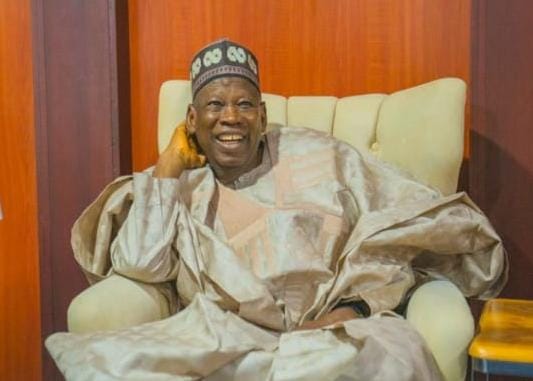
In Nigeria’s turbulent political landscape, where loyalty often fades with power, one name continues to echo with authority and resilience, Dr. Abdullahi Umar Ganduje, former Governor of Kano State and immediate past National Chairman of the All Progressives Congress (APC). Though no longer holding office, Ganduje’s political influence remains deeply woven into the fabric of Nigeria’s ruling party, shaping its internal structure, policies, and grassroots coordination. Political observers agree that Ganduje’s imprint on the APC is not one that time or transition can erase. His tenure as National Chairman was marked by unity-building, reconciliation, and the institutional strengthening of the party. Under his watch, the APC’s internal cohesion was restored after years of factional disputes that threatened its stability. Related: Tinubu, Ganduje Join Dignitaries at Uzodinma’s Book Launch in Imo He also initiated reforms that gave the party a policy direction including the creation of The Progressive Institute (TPI), a think tank designed to advance research, ideological development, and evidence-based policy formulation for the APC. Even as leadership has changed hands, Ganduje’s influence continues to resonate across party ranks. His ability to engage governors, legislators, and party executives with calm but firm diplomacy has earned him a reputation as one of the APC’s most pragmatic bridge-builders. When contacted for his perspective, Umar Idris Shuaibu, a Kano-based journalist and loyal APC member, described Dr. Ganduje as the “soul of the party,” emphasizing that his relevance goes beyond political office. Read Also: Ganduje Emerges as Rallying Point for Kano Appointees in Push for 2027 “Dr. Ganduje represents consistency in leadership, he is a man whose political strength lies not just in his position, but in his principles. Even after leaving office, his voice still carries weight across the APC because he built trust, nurtured loyalty, and delivered results. You can’t talk about the APC’s survival and stability today without mentioning Ganduje’s influence. His ability to unify divergent interests within the party and sustain dialogue between leaders across the states made him an indispensable figure in Nigeria’s ruling political structure.” He added: “What sets him apart is his calm but strategic leadership style, he listens, negotiates, and builds consensus without losing sight of the bigger picture. During his tenure as APC National Chairman, he demonstrated maturity by reconciling internal factions and prioritizing party unity over personal gain. He also engineered the formation of The Progressive Institute (TPI), the party’s policy think tank designed to guide ideological direction and policy formulation, a move that further institutionalized knowledge-driven governance within the APC. Even in Kano, where the APC is currently in opposition, the structure he built remains intact because he invested in people, not just politics.” Looking ahead to 2027, Shuaibu believes Ganduje’s strategic influence will continue to shape APC’s evolution. “As we look toward 2027, Ganduje’s imprint on the APC remains visible in the party’s internal coordination, communication strategy, and grassroots mobilization. Many of us who learned from his political school of thought have come to value patience, inclusion, and bridge-building. Personally, I’ve learned that leadership is not about titles but about legacy — and Ganduje’s legacy is one of endurance, loyalty, and political resilience. His name will continue to echo wherever the APC story is told.” Political analysts share a similar sentiment, noting that Ganduje’s style of leadership — rooted in discipline, strategic thinking, and conflict management — has continued to guide the APC through post-election challenges and governance realignments. His knack for political stability, particularly in bridging divides between federal and state party organs, remains one of his lasting legacies. In a political climate often dominated by fleeting loyalties and internal rivalries, Ganduje’s enduring relevance underscores a deeper truth about leadership — that true influence is not measured by the office one holds, but by the structures, ideas, and people one leaves behind. Even out of office, Dr. Abdullahi Umar Ganduje remains, to many within and outside the APC, the party’s moral compass, strategist, and unifying force, the man whose political architecture continues to sustain Nigeria’s ruling party in both storm and calm.

Abuja, National, News

Nigeria on Path to Prosperity, Says Tinubu in Independence Day Broadcast

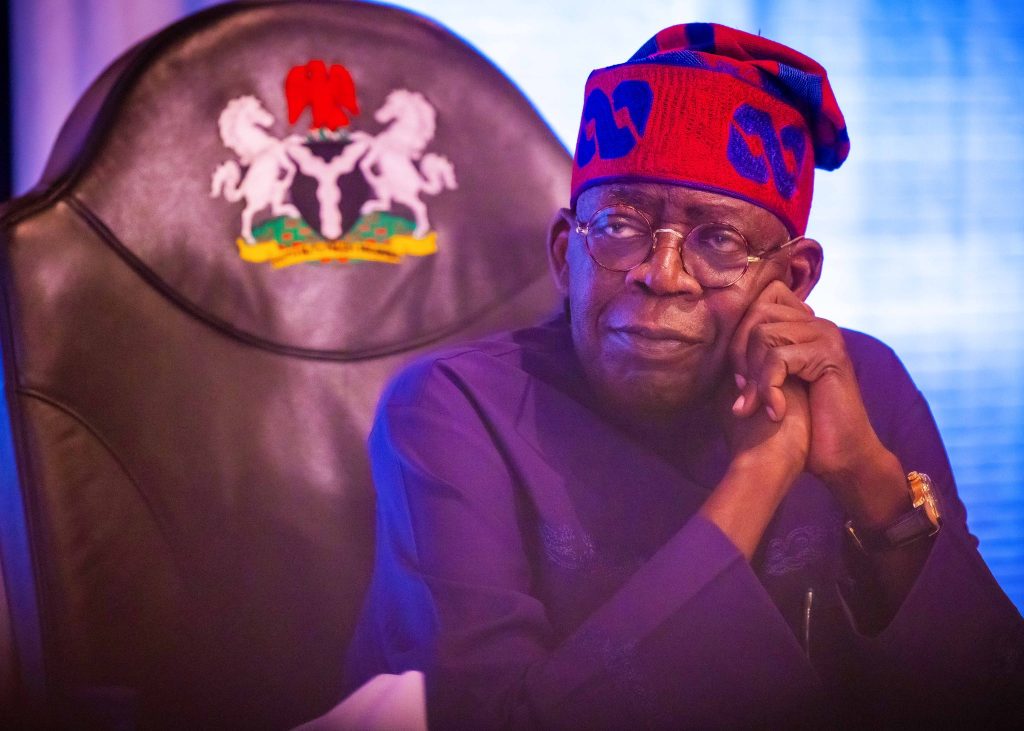
President Bola Ahmed Tinubu, in his 65th Independence Anniversary broadcast on Wednesday, paid tribute to Nigeria’s founding fathers while defending his administration’s tough economic reforms. He admitted that Nigerians are “racing against time” to fix decades of underinvestment in power, roads, and infrastructure but assured that the country has “turned the corner” toward recovery. Tinubu pledged more support for youth, security, and social welfare, stressing his vision of a prosperous, self-reliant Nigeria. Read Also: Tinubu, Ganduje Join Dignitaries at Uzodinma’s Book Launch in Imo Runs Girls Must Pay Tax Like Every Other Service Provider – FG Kano Showcases Security Gains and Youth Rehabilitation at 65th Independence Anniversary The president honoured nationalist leaders like Nnamdi Azikiwe, Obafemi Awolowo, Ahmadu Bello, and Margaret Ekpo, reaffirming their dream of a prosperous and united nation. He highlighted progress since 1960, citing the growth of secondary schools from 120 to over 23,000 and tertiary institutions from two to more than 690. Acknowledging that his administration inherited a weak economy, Tinubu justified ending fuel subsidies and unifying the exchange rate system, explaining that the moves freed funds for education, healthcare, security, agriculture, and infrastructure. He pointed to early signs of recovery, including a 4.23% GDP growth in Q2 2025, the fastest in four years, inflation dropping to 20.12%, and external reserves rising to $42 billion. Non-oil revenue surpassed ₦20 trillion by August, while the debt service-to-revenue ratio fell from 97% to below 50%. On security, Tinubu commended the armed forces for gains against Boko Haram, IPOB/ESN, and banditry, saying peace has returned to many communities in the North-East and North-West. Youth empowerment also featured prominently in the speech. Programmes such as NELFUND, which has supported over 510,000 students with nearly ₦100 billion in loans, Credicorp loans for vehicles and housing, YouthCred for NYSC members, and the iDICE initiative for digital and creative industries were highlighted. The president further noted that over eight million households have benefitted from cash transfers under the social investment programme, while reforms have improved Nigeria’s global credit ratings and boosted investor confidence. Tinubu acknowledged that many Nigerians are facing hardship due to inflation and rising living costs but insisted reforms were necessary to prevent bankruptcy and secure the country’s future. He urged citizens to patronise made-in-Nigeria goods, pay taxes, and embrace productivity as part of nation-building. Closing his address, Tinubu expressed optimism: “The dawn of a new, prosperous, self-reliant Nigeria is here.”

Imo, News

Tinubu, Ganduje Join Dignitaries at Uzodinma’s Book Launch in Imo

President Bola Ahmed Tinubu on Tuesday led a high-powered delegation to Imo State for the launch of a book authored by Governor Hope Uzodinma. The book, titled “A Decade of Impactful Progressive Governance in Nigeria,” was unveiled at the Late Emmanuel Iwuanyanwu International Conference Centre, Owerri. Read Also: ‘They Received More in Six Months Than I Did in Eight Years’ — Ganduje Blasts Yusuf Among the dignitaries in attendance were Senate President Godswill Akpabio, Speaker of the House of Representatives Rt. Hon. Tajudeen Abbas, Deputy Senate President Barau I. Jibrin, APC National Chairman Prof. Nentawe Yilwatda, former Governor of Kano State and immediate past APC Chairman Dr. Abdullahi Umar Ganduje CON, governors, federal lawmakers, traditional rulers, religious leaders, academics, and other stakeholders. In Owerri, schools and markets were closed as pupils, students, and party supporters lined major roads to welcome the president and other dignitaries. Despite an early morning downpour, residents turned out in large numbers to witness the historic occasion. Photo News:

Scroll to Top