
Feature
KANOPOLY: How a medically incapacitated Rector heads a Polytechnic with over 45 PhD holders

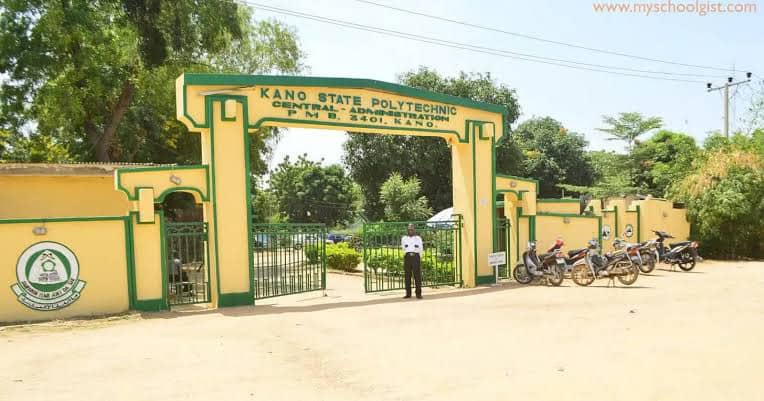
Kano State Polytechnic (KANOPOLY), one of the oldest public tertiary institutions in Northern Nigeria, is facing questions over its leadership amid concerns about the Rector’s reported prolonged health challenges and allegations about his relationship with staff and other stakeholders.
Established in 1975, the polytechnic has played an important role in providing technical, vocational, scientific and professional education to students in Kano State and beyond. With its National Diploma (ND) and Higher National Diploma (HND) programmes, the institution has contributed to the development of skilled manpower in engineering, management, environmental studies, computing and other professional fields.
However, concerns about the Rector’s health and his reported interactions with members of the institution’s community have raised questions about the leadership of a polytechnic that remains important to the educational future of Kano State.
The situation also raises a broader question, on why should an institution with dozens of highly qualified academics face prolonged concerns about leadership when the state government has the responsibility to ensure that its public institutions are effectively managed?
A Polytechnic with more than 45 PhD holders
According to information attributed to the institution’s Academic Planning Department, Kano State Polytechnic has more than 45 lecturers holding PhD qualifications. This represents a considerable pool of academic expertise that could contribute to research, teaching, innovation and institutional development.
Read Also:
Kano Poly MFB: A bank closed, an investigation launched, but where are the answers?
Kano raises concern over delayed release of approved funds as 2026 nears end
Kano Polytechnic announces 2026/2027 part-time admission, lists available courses
The polytechnic operates through several schools, including the School of Technology, School of Management Studies, School of Environmental Studies, School of Rural Technology and Entrepreneurship Development, and School of General Studies. It also offers continuing education programmes for people seeking to advance their education while meeting other professional commitments.
With this range of programmes and experienced personnel, the institution has a responsibility to maintain effective administration and provide students with an environment that supports learning and professional development.
While having a PhD does not automatically qualify anyone to become a Rector, the reported number of doctorate holders raises an important question about leadership development and succession planning within the institution. A well-managed public institution should have clear arrangements for maintaining administrative continuity when its chief executive cannot perform the duties of the office.
Concerns over the Rector’s relationship with journalists and staff
Beyond the questions surrounding his health, concerns have also emerged about the Rector’s interactions with journalists and members of staff.
During a visit by a group of journalists seeking an interview, the Rector failed to engage with them in a cordial and professional manner. According to the journalists’ account, the encounter was uncomfortable, with concerns about his responses and what they perceived as an attempt to insult or belittle members of the team.
The incident has raised questions about how the leadership of a public institution engages with journalists who seek information about its activities. While public officials may disagree with questions or face difficult circumstances, professional communication and mutual respect remain important in dealings with the media.
The concerns are not limited to that encounter. Some members of staff have also reportedly complained about the Rector’s treatment of colleagues, alleging that disagreements over the institution’s operations have sometimes resulted in harassment, insulting remarks and confrontational exchanges.
These allegations deserve attention, particularly if they reflect recurring problems in the institution’s working environment. Staff members should be able to express professional concerns, discuss administrative decisions and perform their duties without fear of intimidation or personal insults.
At the same time, the allegations should be properly investigated, and the Rector should have an opportunity to respond. Specific incidents and the accounts of those directly involved would help establish what happened and whether any breach of professional standards occurred.
For an institution of KANOPOLY’s standing, maintaining a respectful relationship between management, staff and external stakeholders is essential. Disagreements over policy or administration should be resolved through established procedures rather than personal confrontation.
Health challenges and the responsibility of leadership
Th.e prolonged health challenges affecting the Rector have added another dimension to the debate about leadership at the polytechnic.
The office of a Rector carries significant responsibilities, including supervising academic and administrative activities, implementing institutional policies, managing staff and providing strategic direction. The position requires effective coordination and sustained engagement with the institution’s various stakeholders.
Where a medical condition affects an office holder’s ability to discharge these responsibilities over an extended period, the relevant authorities have a duty to assess the situation and ensure that the institution continues to function effectively.
This is not about questioning anyone’s right to receive medical care or treating illness as a personal failing. It is about ensuring that the requirements of public office are met and that the interests of students, staff and the institution are protected.
The question, therefore, is whether the Rector remains able to perform the essential functions of his office and whether the current administrative arrangements are sufficient to guarantee effective leadership.
If he is able to discharge his responsibilities, the institution should continue to operate under the applicable rules. If, however, a prolonged incapacity prevents him from fulfilling the duties of the office, the relevant authorities should follow the procedures established by law to address the situation.
Why has the Kano State government not intervened?
The Kano State Government has a responsibility to ensure that institutions under its control are managed effectively and remain focused on their educational mandates.
That responsibility includes addressing concerns about leadership continuity, examining credible complaints about the conduct of senior officials and ensuring that administrative problems do not undermine the institution’s operations.
The government should therefore clarify what arrangements are in place for the day-to-day management of KANOPOLY and whether the Rector’s ability to perform his official duties has been formally assessed.
It should also establish whether the reported complaints from staff have been brought to the attention of the appropriate authorities and, where necessary, ensure that they are investigated fairly.
If the findings establish that the Rector can no longer perform the essential duties of his office, the government and other competent authorities should take the necessary steps in accordance with the law. Where a leadership change is required, a qualified replacement should be appointed through the prescribed process.
Such action would not amount to a personal attack on the Rector. Rather, it would demonstrate that the government recognises its responsibility to protect public institutions and ensure that leadership arrangements serve the interests of the people.
The future of KANOPOLY must come first
At the heart of the matter are the students whose education depends on a stable and properly managed institution. Parents and guardians expect the polytechnic to provide quality education, while lecturers and other employees deserve a professional working environment in which they can perform their duties effectively.
KANOPOLY’s long history and academic workforce provide a strong foundation for further development. However, these advantages must be supported by effective leadership, good working relationships and transparent administrative decisions.
The institution cannot afford to allow unresolved questions about its leadership to overshadow its core responsibility of educating students and producing skilled graduates.
The reported presence of more than 45 PhD holders also highlights the importance of developing qualified personnel who can contribute to the institution’s future leadership. Although any appointment must be based on the relevant legal requirements, experience and administrative competence, succession planning should remain an essential part of institutional governance.
The government should not wait until an administrative problem becomes a full-blown crisis before taking action. Early intervention, proper assessment and adherence to established procedures can help protect the institution from unnecessary uncertainty.
The need of decisive government action
Kano State Polytechnic is too important to the educational and economic future of the state for legitimate concerns about its leadership and internal working relationships to remain unresolved.
The Kano State Government should take a closer look at the situation, establish the facts surrounding the Rector’s capacity to perform his duties and ensure that credible complaints about his conduct are handled through appropriate channels.
Where the evidence establishes that a change in leadership is necessary, the government should act in accordance with the law and ensure that the institution is placed under competent leadership.
The priority should be neither personal animosity nor political considerations, but the welfare of students, the professional dignity of staff and the long-term development of the polytechnic.
Ultimately, the issue goes beyond the health of one individual or disagreements between management and staff. It concerns the ability of a major public institution to fulfil its responsibilities and the willingness of the government to address problems that may affect its performance.
With nearly five decades of experience in technical education and a reported pool of more than 45 PhD holders, Kano State Polytechnic has the human resources and institutional history to continue making a meaningful contribution to Kano State.
The Kano State Government must ensure that the institution has effective leadership, a professional working environment and a clear direction for the future. The interests of Kano students and the continued progress of the polytechnic must remain paramount.
KANOPOLY: How a medically incapacitated Rector heads a Polytechnic with over 45 PhD holders

Mass Education: Kano expands learning centres to over 300, introduces new skills

Kano Civil Service: Govt moves to address manpower gaps through recruitment
2027: Ganduje and APC heavyweights prepare for a defining political contest

Insecurity: Gunmen kill Islamic cleric, visitor in Dutsin-Ma
ABCOAD Unveils Journal, Bids Farewell to Provost

Nigerian Army Begins DSSC 29/2026 Recruitment, Outlines Eligibility Criteria
2027: NDC Releases Full List of Consensus Candidates in Kano

Gaya Polytechnic Opens Recruitment, Advertises 46 Academic, Non-Academic Positions

Gaya Polytechnic to Begin with Four Courses as Committee Eyes Year-End Take-Off
-
 Kano6 days ago
Kano Governor Nominates Retired Air Commodore, Professor, Four Others as Commissioners
-
 Feature2 days ago
Kano Poly MFB: A bank closed, an investigation launched, but where are the answers?
-
 Kano4 days ago
2027: Kano Governor Names Former Education Commissioner Kiru Campaign Spokesperson II