
Feature
Kano Poly MFB: A bank closed, an investigation launched, but where are the answers?

By Umar Idris Shuaibu
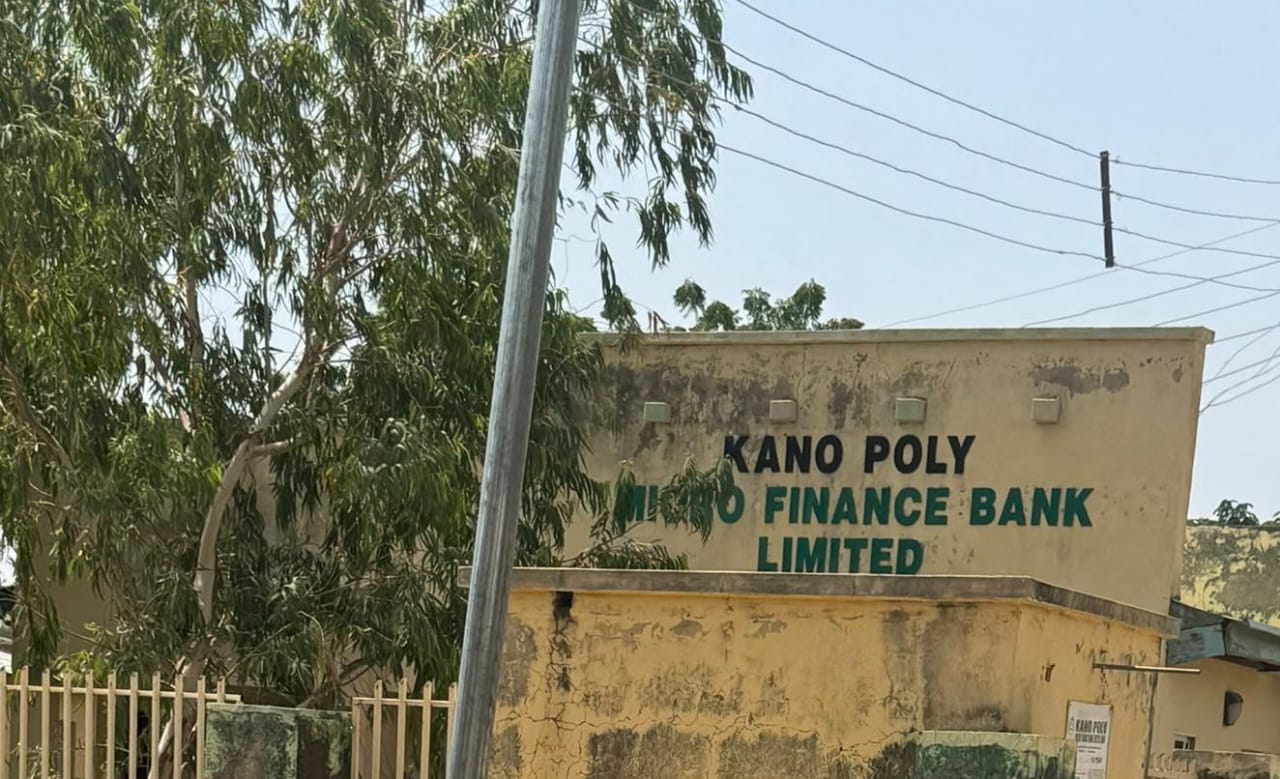
The closure of Kano Polytechnic Micro Finance Bank Limited in July 2026 has raised serious questions about the management of the bank, the oversight exercised by its parent institution and the circumstances that led to its financial collapse.
For Kano State Polytechnic, the bank was more than a business venture. A properly managed microfinance bank could serve students, staff, traders, small-scale entrepreneurs and residents of the surrounding communities while contributing to the institution’s internally generated revenue.
Its closure, following regulatory action by the Central Bank of Nigeria (CBN), has therefore brought an important institutional investment to an end and raised questions about what went wrong.
Why did the bank fail? Were there warning signs before its financial position deteriorated? What role did its management and parent institution play in its affairs? And what has become of the investigation initiated after the closure?
These are questions that deserve clear answers.
A bank’s unfinished story: The questions surrounding Kano Poly MFB
Microfinance banks established by polytechnics can serve several purposes when properly managed.
They provide financial services to people and businesses that may find it difficult to obtain credit from conventional banks. Their customers may include traders, artisans, farmers, market women and small-scale business owners who need access to savings facilities and loans to support their activities.
Read Also:
Gaya Polytechnic: Kurawa leads push to meet 2026 take-off target
Why Science College Dawakin Kudu remains a pride of Kano’s educational heritage
Kano raises concern over delayed release of approved funds as 2026 nears end
Within a polytechnic, such a bank can also provide practical learning opportunities for students studying Accountancy, Banking and Finance, Business Administration and related courses.
Through internships and industrial training, students can gain firsthand experience of banking operations, customer relations, credit administration and financial management.
The bank can also provide financial services to members of the institution’s community and, where its operations are profitable, contribute to the institution’s revenue.
These benefits, however, depend on sound management, effective supervision and compliance with the regulations governing the banking sector.
Owning a bank does not guarantee its success. Like every other financial institution, a microfinance bank must manage its resources carefully, maintain adequate capital and ensure that its liabilities can be met.
The closure of Kano Polytechnic Micro Finance Bank Limited raises questions about whether these responsibilities were adequately discharged.
What went wrong?
The financial difficulties that led to the bank’s closure centred on its inability to meet its liabilities and its failure to maintain the required minimum capital unimpaired by losses, according to the information available on the regulatory action.
These are serious problems for any financial institution.
Capital provides a cushion against losses and helps a bank maintain confidence in its ability to meet its obligations. When accumulated losses erode that capital, the institution’s ability to continue operating safely becomes threatened.
Similarly, when a bank’s assets are insufficient to cover its liabilities, questions arise about its financial health and its capacity to meet the obligations it owes to depositors and other creditors.
The CBN’s intervention brought these concerns to the forefront and resulted in the closure of the bank.
But knowing the financial conditions that led to the closure is only part of the story. The more important question is how the bank arrived at that position.
Did the problems develop gradually, giving management time to respond? Were the bank’s accounts regularly reviewed? Did its management and board take appropriate steps when financial difficulties emerged? Was the parent institution sufficiently involved in monitoring its performance?
The answers would help explain whether the bank’s failure resulted from problems that could have been addressed earlier or from other circumstances that made its continued operation unsustainable.
Without examining the bank’s financial records and the decisions taken before its closure, it would be difficult to establish the full circumstances of its collapse.
What is clear, however, is that the closure deserves more than a passing mention in the history of Kano State Polytechnic.
Questions about management and oversight
Information available to ‘The Historica Nigeria‘ raises concerns about the management of the bank and the oversight exercised by Kano State Polytechnic.
These concerns deserve attention, particularly because the bank operated within the institutional framework of a public educational institution.
The management of a financial institution requires more than the day-to-day handling of transactions. It demands careful lending decisions, effective loan recovery, expenditure control, accurate financial reporting and strict adherence to regulatory requirements.
The board and management must also ensure that emerging problems are identified and addressed before they threaten the institution’s survival.
The parent institution, for its part, has an interest in ensuring that its investment is properly managed and that appropriate oversight arrangements are in place.
This raises several questions about Kanopoly MFB.
What were the bank’s financial results in the years preceding its closure? How much did it owe depositors and other creditors? What steps were taken to address its financial difficulties? Did the institution’s management and relevant authorities receive warnings about its financial condition?
These questions cannot be answered through speculation. They require access to the bank’s accounts, regulatory findings and other relevant records.
Nevertheless, the circumstances surrounding the closure make it important for the relevant authorities to provide an account of what happened.
The objective should not be to assign blame without evidence, but to establish the facts and determine whether there were failures that could have been prevented.
The rector’s investigation and the silence that followed
Following the closure of Kano Polytechnic Micro Finance Bank Limited, the Rector of Kano State Polytechnic, Dr. Abubakar Umar Farouk, set up a committee to investigate the circumstances that led to the bank’s collapse.
The decision raised expectations that the events leading to the closure would be examined and that the institution would establish what went wrong.
However, information available to ‘The Historica Nigeria‘ indicates that the committee’s findings have yet to be made public.
The absence of a publicly communicated outcome raises further questions about the investigation and the steps taken since the committee was established.
Has the committee completed its assignment? Has it submitted its report to the Rector? If the report has been submitted, what action has the institution taken on its recommendations? If the committee is still working, what accounts for the delay?
These questions are important because establishing a committee is only the beginning of an investigation. Its value lies in the findings it produces and the action taken on those findings.
The public needs to know whether the investigation has established the causes of the bank’s failure and whether any measures have been recommended to prevent similar problems in the future.
At the time of writing, ‘The Historica Nigeria‘ has not been able to establish the outcome of the committee’s work.
That does not necessarily mean the investigation has been abandoned. However, the lack of a clear public update leaves room for concern, particularly given the seriousness of the financial difficulties that led to the bank’s closure.
Kano State Polytechnic should clarify the status of the committee’s assignment and explain what has been done to address the issues surrounding the bank.
Dr. Abubakar Umar Farouk and the relevant authorities should also be given the opportunity to explain the committee’s progress, its findings, if completed, and any action taken.
For an institution responsible for public education and the management of public resources, providing such an explanation would help restore confidence and demonstrate a commitment to accountability.
Without answers, the questions surrounding the bank’s closure will remain unresolved.
Why do institutional investments fail?
The experience of Kano Polytechnic Micro Finance Bank Limited also raises a broader concern about the management of commercial ventures established by public institutions.
Across the public sector, institutions establish businesses and other investments to generate revenue, provide services and reduce their dependence on government funding.
These objectives are reasonable. However, an investment cannot survive on its original purpose alone. It needs competent management, proper planning, regular financial monitoring and a clear understanding of the risks involved.
A microfinance bank, in particular, must be careful about how it lends money, manages operating expenses and recovers outstanding loans.
Poor lending decisions can leave a bank with large amounts of unrecovered debt. Weak internal controls can make it difficult to detect financial irregularities, while inadequate supervision may allow problems to persist until they become too serious to manage.
Failure to monitor capital adequacy and operating costs can also threaten a bank’s survival.
These are risks that every microfinance bank must guard against. Whether any of them contributed to the collapse of Kanopoly MFB must be established through a proper examination of its records.
The wider lesson is that public ownership does not protect a business from failure. Institutions must ensure that their investments are managed by competent professionals and subjected to effective oversight.
Where financial difficulties emerge, they must be addressed promptly rather than allowed to deepen.
What does the closure mean for the Polytechnic?
The closure represents the loss of an institution that could have served both commercial and educational purposes.
For Kano State Polytechnic, a functioning microfinance bank could provide an additional source of revenue, subject to its profitability and the institution’s ownership arrangements.
It could also serve as a practical training ground for students, particularly those studying courses related to banking, finance and business administration.
With the bank no longer operating, those opportunities have been lost, at least in the form previously available.
The closure also raises concerns about the people and businesses that depended on the bank for financial services.
For the polytechnic, the priority should be to understand the circumstances that led to the closure and determine how similar problems can be avoided in its other investments.
The institution should also consider alternative arrangements that would allow students to continue gaining practical experience through partnerships with properly licensed financial institutions.
The closure should not mean the end of opportunities that the bank was established to provide.
However, when a regulated financial institution closes after failing to meet key financial requirements, it is reasonable to ask how the situation developed and whether appropriate steps were taken to prevent it.
That is why the investigation initiated by the Rector matters.
Its findings could help establish the sequence of events that led to the closure, identify any weaknesses in management or oversight and recommend measures to prevent a recurrence.
If the committee has completed its work, the institution should explain the findings and the action taken, subject to legitimate legal and confidentiality requirements.
If the investigation remains ongoing, the polytechnic should provide an update.
Where evidence of misconduct or financial irregularities emerges, the appropriate authorities should handle the matter in accordance with the law and established procedures.
Accountability must be based on evidence, not assumptions. Equally, the need for evidence should not become a reason to leave legitimate questions unanswered.
The unanswered questions
The closure of Kano Polytechnic Micro Finance Bank Limited in July 2026 marks a significant development in the history of the institution’s investments.
The bank’s financial difficulties and the CBN’s regulatory intervention explain why it could no longer continue operating. But the circumstances that brought it to that point, the decisions taken before the closure and the outcome of the subsequent investigation remain important matters requiring clarification.
What happened to the bank’s financial resources? Were its problems identified early enough? Did its management and parent institution take appropriate steps? What has the committee established, and what action will follow?
These are questions that Kano State Polytechnic and the relevant authorities should address.
For the Rector, Dr. Abubakar Umar Farouk, clarifying the status of the investigation would be an important step towards addressing the concerns surrounding the closure.
For the institution, the priority should be to establish the facts, act on any findings and strengthen the management of its investments.
The lesson extends beyond Kano State Polytechnic. Public institutions that establish commercial ventures must ensure that they are properly managed, regularly assessed and held accountable for their performance.
A bank established to serve a community and support an educational institution should not simply disappear from the public conversation after its closure.
The central question now is, what went wrong at Kano Polytechnic Micro Finance Bank Limited, and what has been done to ensure that the circumstances that led to its closure do not happen again?
Until these questions are answered, the story of Kanopoly MFB will remain one of an institutional investment’s collapse and an investigation whose outcome the public is still waiting to understand.

Kano Poly MFB: A bank closed, an investigation launched, but where are the answers?

Tinubu’s Kaduna Campaign Eve: Dan’agundi leads thousands of supporters to governor Uba Sani in Massive show of solidarity

Gwarzo’s exclusion: NDC races against time as INEC deadline nears

2027: Mariya Bunkure takes key women affairs role in Kano APC campaign
ABCOAD Unveils Journal, Bids Farewell to Provost

Nigerian Army Begins DSSC 29/2026 Recruitment, Outlines Eligibility Criteria
2027: NDC Releases Full List of Consensus Candidates in Kano

Gaya Polytechnic Opens Recruitment, Advertises 46 Academic, Non-Academic Positions