The Historica Nigeria

National

National, News

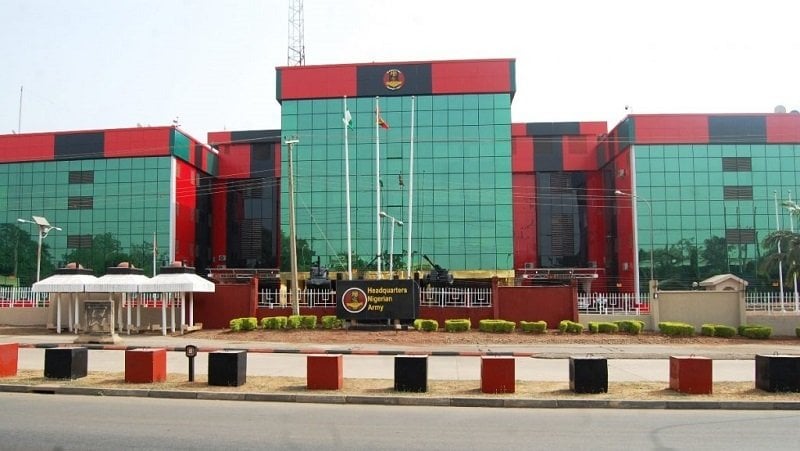
Reps Move to Establish Nigeria Police Pension Board, End PenCom Control

The House of Representatives has passed a Bill seeking to remove personnel of the Nigeria Police Force (NPF) from the Contributory Pension Scheme (CPS), setting the stage for a distinct pension system dedicated exclusively to police officers. The proposed legislation, titled A Bill for an Act to Establish the Nigeria Police Force Pension Board, is designed to create a more effective and transparent framework for managing the pensions and gratuities of serving and retired police personnel. Under the new arrangement, police officers will be exempted from the Pension Reform Act’s contributory scheme and will instead be entitled to 85 per cent of their total emoluments as pension. The move aims to ensure timely and equitable payment of benefits to all retired members of the Force. Read Also: BUK Alumni Celebrate Kankarofi’s Elevation, Describe Him as Pride of 1992 Set The Bill, which now awaits the Senate’s concurrence before transmission to the President for assent, also seeks to amend Section 5(1a) of the Pension Reform Act, 2014, to include the Nigeria Police Force among the groups already excluded from the scheme—alongside members of the Armed Forces and intelligence services. Once signed into law, the legislation will establish the Nigeria Police Pension Board, to be headed by a Director-General—a serving officer not below the rank of Assistant Inspector-General of Police (AIG)—and a Secretary, who must be a senior police officer and a lawyer with at least ten years of post-call experience. The new board will assume full responsibility for administering and paying pensions and gratuities to retired officers, taking over these functions from the National Pension Commission (PenCom). It will also oversee the disbursement of compassionate gratuities, death benefits, and other entitlements to the next of kin of deceased officers. According to Section 14, “There shall be charged on and paid out of the Consolidated Revenue Fund of the Federation, all such sums of money as may be granted by the Federal Government by way of pension and gratuity in accordance with this Bill.” Section 15 outlines eligibility criteria, stating that no officer shall receive pension or gratuity unless they have served 35 years or reached the age of 60, whichever comes first. It also provides benefits in cases of voluntary retirement after ten years, compulsory retirement, or medical incapacity. The law further provides under Section 17 that a pension granted under this Bill shall not be less than 85 per cent of total emoluments, while additional pensions granted due to injuries shall not exceed 100 per cent of the highest pensionable emoluments during service. Section 19 stipulates that if a retired officer dies within five years of retirement, the next of kin shall continue receiving the same pension for the remainder of that period. Section 21 also protects pensions and gratuities from seizure or transfer, except for debts owed to the Federal Government or court-ordered payments. The passage of the Bill marks a major milestone in addressing the long-standing concerns of police officers over inadequate pension management under the current contributory system.  

National, News, Politics

Niger Delta Leaders Push Jonathan to Support Tinubu

Fresh pressure is mounting on former President Goodluck Jonathan to shelve his rumoured plan to contest the presidency in the 2027 general elections, as prominent figures in the Niger Delta intensify efforts to persuade him to instead support the re-election of President Bola Tinubu. Findings by The PUNCH revealed that ex-militant leader, High Chief Government Ekpemupolo, popularly known as Tompolo, is leading the regional movement urging Jonathan to drop his alleged presidential ambition and rally behind President Tinubu’s second-term bid. It was gathered that Tompolo, accompanied by top associates including the Managing Director of Tantita Security Services Nigeria Limited, High Chief Kestin Pondi, and the deputy governorship candidate of the All Progressives Congress in the 2023 Bayelsa State election, Joshua Maciver, paid a private visit to Jonathan at his Otuoke residence in Bayelsa State on October 16. Read Also: Ganduje’s Era: The Golden Years of Infrastructure in Kano APC Hits Back at Daily Trust, Labels Editorial “Biased and Reckless” Kukah Warns Against Labeling Nigeria a Country of Concern, Cites Tinubu’s Inclusive Leadership The meeting, which reportedly lasted several hours, was Tompolo’s first public appearance in nearly a decade—signifying the importance of his mission. Contrary to earlier reports suggesting that discussions centred on peace and security in the Niger Delta, multiple sources disclosed that the visit was primarily political. According to reliable sources, Tompolo’s visit aimed to discourage Jonathan from running for president and to convince him to support Tinubu’s 2027 re-election bid. A close associate of the former president confirmed that the meeting indeed took place, stating, “Niger Delta stakeholders believe President Tinubu has done a lot for the region—the Lagos-Calabar Coastal Highway, the university approved for Ogoniland, and other projects. The consensus is that the region should back his second term.” The source added that Jonathan had been considering the idea of contesting before the meeting. Members of Tompolo’s camp described the visit as “historic,” noting that it underscored the seriousness of the message delivered to the former president. Tompolo, who has remained a strong supporter of President Tinubu, currently oversees the multibillion-naira pipeline surveillance contract and leads a grassroots mobilisation group known as the PBAT Door-to-Door Movement, aimed at promoting Tinubu’s re-election across the Niger Delta. Further reports suggest that Tompolo told Jonathan that the sentiment among Niger Deltans does not favour his return to power. He reportedly urged the former president to take a cue from his wife, Patience Jonathan, and Bayelsa State Governor, Douye Diri, who are said to have aligned with Tinubu’s re-election efforts. “Tompolo told him point-blank that most Niger Deltans prefer Tinubu to continue till 2031,” a source said. Jonathan, according to insiders, listened attentively and thanked Tompolo for his frankness, promising to reflect on the advice before making any political decisions. While Jonathan later told journalists that their discussion focused on peace and stability in the Niger Delta, sources insist that the political angle dominated the talks as regional elites increasingly tilt towards Tinubu’s re-election.

Education, National, News

NBTE Warns Against Illegal Award of ND, HND Certificates by Unaccredited Bodies

The National Board for Technical Education (NBTE) has expressed serious concern over the activities of some professional and examination bodies allegedly awarding National Diploma (ND) and Higher National Diploma (HND) certificates without legal authorization. In a circular issued by NBTE spokesperson, Fatima Abubakar, and signed by the Executive Secretary, Professor Idris M. Bugaje, the Board described the act as illegal and a clear violation of its regulatory mandate. The statement noted that only accredited Technical and Vocational Education and Training (TVET) institutions are legally empowered to design, conduct, and award ND and HND certificates in Nigeria. Read Also: Experts, Scholars Chart Path for Zero-Waste Leather Production at NILEST Conference Kano Moves to Establish Gaya Polytechnic, Inaugurates High-Powered Committee FG Approves Nine New Private Universities Across Nigeria According to the circular, the NBTE remains the sole agency authorized by law — under the Federal Government Decree No. 9 of 1977, as amended by Act 16 of 1985 — to approve, accredit, and regulate all programmes leading to the award of ND and HND qualifications across the country. It further emphasized that institutions such as polytechnics, colleges of nursing sciences, colleges of health, and colleges of agriculture must meet the prescribed standards before running any diploma programmes. The Board warned that it would not hesitate to take legal and regulatory action against any organization found issuing unapproved diplomas or certificates, urging stakeholders and the public to report such activities and adhere strictly to established educational regulations.

Abuja, Kano, National, Politics

Ganduje’s Era: The Golden Years of Infrastructure in Kano

By Umar Idris Shuaibu, Kano In the history of Kano State’s development, few leaders have left a legacy as profound and visible as Dr. Abdullahi Umar Ganduje, CON, the immediate past National Chairman of the All Progressives Congress (APC) and current Chairperson of the Board of the Federal Airports Authority of Nigeria (FAAN). During his tenure as Governor of Kano State from 2015 to 2023, Dr. Ganduje transformed the state through bold infrastructural development, urban renewal projects, and capital investments that continue to shape the daily lives of residents. His administration’s focus on physical development, human capital growth, and institutional reforms earned him recognition as one of Kano’s most visionary leaders in recent decades. Across eight years, the former governor turned Kano into a vast construction site, with flyovers, hospitals, schools, and road networks springing up across the state. Many citizens still recall that period as a time of purposeful leadership and practical governance. Transforming Urban Kano One of the defining hallmarks of Ganduje’s administration was the modernization of Kano’s urban landscape. Determined to ease congestion and beautify the city, he embarked on an ambitious program of constructing flyovers, underpasses, and dual carriage roads. Read Also: Ganduje’s Achievements Still Define Kano, Despite NNPP’s Attempts to Erase Them Even Out of Office, Ganduje Remains the Soul of APC — Party Loyalist Kwankwaso’s Conditions Unrealistic, Says Ganduje-Led Kano APC Projects such as the Ado Bayero Flyover, the Aminu Dantata Flyover, and the Kofar Ruwa Underpass stand today as monuments of urban transformation. These structures not only improved traffic flow but also gave Kano a modern outlook befitting its status as the commercial nerve center of Northern Nigeria. Healthcare and Education Ganduje’s vision extended beyond infrastructure to the health and education sectors. His government initiated and completed several landmark projects, including the Kano Cancer Treatment Centre — one of the most advanced oncology facilities in the region. In the education sector, he championed a free and compulsory basic education policy to ensure that every child in Kano had access to learning. He also established new tertiary institutions and upgraded existing ones, particularly the transformation of Northwest University, now Yusuf Maitama Sule University, into a model center of learning with improved academic standards. Rural Development and Agriculture While the city experienced modernization, the Ganduje administration also prioritized rural development. Extensive road networks were constructed to link communities, and farmers received support through agricultural input programs and irrigation schemes. The establishment of the Dansoshiya Grazing Reserve Project remains one of his most notable initiatives. Designed to address the herders-farmers crisis, the project provided housing, veterinary services, and sustainable grazing facilities for pastoral communities. It later served as a reference point for national livestock policies and contributed to the formation of the Federal Ministry of Livestock Development. Industrial Growth and Policy Reforms Dr. Ganduje also revitalized Kano’s commercial and industrial base. The completion of the Kano Economic City and the Dawakin Tofa Industrial Park boosted trade and small-scale enterprises. His government encouraged industrial investors and promoted private sector partnerships to enhance job creation. Beyond infrastructure, Ganduje introduced several policy innovations, including the creation of the APC Progressive Institute (TPI), a think tank that fosters leadership and policy development within the party. The institute remains an example of his forward-thinking approach to governance and capacity building. Legacy of Progress Today, years after leaving office, the impact of Dr. Abdullahi Umar Ganduje’s leadership remains evident across Kano. Roads, bridges, hospitals, schools, and public institutions reflect his administration’s focus on progress and continuity. Many residents believe his era marked a golden chapter in Kano’s developmental journey — one characterized by visible achievements and long-term investments. From the city to rural communities, his infrastructural footprint continues to inspire admiration and debate among citizens and observers alike. Indeed, when it comes to capital projects and visionary development, Dr. Abdullahi Umar Ganduje stands unmatched in the history of Kano State.

National, News

Amupitan Takes Oath as INEC Boss, Promises Credible Elections

President Bola Tinubu has officially sworn in Professor Joash Amupitan as the new Chairman of the Independent National Electoral Commission (INEC). The swearing-in ceremony took place on Thursday inside the Council Chamber of the Presidential Villa, Abuja. Amupitan, a Senior Advocate of Nigeria (SAN), took the oath of office at exactly 1:50 p.m. Dressed in a white agbada with a gold cap, Amupitan arrived at the State House earlier in the day, exchanging pleasantries with dignitaries and guests before the ceremony commenced. While addressing the new INEC boss, President Tinubu urged him to safeguard the integrity of Nigeria’s electoral system and enhance the institutional capacity of the commission. The president said Amupitan must ensure the credibility of future polls by upholding fairness, professionalism, and transparency. Read Also: Tinubu Seeks Senate Confirmation of Bernard Doro as Minister Amupitan’s swearing-in came a week after the Senate confirmed his appointment following a screening exercise on October 16. During his appearance before lawmakers, the 58-year-old law professor outlined plans to reform Nigeria’s electoral process, strengthen institutional independence, and rebuild public confidence in INEC. “We must conduct elections where even the loser will congratulate the winner and say, ‘You won fairly and well.’ When that happens, voters’ confidence will naturally be restored,” Amupitan told senators during his confirmation hearing. He also pledged to prioritise amendments to the Electoral Act, eliminate grey areas in election timelines, and improve transparency in the conduct of polls. Amupitan refuted claims of his alleged involvement in President Tinubu’s legal team during the 2023 presidential election petition, saying, “I never appeared before the Presidential Election Tribunal or the Supreme Court for any of the parties,” stressing his neutrality and independence. Following his swearing-in, the new INEC chairman is expected to assume office immediately and begin the transition process at the commission’s headquarters in Abuja. He succeeds Mahmood Yakubu, whose tenure as INEC chairman ended on October 7, 2025, making him the sixth substantive head of the commission since its establishment.

National, News, Politics

PDP Adopts Turaki as Consensus Chairman

Former Minister of Special Duties under Goodluck Jonathan’s administration, Kabiru Tanimu Turaki, SAN, has emerged as the consensus chairmanship candidate ahead of next month’s National Convention of the Peoples Democratic Party (PDP). Adamawa State Governor, Ahmadu Fintiri, announced the decision of PDP stakeholders to settle on Turaki at about 10:45 p.m. in Abuja on Wednesday night. He said the Senior Advocate of Nigeria emerged after extensive consultations among PDP Northern stakeholders. Read Also: APC Consolidates Strength Across Nigeria Ahead of 2027 Elections Among those present at the stakeholders’ meeting where the decision was reached were the incumbent PDP National Chairman, Umar Damagum; Zamfara State Governor, Dauda Lawal; former Information Minister, Prof. Jerry Gana; Bauchi State Governor, Bala Mohammed; former Senate President, Bukola Saraki; former Kaduna State Governors, Ibrahim Shekarau and Ahmed Makarfi; and Senate Minority Leader, Senator Abba Moro, among others. Reports indicate that Turaki was formally adopted by PDP Northern stakeholders who met in Abuja on Wednesday night, October 22, 2025. The PDP had earlier retained the chairmanship position in the North, later micro-zoning it to the North-West region. Turaki, who hails from Kebbi State, was adopted as part of a wider consensus arrangement aimed at ensuring unity within the party ahead of the convention. The meeting also deliberated on other positions zoned to the region, including those of National Organising Secretary, Treasurer, and National Youth Leader, among others.

National, News

ASUU Suspends Two-Week Warning Strike, Gives FG One-Month Ultimatum to Conclude Agreement

The Academic Staff Union of Universities (ASUU) has suspended its two-week warning strike, granting the Federal Government a one-month grace period to finalise the renegotiation of the 2009 FGN/ASUU Agreement and resolve other lingering issues affecting the nation’s public universities. ASUU President, Prof. Chris Piwuna, made this known on Wednesday at a press briefing in Abuja, stating that the suspension followed constructive engagements with the Federal Government and crucial interventions by the National Assembly. Piwuna explained that the union had declared the warning strike on October 13, 2025, after the government failed to respond to repeated appeals to address long-standing issues relating to the 2009 FGN/ASUU Agreement and the welfare of university lecturers. Read Also: Kukah Warns Against Labeling Nigeria a Country of Concern, Cites Tinubu’s Inclusive Leadership “When we gathered here about 10 days ago to painfully declare a warning strike, it was a decision that left us with no other choice. The government had ignored our repeated overtures to address issues critical to the survival of Nigeria’s public universities,” he said. According to him, following the commencement of the strike, the Federal Government re-engaged ASUU through a committee led by Alhaji Yayale Ahmed, which met with the union’s representatives on October 16 and 18 to review the government’s response to the draft renegotiated agreement. The ASUU president noted that although not all issues were resolved, the meetings recorded significant progress compared to earlier stages. Piwuna also commended the interventions of the Senate Committees on Tertiary Education and TETFund, and Labour, as well as the Deputy Senate President, Senator Barau Jibrin, whose mediation efforts, he said, rekindled hope for lasting peace in the university system. He disclosed that after an emergency National Executive Council (NEC) meeting held between October 21 and 22, 2025, ASUU reviewed the developments and resolved that the warning strike had achieved part of its goal, particularly by compelling the government to return to the negotiation table. “While noting that more work remains to be done, NEC resolved to suspend the warning strike to allow for a conducive atmosphere for further engagement,” Piwuna stated.

National, News, Plateau

Tinubu Seeks Senate Confirmation of Bernard Doro as Minister

President Bola Ahmed Tinubu has written to the Senate, requesting the screening and confirmation of Dr. Bernard Mohammed Doro from Plateau State as a Minister of the Federal Republic of Nigeria. The letter, which was read on Wednesday by Senate President Godswill Akpabio during plenary, was subsequently referred to the Committee of the Whole for consideration and report. Read Also: Tinubu Nominates Dr. Bernard Doro as Minister From Plateau State The Historica Nigeria reports that Doro’s nomination follows the emergence of Prof. Nentawe Yilwatda as the National Chairman of the All Progressives Congress (APC) in July. Yilwatda had previously served as Minister of Humanitarian Affairs and Poverty Reduction. It will be recalled that President Tinubu on Tuesday announced the appointment of Dr. Doro as a new minister from Plateau State.

National, News

FAAN Unveils Integrated ISO Policy to Strengthen Quality, Safety, and Sustainability Standard’s

The Federal Airports Authority of Nigeria (FAAN) has launched an Integrated ISO Policy designed to deepen quality assurance, operational safety, and environmental sustainability across all Nigerian airports. The policy was unveiled on Monday by the Managing Director/Chief Executive Officer of FAAN, Mrs. Olubunmi Kuku, who was represented by the Director of Human Resources and Administration, Dr. Luqman Emiola. Speaking during the unveiling, the Director of Special Duties, Mrs. Obiageli Orah, highlighted that the new ISO Policy was part of FAAN’s broader commitment to institutionalizing a culture of service excellence. She explained that the audit-driven policy aims to measure FAAN’s performance in maintaining quality operations, customer satisfaction, and environmental responsibility. Read Also: Barau Jibrin Reaffirms Tinubu’s Commitment to Quality Healthcare, Inspects Seven Projects at AKTH According to her, the policy integrates two global standards—ISO 9001:2015 Quality Management System (QMS) and ISO 14001:2015 Environmental Management System (EMS)—into a single operational framework. Through this initiative, FAAN seeks to ensure consistent quality service delivery, enhance operational safety, and adopt sustainable practices across all airports under its management. Management disclosed that the Authority has achieved about 70 percent completion of the certification process, with external auditors expected to arrive in November to assess compliance and address identified gaps. FAAN targets full ISO certification by December 2025. In his goodwill message, the Director of Public Affairs and Consumer Protection, Mr. Henry Agbebire, commended Mrs. Kuku and the FAAN management team for their commitment to improving service delivery and operational standards. He reaffirmed the Authority’s dedication to embedding quality and sustainability principles in its operations, pledging continued support until full certification is achieved. Mrs. Kuku, represented at the event, emphasized that the ISO Policy reinforces FAAN’s operational principle that “if it is not documented, it is considered not done.” She explained that the new policy provides a standardized framework for internal audits and guides all directorates to ensure compliance with FAAN’s commitment to excellence, environmental stewardship, and safety. FAAN reiterated its dedication to aligning Nigeria’s airports with international best practices by ensuring safe, secure, efficient, and environmentally responsible operations. The Authority also reaffirmed its commitment to protecting the environment, supporting host communities, and providing a conducive workplace for staff. In his closing remarks, the General Manager, Special Duties, appreciated FAAN management for their consistent support, describing the ISO initiative as a long-term investment in Nigeria’s aviation industry that will enhance safety and operational efficiency. The ISO, which stands for the International Organization for Standardization, is a global body that develops and publishes international standards to ensure quality, safety, and efficiency across industries worldwide. FAAN’s adoption of ISO 9001:2015 and ISO 14001:2015 demonstrates its commitment to achieving world-class airport operations and sustainability practices.

Feature, National, Politics

APC Consolidates Strength Across Nigeria Ahead of 2027 Elections

As Nigeria steadily approaches the 2027 general elections, the All Progressives Congress (APC) continues to tighten its grip across the country’s six geo-political zones, emerging stronger and more coordinated than ever. The ruling party’s growing dominance is reinforced not only by the wave of defections from opposition governors but also by the institutional strengthening championed by visionary leaders such as Dr. Abdullahi Umar Ganduje, the immediate past National Chairman of the APC and current Chairman of the Board of the Federal Airports Authority of Nigeria (FAAN). In recent weeks, several governors elected under the opposition Peoples Democratic Party (PDP) have defected to the APC, citing disunity, lack of ideological direction, and leadership crises within the party. These defections have further consolidated APC’s foothold across regions — particularly in the South-East and South-South — where the PDP once enjoyed strong influence. One of the most significant political shifts occurred in Enugu State, where Governor Peter Mbah, alongside members of his State Executive Council, officially joined the APC. Barely a day later, Bayelsa State Governor Douye Diri resigned his PDP membership, signaling a major setback for the opposition and a widening acceptance of the APC’s reform-driven governance style. Related: APC Hits Back at Daily Trust, Labels Editorial “Biased and Reckless” Beyond electoral strength, the APC’s growing institutional maturity can be credited to reforms introduced under the leadership of Dr. Ganduje, whose tenure as National Chairman marked a strategic turning point for the party. Among his most notable initiatives was the establishment of the APC Progressive Institute (TPI) — a think tank designed to build intellectual capacity, strengthen internal democracy, and drive policy innovation within the party. The TPI serves as a research and policy center that develops data-driven ideas to guide national and state governments under the APC. Through this platform, party members, public officials, and emerging political leaders are exposed to structured training in governance, political communication, and sustainable development strategies — aligning the party’s ideology with Nigeria’s long-term growth and democratic consolidation. Read Also: Ganduje’s Achievements Still Define Kano, Despite NNPP’s Attempts to Erase Them Political observers note that such forward-thinking initiatives have transformed the APC into more than just a political party — it has evolved into a policy-driven institution capable of shaping Nigeria’s future through ideas, reforms, and inclusive governance. Currently, the APC controls 22 out of Nigeria’s 36 states, with a dominant presence in both the North and South. In the South-West, it maintains a solid base in Lagos, Ekiti, Ogun, and Ondo states. The South-East, once seen as a stronghold of the opposition, now boasts APC-led governments in Enugu, Ebonyi, and Imo States. In the South-South, the party has made significant inroads with Delta, Edo, Akwa Ibom, and Cross River under its fold. In the North, the APC’s dominance remains unshaken. It commands control of nearly all states in the North-West, North-East, and North-Central, including Kano, Katsina, Jigawa, Borno, Gombe, Niger, Kwara, Kogi, and Benue, among others — a testament to its widespread appeal. Analysts agree that the APC’s current strength is not accidental but the result of deliberate political engineering, internal restructuring, and strategic inclusiveness initiated by leaders like Dr. Ganduje. His role in institutionalizing political education through the Progressive Institute continues to serve as a model for long-term party sustainability and governance innovation. With a sitting president, a majority in the National Assembly, and dominance in most state governments, the APC enters the 2027 election season as the defining political force shaping Nigeria’s direction. The party’s expanding structure, ideological clarity, and commitment to development-oriented governance make it a formidable institution, far beyond the reach of fragmented opposition parties. As many political watchers observe, the APC today represents not just a ruling party — but a forward-looking movement anchored on progressive ideas, institutional learning, and national stability. Umar Idris Shuaibu is a public affairs analyst and Ganduje loyalist from Kano.

Scroll to Top