
The Historica Nigeria

National

National, News, Politics

Constitution Review Committee Backs Creation of Additional State in South-East

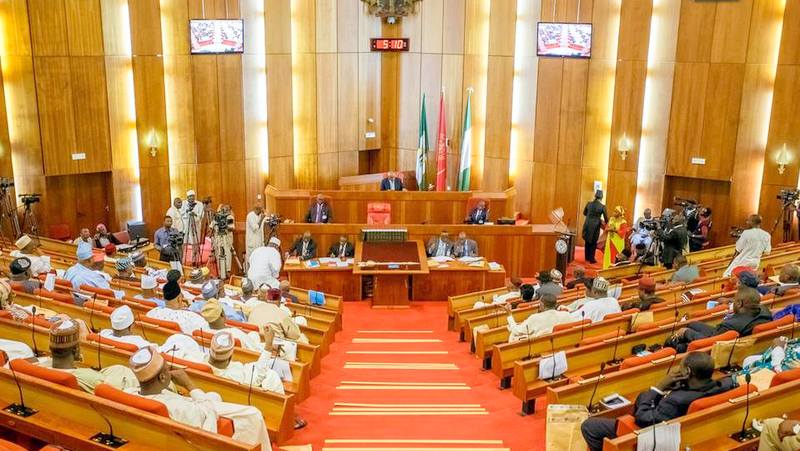
The National Assembly Joint Committee on Constitution Review has endorsed the creation of an additional state in Nigeria’s South-East region — a decision aimed at addressing long-standing demands for fairness and equity in the country’s geopolitical structure. If approved, the South-East will join the South-South, South-West, North-Central, and North-East zones in having six states each. Currently, the region comprises five: Abia, Anambra, Ebonyi, Enugu, and Imo. The resolution emerged during a two-day retreat held in Lagos on Saturday, where members of the committee deliberated on 55 proposals for new states across the country. The session was chaired by the Deputy Senate President, Senator Barau Jibrin, while the Deputy Speaker of the House of Representatives, Rt. Hon. Benjamin Kalu, served as co-chair. Related: Barau Jibrin Reaffirms Tinubu’s Commitment to Quality Healthcare, Inspects Seven Projects at AKTH In a communiqué issued at the end of the meeting, the committee said the recommendation was made “in the spirit of fairness and equity,” calling on the Federal Government to ensure the establishment of one more state for the South-East. Kalu, who has consistently championed the cause, described the development as “a step towards giving the people of the region a stronger sense of belonging in the Nigerian federation.” A statement released by the committee’s media unit confirmed that lawmakers voted unanimously in favor of the motion. “Following deliberations, Senator Abdul Ningi (Bauchi Central) moved the motion for the creation of the new state, which was seconded by Hon. Ibrahim Isiaka (Ifo/Ewekoro, Ogun State). The motion received unanimous support and was adopted,” the statement read. The committee also constituted a sub-committee to review other requests for new states and local government areas across all six geopolitical zones. According to the communiqué, 278 proposals were submitted for consideration. Read Also: Even Out of Office, Ganduje Remains the Soul of APC — Party Loyalist Speaking at the closing session, Senator Jibrin urged lawmakers to sustain the momentum by engaging colleagues in both chambers and at the state level to ensure the success of the proposal when it reaches the voting stage. “We need to strengthen what we have started so that all parts of the country will key into this process. By the time we get to the actual voting, we should already have the buy-in of all stakeholders—from both chambers and the State Houses of Assembly,” he said.

Education, Kano, National

VAU Condemns Blackmail Attempt Against MAAUN Lecturer and Institution

The Voice of African Universities (VAU) has strongly condemned what it describes as a “malicious and targeted blackmail attempt” against a faculty member and the Maryam Abacha American University of Nigeria (MAAUN), Kano. According to a statement released by the organization’s Vice President for Higher Education Development, Fafana Khalidou, the incident arose after a parent and student allegedly attempted to bypass standard examination procedures. The parent reportedly appeared uninvited at an examination venue, demanding that his daughter be allowed to sit for an exam without the requisite exam clearance card. When the supervising lecturer, Dr. M. Adamu, insisted on compliance with university regulations, the situation allegedly escalated into a verbal confrontation. The parent and student are accused of covertly recording the exchange, editing the footage to misrepresent the lecturer’s actions, and circulating it on social media in an apparent bid to discredit both the academic and the university. Read Also: Niger Student’s Arrest Sparks Outrage as CITAD Calls for His Release VAU described the act as “a calculated attempt to undermine institutional integrity and academic governance.” “No individual — regardless of wealth, family background, or social connections — is above institutional rules,” the statement reads. “Respect for ethics and due process is the foundation upon which higher education stands.”   Firm Stance on Academic Freedom VAU praised Dr. Adamu’s “measured and principled response,” which it said exemplified professionalism under provocation. The organization expressed zero tolerance for attempts to intimidate or blackmail educators performing their lawful duties, adding that such incidents threaten the very fabric of academic freedom and fairness. “The lecturer’s response — reminding the parent that ethics must be respected regardless of status — was both appropriate and commendable,” Khalidou said. “It is unacceptable for educators to be vilified for upholding standards.”   Support for MAAUN’s Actions VAU also commended MAAUN for taking prompt disciplinary and legal measures to address the matter. The body called for a thorough investigation and appropriate sanctions against those responsible, in accordance with university statutes. “We will continue to monitor developments and advocate for stronger safeguards across African universities against similar abuses,” the statement noted.   A Growing Concern in African Academia The incident, VAU warned, reflects a growing trend of individuals using influence or social media manipulation to subvert academic rules. The organization urged universities across Africa to stand together in defending merit-based systems and protecting educators from undue pressure.

National, News, Niger

Niger Student’s Arrest Sparks Outrage as CITAD Calls for His Release

The Centre for Information Technology and Development (CITAD) has condemned the arrest of Abubakar Isah Mokwa, a postgraduate student of the Department of Agricultural Economy and Extension at Ibrahim Badamasi Babangida University, Lapai (IBBUL), allegedly on the orders of Niger State Governor Mohammed Umaru Bago, for criticising the governor on Facebook. According to reports, Abubakar was arrested at his off-campus residence in Lapai and later transferred to the Niger State Police Command Headquarters in Minna. The police claimed that his arrest was based on allegations of “cyber bullying and cyberstalking.” However, CITAD, in a statement signed by its Executive Director, Y.Z. Ya’u, described the arrest as an unlawful attempt to criminalise free expression and silence dissenting voices in the state. Read Also: Bauchi Governor Appoints Brother as New Emir “The arrest of a student for merely expressing his opinion online is a clear violation of Section 39 of the 1999 Constitution, which guarantees every citizen the right to freedom of expression and to hold opinions without interference,” the statement read. CITAD further expressed concern that the incident reflects a disturbing pattern of media repression and intolerance for criticism under Governor Bago’s administration. It recalled that in August 2025, the state government suspended Badegi 90.1 FM for alleged criticism of the governor, while journalists such as Yakubu Mustapha of Peoples Daily and Mustapha Nasiru Batsari of Voice of America (VOA) were harassed for performing their professional duties. The organisation demanded the immediate and unconditional release of Abubakar Isah Mokwa and called on the Federal Government, particularly President Bola Ahmed Tinubu, to caution the Nigeria Police Force against being used as a tool for political oppression. It also urged the Inspector-General of Police to investigate the incident and ensure that officers desist from arbitrary arrests of citizens for expressing their opinions in a democratic setting. CITAD appealed to Governor Mohammed Umaru Bago to respect the principles of free speech, desist from intimidating critics, and focus on addressing developmental challenges in Niger State. “Freedom of expression is the foundation of democracy. The continued misuse of state power to silence critics undermines civic trust and weakens democratic governance,” the statement added. The organisation reaffirmed its commitment to defending digital rights, promoting online safety, and ensuring that Nigeria remains a country where citizens can freely express their opinions without fear of intimidation or persecution.

Kano, National, News, Profile

Meet Rear Admiral Idi Abbas From Kano, Nigeria’s New Chief of Naval Staff

Rear Admiral Idi Abbas, a native of Tudun Maliki in Kano State, has been appointed as Nigeria’s new Chief of Naval Staff by President Bola Ahmed Tinubu, marking a significant move in the ongoing effort to strengthen national security and maritime operations. Abbas brings to the role a distinguished military career rooted in operational excellence, strategic leadership, and maritime security expertise. With years of active service in the Nigerian Navy, he has played key roles in combating oil theft, curbing illegal bunkering, and enhancing coastal surveillance across the country’s waterways. Before his elevation, Rear Admiral Abbas served as the Flag Officer Commanding, Central Naval Command, Yenagoa, where he led decisive operations against oil theft, pipeline vandalism, and other maritime crimes in the Niger Delta region. His leadership was instrumental in improving naval presence and response capability within Nigeria’s territorial waters. Read Also: Meet Air Vice Marshal Sunday Kelvin Aneke, Nigeria’s New Chief of Air Staff Maj. Gen. Waidi Shaibu: A Seasoned Commander Taking Charge of the Nigerian Army Wike Appoints Acting Head of Service for FCT Administration He also previously held the position of Chief Staff Officer at the Central Naval Command, where he coordinated naval operations, logistics, and administrative reforms that strengthened the command’s operational readiness. In addition to his field experience, Rear Admiral Abbas has a strong academic and research background. He served as a Senior Research Fellow at the Nigerian Army Heritage Centre, contributing to maritime policy formulation and national security strategy development. Known among his peers for discipline, foresight, and commitment to duty, Rear Admiral Idi Abbas is expected to bring renewed vigour to Nigeria’s maritime defence and help advance the Federal Government’s vision of a safer and more secure blue economy.

National, Profile

Maj. Gen. Waidi Shaibu: A Seasoned Commander Taking Charge of the Nigerian Army

Major General Waidi Shaibu, a highly decorated and strategic officer of the Nigerian Army, has emerged as one of the country’s most distinguished military leaders following his appointment as the new Chief of Army Staff. Before his recent elevation, General Shaibu served as the Theatre Commander of Operation HADIN KAI, where he led decisive counter-terrorism and counter-insurgency operations in Nigeria’s Northeast. Under his command, the military recorded remarkable achievements, including the neutralisation of over 567 terrorists, recovery of 492 weapons and 10,714 rounds of ammunition, as well as the rescue of more than 2,225 civilians from terrorist enclaves. His leadership also disrupted terrorist command and communication networks, significantly weakening the operational capabilities of insurgent groups in the region. Read Also: Meet Air Vice Marshal Sunday Kelvin Aneke, Nigeria’s New Chief of Air Staff Tinubu Appoints New Service Chiefs in Major Military Reshuffle Reps Move to Establish Nigeria Police Pension Board, End PenCom Control In April 2025, following his successful tenure in the Northeast, General Shaibu was redeployed to the Defence Space Agency in Abuja — a posting that underscored his strategic insight and technical expertise in modern defence systems. Throughout his career, General Shaibu has held several key command and academic positions, including Theatre Commander of Operation HADIN KAI, where he led joint military operations against insurgents in the Northeast; General Officer Commanding 7 Division, where he oversaw tactical operations and coordination of Sector 1 activities; and Deputy Commandant and Director of Studies at the National Defence College, Abuja, where he contributed to advanced defence education and strategic training. His exceptional service has earned him numerous commendations, including the Operation ADINKRA Medal for outstanding leadership in theatre operations. He also strengthened inter-agency collaboration with other security outfits such as the Nigeria Immigration Service, fostering enhanced national security coordination. General Shaibu is known for his community-focused approach to peacebuilding, having engaged traditional rulers such as the Shehu of Borno to foster grassroots cooperation for regional stability. He has also championed continuous training within the military, including the launch of the Counter-Terrorism Practitioner Course, aimed at enhancing operational efficiency and professionalism among troops. With his appointment as Chief of Army Staff, Major General Waidi Shaibu is expected to bring renewed discipline, innovation, and commitment to the Nigerian Army’s mission of protecting national sovereignty and ensuring peace across the country.

National, News, Profile

Meet Air Vice Marshal Sunday Kelvin Aneke, Nigeria’s New Chief of Air Staff

President Bola Ahmed Tinubu has approved the appointment of Air Vice Marshal (AVM) Sunday Kelvin Aneke as Nigeria’s new Chief of Air Staff, following a major leadership reshuffle in the Armed Forces. Born on February 20, 1972, in Makurdi, Benue State, and hailing from Udi Local Government Area of Enugu State, AVM Aneke brings over three decades of distinguished service marked by discipline, professionalism, and strategic vision. He joined the Nigerian Defence Academy on September 10, 1988, as part of the 40th Regular Course and was commissioned as a Pilot Officer on September 10, 1993. Over the years, he has served in key operational, administrative, and leadership roles across the Air Force. Read Also: Tinubu Appoints New Service Chiefs in Major Military Reshuffle Before his appointment, he was the Air Officer Commanding, Mobility Command, where he oversaw critical air operations and logistics. His career also includes notable stints at the Air Force Headquarters and various command training institutions. Aneke is one of the most academically accomplished officers in the Nigerian Air Force. He holds a B.Sc. in Physics, a Post-Graduate Diploma in Management from the University of Calabar, and multiple Master’s degrees, including International Affairs and Diplomacy (Ahmadu Bello University), Political Economy and Development Studies (University of Abuja), and Strategic Studies from the U.S. Air War College, Air University, Montgomery, Alabama. He has also completed several professional and flying courses locally and internationally, including at the U.S. Air Force-Air University. With his appointment, AVM Aneke is expected to bring renewed strategic direction, innovation, and operational efficiency to the Nigerian Air Force under the Tinubu administration.

National, News

National Assembly Moves to Amend 1999 Constitution, Reviews State Creation Proposals

The National Assembly has begun reviewing fresh requests for the creation of new states and local governments as part of the ongoing amendment to the 1999 Constitution. Deputy President of the Senate, Barau I. Jibrin, disclosed this on Thursday during the opening of a two-day joint retreat of the Senate and House of Representatives Committees on the Review of the 1999 Constitution held in Lagos. Jibrin, who also chairs the Constitution Review Committee, said the National Assembly remains committed to producing people-oriented constitutional amendments within the timeline set by lawmakers. Read Also: Tinubu Seeks Senate Confirmation of Bernard Doro as Minister “For the past two years, we have engaged constituents, stakeholders, civil society organisations, and interest groups through town hall meetings and public hearings. The process has so far produced 69 bills, 55 state creation requests, two boundary adjustments, and 278 local government creation requests,” he said in a statement issued by his media aide, Ismail Mudashir. He explained that the retreat would enable committee members to thoroughly consider each of the proposed amendments and make recommendations for adoption by both chambers. “It will not be an easy task to conclude in two days, but I believe we can do it, especially as we have promised Nigerians to deliver the first set of amendments before the end of the year,” Jibrin stated. The Deputy Senate President, who also serves as the First Deputy Speaker of the ECOWAS Parliament, urged lawmakers to put national interest above personal or sectional considerations. “We are here as one committee — there should be no division between the Senate and the House. Our guiding principle must be what best serves Nigerians,” he said. Jibrin reiterated that the current amendment exercise aims to address long-standing structural challenges, enhance local governance, and strengthen Nigeria’s federal system for more equitable development across all regions.

National, News

Tinubu Appoints New Service Chiefs in Major Military Reshuffle

Nigerian President Bola Ahmed Tinubu has announced a major shake-up in the leadership of the nation’s armed forces, appointing new service chiefs in a move aimed at strengthening national security and improving inter-service coordination. According to a statement signed by Sunday Dare, Special Adviser to the President on Media and Public Communication, General Olufemi Oluyede has been appointed as the new Chief of Defence Staff, succeeding General Christopher Musa. In the new appointments, Major-General W. Shaibu was named Chief of Army Staff, Air Vice Marshal S.K. Aneke was appointed Chief of Air Staff, while Rear Admiral I. Abbas takes over as the new Chief of Naval Staff. Read Also: Reps Move to Establish Nigeria Police Pension Board, End PenCom Control The statement noted that the changes form part of President Tinubu’s broader security reform agenda, which focuses on enhancing professionalism, intelligence sharing, and operational synergy among the armed forces. The new service chiefs are expected to hit the ground running in addressing the country’s pressing security challenges, including terrorism, banditry, and oil theft, while strengthening collaboration with regional and international partners. The appointments take immediate effect.

Agriculture, Feature, Kano, National

The Green Imperative Is Not Just a Federal Government Project — It Is a Lifeline for Northern Nigeria’s Agricultural Future

Veteran labour leader, Comrade Mustapha Nuhu Wali, has called on northern leaders, traditional institutions, cooperatives, and private investors to take ownership of the Green Imperative Programme, stressing that the initiative is not just a Federal Government project but a national lifeline for the North’s agricultural transformation. He stated this in a statement released to ‘The Historica Nigeria‘, noting that while the Green Imperative Programme was designed to revolutionise farming across the country, its success now depends largely on active regional participation. “The Green Imperative is not just a Federal Government initiative; it is a national programme that requires regional participation. Northern state governments, traditional institutions, cooperatives, and private investors must now take ownership,” Wali said. Read Also: Food Waivers Threaten Northern Agriculture, Says Wali Reps Move to Establish Nigeria Police Pension Board, End PenCom Control Niger Delta Leaders Push Jonathan to Support Tinubu Originally launched in 2019 under former President Muhammadu Buhari, the Green Imperative Programme was a ten-year mechanisation partnership between Nigeria and Brazil, aimed at supplying over 10,000 tractors, 50,000 implements, and establishing 774 service centres nationwide. The initiative was expected to create millions of jobs and transform rural economies through modern mechanised farming. However, seven years later, the programme has not achieved its full potential. Wali attributed the setback to the limited engagement from state governments and regional stakeholders, who failed to provide the required counterpart funding and institutional support. “Mechanisation cannot be achieved through federal action alone. It requires collective ownership and sustained political will at every level,” he said. He described the Green Imperative as a missed opportunity that could have transformed food production and employment, particularly in Northern Nigeria, which holds more than 70 percent of the country’s arable land. Wali, however, commended the administration of President Bola Ahmed Tinubu for reviving and commercialising the programme in 2025, saying that renewed agreements with Brazil and technical partners show a genuine political commitment to sustainable agricultural development. “The revival of the Green Imperative offers a second chance—especially for Northern Nigeria, where the youthful population and vast land mass make it the natural engine of the nation’s food security. Mechanisation is not a luxury; for Northern Nigeria, it is a necessity for survival and growth,” he said. He urged northern state governments, private investors, and traditional institutions to create Green Imperative Implementation Desks within their ministries of agriculture and to train youths and women as tractor operators, mechanics, and service providers. He also called on polytechnics and universities in the region to strengthen practical agricultural engineering and mechanisation programmes to ensure long-term sustainability. “The era of waiting for Abuja is over. Local leadership and regional coordination must drive agricultural transformation,” he added. Wali emphasised that state governments should provide counterpart funding, allocate land for training and service centres, and set clear mechanisation targets in their budgets. He further encouraged cooperatives and private companies to partner with federal agencies in running tractor-hire and maintenance services, while NGOs and development partners focus on youth and women empowerment clusters. He concluded by calling for transparency, accountability, and local assembly of equipment, warning that seven of the ten years originally planned for the project had already passed. “The Green Imperative is not just a federal government project; it is a lifeline for the North. If properly embraced, it can ignite a Northern Agricultural Renaissance—one that feeds the nation, empowers the youth, and sustains livelihoods,” Wali stressed.

National, News

Reps Move to Establish Nigeria Police Pension Board, End PenCom Control

The House of Representatives has passed a Bill seeking to remove personnel of the Nigeria Police Force (NPF) from the Contributory Pension Scheme (CPS), setting the stage for a distinct pension system dedicated exclusively to police officers. The proposed legislation, titled A Bill for an Act to Establish the Nigeria Police Force Pension Board, is designed to create a more effective and transparent framework for managing the pensions and gratuities of serving and retired police personnel. Under the new arrangement, police officers will be exempted from the Pension Reform Act’s contributory scheme and will instead be entitled to 85 per cent of their total emoluments as pension. The move aims to ensure timely and equitable payment of benefits to all retired members of the Force. Read Also: BUK Alumni Celebrate Kankarofi’s Elevation, Describe Him as Pride of 1992 Set The Bill, which now awaits the Senate’s concurrence before transmission to the President for assent, also seeks to amend Section 5(1a) of the Pension Reform Act, 2014, to include the Nigeria Police Force among the groups already excluded from the scheme—alongside members of the Armed Forces and intelligence services. Once signed into law, the legislation will establish the Nigeria Police Pension Board, to be headed by a Director-General—a serving officer not below the rank of Assistant Inspector-General of Police (AIG)—and a Secretary, who must be a senior police officer and a lawyer with at least ten years of post-call experience. The new board will assume full responsibility for administering and paying pensions and gratuities to retired officers, taking over these functions from the National Pension Commission (PenCom). It will also oversee the disbursement of compassionate gratuities, death benefits, and other entitlements to the next of kin of deceased officers. According to Section 14, “There shall be charged on and paid out of the Consolidated Revenue Fund of the Federation, all such sums of money as may be granted by the Federal Government by way of pension and gratuity in accordance with this Bill.” Section 15 outlines eligibility criteria, stating that no officer shall receive pension or gratuity unless they have served 35 years or reached the age of 60, whichever comes first. It also provides benefits in cases of voluntary retirement after ten years, compulsory retirement, or medical incapacity. The law further provides under Section 17 that a pension granted under this Bill shall not be less than 85 per cent of total emoluments, while additional pensions granted due to injuries shall not exceed 100 per cent of the highest pensionable emoluments during service. Section 19 stipulates that if a retired officer dies within five years of retirement, the next of kin shall continue receiving the same pension for the remainder of that period. Section 21 also protects pensions and gratuities from seizure or transfer, except for debts owed to the Federal Government or court-ordered payments. The passage of the Bill marks a major milestone in addressing the long-standing concerns of police officers over inadequate pension management under the current contributory system.  

Scroll to Top