The Historica Nigeria

Feature

Feature, Kano, National

Domestic Violence: A Threat to Human Survival

By Ibrahim Ishaq Rano “From broken homes to broken lives: how neglect, fear, and weak justice systems fuel violence” In recent times, few realities have unsettled our collective conscience as deeply as the rising tide of violence claiming innocent lives across our communities. Men, women, and even children are being killed without warning sometimes out of hatred, sometimes out of greed, and often for reasons that defy basic human sense. What is most alarming, however, is not only the brutality itself, but how quickly it is becoming normal absorbed into everyday conversations as though human life has lost its sacred value. As this grim pattern intensifies, it becomes imperative to confront uncomfortable truths. Violence, especially within homes and close communities, does not emerge overnight. It is nurtured by neglect, fear, silence, and weak systems of accountability. To understand where we are, we must examine both the roots of the problem and the paths toward meaningful solutions. A Hausa proverb warns that “Idan Ɓera da sata, Daddawa da wari” (When a Rat steals locust beans, the stench will expose it.) Yet, as a society, we often pretend not to notice the stench. Citizens hesitate to speak out, institutions delay decisive action, and fear restrains communities from challenging wrongdoing. This climate emboldens perpetrators, who operate with the confidence that justice will be slow, selective, or entirely absent. In such an environment, violence thrives. Recent events in Kano painfully illustrate this reality. On January 17, 2026, residents of Dorayi Chiranchi Quarters awoke to one of the most horrifying crimes in recent memory, the brutal murder of Fatima Abubakar and her six children inside their home. Reports indicated that even an infant was not spared. Read Also: Police Arrest Three Over Gruesome Murder of Kano Housewife, Six Children From MAKAFI to AWAKAI: The Display of Blind Politics and Political Idolatry The Power of Innuendo: Inside Dan’uwa Rano’s “Letter of Malam Imalu” and the Role of Subtle Truth in Journalism Following public outrage, the Kano State Police Command confirmed the arrest of suspects connected to the crime and assured the public that investigations were ongoing to ensure that justice is served without compromise. While these arrests offered a measure of reassurance, the tragedy remains a stark reminder that the home once regarded as a sanctuary has become a site of grave danger. Another disturbing case occurred on May 6, 2025, when 18-year-old Saudat Jibril was arrested in Farawa Quarters for allegedly killing her husband. Law enforcement swiftly intervened, and the suspect was charged accordingly. The incident exposed how unresolved domestic conflict can escalate into fatal violence when support systems fail. Similarly, on September 25, 2025, a dispute over food in Kofar Dawanau, Dala Local Government Area, reportedly led to the killing of two elderly grandparents by their grandson. Investigations suggested possible drug influence, once again highlighting how poverty, substance abuse, and family breakdown intersect to produce tragic outcomes. “When violence becomes normal inside the home, society itself is already under siege.” Government authorities often emphasize arrest figures and investigations, and indeed, law enforcement in Kano has recorded thousands of arrests linked to violent and related crimes. However, policing alone cannot resolve a problem that is deeply social. Justice delayed or inconsistently applied only reinforces the perception that violence carries little consequence. Beyond government action lies a responsibility we rarely confront honestly: the role of the family. Many parents bring children into the world without the capacity, financial, moral, or emotional to raise them responsibly. When children grow up without proper guidance, education, discipline, or care, society eventually pays the price. A child neglected at home may become a danger on the streets. This is a bitter truth we often avoid, but one that must be acknowledged if meaningful change is to occur. Ending domestic and community violence therefore demands a multi-layered response. Government must strengthen justice systems, ensure swift and impartial punishment for offenders, and invest in preventive social services. Communities must reject the culture of silence that protects abusers. Religious leaders, educators, and traditional institutions must consistently reinforce the sanctity of human life. Parents, above all, must recognize that raising children responsibly is not optional but a duty with direct consequences for societal survival. Domestic violence is not merely a private matter; it is a public crisis and a direct threat to human survival. When brutality takes root in the home, it spreads outward, corroding social trust and undermining our shared humanity. If we truly desire peace, safety, and dignity, then confronting violence-without excuses or delay-must become a collective priority. ✍️ – Ibrahim Ishaq Rano Email – danuwarano@gmail.com

Feature, Kano, Politics

The Ganduje Equation: How Kano’s Power Map Leaves Governor Yusuf with Few Options

By Umar Idris Shuaibu, Kano In the complex and often unforgiving terrain of Kano politics, power does not merely change hands; it is negotiated, structured, and sustained through deeply rooted political networks. At the centre of this structure remains one figure whose relevance has endured beyond office, party shifts, and electoral cycles is the immediate past National Chairman of the All Progressives Congress (APC) and Chairperson of the Board of the Federal Airports Authority of Nigeria (FAAN), Dr. Abdullahi Umar Ganduje. As Governor Abba Kabir Yusuf grapples with the uncertainties surrounding his reported plan to defect from the New Nigeria People’s Party (NNPP) to the APC, the unfolding drama has exposed a fundamental reality that Kano’s political machinery still largely responds to Ganduje’s architecture of influence. Any attempt to bypass this reality has historically proven costly. Governor Yusuf’s alleged demands ranging from an automatic 2027 gubernatorial ticket to control over federal appointments have reportedly met firm resistance within the APC. This resistance is not merely procedural; it is structural. The APC in Kano is not a vacuum waiting to be occupied. It is a carefully layered organisation shaped over years by Ganduje’s leadership, political investments, and institutional loyalty. Ganduje’s enduring relevance is rooted in more than incumbency or past titles. As governor, he built a political ecosystem that fused grassroots mobilisation, party discipline, and strategic federal alignment. His transition from Government House to national party leadership only expanded that influence, giving him a rare blend of local legitimacy and national leverage. Read Also: Dr. Ganduje’s Political School and the Rise of Dr. Mariya Mahmoud Bunkure at 48 Ganduje Rallies Kano APC Members for Strategic E-Registration Push Group Backs Adamu Abdu Fanda for Kano Deputy Governorship, Cites Experience, Competence For Governor Yusuf, the dilemma is therefore not simply about changing party platforms; it is about navigating an existing power order. Unlike other governors who defected quietly or negotiated entry without preconditions, Yusuf is operating in a state where political memory is long and structures are not easily dismantled. Crucially, Ganduje represents stability to the APC hierarchy, a bridge between Kano’s political past and its future within the ruling party. His relationship with key national actors, combined with his firm grip on the Kano APC structure, positions him as both gatekeeper and guarantor. Any defection that does not pass through this prism is likely to remain stalled. The presence of strong APC aspirants, notably Deputy Senate President Senator Barau Jibrin, further complicates Yusuf’s calculations. Yet even within these internal dynamics, Ganduje’s role as balancer and consensus-builder remains pivotal. He is one of the few figures with the authority to manage ambition without fracturing the party. Beyond partisan considerations, Ganduje’s political philosophy has consistently emphasised order, institutional process, and gradual consolidation. This is precisely why APC leaders have resisted demands perceived as transactional or exceptional. The party’s insistence on primaries is not hostility; it is continuity and a principle Ganduje himself institutionalised. For Governor Yusuf, the most realistic pathway forward lies not in confrontation or conditional bargaining, but in strategic accommodation. Succumbing, in this context, does not imply political surrender; it implies political wisdom, recognising the limits of leverage and the value of alignment. History offers a sobering lesson in Kano politics, that those who swim against the dominant current rarely reach shore intact. Ganduje has outlasted administrations, redefined party loyalty, and remained relevant across political seasons because he understands this current better than most. As Kano approaches another defining electoral cycle, the question is no longer whether Ganduje remains relevant, because that has been answered by events themselves. The real question is whether Governor Yusuf will read the political map accurately and choose collaboration over collision. In Kano politics, structures matter more than sentiments, and alliances matter more than declarations. On this score, Ganduje remains the axis around which stability revolves, a reality that Governor Yusuf may yet be compelled to acknowledge, as events continue to unfold and political actors recalibrate their positions, a fact observers say the unfolding scenario has once again reiterated.

Abuja, Feature, Kano

Dr. Ganduje’s Political School and the Rise of Dr. Mariya Mahmoud Bunkure at 48

By Umar Idris Shuaibu, Kano As Dr. Mariya Mahmoud Bunkure marks her 48th birthday, encomiums have continued to pour in from across political, professional and social divides, celebrating a woman whose life reflects purpose, discipline and uncommon dedication to public service. Currently serving as the Honourable Minister of State in charge of the Federal Capital Territory Administration (FCTA), Dr. Bunkure has, over the years, carved a distinct identity as a technocrat of depth, a politician of principle and a leader guided by compassion. Her journey stands as a testament to what disciplined leadership, professional excellence and human empathy can achieve in public life. A trained medical consultant, Dr. Bunkure’s background in healthcare laid the foundation for her people-centred approach to governance. Her transition into public service did not dilute her professional values; rather, it strengthened her resolve to pursue policies and decisions that prioritise human welfare, equity and institutional effectiveness. Colleagues and associates often describe her as calm, focused and methodical qualities that have continued to define her leadership style. Beyond her technocratic competence, Dr. Bunkure’s political conduct has earned her widespread respect. Her steadfast loyalty to President Bola Ahmed Tinubu, GCFR, and firm alignment with the Renewed Hope Agenda underscore her belief in collective vision over personal ambition. In an era where political opportunism often overshadows ideology, she has remained consistent, disciplined and committed to the broader objectives of national development. Read Also: Ganduje Rallies Kano APC Members for Strategic E-Registration Push APC Eyes Control of 30 States as Governor Yusuf’s Possible Defection Redraws Kano Politics Kano Power Struggle Heats Up as Yusuf Reappears Without Kwankwaso Allies Equally notable is her respect for party structure and leadership. Her cooperation and obedience under the guidance of Dr. Abdullahi Umar Ganduje, CON, the former National Chairman of the All Progressives Congress (APC), exemplify a politics rooted in consultation, loyalty and respect for constituted authority. This approach has contributed significantly to strengthening party unity in Kano State and beyond, reinforcing cohesion at critical moments in the nation’s political journey. Yet, beyond titles and offices, Dr. Bunkure’s humanity stands out. Her kindness, accessibility and philanthropic spirit have touched many lives, particularly women, youths and the less privileged. As a caring mother, devoted wife and compassionate leader, she has demonstrated that strength and humility can coexist, and that leadership is most impactful when anchored in service to humanity. At 48, Dr. Mariya Mahmoud Bunkure represents a rare blend of professionalism, political maturity and moral clarity. Her life and career continue to inspire a generation seeking role models defined not merely by ambition, but by integrity, loyalty and compassion. As she celebrates another year, prayers abound for long life, good health, renewed strength and divine wisdom. May Allah (SWT) continue to guide her steps, protect her path and reward her service in this world and the Hereafter. In celebrating Dr. Mariya Mahmoud Bunkure, Nigeria celebrates a leader whose record speaks louder than rhetoric, and whose journey remains one of purposeful impact.

Feature

Streetlight Swagger Unleashed: ‘Kabiru Bagudu Says DSP Barau Turns Bichi into a Glow-Up City’

By Kabiru Inuwa Senator Barau Jibrin was the first political leader to introduce solar streetlights in Bichi Local Government Area, according to a clear and unequivocal statement by SLA Kabiru Bagudu, effectively settling ongoing public debate over the origin of the project. “Senator Barau was the first to introduce solar streetlights in Bichi,” Bagudu said, firmly attributing the initiative to the senator’s early development interventions in the area. Bagudu’s statement directly addresses recent claims by some youths seeking to reassign credit for the solar lighting project. His clarification shifts the discussion from political sentiment to historical fact, emphasizing initiation rather than subsequent expansion or maintenance. In governance and public administration, origins matter. The Greek philosopher Aristotle, in his theory of causation, argued that every outcome can be traced to a first cause. Applied to development policy, this principle holds that while projects may evolve over time, recognition for their conception belongs to the initiator. Available community accounts and development records indicate that Senator Barau introduced the solar streetlight initiative at a time when Bichi had limited urban infrastructure and before such projects became commonplace in local governance. The intervention reflected foresight and planning rather than political expediency. Political philosopher John Locke maintained that legitimate leadership is grounded in actions that advance the collective good. Supporters argue that Senator Barau’s early focus on sustainable street lighting aligns with this principle, demonstrating governance oriented toward long-term public benefit rather than short-term political gain. The controversy surrounding the project also reflects a pattern identified by Niccolo Machiavelli, who observed that pioneers of new initiatives often face resistance or revisionism once their ideas become widely accepted. As innovations are normalized, public memory frequently shifts away from the original initiator. Read Also: Group Backs Adamu Abdu Fanda for Kano Deputy Governorship, Cites Experience, Competence Bagudu’s clarification therefore serves as a corrective to what analysts describe as political amnesia. As G.W.F. Hegel noted, history progresses through identifiable stages, each built upon the foundations laid by earlier actors. Removing the initial stage distorts the entire narrative. Within the broader political landscape, Senator Barau’s career reflects sustained institutional engagement rather than opportunism. Sociologist Max Weber described such authority as rational-legal, earned through consistency, structure, and adherence to established norms. For many residents of Bichi, the solar streetlights now in place represent more than infrastructure. They symbolize the lasting impact of early decisions and the resilience of factual history. As political theorist Hannah Arendt observed, facts remain stubbornly persistent even when contested. Bagudu’s statement ultimately reduces the debate to a single, verifiable conclusion: the solar streetlight project in Bichi began under Senator Barau Jibrin’s leadership.

Feature, Kano, Politics

Abba Yusuf’s Calculated Defection Leaves Old Loyalists Politically Exposed

Kano State is witnessing a major political realignment as Governor Abba Kabir Yusuf prepares to defect from the New Nigeria People’s Party (NNPP) to the All Progressives Congress (APC), a move that has left his former allies and longtime loyalists of Senator Rabiu Musa Kwankwaso politically exposed. Insiders indicate that the governor’s decision is the culmination of months of strategic planning, designed to free his administration from the influence of Kwankwaso, the NNPP leader and his former political mentor. Sources confirm that Yusuf’s aides and members of the State House of Assembly have been briefed about the planned transition, even though a public announcement is yet to be made. Premium Times reports that the move has already triggered the expected resignations of key commissioners, including Mustapha Kwankwaso, the Kano State Commissioner for Youth and Sports and eldest son of Senator Kwankwaso. While Mustapha has not formally stepped down, insiders suggest he will vacate his position before or immediately after the governor formalizes his defection. The sources from the online newspaper platform stated that the defection has created a stark divide among political office holders in the state.  Several high-ranking officials have reaffirmed loyalty to Kwankwaso and the NNPP, distancing themselves from the governor’s transition. Among them are the Commissioner for Science and Technology, Yusuf Kofar-Mata; Commissioner for Humanitarian Affairs, Adamu Aliyu; Commissioner for Internal Security, AVM Ibrahim Umar (rtd.); and Commissioner for Mineral Resources, Hamza Kachako. Other NNPP loyalists include the Executive Secretary of the Kano Scholarship Board, Musa Danzaki, and the Managing Director of Kwari Textile Market, Hamisu Dogonnama. Read Also: Beyond Betrayal: The Real Politics Behind Abba Kabir Yusuf’s Calculated Move APC Eyes Control of 30 States as Governor Yusuf’s Possible Defection Redraws Kano Politics Kano Politics: Ganduje’s Leadership Remains APC’s Strongest Asset The loyalty split also extends to the federal and state legislatures, with Senator Rufa’i Hanga and members of the House of Representatives Mukhtar Yarima, Abdulkarim Ado, and Sani Wakili affirming their allegiance to the Kwankwaso camp. Despite these holdouts, Governor Yusuf reportedly commands the support of the majority of NNPP members in the State Assembly, as well as all 44 local government chairpersons, their deputies, and most ward-level executives. Political analysts describe the move as a “palace coup” that could recalibrate Kano’s political landscape ahead of upcoming elections. The development marks a significant turning point in Kano politics, as it challenges nearly four decades of loyalty between Yusuf and Senator Kwankwaso. In 2023, 14 of the 19 commissioners in Yusuf’s initial cabinet were former aides and associates of Kwankwaso, highlighting the depth of their alliance. His son, Mustapha, was appointed to the cabinet in April 2024, further consolidating Kwankwaso’s influence within the state administration. Proponents of the governor’s defection argue that the move is intended to liberate the administration from external pressures and allow a more independent focus on Kano’s development agenda. Meanwhile, supporters of Senator Kwankwaso have described Yusuf’s planned exit as the “ultimate betrayal” of a lifelong political partnership. Originally expected in early January, the defection has reportedly been rescheduled to allow for consultations with key stakeholders and political actors within the state. The unfolding events underscore the fragility of old alliances and signal a reshaping of Kano’s political hierarchy. As the state anticipates formal announcements, observers suggest that the governor’s calculated defection may not only weaken Kwankwaso’s political stronghold but also reshape future alignments across the North-West political landscape.

Feature, Kano, Politics

​REJOINDER: The Fallacy of Continuity and the Reality of Political Independence, By Muhammad Sanusi Kiru

The recent article by Hassan Sani Tukur, “Understanding the Current Kano Political Scene,” attempts to paint a picture of seamless ideological fidelity between the current administration and the Kwankwasiyya movement. However, the writer fails to acknowledge that history is repeating itself with remarkable precision. The only difference lies not in the “ideology,” but in the timeline of when a Governor decides to prioritize the interests of the Kano people over the overbearing dictates of a single individual. To compare Dr. Abdullahi Umar Ganduje’s tenure to that of Abba Kabir Yusuf is to ignore the fundamental realities of age, experience, and professional standing, realities that are now pushing Governor Abba toward the same path of independence that Ganduje once took. ​One must consider the seniority and professional pedigree that Dr. Ganduje brought to the table. Long before Senator Kwankwaso rose to political prominence, Ganduje was a seasoned administrator, rising to the level of Director in the Federal Service and serving as a Commissioner. While Ganduje was supervising ministries, Kwankwaso was a subordinate staff member (Assistant Director) at WRECA. To expect a man of Ganduje’s seniority to remain a perpetual subordinate was an exercise in futility. Conversely, Abba Kabir Yusuf’s relationship with Kwankwaso was forged in the shadow of a Personal Assistant and in-law. What Abba could tolerate as a protégé, he can no longer sustain as a sitting Governor. The current January 2026 rift where the Governor is reportedly defecting to the APC while Kwankwaso opens “loyalty registers” for his followers is the ultimate proof that the “perfect subordinate” is a myth that even family ties cannot preserve. Read Also: Beyond Betrayal: The Real Politics Behind Abba Kabir Yusuf’s Calculated Move APC Eyes Control of 30 States as Governor Yusuf’s Possible Defection Redraws Kano Politics Kano Politics: Ganduje’s Leadership Remains APC’s Strongest Asset The narrative that Ganduje “abandoned” projects out of spite is a convenient deception. As a seasoned administrator, Ganduje understood that many inherited projects were riddled with corrupt-related insertions. History is now vindicating that caution. The current investigation by the ICPC into the alleged N1.5 billion foreign scholarship scam under the Abba administration, where investigations suggest a massive disparity between funds released and students actually sent is a chilling testimony to the concerns Ganduje raised years ago. For anyone to expect Ganduje, or any responsible leader, to become a “rubber-stamp” for projects crookedly packaged to siphon public funds through proxies is a great disservice to the state. ​To be fair to the records, Ganduje did not halt progress; he redefined it for sustainability. He completed the Murtala Muhammad and Ibrahim Taiwo flyovers, the Tiga Independent Power Project, and gave the “free education” policy legislative backing through the Kano State Free Basic and Secondary School Education Law of 2020. He refused to let the Governor’s office become a mere department of a private “Kwankwasiyya Company.” ​As of today, history has proved Ganduje right. The same approach of independence is exactly what Governor Abba is now being forced to take as he moves to align with the center. It is now clear that no one not a peer like Ganduje, nor a protégé and in-law like Abba can satisfy the overbearing dictatorship of the Jagora. The search for a “loyal governor” who will remain a puppet for eight years is an impossible quest. In the end, the needs of Kano always outgrow the control of a single man. Muhammad Sanusi Kiru Former Commissioner of Education, Kano State

Feature

Opinion: The Law of Wasted Efforts and Why We Must Keep Going

In nature, failure is not an exception; it is a process. A lion succeeds in only about a quarter of its hunting attempts. Most of the time, it returns empty-handed. Yet, it does not pause to mourn missed opportunities or retreat into self-doubt. It hunts again. This quiet persistence reflects a natural principle often overlooked by humans, the Law of Wasted Efforts. Across the natural world, loss is woven into survival. Many fish eggs never hatch. Numerous animals die before maturity. Most rainfall ends up in oceans, unused by farmers. Seeds are eaten long before they sprout. Still, forests thrive, rivers flow, and ecosystems endure. Nature progresses not because every effort succeeds, but because life continues despite losses. This lesson holds deep relevance for Nigerians today. In a society weighed down by economic hardship, unemployment, insecurity, and delayed dreams, many people are tempted to interpret setbacks as final judgments. A failed business, an unsuccessful application, a delayed breakthrough, all too often, these are seen as proof that effort has been wasted. But effort is never wasted unless it ends in surrender. What nature teaches us is that progress is cumulative. Every attempt carries experience. Every failure refines judgment. Every setback strengthens resilience. The mistake is not in trying and falling short; it is in allowing discouragement to resuscitate hopelessness and silence ambition. Success, therefore, is not the absence of struggle. It is the discipline to rise after disappointment and move forward with renewed clarity. It is the courage to keep pushing when results are slow, and the wisdom to understand that growth is often invisible before it becomes evident. Nigeria itself is a living testimony to this law. Despite decades of challenges, its people continue to innovate, trade, learn, and create. Read Also: Islamic Month of Rajab Holds Spiritual Significance but No Exclusive Worship, Says Kano Cleric From roadside entrepreneurs to young professionals navigating uncertain futures, the Nigerian spirit reflects an unspoken commitment to persistence, even when the odds seem stacked. If there is one word that defines survival, it is continue. Continue after rejection. Continue after loss. Continue when the road seems unclear. Continue with prayer, patience, and purpose. Because history, personal and national is shaped not by uninterrupted success, but by those who refused to stop. Failure is not the end. Giving up is.

Feature, National

Nigerian Army Begins DSSC 29/2026 Recruitment, Outlines Eligibility Criteria

The Nigerian Army has announced the commencement of applications for the Direct Short Service Commission (DSSC) Course 29/2026, offering qualified Nigerians the opportunity to be commissioned as officers in specialist corps and services. The recruitment exercise, which is free of charge, is open to both civilians and serving military personnel who meet the prescribed requirements. This was disclosed in an official notice by the Nigerian Army, advising interested applicants to apply only through its authorised recruitment portal. The DSSC is designed to recruit professionals with specialised qualifications to fill technical and professional roles within the Nigerian Army. Successful candidates will undergo military training and, upon completion, be commissioned as officers for a fixed term, with the possibility of conversion to Regular Commission based on performance and service requirements. Available corps and services include the Nigerian Army Engineers, Signals, Medical Corps, Electrical and Mechanical Engineers, Education Corps, Supply and Transport Corps, Ordnance Corps, and Medical Services, covering doctors, nurses, pharmacists, and allied health professionals. Read Also: Army Invites Nigerians to Apply for DSSC Officer Recruitment Kano Police Command Receives 30 Newly Posted ASPs IGP Orders Nationwide Deployment of Senior Police Officers To be eligible for the DSSC recruitment, applicants must meet the following criteria: 1) Be a Nigerian citizen by birth. 2) Be of good character and recommended by at least two referees. 3) Be medically, mentally, and physically fit in line with Nigerian Army standards. 4) Be between 20 and 32 years of age by March 30, 2026, except medical consultants who may be up to 40 years. 5) Possess a minimum of a First Degree or Higher National Diploma (HND) from a recognised institution. 6) Hold valid professional registration with relevant bodies where applicable. 7) Possess a valid birth certificate or age declaration. 8) Present a certificate of state of origin. 9) Possess valid National Identification Number (NIN) and Bank Verification Number (BVN). 10) Have no criminal record and must not have been convicted by any court of law. 11) Not belong to any cult or secret society. 12) Meet the minimum height requirement of 1.68 metres for males and 1.65 metres for females. 13) Serving military personnel must be free from disciplinary cases and endorsed by their Commanding Officers. Under the conditions of service, the DSSC is granted for a period of 15 years, with officers placed on probation for the first three years. Conversion to Regular Commission is not automatic, while rank placement after training will depend on corps and qualifications. Applications open on January 7, 2026, and will close on February 4, 2026. Interested and qualified candidates are to apply online through the Nigerian Army recruitment portal at recruitment.army.mil.ng and print the acknowledgment slip after submission. The Nigerian Army reiterated that the DSSC application is completely free and warned applicants to avoid agents, middlemen, or any individual demanding payment, describing such persons as fraudsters.

Feature, Politics

In Politics, Follow Who Knows the Road: Gwarzo’s Journey to the Speaker’s Office

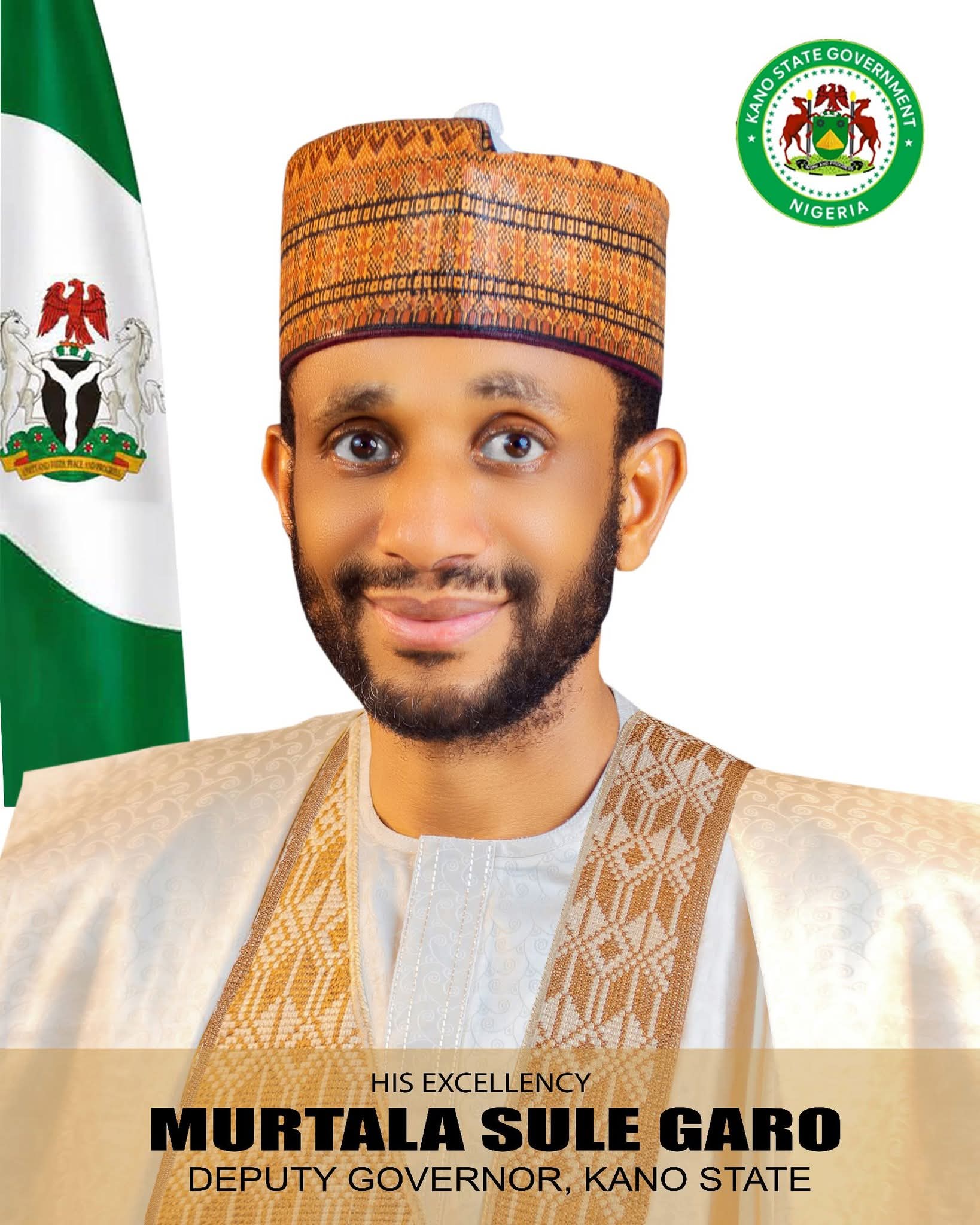
In a swift political transition that underscores the value of loyalty and strategic alignment in governance, Comrade Salmanu Rabiu Gwarzo has been reappointed as Senior Legislative Aide (SLA) to the Speaker of the House of Representatives, Rt. Hon. Tajudeen Abbas, GCON, shortly after resigning his position as Senior Legislative Aide to the Deputy President of the Senate. This was conveyed in a statement signed by Comrade Salmanu Rabiu Gwarzo, announcing his new appointment and expressing gratitude to key political leaders who facilitated the development. According to the statement, the appointment was made with a promotion and followed his exit from the National Assembly’s upper chamber. Gwarzo attributed the opportunity to the support and intervention of the Chairman, House Committee on Appropriation, Hon. Abubakar Kabir Bichi, as well as his political mentor, His Excellency Alhaji Murtala Sule Garo, the former All Progressives Congress (APC) deputy governorship candidate in the 2023 general election. He described the development as a testament to the political maxim that experience and guidance remain crucial in navigating public service, stressing that “in politics, one must follow those who know the road.” The new Senior Legislative Aide expressed deep appreciation to the leadership of the House and to his benefactors for what he described as an “amazing opportunity” to continue serving at the highest legislative level. He pledged his readiness to discharge his duties with excellence and commitment. Read Also: Kano Politics: Ganduje’s Leadership Remains APC’s Strongest Asset Kano 2027: Deputy Governor Gwarzo, Kofar Mata Emerge as Potential NNPP Candidates Unchecked Sand Mining Threatens 300-Year-Old Farming Community in Kano Gwarzo also acknowledged the roles played by Hon. Sani Mukaddas Barden Bichi, who represented Hon. Abubakar Kabir Bichi, and Hon. Laminu Sani Zawiyya, who stood in for His Excellency Alhaji Murtala Sule Garo, during the presentation of his appointment letter. Special appreciation was extended to Hon. Abubakar Aminu Ibrahim, Senior Legislative Aide, whom Gwarzo commended for his tireless efforts and support throughout the process. He further thanked his well-wishers for their prayers, encouragement and goodwill, noting that their support contributed significantly to his political journey and renewed appointment. Gwarzo concluded by praying for divine reward for all those who supported him, reaffirming his commitment to serve the Speaker and the National Assembly with dedication, professionalism and loyalty.

Feature, Kano, Politics

Abba Kabir Yusuf and the Politics of Strategic Realignment: Why the APC Option Makes Sense

By Comrade Najeeb Nasir Ibrahim Kano Concern Citizens for Good Governance In politics, leadership is measured not by emotional loyalty to platforms, but by the courage to make strategic decisions that protect stability, relevance, and the collective interest of the people. Recent reports indicating that the Executive Governor of Kano State, Abba Kabir Yusuf, may defect from the New Nigeria People’s Party (NNPP) to the All Progressives Congress (APC) should therefore be assessed with political maturity rather than sentiment. Kano State, Nigeria’s most populous state, occupies a critical position in national politics. Any political decision taken by its governor has implications far beyond party structures—it directly affects governance, development, and Kano’s bargaining power at the federal level. The Political Reality Behind the Decision Governor Yusuf emerged under the NNPP, largely supported by the Kwankwasiyya movement. However, evolving political realities—particularly internal divisions within the NNPP and increasing national realignments—have made the status quo difficult to sustain. The open invitation extended by the APC, reportedly backed by key party stakeholders, reflects recognition of Governor Yusuf’s political weight. More significantly, indications that a large majority of NNPP lawmakers in the Kano State House of Assembly may follow him suggest that this is not an isolated ambition but a calculated collective shift. Why the APC Alignment Is a Wise Decision First, alignment with the ruling party at the federal level enhances access to national resources, infrastructure funding, and policy collaboration. In Nigeria’s political system, federal-state harmony often determines the pace and scale of development. Kano cannot afford isolation at the centre. Second, internal crises within the NNPP have increasingly become a distraction to governance. Political stability is essential for effective leadership. A move to the APC could consolidate political forces, reduce factional conflicts, and allow the governor to focus squarely on service delivery. Read Also: 2025 in Memoriam: Nigerians and Global Icons Who Left a Lasting Legacy Beyond Betrayal: The Real Politics Behind Abba Kabir Yusuf’s Calculated Move Kano 2027: Deputy Governor Gwarzo, Kofar Mata Emerge as Potential NNPP Candidates Third, with the 2027 general elections approaching, political foresight is essential. The APC’s nationwide structure, institutional depth, and electoral machinery offer a broader and more sustainable platform than a fragmented opposition party. This positioning strengthens both the governor’s future prospects and Kano’s influence in national decision-making. Fourth, the move could contribute to building a wider northern political coalition—an important factor in shaping national leadership and policy outcomes in Nigeria. Responding to the Critics Critics frame the potential defection as a betrayal of loyalty to the Kwankwasiyya movement. While loyalty has its place, governance must always come before political sentiment. Political movements are vehicles for progress, not permanent constraints. Others raise concerns about ideological inconsistency. However, Nigerian politics has long been shaped by strategic realignments. What ultimately matters is not party branding, but the ability to deliver dividends of democracy to the people. Implications for Kano Politics This moment represents a turning point in Kano’s political history. It signals a possible fragmentation of the Kwankwasiyya structure, a redefinition of long-standing political alliances, and a reshaping of opposition strength within the state. More importantly, it underscores early preparations for the decisive 2027 elections. Conclusion Governor Abba Kabir Yusuf’s reported move toward the APC should be seen as a strategic and forward-looking political decision, driven by the need for stability, development, and relevance in national politics. While the decision carries political risks, leadership often demands difficult choices. History will ultimately judge this decision by its outcomes. If Kano secures greater development, stronger federal collaboration, and political stability, then this move will stand as a wise and timely decision made in the best interest of the people.

Scroll to Top