Feature
Why Ganduje remains one of APC’s most valuable political assets


By Umar Idris Shuaibu, Kano
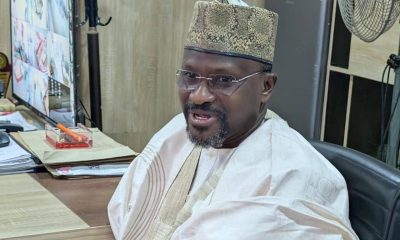
In Nigerian politics, influence is rarely determined by the office a politician currently occupies. More often, it is measured by experience, institutional memory, administrative competence, political loyalty, and the ability to remain relevant across changing political seasons. By those standards, Dr. Abdullahi Umar Ganduje remains one of the All Progressives Congress’ (APC) most valuable political assets.
Having served as the immediate past National Chairman of the APC, former Governor of Kano State, former Deputy Governor, seasoned public administrator, and long-serving civil servant, Ganduje possesses one of the most extensive résumés in contemporary Nigerian politics. His career spans academia, bureaucracy, governance, diplomacy, and party administration, placing him among a select group of political leaders with practical experience across virtually every layer of public service.
Unlike many politicians whose careers began and ended within electoral politics, Ganduje’s foundation was built in public administration. Armed with a Doctor of Philosophy (PhD) in Public Administration from the University of Ibadan, he developed an academic understanding of governance long before occupying some of the country’s highest public offices. His educational background continues to distinguish him among political leaders, providing a blend of theory and practical governance that has shaped his leadership style.
His early years in public service began as an Education Officer in the Kano State Ministry of Education before moving into the Federal Capital Development Authority (FCDA), where he spent more than a decade handling key administrative responsibilities. During this period, he served as Sole Administrator of the Abaji Area Council and later as Executive Secretary responsible for Resettlement and Compensation within the Federal Capital Territory.
Read Also:
Associate Professor Amina Ganduje’s Quiet March into Nigeria’s Intellectual Elite
Ganduje, Kuku and the transformation of Nigeria’s airports
Ganduje Confident APC Will Reclaim Kano in 2027
Those assignments exposed him to the complexities of government administration, institutional coordination, policy implementation, and conflict resolution long before he entered mainstream elective politics.
His experience was further broadened through international service as Executive Secretary of the Lake Chad Basin Commission in N’Djamena, Republic of Chad, where he participated in regional cooperation involving environmental management, development planning, and multilateral engagement among member states.
Politically, Ganduje’s journey stretches back to Nigeria’s Second Republic, when he served as Assistant Secretary of the defunct National Party of Nigeria (NPN) in Kano State. Since then, he has remained an active participant in virtually every democratic transition, building relationships that have endured across generations of political leadership.
Perhaps no position illustrates his administrative endurance more than his tenure as Deputy Governor of Kano State. Serving two separate terms between 1999 and 2003 and again from 2011 to 2015, he accumulated eight years as the state’s second-in-command while simultaneously overseeing strategic responsibilities in local government administration. Few Nigerian politicians can point to such continuity in executive governance.
His subsequent election as Governor of Kano State from 2015 to 2023 elevated him to the leadership of Nigeria’s most populous state. During those eight years, his administration pursued major investments in road infrastructure, healthcare, education, rural development, housing, water supply, agricultural support, and urban renewal.
Beyond initiating new projects, his government became widely associated with completing inherited projects and promoting continuity in governance. Rather than abandoning projects initiated by previous administrations, many were completed, expanded, or upgraded, reinforcing the principle that government is a continuous institution rather than a collection of political tenures.
Following his governorship, Ganduje was entrusted with one of the most demanding political assignments in the country as National Chairman of the ruling APC. The responsibility came at a period marked by intense political realignments, internal party negotiations, and preparations for off-cycle governorship elections.
Under his leadership, the APC consolidated its organisational structures while attracting prominent politicians, including serving and former governors, senators, members of the House of Representatives, and other influential political stakeholders from different parts of the country. The party strengthened its national presence through sustained engagement, strategic negotiations, and efforts aimed at broadening its support base.
Many of the institutional reforms and organisational structures established during that period continue to provide a foundation upon which the present party leadership has continued to build.
Another defining feature of Ganduje’s political career has been his approach to leadership. Rather than relying on confrontation, his style has largely been characterised by consultation, consensus-building, patience, and calculated decision-making. His background in public administration is often reflected in his preference for institutional processes over political drama.
Political developments over the years have repeatedly demonstrated his ability to navigate difficult situations without allowing temporary setbacks to define his long-term relevance. His resilience has enabled him to remain a significant voice within the ruling party despite the constantly changing dynamics of Nigerian politics.
Equally significant is Ganduje’s enduring political influence in Kano State. As Nigeria’s most populous state and one of the country’s largest electoral blocs, Kano occupies a strategic position in national politics. Over several decades, Ganduje has built extensive political structures across the state’s 44 local government areas while maintaining relationships with community leaders, political stakeholders, and grassroots supporters.
Although Kano’s political landscape has continued to evolve with the emergence of new actors and shifting alliances, Ganduje remains one of the state’s most recognisable political figures whose experience continues to command national attention.
His recent appointment as Chairperson of the Board of the Federal Airports Authority of Nigeria (FAAN) further reflects continued confidence in his administrative abilities and public service experience. The assignment places him once again within the national governance architecture, where his decades of institutional knowledge continue to be deployed in support of public administration.
In every democracy, experienced leaders remain valuable not merely because of the offices they have held, but because of the institutional memory, strategic insight, and leadership capacity they bring to national development. Nigeria is no exception.
As the country continues to navigate governance reforms, economic transformation, and evolving political realities, leaders with broad administrative exposure and proven organisational experience will remain important to strengthening public institutions.
Dr. Abdullahi Umar Ganduje’s career reflects more than political longevity. It tells the story of a public administrator who rose through the ranks of the civil service, excelled in executive governance, led the nation’s ruling political party, and continues to contribute to national development. Whether viewed from the perspective of governance, party organisation, or public administration, his record has secured him a place among the APC’s most experienced and enduring political assets.

Kano emirate dispute: CSOs urge Tinubu to prevent escalation

Let the Renewed Hope Story be Heard: Tinubu’s Appointees from the North Must Take the Message to the Grassroot

FG Announces 30-day petrol discount, gives priority to public transporters

MHWUN backs efforts to reduce zero-dose children in Kano

Kano emirate dispute: Abba, Bayero’s senior counsellor meet in Abuja
ABCOAD Unveils Journal, Bids Farewell to Provost

Nigerian Army Begins DSSC 29/2026 Recruitment, Outlines Eligibility Criteria
2027: NDC Releases Full List of Consensus Candidates in Kano

Gaya Polytechnic Opens Recruitment, Advertises 46 Academic, Non-Academic Positions