
The Historica Nigeria

Feature

Feature, National, Politics

APC Needs Unity, Not Division — Kano Analyst Defends Chairman Yilwatda

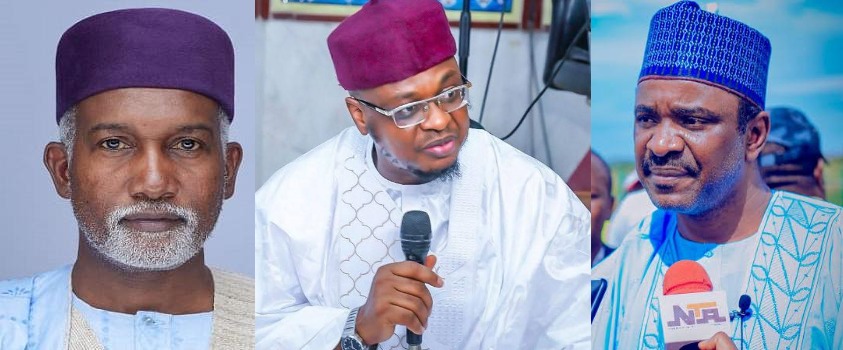
A public affairs analyst from Kano, Umar Idris Shuaibu, has defended the National Chairman of the All Progressives Congress (APC), Prof. Nentawe Yilwatda, following recent calls by a youth faction demanding his resignation. The analyst described the two-week ultimatum reportedly issued by the APC Youth Solidarity Network (APC-YSN) as “misplaced, unnecessary, and potentially divisive,” warning that such internal agitation could weaken the party’s stability at a time when unity is most needed. Shuaibu, speaking to journalists in Kano, said Prof. Yilwatda has shown strong leadership qualities since assuming office, emphasizing inclusiveness, reorganization, and internal reconciliation within the party. Read Also: Inside Ganduje’s Political Blueprint That Keeps Strengthening APC Nationwide Political Realignment: Taraba’s Kefas Eyes APC for Greater Federal Inclusion APC Consolidates Strength Across Nigeria Ahead of 2027 Elections “This is a leader who has barely spent three months in office yet has already begun uniting party structures, engaging critical stakeholders across the states, and restoring confidence in the APC — much like Dr. Abdullahi Umar Ganduje did during his time as National Chairman. What the party needs now is support, not distractions,” he said. He added that the current National Chairman has demonstrated administrative discipline by delegating authority to the National Secretary during his absence — a practice that aligns with democratic norms and organizational efficiency. “If anything, that shows institutional maturity and respect for due process, not weakness,” Shuaibu stated. The analyst further noted that under Prof. Yilwatda’s short tenure, the APC has been actively re-engaging its grassroots members while attracting new entrants across the geopolitical zones. He urged the youth wing and other stakeholders to rally behind the Chairman, assuring that the ongoing reforms would strengthen the party ahead of future elections. “The National Chairman has keyed into the Renewed Hope Agenda of President Bola Ahmed Tinubu. His efforts must be encouraged, not frustrated. The focus should be on building, not breaking,” he reiterated. Shuaibu, who described the APC as the largest political movement in Africa, called for patience and collective responsibility in consolidating its democratic gains, stressing that leadership takes time to yield visible transformation. “Political progress is not achieved through pressure or division but through collaboration and consistency. What Prof. Yilwatda needs now is our trust and teamwork,” he reiterated.

Feature, News

Young Africans Champion Health Sovereignty at 8th Galien Forum in Dakar

Faced with a global disease burden of 24 percent but only 3 percent of the world’s health professionals, Africa continues to grapple with the challenge of meeting its health needs. Yet, a new wave of young Africans is rising to the occasion—driving innovation and advocacy for the continent’s health sovereignty. This theme resonated strongly at the 8th Galien Africa Forum, which opened on October 28, 2025, in Dakar, Senegal. The first day of the three-day conference was held under the theme: “Rethinking Health Leadership: Preparing a Generation Capable of Defending Africa’s Health Sovereignty in a Technological and Globalised World.” More than 2,500 participants—including scientists, policymakers, health professionals, students, and development partners—attended the forum both physically and virtually. The gathering seeks to re-examine Africa’s role in global health leadership and reaffirm its commitment to shaping its own priorities in the healthcare sector. One of the forum’s major attractions was an exhibition by young African scientists showcasing innovation-driven technological solutions to some of the continent’s most pressing health challenges. Among the most discussed projects were those focused on Universal Access to Healthcare Leveraging Biometrics and AI, Safe Water Hubs, and Integrated Health Systems. Read Also: Stakeholders Meet in Kano to Address Health Workers’ Attitude Towards Immunization Two medical students—Samuel Afolabi from the University of Ibadan, Nigeria, and Lydia Ankomah Obeng from the University of Ghana Medical School—led a team of ten innovators to present their project on Universal Access to Healthcare Leveraging Biometrics and AI. Speaking to Emefa Ewoenam Atiamoah-Eli, West and Central Africa Regional Coordinator (Maternal, Newborn and Child Health) of the Africa Media Network for the Promotion of Health and Environment (REMAPSEN), Afolabi explained that technology holds the key to closing Africa’s healthcare gaps. “Many people in Africa lack the proper data needed to access quality healthcare. Some spend hours in hospitals for consultations that should take minutes, while others walk several kilometres to see a doctor. Our solution aims to bridge that gap through digital innovation,” he said. Their innovation proposes a simple mobile application designed to streamline healthcare access while helping Africa take ownership of its health systems. Lydia Ankomah Obeng added that “education and awareness in rural communities are crucial for adoption. With proper government and partner support, this innovation can be scaled across Africa.” Echoing the call for health autonomy, Prof. Dr. Bamba Gaye, a research scientist in preventive cardiology at the Institute of Health and Development (ISED), University Cheikh Anta Diop of Dakar, emphasized the importance of local data ownership. “Africa must become an active contributor to AI systems by feeding them with its own data,” he said. “Otherwise, we risk having our realities misrepresented by externally generated data that do not reflect our context.” Under the leadership of Prof. Marie Coll Seck, President of Galien Africa, the forum attracted high-level dignitaries, including researchers, development partners, and government officials. In her address, Prof. Seck remarked that “Africa is not just a continent—it is the driving force of innovation.” She urged African nations to scale up local production of health products and mobilize resources to achieve true health sovereignty. Officially declaring the forum open, Senegal’s Minister of Health, Dr. Ibrahima Sy, called for collective responsibility in reclaiming Africa’s health independence. “Reclaiming autonomy over Africa’s health requires deliberate action—investing in youth training and fostering technological innovation in healthcare delivery,” Dr. Sy said. The 8th Galien Africa Forum continues to serve as a platform for inspiring a new generation of African health leaders—young innovators determined to make the continent self-reliant, data-driven, and globally competitive in healthcare advancement.

Abuja, Feature, National, Politics

Inside Ganduje’s Political Blueprint That Keeps Strengthening APC Nationwide

Nigeria’s current political landscape is witnessing a remarkable shift — one that analysts say bears the unmistakable imprint of Dr. Abdullahi Umar Ganduje, the immediate past National Chairman of the All Progressives Congress (APC) and Chairperson of the Board of the Federal Airports Authority of Nigeria (FAAN). The recent declaration by Taraba State Governor, Dr. Agbu Kefas, to defect from the Peoples Democratic Party (PDP) to the ruling APC has stirred national debate. But beyond the headlines lies a deeper narrative — one tied to the strategic groundwork Ganduje laid during his tenure as the APC’s helmsman. Under Ganduje’s leadership, the APC experienced one of its most stable and strategic organizational phases. He did not merely lead a political party — he built a political machinery grounded in policy, ideological clarity, and institutional discipline. Related: Political Realignment: Taraba’s Kefas Eyes APC for Greater Federal Inclusion Ganduje rebuilt APC from crisis to dominance APC Consolidates Strength Across Nigeria Ahead of 2027 Elections During his time as National Chairman, Ganduje consolidated the party’s internal unity, oversaw the resolution of lingering intra-party crises, and strengthened relationships between national and subnational leaders. This renewed cohesion, experts argue, is what has now positioned the APC as the dominant force attracting governors, legislators, and party stalwarts from the opposition. Dr. Ganduje’s tenure also recorded significant electoral victories across key states. His ability to bridge divides among stakeholders and sustain dialogue between federal and state party structures contributed immensely to the APC’s successes in off-season and by-elections. It was a tenure marked by strategic negotiation, inclusivity, and political foresight. Perhaps his most enduring contribution to Nigeria’s political space was the establishment of the Progressive Institute — a think tank envisioned as the party’s policy, research, and ideological center. The institute was designed not only to strengthen the APC’s internal policy framework but also to serve as a national policy incubation hub, focusing on governance, public administration, and development strategy. According to political observers, the Progressive Institute has become a quiet powerhouse, producing policy recommendations, conducting political risk assessments, and providing intellectual depth to party reforms. “It is one of Ganduje’s most transformative legacies,” noted a senior party insider, “because it ensures that the APC’s political agenda is backed by research and evidence.” This long-term institutional thinking explains why, today, the APC remains the natural destination for defecting governors and influential politicians. The party’s dominance, structure, and strategic stability — all nurtured under Ganduje’s leadership — have created a gravitational pull too strong for many to resist. Even as he left office as National Chairman, Ganduje’s imprint remains visible in the party’s growing influence. His philosophy of “progressivism with discipline” continues to guide internal decisions, while his diplomatic approach to inter-party dialogue still shapes the tone of Nigeria’s political engagement. Governor Agbu Kefas’s defection, and similar moves from other state leaders, reflect the continuing legacy of Ganduje’s groundwork — a legacy rooted in inclusiveness, strategy, and ideological conviction. As Nigeria inches closer to the next electoral cycle, one thing remains clear: the Ganduje effect is far from over. The structures he built, the alliances he nurtured, and the policies he institutionalized have redefined Nigeria’s political map and strengthened the APC’s position as the party of national cohesion. In the words of a Kano-based political analyst, “What Ganduje did for the APC was not just to lead it — he engineered a system. And that system is now producing results long after he has left the stage.”

Education, Feature, National

Why Science College Dawakin Kudu Remains a Pride of Kano’s Educational Heritage

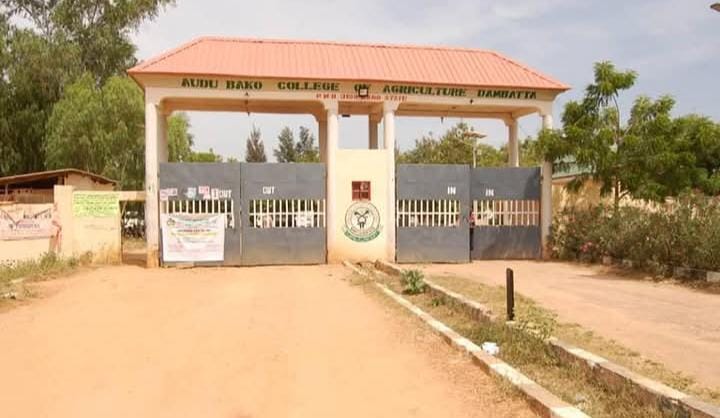
By Umar Idris Shuaibu, Kano  Nestled in the heart of Dawakin Kudu Local Government Area, Science College Dawakin Kudu, now renamed as Sani Bello Science College stands as one of the most enduring symbols of Kano State’s commitment to quality education and scientific advancement. For decades, the prestigious institution has served as a cradle for innovation, discipline, and academic excellence in Northern Nigeria. Established in the 1970s under the visionary leadership of the late Governor Audu Bako, the college was part of Kano State’s broader agenda to strengthen science and technology education. At a time when the region sought to bridge educational disparities and prepare its youth for modern challenges, Dawakin Kudu Science College emerged as a beacon of hope, training young minds to pursue excellence in science and engineering. Today, the school remains under the supervision of the Kano State Ministry of Education and continues to live up to its founding ideals as a special science boarding school for boys. The college provides a rigorous curriculum in Physics, Chemistry, Biology, Mathematics, Computer Science, Agriculture and Technical Drawing, alongside general subjects that ensure holistic learning. Read Also: KASSOSA Reiterates Commitment to Supporting Kano Science Colleges With well-equipped laboratories, a functional library, and a growing ICT centre, the school has become a model of practical learning and discipline. Its serene academic environment, supported by a strong administrative framework through the Post-Primary Schools Management Board (PPSMB), allows students to thrive both intellectually and morally. Over the years, Dawakin Kudu Science College has produced thousands of graduates who now occupy prominent positions across Nigeria’s public and private sectors. Many have become medical doctors, engineers, lecturers, and administrators, contributing immensely to national growth and innovation. The school’s alumni association, known as the Kano Science Schools Old Students Association (KASSOSA), has played a vital role in maintaining the college’s legacy through rehabilitation projects, scholarships, and mentorship programmes. Their consistent engagement reflects the strong bond of brotherhood and loyalty that defines the spirit of Dawakin Kudu. The college’s reputation extends beyond academic achievement, it has become a cultural and moral institution, moulding students into disciplined citizens. Teachers and administrators emphasize leadership, responsibility, and community service as integral parts of education. In recent years, the Kano State Government has intensified efforts to modernize the college’s infrastructure through renovations, laboratory upgrades, and improved digital learning resources. These interventions align with the state’s renewed focus on science and technology-driven education under contemporary education reforms. The school’s motto, “Knowledge is Light,” captures its enduring mission to illuminate minds and empower future scientists capable of transforming Nigeria’s technological landscape. From its humble beginnings in the 1970s to its current status as a centre of excellence, Science College Dawakin Kudu remains a proud testament to the power of vision, discipline, and education. For generations of young Nigerians, it continues to inspire the pursuit of knowledge and innovation, one student at a time.

Agriculture, Feature, Kano, National

The Green Imperative Is Not Just a Federal Government Project — It Is a Lifeline for Northern Nigeria’s Agricultural Future

Veteran labour leader, Comrade Mustapha Nuhu Wali, has called on northern leaders, traditional institutions, cooperatives, and private investors to take ownership of the Green Imperative Programme, stressing that the initiative is not just a Federal Government project but a national lifeline for the North’s agricultural transformation. He stated this in a statement released to ‘The Historica Nigeria‘, noting that while the Green Imperative Programme was designed to revolutionise farming across the country, its success now depends largely on active regional participation. “The Green Imperative is not just a Federal Government initiative; it is a national programme that requires regional participation. Northern state governments, traditional institutions, cooperatives, and private investors must now take ownership,” Wali said. Read Also: Food Waivers Threaten Northern Agriculture, Says Wali Reps Move to Establish Nigeria Police Pension Board, End PenCom Control Niger Delta Leaders Push Jonathan to Support Tinubu Originally launched in 2019 under former President Muhammadu Buhari, the Green Imperative Programme was a ten-year mechanisation partnership between Nigeria and Brazil, aimed at supplying over 10,000 tractors, 50,000 implements, and establishing 774 service centres nationwide. The initiative was expected to create millions of jobs and transform rural economies through modern mechanised farming. However, seven years later, the programme has not achieved its full potential. Wali attributed the setback to the limited engagement from state governments and regional stakeholders, who failed to provide the required counterpart funding and institutional support. “Mechanisation cannot be achieved through federal action alone. It requires collective ownership and sustained political will at every level,” he said. He described the Green Imperative as a missed opportunity that could have transformed food production and employment, particularly in Northern Nigeria, which holds more than 70 percent of the country’s arable land. Wali, however, commended the administration of President Bola Ahmed Tinubu for reviving and commercialising the programme in 2025, saying that renewed agreements with Brazil and technical partners show a genuine political commitment to sustainable agricultural development. “The revival of the Green Imperative offers a second chance—especially for Northern Nigeria, where the youthful population and vast land mass make it the natural engine of the nation’s food security. Mechanisation is not a luxury; for Northern Nigeria, it is a necessity for survival and growth,” he said. He urged northern state governments, private investors, and traditional institutions to create Green Imperative Implementation Desks within their ministries of agriculture and to train youths and women as tractor operators, mechanics, and service providers. He also called on polytechnics and universities in the region to strengthen practical agricultural engineering and mechanisation programmes to ensure long-term sustainability. “The era of waiting for Abuja is over. Local leadership and regional coordination must drive agricultural transformation,” he added. Wali emphasised that state governments should provide counterpart funding, allocate land for training and service centres, and set clear mechanisation targets in their budgets. He further encouraged cooperatives and private companies to partner with federal agencies in running tractor-hire and maintenance services, while NGOs and development partners focus on youth and women empowerment clusters. He concluded by calling for transparency, accountability, and local assembly of equipment, warning that seven of the ten years originally planned for the project had already passed. “The Green Imperative is not just a federal government project; it is a lifeline for the North. If properly embraced, it can ignite a Northern Agricultural Renaissance—one that feeds the nation, empowers the youth, and sustains livelihoods,” Wali stressed.

Feature, National, Politics

APC Consolidates Strength Across Nigeria Ahead of 2027 Elections

As Nigeria steadily approaches the 2027 general elections, the All Progressives Congress (APC) continues to tighten its grip across the country’s six geo-political zones, emerging stronger and more coordinated than ever. The ruling party’s growing dominance is reinforced not only by the wave of defections from opposition governors but also by the institutional strengthening championed by visionary leaders such as Dr. Abdullahi Umar Ganduje, the immediate past National Chairman of the APC and current Chairman of the Board of the Federal Airports Authority of Nigeria (FAAN). In recent weeks, several governors elected under the opposition Peoples Democratic Party (PDP) have defected to the APC, citing disunity, lack of ideological direction, and leadership crises within the party. These defections have further consolidated APC’s foothold across regions — particularly in the South-East and South-South — where the PDP once enjoyed strong influence. One of the most significant political shifts occurred in Enugu State, where Governor Peter Mbah, alongside members of his State Executive Council, officially joined the APC. Barely a day later, Bayelsa State Governor Douye Diri resigned his PDP membership, signaling a major setback for the opposition and a widening acceptance of the APC’s reform-driven governance style. Related: APC Hits Back at Daily Trust, Labels Editorial “Biased and Reckless” Beyond electoral strength, the APC’s growing institutional maturity can be credited to reforms introduced under the leadership of Dr. Ganduje, whose tenure as National Chairman marked a strategic turning point for the party. Among his most notable initiatives was the establishment of the APC Progressive Institute (TPI) — a think tank designed to build intellectual capacity, strengthen internal democracy, and drive policy innovation within the party. The TPI serves as a research and policy center that develops data-driven ideas to guide national and state governments under the APC. Through this platform, party members, public officials, and emerging political leaders are exposed to structured training in governance, political communication, and sustainable development strategies — aligning the party’s ideology with Nigeria’s long-term growth and democratic consolidation. Read Also: Ganduje’s Achievements Still Define Kano, Despite NNPP’s Attempts to Erase Them Political observers note that such forward-thinking initiatives have transformed the APC into more than just a political party — it has evolved into a policy-driven institution capable of shaping Nigeria’s future through ideas, reforms, and inclusive governance. Currently, the APC controls 22 out of Nigeria’s 36 states, with a dominant presence in both the North and South. In the South-West, it maintains a solid base in Lagos, Ekiti, Ogun, and Ondo states. The South-East, once seen as a stronghold of the opposition, now boasts APC-led governments in Enugu, Ebonyi, and Imo States. In the South-South, the party has made significant inroads with Delta, Edo, Akwa Ibom, and Cross River under its fold. In the North, the APC’s dominance remains unshaken. It commands control of nearly all states in the North-West, North-East, and North-Central, including Kano, Katsina, Jigawa, Borno, Gombe, Niger, Kwara, Kogi, and Benue, among others — a testament to its widespread appeal. Analysts agree that the APC’s current strength is not accidental but the result of deliberate political engineering, internal restructuring, and strategic inclusiveness initiated by leaders like Dr. Ganduje. His role in institutionalizing political education through the Progressive Institute continues to serve as a model for long-term party sustainability and governance innovation. With a sitting president, a majority in the National Assembly, and dominance in most state governments, the APC enters the 2027 election season as the defining political force shaping Nigeria’s direction. The party’s expanding structure, ideological clarity, and commitment to development-oriented governance make it a formidable institution, far beyond the reach of fragmented opposition parties. As many political watchers observe, the APC today represents not just a ruling party — but a forward-looking movement anchored on progressive ideas, institutional learning, and national stability. Umar Idris Shuaibu is a public affairs analyst and Ganduje loyalist from Kano.

Feature, Kano, National

The Power of Innuendo: Inside Dan’uwa Rano’s “Letter of Malam Imalu” and the Role of Subtle Truth in Journalism

In journalism, words can build bridges or break walls. They can inform, provoke, or expose. But when truth becomes too dangerous to speak plainly, journalists often turn to the subtle art of innuendo, that is the craft of saying much without saying it directly. That’s exactly what Ibrahim Ishaq, the popular broadcast journalist known as Dan’uwa Rano, achieved with his viral program “Letter of Malam Imalu.” Through creative storytelling and metaphorical language, the journalist used satire and social commentary to mirror political realities in Kano State without naming names. The program, which struck a deep chord with the public, explored issues of corruption, abuse of office, and moral decay within the corridors of power. But while the message resonated with ordinary listeners, it drew discomfort from some political actors, eventually leading to Dan’uwa Rano’s arrest and interrogation by the police, following a petition by Abdullahi Ibrahim Rogo, the Director-General of Protocol to the Kano State Governor. Related: Kano Journalist Ibrahim Dan’uwa Rano Regains Freedom After Unlawful Detention Observers believe that the “Letter of Malam Imalu” controversy underscores a deeper misunderstanding of journalistic expression in Nigeria’s evolving democracy. In a system where criticism is often mistaken for defamation, and satire is treated as subversion, journalists find themselves walking a fine line between truth-telling and survival. The use of innuendo, or indirect expression, has long been a strategic tool for journalists working under repressive or politically charged environments. Rather than making direct accusations that could attract censorship or legal action, skilled communicators use symbolism, coded speech, and fictional characters like “Malam Imalu” just to represent real issues. Read Also: Kano Governor’s Protocol Chief Caught in N6.5bn Corruption Scandal Media analysts argue that Dan’uwa Rano’s storytelling mirrors a time-honoured journalistic practice, exposing societal ills through creative expression. “Innuendo isn’t deception; it’s protection,” one analyst noted. “It allows journalists to speak truth to power in societies where direct criticism is unsafe.” However, the backlash against Rano reveals how fragile media freedom remains. The reaction to his program instead of sparking dialogue, has instead deepened concerns over press intimidation in Kano. Civil society groups say the journalist’s arrest was not only uncolourful but also uncalled for, describing it as an act capable of silencing legitimate voices of accountability. In reality, the “Letter of Malam Imalu” is more than satire; it is a reflection of the frustrations of ordinary citizens and the courage of journalists who use creativity to express truth. By blending humour, allegory, and cultural idioms, Dan’uwa Rano joined a long tradition of African storytellers who challenge power through words, not weapons. The unfolding episode serves as a reminder that the health of a democracy depends not only on elections and institutions but also on the freedom to question, to imagine, and to speak. When journalists like Dan’uwa Rano resort to innuendo, it is often not to mock the system, but rather to survive within it, while still keeping the public informed. Political actors should know that silencing innuendo does not silence the truth but only drives it deeper into the conscience of the people. shuaibuumaridris@gmail.com

Feature, Kano, Weekend Digest with The Historica Nigeria

Why Government Administrations Need to Appoint Competent Media Managers

In every thriving democracy, communication remains the vital bridge between the government and the governed. A visionary administration understands this and invests not only in physical infrastructure and policies but also in credible, professional media management. Competent media managers are essential to shaping narratives, clarifying intentions, and safeguarding an administration’s image against misinformation and public misinterpretation. Recent developments in Kano have once again brought this issue into sharp focus, particularly following the arrest and interrogation of popular broadcast journalist, Ibrahim Ishaq, widely known as Dan’uwa Rano. The journalist was reportedly questioned over alleged defamation and the operation of an online television channel without a valid license from the National Broadcasting Commission (NBC). The episode was uncalled for, as it created unnecessary tension within Kano’s media space and raised legitimate concerns about press freedom and the government’s handling of criticism. Instead of fostering dialogue and responsible engagement, the decision to subject a journalist to police grilling appeared reactive and heavy-handed, an avoidable situation if a robust communication framework were in place. Related: Police Grill Journalist Dan’uwa Rano Over Petition by Kano Official Rogo Equally, the entire scenario was uncolourful, a distraction that did little to boost public confidence in the administration. In a digital era where perception influences governance as much as performance, the absence of proactive communication can easily lead to reputational damage that even well-intentioned policies cannot undo. Governments must therefore recognize that the media is not an adversary but a critical partner in nation-building. A competent media manager interprets government policies clearly, communicates decisions responsibly, and provides accurate information swiftly, ensuring that facts are not overtaken by rumours or propaganda. The issue of defamation allegedly raised against the journalist brings a more fundamental question, “did the alleged act truly occur, or is this an attempt to silence accountability? According to an earlier report by Daily Nigerian, the Independent Corrupt Practices and Other Related Offences Commission (ICPC) recovered over ₦1.1 billion from Abdullahi Ibrahim Rogo, the Director-General of Protocol at the Kano State Government House, as part of its investigation into alleged misappropriation of public funds. The Economic and Financial Crimes Commission (EFCC) is also said to be probing related transactions linked to fictitious contracts and alleged diversions of public funds through corporate and personal accounts. Read Also: ICPC, EFCC Probe Kano Governor’s Aide Over Alleged ₦6.5bn Fraud However, the Kano State Government has strongly denied these corruption allegations, describing them as politically motivated. In a statement signed by the Governor’s spokesman, Sanusi Bature Dawakin Tofa, the government dismissed the reports as “a work of fiction aimed at tarnishing the image of government officials.” The situation now rests in the court of public opinion. Citizens, who are ultimately the judges of governance, will continue to assess those entrusted with managing public affairs, measuring words against actions, and promises against performance. The unfolding episode in Kano offers a vital lesson for all levels of government, the the need for strategic communication and competent media management cannot be overstated. Professional media handlers not only manage crises but also prevent them. They uphold transparency, maintain trust, and build bridges between leadership and the people. In the end, governance thrives not only on policies and projects but also on the confidence born out of clear, honest, and timely communication. When governments fail to manage information effectively, they risk losing both credibility and the trust of those they are meant to serve. Umar Idris Shuaibu is the publisher ‘The Historica Nigeria’ and writes from Kano.

Feature, National

Defection Storm: A Looming Threat to Nigeria’s Political Stability

When politics is no longer a mission but a profession, politicians become more self-serving than public servants”_ – Emmanuel Macron, President of France. This quote highlights the distinction between politicians driven by purpose (mission) and those who view politics as a career (profession). When politics is a mission, politicians prioritize the greater good, guided by responsibility and duty. In contrast, when politics becomes a profession, politicians are driven by personal ambition, power, and financial gain, prioritizing their interests over public needs. The quote starkly captures Nigeria’s political landscape, where politics has devolved into a profession, with politicians often prioritizing personal interests over public service, resulting in self-serving behavior. Read Also: Ganduje’s Achievements Still Define Kano, Despite NNPP’s Attempts to Erase Them Frequent party switches erode public trust, undermine credibility, and negatively impact governance. Nigeria’s constitution allows defections with certain conditions, but it’s silent on executive office holders. The Supreme Court has ruled that electoral mandates belong to parties, not candidates. To curb defections, lawmakers should consider constitutional amendments requiring elected representatives to vacate seats if they defect. Nigeria has a long history of party defections, dating back to 1951. This phenomenon has persisted for 70 years, significantly impacting democracy. In 2013, five PDP governors defected to the APC, and similar instances have occurred since. These politicians often criticize opposition parties, only to later seek refuge in the same parties they maligned, supporting the notion that “in politics, there are no permanent friends or enemies, only permanent interests.” *Recent Defections, At least four PDP governors defected to the APC between April and October 2025, including: Delta State Governor Sheriff Oborevwori (April), Akwa Ibom State Governor Umo Eno (June), Enugu State Governor Peter Mbah (October) and Bayelsa State Governor Douye Diri (October). This highlighting a significant shift in Nigeria’s political landscape. Based on recent developments, it’s reported that the APC has gained significant numbers in both the Senate and the House of Representatives due to defections. The APC now holds 74 seats in the Senate. Previously, the APC had 70 seats after four senators from the PDP and LP defected to the APC in July 2025. The APC has 207 members in the House of Representatives after gaining 30 seats from opposition parties since the inauguration of the 10th National Assembly. In the green chamber The opposition parties have been significantly weakened, with the PDP reduced to 37 lawmakers. Overall, the APC has solidified its dominance in the National Assembly, holding a significant majority in both chambers. Nigeria appears to be gradually embracing a dominant-party system, where one party’s grip on power is sustained not by superior governance but by absorbing opposition forces. This trend poses a significant threat to federalism, as it fosters conformity over competition, loyalty over merit, and silence over dissent. The concentration of power in a single entity is particularly perilous for a country as diverse and complex as Nigeria, potentially leading to political stagnation, marginalized groups’ resistance, and the eventual emergence of a one-party state. A larger implications to the political landscape of the country, a democracy without a robust and credible opposition is a farce. The mass defection of opposition figures to the ruling party undermines institutional checks and balances, emboldens authoritarian tendencies, and reduces the National Assembly to a mere rubber stamp. When opposition lawmakers defect en masse, they abandon their critical role of holding the government accountable, paving the way for executive overreach and weakening oversight mechanisms that protect citizens from state abuse. The casual party-switching phenomenon in Nigeria signals the erosion of ideology in politics. With parties becoming indistinguishable, electoral choices are reduced to personalities rather than policies. This development undermines informed decision-making, as voters are left with little to differentiate between parties. The APC and PDP have become virtually indistinguishable, filled with the same faces, ideas, and contradictions. This absence of ideological competition has dire consequences. Elections devolve into contests driven by tribal, religious, or pecuniary considerations, rather than policy debates. This ideological bankruptcy threatens the very foundations of Nigeria’s democracy, and it’s imperative that stakeholders address this issue to restore the country’s democratic health. Dukawa write it from Abuja can be reached at abbahydukawa@gmail.com

Feature, Kano, Politics

Ganduje’s Achievements Still Define Kano, Despite NNPP’s Attempts to Erase Them

In the unfolding political landscape of Kano State, one truth stands undeniable as Dr. Abdullahi Umar Ganduje’s legacy continues to define the direction, pace, and expectations of governance. Nearly two years into office, the New Nigeria People’s Party (NNPP)-led administration under Governor Abba Kabir Yusuf has struggled to escape the shadow of the former governor, whose developmental strides remain deeply etched in the state’s progress story. Rather than consolidating on the solid foundations laid during Ganduje’s two-term tenure, the NNPP government has seemingly chosen a path of political vengeance — focusing more on dismantling his achievements than building new ones. From endless legal distractions to administrative reversals, the state government appears more interested in Ganduje’s past than in its own performance record. Observers argue that the NNPP government came into power without a clear blueprint for governance. Since assuming office, there has been little evidence of coherent planning, continuity, or measurable progress in critical sectors such as infrastructure, education, healthcare, and urban renewal. Instead, political theatrics and intra-party crises have dominated the government’s first years, stalling meaningful development and eroding public confidence. Related: Even Out of Office, Ganduje Remains the Soul of APC — Party Loyalist By contrast, during his eight-year tenure, Dr. Ganduje demonstrated a pragmatic and inclusive approach to governance. He not only transformed Kano metropolis into a rapidly growing mega city through massive road networks, flyovers, and urban renewal projects, but also extended infrastructural development to rural areas — ensuring that communities in Rano, Karaye, Gaya, and Bichi Emirates experienced tangible growth and government presence. The creation of the four new emirates remains one of Ganduje’s most people-centered reforms, bringing governance and traditional leadership closer to grassroots communities. The move was widely celebrated for promoting inclusion, cultural revival, and administrative efficiency — a decision that many Kano residents still view as a bold and visionary step. Critics now point out that Governor Yusuf’s administration has failed to match Ganduje’s foresight and administrative discipline. While the NNPP government blames its slow progress on alleged mismanagement by the previous administration, the realities on the ground suggest a lack of strategic focus and leadership depth. Read Also: Northwest University Kano Appoints Professor Aisha Garba Habib as Acting Vice Chancellor Kano’s development narrative, therefore, still bears Ganduje’s imprint — from urban transformation projects and economic empowerment programs to the state’s elevated status as a major investment destination in northern Nigeria. His emphasis on education, healthcare, and rural development has left footprints too visible to erase. In the end, even as the NNPP administration seeks to rewrite history, Ganduje’s achievements continue to speak louder than the propaganda against him. His era remains the benchmark of modern governance in Kano — one defined by planning, execution, and tangible results.

Scroll to Top