Feature
What to Know About Kano’s Deputy Governor, Murtala Sule Garo


By Umar Idris Shuaibu, Kano
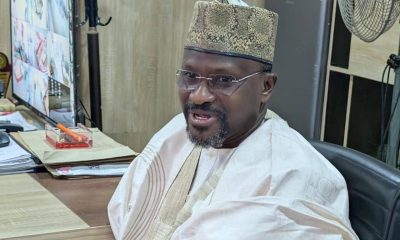
In Kano’s shifting corridors of power, where political tides change swiftly and alliances often define survival, the rise of Murtala Sule Garo to the office of Deputy Governor has reintroduced a familiar figure whose influence has long been anchored in grassroots politics, institutional experience, and steady relevance within the state’s complex political structure.
His nomination and assumption of office under the administration of Governor Abba Kabir Yusuf have sparked renewed political interest, not only for its immediate administrative implications but also for what it signals about alliance-building and governance direction in one of Nigeria’s most politically significant states.
Garo is widely recognised in Kano political circles for his earlier service as Commissioner for Local Government and Chieftaincy Affairs. In that role, he positioned himself as a key link between formal government structures and traditional institutions, engaging emirs, district heads, and local council administrators in a bid to strengthen grassroots governance.
Born and raised in Kano State, his formative years were shaped by the socio-cultural fabric of northern Nigeria, where community leadership, religious values, and respect for tradition remain central to public life. Those early influences, helped shape his political identity, one anchored on accessibility, negotiation, and local engagement.
Read Also:
Why Kiru/Bebeji ‘Consensus’ May End in Court
Abuja Screening Exposes Cracks in Kano APC Consensus Plans
Ganduje Clarifies Position on Sanusi, Says Apex Court Will Determine Emirship
He was educated within Kano’s schooling system before advancing into higher learning, where he acquired training that supported his entry into public administration and governance. His professional trajectory reflects a consistent progression through local government structures and state-level administration.
Garo’s political journey began at the grassroots, where he built a base through close engagement with ward leaders, community stakeholders, and party structures. His tenure as Chairman of Kabo Local Government Area marked a defining phase in his career, giving him firsthand experience in managing public resources, local disputes, and community development priorities.
His elevation to the position of Commissioner under the administration of Dr. Abdullahi Umar Ganduje, who is the immediate past National Chairman of the All Progressives Congress (APC) and Chairperson of the Board of the Federal Airports Authority of Nigeria (FAAN), further expanded his political footprint. In that capacity, he supervised local government administration and deepened engagement with traditional institutions across Kano State.
During that period, Garo became known for sustained interaction with traditional rulers and local council officials, a style that helped improve coordination between state authority and grassroots governance structures. His approach earned him recognition as a bridge-builder in a system often defined by political and institutional complexity.
Within the All Progressives Congress (APC), Garo has maintained relevance as a loyal stakeholder and mobiliser. His ability to navigate shifting political dynamics in Kano has been attributed to a pragmatic style combining loyalty with strategic adaptability.
His emergence as Deputy Governor is widely viewed as a strategic political recalibration with implications that extend beyond a routine appointment. Kano people believed his deep-rooted grassroots network and long-standing experience within local government administration could prove pivotal in strengthening coordination between state institutions and communities, especially in a political environment where local dynamics often shape broader governance outcomes.
In many ways, Murtala Sule Garo’s journey reflects a recurring pattern in Kano politics where influence is cultivated quietly at the grassroots, sustained through relationships, and eventually elevated at moments of political transition, reshaping the balance of power once again.

Kano emirate dispute: CSOs urge Tinubu to prevent escalation

Let the Renewed Hope Story be Heard: Tinubu’s Appointees from the North Must Take the Message to the Grassroot

FG Announces 30-day petrol discount, gives priority to public transporters

MHWUN backs efforts to reduce zero-dose children in Kano

Kano emirate dispute: Abba, Bayero’s senior counsellor meet in Abuja
ABCOAD Unveils Journal, Bids Farewell to Provost

Nigerian Army Begins DSSC 29/2026 Recruitment, Outlines Eligibility Criteria
2027: NDC Releases Full List of Consensus Candidates in Kano

Gaya Polytechnic Opens Recruitment, Advertises 46 Academic, Non-Academic Positions