The Historica Nigeria

News

Kano, News

29 Police Officers Decorated With New Ranks in Kano

The Kano State Police Command has decorated 29 senior officers with new ranks during a colourful ceremony held at the Command Headquarters in Kano. Commissioner of Police, Ibrahim Adamu Bakori, who presided over the event, congratulated the newly promoted officers and urged them to uphold integrity, discipline, and selfless service in the discharge of their duties. Bakori reminded the officers that promotion in the Nigeria Police Force comes with increased responsibility and higher expectations, especially in maintaining public peace and tackling emerging security challenges. Read Also: Federal Fire Service Trains 100 Police Officers’ Wives on Fire Safety in Kano “The promotion you have earned today is not just a reward for your hard work, but a call to greater service. I urge you to demonstrate exceptional leadership, professionalism, and accountability as you carry out your duties,” he said. Among those promoted were two Assistant Commissioners of Police (ACPs), 21 Chief Superintendents of Police (CSPs), and six Superintendents of Police (SPs). The event was attended by senior officers, invited guests, members of the press, and family members of the honourees, who gathered to celebrate the officers’ achievements and new ranks. The News Agency of Nigeria (NAN) reports that the ceremony also featured goodwill messages and reflections on the importance of commitment and integrity in the policing profession.

Kano, News

Ex-NUJ President Warns Kano Govt Against Suppressing Journalists

Ex-NUJ President Warns Kano Govt Against Suppressing Journalists A former National President of the Nigeria Union of Journalists (NUJ), Malam Muhammad Garba, has called on the Kano State Government to adopt a more constructive approach in its dealings with the media, warning that journalists must be allowed to operate without fear or intimidation. Garba, who also served twice as Kano State Commissioner for Information and Internal Affairs, urged Governor Abba Kabir Yusuf’s administration to take seriously the recent findings of the Wole Soyinka Centre for Investigative Journalism (WSCIJ) report, which highlighted growing threats to press freedom in the state. In a statement issued on Sunday, the former NUJ president, now Special Adviser to the Minister of Information, expressed deep concern over what he described as “a disturbing pattern of repression, intimidation, and harassment of journalists in Kano.”   He said, “A government confident enough to engage the press constructively demonstrates both strength and accountability. Freedom of the press is measured not by plaques or ceremonies, but by the ability of journalists to report without fear of reprisal.” Garba lamented that Kano has in recent months drawn criticism from both local and international media rights organizations for its alleged clampdown on journalists. He noted that true democracy thrives only when the media operates freely and without interference from state institutions. “The media is not an enemy of government; it is a partner in nation-building. Respecting press freedom is not only a constitutional obligation but a mark of mature and responsive leadership,” he added. He accused the Kano State Government of sending mixed signals — claiming to uphold free speech while allegedly deploying state machinery to stifle dissent and control media narratives. According to him, incidents such as the police probe of Daily Nigerian publisher Jaafar Jaafar, following reports on alleged corruption involving a top government official, and the arrest of Ibrahim Ishaq Dan’uwa Rano of Dan’uwa Rano TV, point to a growing intolerance for scrutiny. Garba also cited the detention of Kano Times reporters Buhari Rano and Ismail Auwal, the arrest of Abdulaziz Aliyu of Waraka Online TV, and the August 2024 machete attack on a Channels Television crew during a protest in Kano as worrying examples of media hostility in the state. He condemned recent restrictions on live political programmes and warnings to journalists against asking what officials termed “provocative questions,” describing the measures as censorship that undermines democratic governance. Garba, who also serves as a steering committee member of the International Forum on Ethical Journalism, urged Governor Abba Kabir Yusuf to “reverse this disturbing trend and embrace a media-friendly approach that guarantees journalists’ safety, strengthens public trust, and enhances government credibility.”

Kano, News

Kano State Council Approves ₦19bn for Roads, Education, Health, and Power Projects

The Kano State Executive Council has approved a total of ₦19.02 billion for the execution of major projects across key sectors of the state economy, including education, health, water resources, infrastructure, and renewable energy. The approvals were granted during the 33rd Council meeting held on Saturday, November 1, 2025, at the Council Chamber, Government House, Kano. The meeting was presided over by Governor Abba Kabir Yusuf, who reaffirmed his administration’s commitment to transparency, accountability, and sustainable development. Education Sector Gets Over ₦4.9bn A total of ₦4,931,962,184.11 was approved for projects under the Ministry of Education and the Ministry for Higher Education. Key allocations include ₦1.49 billion for payment of debts owed to boarding school feeding suppliers, ₦2.54 billion for the renovation of Government Technical College, Ungogo (Phase II), and ₦308.9 million for the settlement of liabilities due to the National Board for Arabic and Islamic Studies (NBAIS). Related: Our Administration Must Not Disappoint Kano People, Governor Yusuf Tells Appointees Other approvals include ₦270.9 million for the completion and furnishing of the e-Library at the Kano State College of Education and Preliminary Studies, ₦400 million for office furniture at Northwest University, and ₦140.7 million for accreditation exercises at Kano State Polytechnic. Health Sector Allocates ₦274m for Hospital Upgrades To improve healthcare delivery, the Council approved ₦274,076,413.48, including ₦109.3 million for renovation works at Tiga General Hospital and ₦164.7 million for the renovation of Hasiya Bayero Paediatric Hospital within the Emir’s Palace. Water Resources Gets ₦3.33bn for Supply and Energy Costs The Council approved ₦3,338,290,683.52 for projects under the Ministry of Water Resources. Allocations include ₦1.75 billion for settling debts on fuel supply for water treatment plants, ₦915 million for constructing a water treatment plant at Taliwaiwai in Rano Local Government, and ₦670.4 million for electricity bills owed to KEDCO. Over ₦9.8bn Earmarked for Roads, Flood Control, and Streetlights The Ministry of Works and Infrastructure received approvals totaling ₦9,854,326,460.92 for multiple road and renovation projects across the state. These include ₦2.63 billion for the construction of Dambatta–Gwarabjawa Road, ₦2.47 billion for installing intersection traffic lights on major roads, and ₦388.5 million for flood control works at Baban Gwari Roundabout along Katsina Road. Read Also: Waiya: Kano Govt Committed to Ethical Communication, Responsible Governance Other notable projects include solar-powered streetlights at Kwankwasiyya City (₦339.6 million), maintenance works on Karaye–Rogo Road (₦185.4 million), and the renovation of the Ministry of Works headquarters (₦393 million). Renewable Energy Sector Receives ₦979m Under the Ministry of Power and Renewable Energy, the Council approved ₦979,889,993.56, including ₦840 million for installing a 150KW solar backup system at Africa House, Government House, and ₦139.5 million for solar systems at the Council Affairs Directorate. Other Approvals and Policy Reforms The Office of the Deputy Governor received ₦149.3 million for 2026 Hajj operations, while the Office of the Secretary to the State Government got ₦126 million for three Toyota Hilux vehicles. Additionally, ₦586.5 million was approved for constructing weighbridges at Doguwa and other key entry points into Kano State. The Council also approved the construction of 50 low-cost housing units across 36 local government areas, the acquisition of majority shares in KEDCO, and the presentation of the Kano State Electricity Policy. Governor Yusuf Receives Multiple National and International Awards The meeting also noted eight national and international awards conferred on Governor Abba Kabir Yusuf for his leadership and service, including the Gold Medal of the Republic of Guinea-Bissau, the Zamka Award 2025, and the Distinguished Governor Award by SWAN. The Commissioner for Information and Internal Affairs, Comrade Ibrahim Abdullahi Waiya, said the approvals reflect the administration’s focus on improving education, infrastructure, energy, and public welfare, emphasizing the government’s commitment to transparency and progress across Kano State.

Education, Kano, News

TechnoServe, KASSOSA, and TIC Partner to Train 1500 Young Girls in Kano, Introduce Robust Aftercare Phase

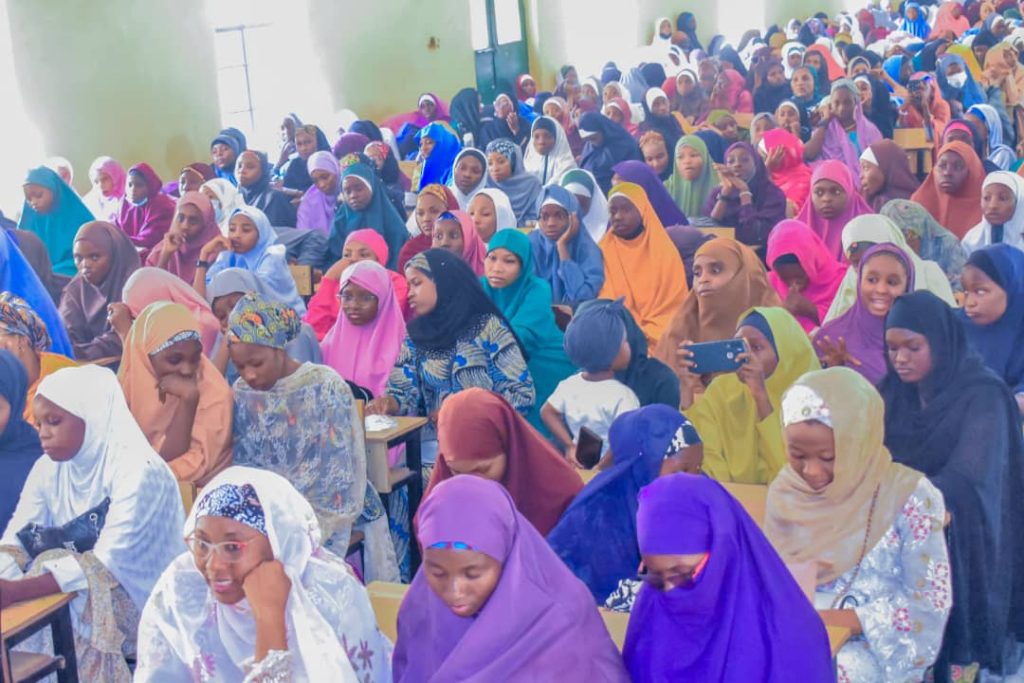
Umar Idris Shuaibu, Kano In a major step toward advancing female entrepreneurship and self-reliance, TechnoServe, in collaboration with the Kano Science Schools Old Students Association (KASSOSA) and the Technology Incubation Center (TIC), has launched a six-month training programme for young girls graduated from girls’ science secondary schools in Kano State. The event, which marked the official flag-off of the initiative, was held at the New Government Science and Technical College (GSTC), Kano, where hundreds of participants gathered to begin their journey toward acquiring practical entrepreneurial and employability skills. Speaking during the launch, Maryam Haruna Danjuma, Enterprise Development Advisor on the SAY-WEE Project—Skilling on Adolescent and Young Women for Entrepreneurship and Employability—explained that the project, funded by UNICEF through support from FCDO, aims to empower young women with business and employment skills that will enable them to become self-reliant and economically active. “In today’s world, women constitute a larger portion of the population, and empowering them means empowering their families and communities. SAY-WEE is designed to give young women the confidence and tools to contribute meaningfully to national development,” she said. Read Also: Why Science College Dawakin Kudu Remains a Pride of Kano’s Educational Heritage 15% Ad-Valorem Import Duty on Petrol and Diesel: Balancing Protectionism and Public Interest FG Clarifies: English, Mathematics Still Compulsory for O’Level Students Maryam added that being in science should not limit one’s opportunities in entrepreneurship, encouraging participants to “grab and learn other skills even as you continue your studies.” She urged KASSOSA members and trainees to take attendance and punctuality seriously, noting that consistent participation would determine eligibility for participating in the robust Aftercare phase of the project — a stage designed to provide ongoing mentorship and guidance after the training. Earlier in his address, KASSOSA National President, Malam Balarabe Nuhu Jalla Danbatta, explained that the association’s move into entrepreneurship and capacity building as part of its broader vision to help members and students become productive citizens and economic contributors. He said, “We believe in the power of entrepreneurship to shape lives, build enterprises, and transform communities. That is why KASSOSA, TechnoServe, and TIC have come together — KASSOSA provides the platform, TIC trains, and TechnoServe empowers.” Jalla noted that this is not KASSOSA’s first intervention of its kind, recalling previous collaborations with the Technology Incubation Center that led to successful training and empowerment of young people across Kano. Representing TIC, Malam Baba Tata Azare urged the girls to take the training seriously, stressing that such an opportunity — facilitated by credible organizations — is one many would ordinarily have to pay for. The Chairman of the KASSOSA Entrepreneurship Committee, Malam Habibu Ahmadu, announced that over 1,000 young girls would undergo training across three designated centers in Kano Metropolis: Girls Secondary School Ja’oji, First Lady Science College, New Girls Science Secondary School, and New Science Secondary School Dala. He advised the participants to choose the centers closest to them and make the best use of the programme to complement their science education with entrepreneurship knowledge that can improve their livelihoods. A notable moment during the event came from Aisha Shehu Jakada, a past beneficiary of the KASSOSA Entrepreneurship Programme, who shared her success story and urged the new trainees to stay committed. “I started small, but today I can proudly say that what I learned from the KASSOSA entrepreneurship programme changed my life. I now run a small business that supports my education and family. I urge every participant here to take this opportunity seriously and become self-reliant,” she said. The event underscored KASSOSA’s continuous commitment to youth empowerment and female capacity building in Kano, as the partnership with TechnoServe and TIC seeks to promote inclusive economic growth and gender equity in the state.

Education, Kano, News

ADUSTECH Management Dismisses ASUU Allegations, Lists Achievements Under Prof. Yakasai

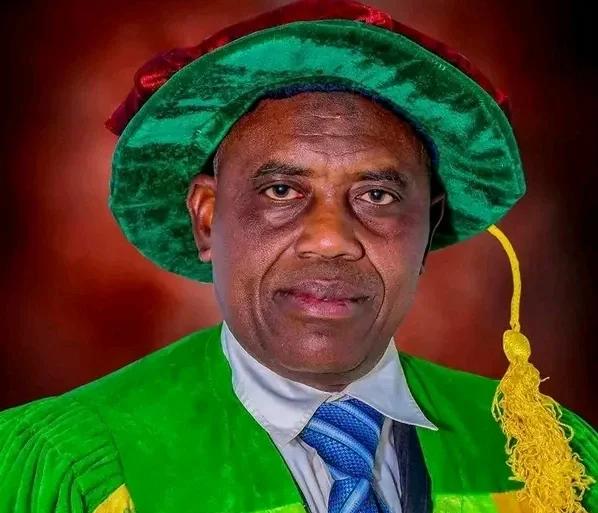
The Management of Aliko Dangote University of Science and Technology (ADUSTECH), Wudil, has dismissed what it described as spurious and unfounded allegations made by the Academic Staff Union of Universities (ASUU), ADUSTECH branch, saying the claims were aimed at misleading the public about the progress recorded by the institution and the Kano State Government. In a statement signed by the Deputy Registrar and Head of Information, Media and Public Relations Unit, Abdullahi Datti Abdullahi, the University Management maintained that under the leadership of Vice Chancellor Prof. Musa Tukur Yakasai, significant strides have been made to enhance teaching and learning facilities, improve staff welfare, and upgrade infrastructure across the campus. “For the avoidance of doubt and contrary to ASUU’s claims, the University has renovated lecture theatres and classrooms, installed multimedia facilities, public address systems, and digital teaching aids to enhance lecture delivery,” the statement said. Read Also: Prof. Musa Tukur Yakasai Appointed Sarkin Kudun Gaya by Emir of Gaya ADUSTECH Senate Reappoints Deputy Vice Chancellors Northwest University Kano Appoints Professor Aisha Garba Habib as Acting Vice Chancellor The Management further noted that the University Library had been connected to fibre optic internet through Galaxy Backbone, while the Central Research Laboratory was equipped with state-of-the-art facilities and powered by solar energy to ensure uninterrupted operations. According to the statement, the administration also carries out annual renovations of both male and female hostels, focusing on improved sanitation and hygiene to create a more conducive living environment for students. On financial matters, ADUSTECH clarified that the Vice Chancellor inherited unaudited accounts for the years 2020, 2021, and 2022, which have since been audited and released to the public. “The 2023 accounts are currently with the External Auditors and will be made available once completed,” it added. Addressing the issue of the Budget Performance Report, the Management explained that the dissolution of the 5th Governing Council had temporarily affected the activities of the Budget Monitoring Committee. However, with the reconstitution of the 6th Council, the Committee had already reviewed the first and second quarters of 2025. On staffing concerns, the statement noted that the University inherited newly established academic departments that lacked sufficient personnel and teaching facilities. It said the Management submitted recruitment requests, which were partly approved by the government, contributing to the institution’s successful accreditation exercise conducted by the National Universities Commission (NUC) in 2023. The University also clarified that the conversion of certain non-indigenous academic staff to contract appointments was based on a government circular directing such adjustments. “The Ministry for Higher Education has already constituted a committee to review the matter, and the Management awaits its recommendations,” the statement added. Responding to allegations of power disconnection, the Management said no section of the University was ever disconnected. It explained that the rationalization of electricity supply was due to high costs associated with operating on Band ‘A’, which had pushed the University’s monthly electricity bill to about ₦60 million — an unsustainable figure. The statement also emphasized that upon assumption of office, the Yakasai-led administration inherited over ₦2 billion in staff entitlements, 80 percent of which have been settled by the administration of Governor Abba Kabir Yusuf. The payments included Consequential Adjustments, Earned Academic Allowances, Hazard Allowance, SIWES/TP/Fieldwork allowances, Family Air Tickets, and promotion arrears for professors. Furthermore, the Management disclosed that the University had forwarded the outstanding 25 and 35 percent salary increments for staff to the state government, which is currently receiving attention. The University commended Governor Yusuf for his unwavering commitment to education, citing the State of Emergency on Education, foreign scholarships for outstanding graduates, and allocation of over 30 percent of the state budget to education as evidence of his dedication to revitalizing the sector. Describing ASUU’s allegations as politically motivated, the Management recalled that one of the signatories to the union’s press statement had previously accused the state government of undermining education less than a year into its administration. “The University Management therefore calls on the general public to disregard the misleading allegations by the ADUSTECH branch of ASUU. Despite this misinformation, we remain focused on improving the welfare and living conditions of both staff and students,” the statement concluded.

Business, Education, National, News

Naira Closes Week Stronger, Gains 1.07% at Official Forex Market

The Naira closed the week on a positive note, appreciating to N1,421.73 per dollar at the official foreign exchange market on Friday. According to data released by the Central Bank of Nigeria (CBN), the local currency gained N15.23 or 1.07 percent compared to the N1,436.97 recorded on Tuesday, maintaining a steady upward trend throughout the week. The Naira traded at N1,452.79 on Monday, N1,448.20 on Tuesday, and N1,444.42 on Wednesday, reflecting consistent appreciation over the past five trading days. Read Also: 15% Ad-Valorem Import Duty on Petrol and Diesel: Balancing Protectionism and Public Interest Financial analysts have linked the Naira’s strong performance to recent positive economic indicators, including Nigeria’s removal from the Financial Action Task Force (FATF) grey list, rising oil revenues, improved foreign reserves, and increased diaspora remittances. They noted that the sustained reforms by the Central Bank and the Federal Government are helping to stabilize the foreign exchange market and rebuild investor confidence. Analysts also expressed optimism that if the current policy direction continues, the Naira could experience further appreciation in the coming weeks, signaling growing stability in Nigeria’s macroeconomic environment.

Abuja, Kano, National, News

15% Ad-Valorem Import Duty on Petrol and Diesel: Balancing Protectionism and Public Interest

Veteran Labour Leader and Member of the National Institute (mni), Comrade Mustapha Nuhu Wali, has commended the Federal Government’s introduction of a 15 percent ad-valorem import duty on petrol and diesel, describing it as a strategic policy geared toward promoting local refining, industrial protection, and long-term national development. In a statement issued on Friday and made available to newsmen, Wali noted that the policy, approved by President Bola Ahmed Tinubu, represents a deliberate economic shift aimed at reducing Nigeria’s overdependence on imported refined petroleum products while boosting domestic production capacity. According to him, the measure — which places a value-based import tax on refined fuels — is expected to protect investments in local refineries such as the Dangote Refinery and the NNPCL’s rehabilitated plants, ensuring they remain viable and competitive in the Nigerian market. Read Also: Fuel Import Duty Hikes: Tinubu Approves 15% Ad-Valorem Tariff Food Waivers Threaten Northern Agriculture, Says Wali The Green Imperative Is Not Just a Federal Government Project — It Is a Lifeline for Northern Nigeria’s Agricultural Future Comrade Wali, however, cautioned that while the policy is sound from an industrial and fiscal perspective, its implementation must be carefully managed to prevent a disproportionate burden on ordinary Nigerians and small-scale enterprises. “In the short term, consumers and small businesses may experience slight increases in fuel costs, but the long-term benefits far outweigh these temporary challenges. The policy will stabilize fuel prices, reduce pressure on foreign exchange, and create sustainable jobs through increased domestic refining,” Wali stated. He explained that the 15% ad-valorem duty aligns with protectionist economic strategies adopted by countries seeking to industrialize and strengthen internal value chains. Wali emphasized that effective oversight and transparency are crucial for the success of the policy. “Government must ensure that the policy is implemented with fairness and accountability, balancing the interests of local investors with the welfare of the general public,” he said. The labour veteran urged the Federal Government to accompany the measure with social protection programs to cushion the impact on low-income households and transport-dependent sectors. He further noted that the policy, if sustained, could mark a turning point in Nigeria’s quest for energy security and economic self-reliance. “This initiative is a bold step toward achieving energy independence and reviving industrial growth. It’s a signal that Nigeria is ready to take control of its economic destiny,” Wali added. The introduction of the 15% ad-valorem duty forms part of broader fiscal and industrial reforms aimed at repositioning Nigeria’s downstream oil and gas sector for competitiveness, investment, and long-term stability.

National, News

NAF Redeploys 27 Senior Officers In Fresh Command Shake-Up

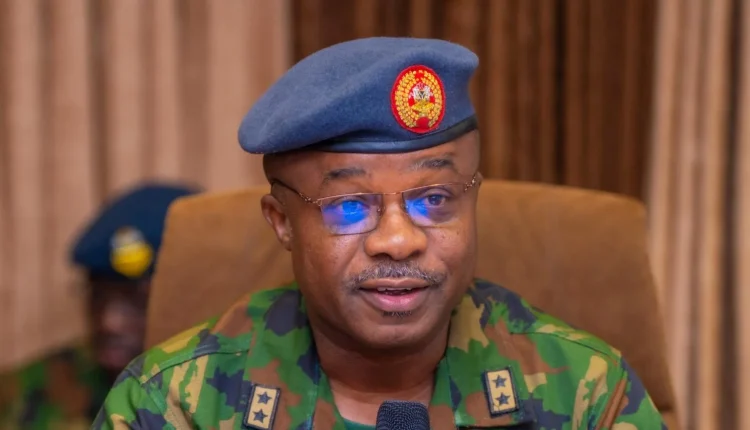
The Nigerian Air Force (NAF) has announced the redeployment of 27 senior officers in the rank of Air Vice Marshal (AVM), marking the first major command shake-up approved by the Chief of the Air Staff (CAS), Air Marshal Sunday Kelvin Aneke. The sweeping reform, which takes effect immediately, is aimed at aligning NAF’s command structure with ongoing defence reforms, evolving national security needs, and strengthening operational efficiency across its strategic formations and training institutions. According to a statement by the Director of Public Relations and Information, Air Commodore Ehimen Ejodame, the exercise reflects the CAS’s commitment to improving decision-making speed, enhancing mission readiness, and reinforcing accountability at all command levels. Read Also: Kogi Police Command Welcomes New Commissioner Naziru Bello Kankarofi  Under the new posting arrangement, AVM Abubakar Abdullahi assumes office as Chief of Policy and Plans at the Air Force Headquarters, while AVM Adeniran Ademuwagun takes over as Commandant of the Air Force Institute of Technology (AFIT), Kaduna. AVM Ibitayo Ajiboye has been appointed Group Managing Director of the Nigerian Air Force Investment Limited (NAFIL) Group of Companies. In operations and intelligence, AVM Precious Amadi becomes Chief of Operations, and AVM Nnamdi Ananaba takes charge as Chief of Air Intelligence. AVM Ebimobo Ebiowe now serves as Superintendent of Standards and Evaluation, while AVM Ahmed Dari becomes Chief of Training. The Transformation and Innovation Branch is now headed by AVM Mohammed Ibrahim, reflecting the service’s increasing focus on technological modernization and digital warfare readiness. In the logistics and engineering sectors, AVM Olufemi Ogunsina now serves as Chief of Aircraft Engineering, and AVM Michael Onyebashi takes command as Air Officer Commanding, Mobility Command. AVM David Pwajok is the new Chief of Communication and Information Systems, and AVM John Ukeh assumes the role of Air Provost Marshal, overseeing internal security enforcement. The administrative cadre also saw major changes. AVM Simon Peter now leads the NAFIL Housing and Construction Company as Managing Director, while AVM Chidiebere Obiabaka assumes duty as Air Secretary. AVM Anthony Martins has been appointed Chief of Administration, and AVM Abubakar Sule becomes Air Officer Commanding, Logistics Command. Similarly, AVM Abdulrasheed Kotun now heads NAF Farms as Managing Director. AVM Edward Gabkwet, the immediate past NAF spokesperson, has been named Chief of Civil-Military Relations, while AVM Osichinaka Ubadike assumes duty as Deputy Commandant of AFIT, Kaduna. Other senior officers — including AVMs Ahmed Bakari, Albert Bot, Idi Sani, Muhammed Suleiman, Jibrin Usman, and Japheht Ekwuribe — have been posted to various defence and joint service institutions to enhance inter-agency coordination and national defence cohesion. Air Marshal Aneke described the redeployment as a strategic effort to balance leadership, sustain institutional reforms, and build an agile, intelligence-driven Air Force capable of addressing Nigeria’s evolving security landscape. The development comes barely 24 hours after the Nigerian Army announced a similar reshuffle involving 27 senior officers, including 25 Major Generals and two Brigadier Generals, signaling ongoing reforms across the nation’s armed forces.

National, News

Former Immigration Boss Babandede Urges Tinubu to Strengthen Ties Between Customs and Immigration

Former Comptroller-General of the Nigeria Immigration Service (NIS), Muhammad Babandede, has called on President Bola Ahmed Tinubu to establish a stronger institutional relationship between the Nigeria Customs Service (NCS) and the Immigration Service to enhance national border security and governance. Babandede made the call in an exclusive interview with Migrationwatch magazine, where he drew parallels with the post-9/11 reforms in the United States that brought Customs and Immigration under closer coordination for improved homeland security. He lamented that in Nigeria, both agencies often operate in isolation despite their overlapping responsibilities. “Any time the two agencies are made to come together, one runs away from the other,” he said. Read Also: Lt. Gen. Shaibu Reshuffles Top Army Officers, Appoints New NDA Commandant According to him, the movement of goods and the movement of people are inseparable, especially within the West African subregion. “A person carrying goods and a person travelling are the same, particularly in our region. You cannot separate the movement of goods from the movement of persons carrying the goods,” Babandede stated. He emphasized the need for deliberate collaboration and innovation between the two agencies to tackle transnational crimes effectively. “Both the Immigration and Customs Services should deliberately invest in enhanced partnership and working relationships to achieve effective and efficient national border security and governance,” he said. Babandede also criticized what he described as a “great negligence” in recognizing the critical role of migration in national development. He urged the Federal Government to sustain ongoing reforms in the Nigeria Immigration Service aimed at modernizing border management. “The border is not just a security zone; it’s a cultural, historical, and economic zone,” he noted, calling for the creation of buffer zones and improved cross-border connectivity with neighboring countries. He further stressed the need for Nigeria to adopt a more strategic migration policy that evaluates the impact of migrants on the economy. “Migration is key to our development. Nigeria must invest in the type of people we filter in and the type we filter out. We must analyze the kind of jobs migrants do and how they affect our economy. We need to remove people who are undermining our development,” Babandede reiterated.

Kano, News

Federal Fire Service Trains 100 Police Officers’ Wives on Fire Safety in Kano

As part of activities marking the 2025 Fire Safety Week, the Federal Fire Service, in collaboration with the Kano State Police Command, has trained 100 members of the Police Officers’ Wives Association (POWA) on basic fire safety and firefighting skills. The training, held on Thursday, October 30, 2025, at the Police Officers’ Mess, Bompai, Kano, was led by the State Controller of the Federal Fire Service, Engr. Kazeem Oyefola Sholadoye, alongside senior fire officers from the Kano Command. According to the organizers, the exercise was timely, coming on the heels of several recorded fire incidents in the last 24 months across Kano State. Related: Brigadier General, 15 Others Held Over Alleged Coup Plan — Military Sources Kogi Police Command Welcomes New Commissioner Naziru Bello Kankarofi  Kano Police Arrest Two Armed Robbers, Recover Vehicle Stolen From Air Force Officer in Abuja Speaking during the opening session, the Chairperson of POWA, Hajia Hadiza Ibrahim Bakori, described the initiative as both educational and empowering. She emphasized that women play a crucial role in promoting safety at home and within their communities. “As wives, mothers, and homemakers, we play a fundamental role in the safety of our families and the environment we live in. Having the knowledge of how to prevent fires, react during emergencies, and use firefighting equipment is crucial in safeguarding lives and property. This training is not just a session — it is an empowerment. What we learn here today, we will take home to educate our families and communities,” she said. The Commissioner of Police, Kano State Command, CP Ibrahim Adamu Bakori, PhD, commended the collaboration between the Federal Fire Service and the Police Command, describing it as a proactive step toward building safer communities. “I am honoured to be part of this initiative organized by the Federal Fire Service in conjunction with the Kano State Police Command. This training offers our police officers’ wives valuable, life-saving skills. I commend the leadership of POWA for their commitment to the welfare and well-being of police families,” he stated. CP Bakori lauded the Kano Fire Service Controller, Engr. Sholadoye, for his innovative approach to fire prevention and safety, noting that the Command would continue to support similar partnerships that enhance community safety and emergency preparedness. He also urged participants to make good use of the knowledge gained and share it within their neighborhoods to promote awareness and responsiveness to fire emergencies. The event forms part of the Fire Safety Week celebration aimed at deepening public understanding of fire prevention measures and equipping residents with the skills to respond effectively to emergencies.

Scroll to Top