
The Historica Nigeria

Kano

Kano, News

Kano Govt Unveils ₦61.6bn Investment in Public Services, Urban Renewal

The Kano State Executive Council has approved the sum of ₦61.63 billion for a wide range of development projects spanning education, healthcare, infrastructure, agriculture, and urban renewal. The approvals were granted during the Council’s 39th meeting held at the Government House in Kano. Addressing journalists on the outcome of the meeting, the Commissioner for Information and Internal Affairs, Ibrahim Abdullahi Waiya, said the approvals reflect the administration’s commitment to improving public service delivery and accelerating socio-economic development across the state. He noted that the decisions followed extensive deliberations on key governance priorities, with a strong focus on enhancing living standards and expanding access to essential services. Education Sector Takes Major Share A significant portion of the funds was allocated to the education sector, including over ₦4.45 billion for the payment of external examination fees for students sitting for NECO, NABTEB, and NBAIS in 2026. Read Also: Kano Champions North-West Social Protection Plan Amid Funding Challenges Tinubu Points to Past Errors in Power Sector as Blackouts Persist Ganduje Confident APC Will Reclaim Kano in 2027 The Council also approved ₦2 billion for the procurement of school furniture across 30 local government areas, alongside multiple projects involving classroom construction, renovation, and upgrades in schools across Makoda, Tarauni, Ajingi, and Minjibir LGAs. Waiya added that funds were also approved to settle outstanding liabilities related to examination fees from 2020 to 2023, as well as feeding costs in boarding schools. Boost for Healthcare Services In the health sector, the Council approved key interventions, including the renovation of Wudil General Hospital and the procurement of medical equipment for major hospitals across the state. Other approvals cover routine immunisation programmes, polio outbreak response across all 44 local government areas, and funding for free maternal, neonatal, and child healthcare services in 484 primary healthcare centres. Major Infrastructure Investments On infrastructure, the Council approved over ₦5.2 billion for the construction of a major road linking Panshekara Underpass to Madobi Bridge, along with road reconstruction projects in Gwale Local Government Area. Additional approvals include the renovation of government offices, upgrades at the NYSC orientation camp in Kusalla, and construction works at key public facilities. Agriculture, Water and Environment To strengthen agricultural productivity, the Council approved nearly ₦3.5 billion for the procurement of over 41,000 bags of fertiliser, as well as investments in irrigation and institutional infrastructure. In the water sector, major allocations include ₦3.48 billion for the rehabilitation of the Tamburawa Water Treatment Plant, alongside funding for boreholes and utility payments. Environmental initiatives such as urban beautification, solar-powered boreholes, and drainage improvements were also approved. Urban Development and Digital Mapping The Council earmarked substantial funds for urban development projects, including compensation for land acquisition, road infrastructure, and the establishment of Gaya Polytechnic. It also approved multi-billion naira projects for street naming, mapping, and house numbering under Phase II of the state’s urban planning programme. Other Strategic Approvals Additional approvals include funding for special intervention projects across 15 local government areas, settlement of staff entitlements at Aliko Dangote University, and procurement of ICT equipment to enhance government communication. The Council also approved programmes aimed at economic empowerment and public service delivery, including support for butchers and operational logistics for Hajj activities. Government Reaffirms Commitment Waiya assured residents that all projects would be executed in line with due process and accountability. He emphasized that the administration remains focused on delivering tangible dividends of democracy to the people. “The approvals underscore government’s commitment to improving infrastructure, education, healthcare, and overall socio-economic development of Kano State,” he stated. He further noted that the Council acknowledged recent recognitions and awards received by the state governor, describing them as reflections of the impact of ongoing reforms and leadership direction.

Humanitarian, Kano, News

UNICEF, KASPA Champion Capacity Training to Strengthen Social Protection, Improve Child Welfare

A three day capacity building training on child poverty data generation, policy design, and implementation has been held in Dutse, Jigawa State, bringing together officials from social protection Ministries, Departments and Agencies in Kano State. Speaking at the session, the Officer in Charge of UNICEF Kano Field Office, Mr. Karanveer Singh, said the training aligns with UNICEF’s core mandate of improving the lives of children and eliminating child poverty. The training was organised by the Kano State Social Protection Agency (KASPA), with support from the UNICEF Kano Field Office as part of efforts to strengthen institutional capacity and improve child welfare outcomes. He emphasised that addressing child poverty requires a coordinated, multi sectoral approach, urging stakeholders to work together in changing the narrative. Read Also: Accurate Data, Accountability Key to Social Protection Success — UNICEF Social Protection Training Highlights Need for Data, Policy Review in Kano Kano, Katsina, Jigawa Record High Child Poverty Rates — UNICEF “There is need to stop depriving children of health, education, nutrition and housing. By doing so, we deprive the future and significantly affect the growth of the child. Every effort must be made to reach children who need support,” he said. Singh explained that bringing together different MDAs was aimed at strengthening collaboration and ensuring that children have access to essential services, including healthcare, education, nutrition, and safe housing. He called on participants to work collectively in delivering meaningful impact. In his presentation on the institutionalisation of social protection, retired Permanent Secretary from the Jigawa State Ministry of Budget and Economic Planning, Aminu Adamu Ringim, described social protection as a critical economic development strategy for addressing societal challenges and safeguarding vulnerable populations. He stressed that a clear understanding of social protection concepts is essential for officials responsible for implementing policies and programmes, noting that such knowledge enhances effective service delivery and operational efficiency. Also speaking, a former Social Protection Coordinating Unit coordinator in Jigawa State urged participants to engage consistently with field implementers of social protection programmes to gain practical insights and address operational challenges. On financing, Director from the Kano State Ministry of Livestock, Dalhatu Danladi, highlighted the importance of sustainable funding for social protection programmes. He explained that social protection includes cash and in kind transfers, social insurance, and labour interventions targeted at vulnerable populations. Danladi noted that adequate financing ensures sustainability, expands coverage, strengthens resilience to economic, climate, and health shocks, and builds public trust in government systems. He called on government to increase budgetary allocations, while also encouraging private sector participation and support from development partners. The director further identified innovative financing options such as Zakat as a viable mechanism for domestic resource mobilisation, noting that it aligns with poverty reduction goals if supported by transparency and accountability frameworks. He, however, pointed out challenges including fragmented administration and weak data systems, urging stronger coordination and integration with social registries. Danladi also advocated for the adoption of budget tagging to track social protection expenditure, improve monitoring and evaluation, identify funding gaps, and strengthen policy alignment. He recommended partnerships between government and Zakat agencies, deployment of digital platforms for beneficiary payments, and real time monitoring systems to improve efficiency. The training is part of broader efforts to equip stakeholders with the knowledge and tools required to design and implement policies that will reduce child poverty and improve human development outcomes across Kano State and beyond.

Humanitarian, Kano, News

Accurate Data, Accountability Key to Social Protection Success — UNICEF

Efforts to strengthen social protection systems in Kano State gained renewed emphasis as experts highlighted the central role of monitoring, evaluation, and accountability in ensuring effective programme delivery and measurable impact. The emphasis came during a three-day capacity-building training on child poverty data generation, policy design, and implementation held in Dutse, Jigawa State. The training was organised by the Kano State Social Protection Agency with support from the UNICEF Kano Field Office. Delivering a presentation on Monitoring and Evaluation in Social Protection, Ibrahim Ibrahim, a Monitoring and Evaluation specialist with UNICEF Kano Field Office, outlined core elements of effective M&E systems, including tracking results, measuring impact, and ensuring accountability. He explained that strong monitoring frameworks help implementers identify gaps, follow performance trends, and make evidence-based decisions. According to him, accountability remains central to addressing inefficiencies and leakages within implementation structures. Read Also: Social Protection Training Highlights Need for Data, Policy Review in Kano Kano, Katsina, Jigawa Record High Child Poverty Rates — UNICEF Kano Tricycle Unions Join Immunisation Drive as BOOST Mobilises 130 Leaders “If we are implementing effectively, we will know where the problems are coming from. It is accountability that will address those leakages,” he said. Ibrahim noted that the primary objective of monitoring systems is to track performance, strengthen accountability, identify bottlenecks, and guide programme and policy decisions. He stressed the importance of reliable and accurate data, warning against duplication and emphasising the need for proper justification of outcomes. “If a programme succeeds, we must understand why. If it fails, we must also explain why,” he added. The UNICEF expert further explained that data for monitoring and evaluation is drawn from Management Information Systems, spot checks, beneficiary surveys, and community-based monitoring processes. Participants were encouraged to strengthen data systems and adopt evidence-driven approaches to improve the delivery of social protection interventions across Kano State. The training forms part of broader efforts aimed at improving institutional performance and ensuring more effective implementation of policies designed to reduce poverty and enhance the welfare of vulnerable populations.

Humanitarian, Kano, News

Kano Tricycle Unions Join Immunisation Drive as BOOST Mobilises 130 Leaders

In a renewed effort to address the rising number of zero-dose and under-immunised children, tricycle union leaders in Kano State have pledged to support routine immunisation campaigns, following a sensitisation training organised under the BOOST Project. The engagement, which brought together over 130 leaders of the Kano State Tricycle Associations Forum, was held in Kano focused on mobilising transport operators as grassroots advocates for child immunisation. The training was implemented by Save the Children International with funding support from GlaxoSmithKline, in collaboration with the Kano State Community of Practice on Immunisation, Budget Tracking, Advocacy, and Accountability. The forum represents one of the largest male-dominated associations in the state, with an estimated membership of about 200,000 operators. Speaking at the session, the BOOST Project Advocacy Officer, Umar Ibrahim, said the initiative was designed to leverage trusted community platforms to improve access to life-saving vaccines. He noted that tricycle operators interact daily with passengers and families, placing them in a strategic position to influence attitudes and promote vaccine acceptance, particularly in underserved communities. Read Also: Nigeria Records Over 2 Million Zero-Dose Children, Ranks Among Highest Globally — Save the Children BOOST Project Strengthens Community Mobilisation Through Kano Tricycle Associations Forum Kano, Katsina, Jigawa Record High Child Poverty Rates — UNICEF Participants were taken through key aspects of routine immunisation, including schedules, benefits, and the urgent need to address barriers such as resistance from male household heads, which continues to affect uptake across parts of the state. In his remarks, the State Chairman of the Amalgamated Commercial Tricycle Owners and Riders Association of Nigeria (ACOMORON), Abdulkarim Yusuf, assured that members of the union would support the campaign by promoting immunisation awareness among passengers and within their communities. Also speaking, the Chairman of the Kano State Community of Practice on Accountability, Salisu Yusuf, emphasised the need for sustained collaboration among government agencies, civil society organisations, and community stakeholders to improve health outcomes. At the end of the engagement, the union leaders signed a commitment statement, affirming their resolve to champion routine immunisation within their networks. The commitments include promoting awareness, identifying and referring zero-dose children, encouraging male participation in immunisation efforts, and supporting the development of a Kano State-specific immunisation policy. They also pledged to integrate immunisation advocacy into their routine activities and meetings, while working closely with implementing partners to track progress and ensure accountability. The initiative forms part of broader interventions under the BOOST Project, Better Opportunities for Optimal Services and Targeted Immunisation for Zero-Dose and Under-Immunised Children, which aims to strengthen routine immunisation coverage, improve accountability systems, and expand access to essential vaccines across Nigeria.

Humanitarian, Jigawa, Kano, News

Social Protection Training Highlights Need for Data, Policy Review in Kano

Stakeholders in Kano’s social protection sector have called for improved data systems, policy review, and stronger government funding to enhance the delivery of programmes aimed at addressing child poverty and human development challenges. The call was made during a three-day capacity-building training on child poverty data generation, policy design, and implementation held in Dutse, Jigawa State. The exercise was organised by the Kano State Social Protection Agency (KASPA ) with support from the UNICEF Kano Field Office. Presenting a paper on Kano State Social Protection Policy, Dalhatu Danladi, a Director from the Ministry of Livestock, outlined key policy objectives, strategies, and implementation frameworks. He stressed the need for officials across relevant agencies to understand the roadmap for executing social protection programmes effectively. “This will be the only way to achieve the desired results. Having a clear understanding of the fundamentals is paramount,” Danladi said. Read Also: Kano, Katsina, Jigawa Record High Child Poverty Rates — UNICEF Cash Transfer Hits 609,000 in Kano as Yusuf Commends Programme Kano Leads North-West Social Protection Drive With Joint Action Plan He added that the state’s social protection policy document requires periodic review to reflect current realities, noting that outdated provisions should be removed while emerging needs to be incorporated. Danladi also emphasised the importance of deploying limited financial resources based on accurate and reliable data, describing it as essential for effective programme implementation. In her remarks, a Social Protection Specialist with UNICEF Kano Field Office, Fatimah Musa, urged officials of KASPA to adhere strictly to established frameworks designed to guide the agency’s operations. She highlighted the need for a functional monitoring system, including a digital dashboard and a Management Information System, to track interventions, identify gaps, and improve service delivery. “KASPA needs a dashboard to monitor social protection interventions, assess progress, and identify gaps. A functional MIS will greatly enhance performance,” she said. Musa further advised social protection agencies to reduce overdependence on donor funding and engage government authorities to secure adequate financing for their programmes. She also called on ministries, departments, and agencies to prioritise budget advocacy to ensure sufficient allocation of resources for implementing policies aimed at improving the welfare of vulnerable populations.

Kano, News, Politics

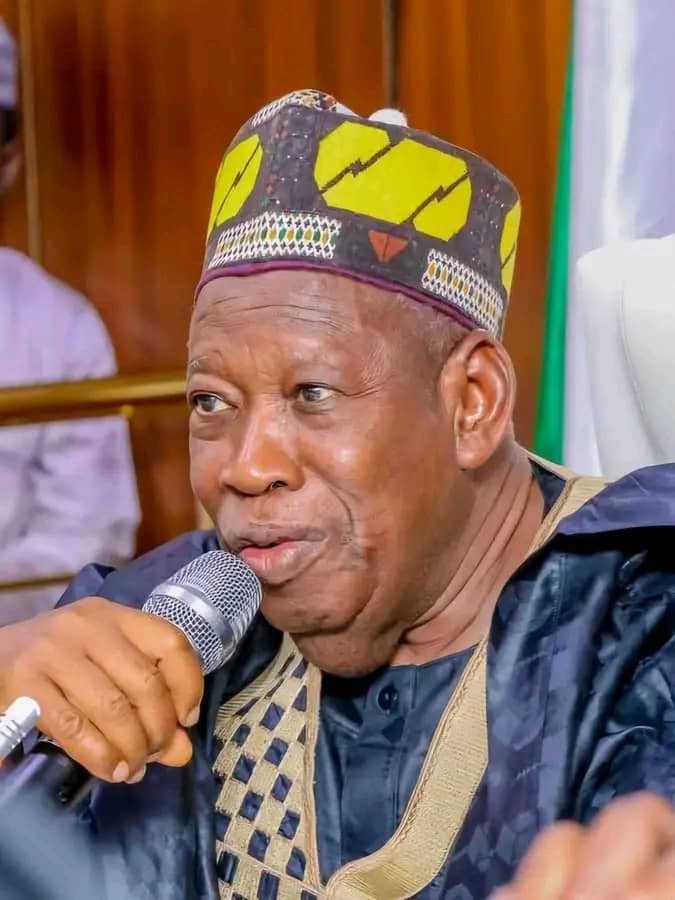
Ganduje Confident APC Will Reclaim Kano in 2027

The immediate past National Chairman of the All Progressives Congress (APC) and Chairperson of the Board of the Federal Airports Authority of Nigeria (FAAN), Abdullahi Umar Ganduje, has expressed confidence that the ruling party will reclaim Kano State in the 2027 general elections. Ganduje made the assertion during an interview with BBC News Hausa, where he described Kano as a critical political battleground and emphasized that the APC is strategically positioning itself to regain control of the state. He noted that the party is leveraging ongoing political developments, including what he described as the perceived alignment of Governor Abba Kabir Yusuf, as part of its broader efforts to strengthen its foothold ahead of the next electoral cycle. The former governor dismissed the recent political moves by Rabiu Musa Kwankwaso, including his association with the African Democratic Congress (ADC) and alliances with figures such as Atiku Abubakar and Peter Obi, arguing that internal ambitions within the coalition could weaken its cohesion. Related: Ganduje Links Rising Begging in North to Poor Support for Disabled Persons Ganduje further pointed to the APC’s control of several states across the country as evidence of its national strength, adding that recent defections into the party reflect growing confidence in its leadership and direction. Reflecting on the 2023 governorship election in Kano, he maintained that the APC had strong grounds in the contest but has since accepted the verdict of the Supreme Court, noting that the party is now focused on rebuilding and consolidating its structure. He also downplayed concerns over the resignation of the party’s 2023 governorship candidate, Nasiru Yusuf Gawuna, attributing the development to personal political considerations rather than internal divisions, while dismissing speculations of any strong alliance between Gawuna and Kwankwaso. Reaffirming the party’s ambition, Ganduje stated that the APC is undergoing a process of reconciliation and grassroots mobilisation, expressing confidence that these efforts will position the party for victory in Kano State in 2027, he reiterated.

Kano

Farm Centre Under Siege: Kano Must Reject Political Violence Before 2027

By Comrade Abbas Ibrahim By all standards, the recent violent invasion of Kano’s bustling GSM Farm Centre Market by suspected political thugs is a dangerous development that must be condemned in the strongest possible terms. What transpired on Monday, 27th April 2026, was not merely an attack on traders and innocent citizens; it was an assault on public peace, economic prosperity, and the very foundations of democratic engagement. Farm Centre is not just another market. It is one of the largest mobile phone and information technology hubs in Northern Nigeria, attracting traders, investors, and customers from across Nigeria and neighbouring countries. Its vibrancy has made it a critical contributor to Kano’s economy and a symbol of the state’s commercial strength. Any attack on such a strategic economic centre is, by extension, an attack on Kano itself. The scenes were deeply disturbing. Shops were looted, vehicles and motorcycles vandalized, and many innocent people sustained injuries. Traders, many of whom are still struggling to recover from previous devastating fire outbreaks, have once again been thrown into uncertainty, pain, and financial hardship. Even more troubling is the fact that the Kano Passport Office is located within the vicinity. Such brazen violence near a sensitive federal facility raises serious security concerns and paints an unfortunate image of Kano before local and international visitors. Read Also: Ganduje Links Rising Begging in North to Poor Support for Disabled Persons Although the politician allegedly linked to the incident has denied involvement, the incident underscores a much larger and more troubling reality: the growing recklessness of political actors and their inability or unwillingness to restrain their supporters. As the 2027 general elections approach, Kano cannot afford a return to the dark days when political contests were settled through violence, intimidation, and destruction. Democracy thrives on ideas, persuasion, and the ballot not on thuggery, fear, and bloodshed. Political leaders must understand that they bear both moral and legal responsibility for the actions of their followers. Silence in the face of violence is complicity. Ambiguity only emboldens criminal elements who exploit political rivalries for personal gain. While the swift intervention of the police, including the deployment of teargas and the arrest of six suspects, helped to restore order, the incident has once again exposed the glaring limitations in the security architecture around Farm Centre. The police division is evidently overstretched, to effectively respond to large scale disturbances in such a densely populated commercial space. This is precisely why the Kano State Government must immediately strengthen the operational capacity of the Kano State Vigilante Group and, more importantly, fully leverage the Kano Neighbourhood Safety Corps. Established with an initial strength of 2,000 personnel drawn from all 44 local government areas, the Corps was specifically designed to complement conventional security agencies. The law establishing it wisely insulates it from partisan politics, ensuring professionalism, neutrality, and community trust. Under the capable leadership of retired Lieutenant Colonel Aminu Abdulmalik, the Corps possesses the discipline, structure, and local intelligence needed to provide rapid response and preventive security. The time has come for their strategic deployment to critical economic hubs such as Farm Centre. Recommendations for Immediate Action First, all political parties and aspirants must publicly commit to peaceful conduct and take responsibility for the actions of their supporters. Second, law enforcement agencies must thoroughly investigate the incident and prosecute all those found culpable, regardless of political affiliation. Third, security presence at Farm Centre should be significantly enhanced through a joint task force comprising the Police, Civil Defence, and Kano Neighbourhood Safety Corps. Fourth, the Kano State Government should establish a permanent rapid response security unit dedicated to protecting major commercial centres. Fifth, political leaders must invest in civic education, teaching their supporters that elections are contests of ideas, not battles of survival. Finally, traditional rulers, religious leaders, civil society organizations, and the media must intensify advocacy against political violence and promote a culture of tolerance. A Test for Kano Kano stands at a critical crossroads. The state can either allow desperate politicians and criminal elements to drag it backwards or rise above violence and preserve its proud reputation as the commercial heartbeat of Northern Nigeria. The attack on Farm Centre must serve as a wake up call. Political ambition must never be allowed to supersede public safety. The livelihoods of hardworking citizens must never become collateral damage in the pursuit of power. Kano deserves better. Its traders deserve protection. Its democracy deserves maturity. The journey to 2027 must begin with a firm and collective rejection of political violence in all its forms. Anything less would be a betrayal of the people. Comrade Abbas Ibrahim writes from Kano and can be reached @ abbasibrahim664@gmail.com

Kano, News

Yusuf: Garo’s Appointment Based on Competence, Track Record

Kano State Governor, Abba Kabir Yusuf, has said the nomination and confirmation of Murtala Sule Garo as Deputy Governor were based on his proven competence and commitment to the development of the state. The governor made this known on Tuesday while declaring open the 39th Executive Council Meeting held at the Government House, Kano. According to a statement issued by his Chief Press Secretary, Mustapha Muhammad, Yusuf explained that the decision followed a careful selection process after the resignation of the former Deputy Governor, Aminu Abdulsalam Gwarzo. “We tried as much as possible to select someone who can make meaningful contributions to the development of the state,” the governor said. Read Also: Meet Zaid Abubakar, The Man Steering Kano’s Revenue Transformation He added that several candidates were considered before arriving at the final choice. “Many people were presented, but we carefully assessed their past performances, competence, and contributions to the state. Murtala Sule Garo is a seasoned politician who can effectively contribute to our administration,” he stated. Governor Yusuf also commended the Kano State House of Assembly, led by Speaker Jibril Ismail Falgore, for the swift confirmation of the nominee. He disclosed that the swearing-in ceremony of the new Deputy Governor would take place soon, urging the people of the state to support him in the discharge of his duties. The governor further congratulated the newly appointed Head of Service, Bilkisu Shehu Maimota, describing her past contributions as Director and Permanent Secretary as invaluable. He called on stakeholders and civil servants to extend maximum support to ensure her success in office. At the meeting, Yusuf was also presented with 39 Outstanding Excellence Awards from various organisations within and outside Kano State in recognition of his administration’s achievements.

Kano, Politics

Governor Yusuf Purchases Nomination Form for Second Term Bid

  The Governor of Kano State, Abba Kabir Yusuf, has purchased a nomination form to contest for a second term in office ahead of the 2027 general elections.Reports indicate that Muhammad Jamo collected the form on his behalf in Abuja on Tuesday, a development that has attracted attention among political observers in Kano and across Nigeria. Read Also: What to Know About Kano’s Deputy Governor Nominee, Murtala Sule Garo The move is seen as an early signal of the governor’s intention to seek re-election, as political activities and strategic alignments gradually intensify ahead of the 2027 polls.

Kano, News

Cash Transfer Hits 609,000 in Kano as Yusuf Commends Programme

Kano State Governor, Abba Kabir Yusuf, has commended the Household Prosperity and Empowerment Cash Transfer Programme for its achievements in transparency, operational efficiency, and wide beneficiary coverage across the state. The governor made the remark on Monday at the Government House, Kano, while receiving the Minister of Humanitarian Affairs and Poverty Reduction, Bernard M. Doro, who led a delegation from the ministry on an assessment visit. In a statement issued by the Chief Press Secretary to the governor, Mustapha Muhammad, Yusuf disclosed that the programme has reached 609,013 beneficiaries in Kano State, with a total disbursement of N48,276,150,000 to citizens living below the poverty line. “This achievement reflects the programme’s far-reaching commitment to poverty alleviation, social inclusion, and economic empowerment,” the governor stated. Read Also: Kano, Katsina, Jigawa Record High Child Poverty Rates — UNICEF Nigeria Records Over 2 Million Zero-Dose Children, Ranks Among Highest Globally — Save the Children Tinubu Points to Past Errors in Power Sector as Blackouts Persist Represented by his Chief of Staff, Dr. Sulaiman Wali Sani, the governor urged beneficiaries to see the support not as temporary relief but as a foundation for sustainable economic growth. He also commended the minister for what he described as visionary leadership and dedication towards the successful implementation of the National Social Safety Nets Project Scale Up. Earlier, Doro said his visit to Kano was aimed at engaging stakeholders and beneficiaries to evaluate the progress and impact of the programme. He noted that the volume of funds disbursed to beneficiaries in Kano surpasses the combined total received by four other states, attributing the success to the transparency demonstrated by the state government. In her remarks, the State Commissioner for Women Affairs, Children and Persons with Special Needs, Amina Abdullahi, confirmed that the programme is progressing smoothly, adding that beneficiaries have continued to express appreciation for the intervention. The visit formed part of ongoing efforts to strengthen social protection initiatives and ensure effective delivery of poverty reduction programmes across the country.

Scroll to Top