The Historica Nigeria

Kano

Kano, News

Pro-Democracy Group Endorses Garo, Urges Unity Ahead of Confirmation

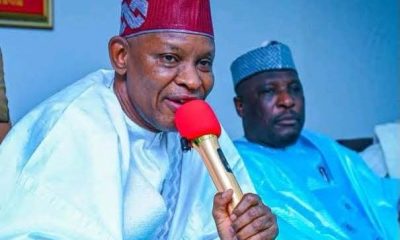
The Nigerian Democratic Working Group has endorsed the nomination of Hon. Murtala Sule Garo as Deputy Governor of Kano State, describing the move as timely and in line with the principles of effective governance. In a statement signed by its National Coordinator, Mohammed Hussaini, the group commended Governor Abba Kabir Yusuf for what it termed a well-considered decision that reflects political maturity and inclusiveness. The group noted that the nomination underscores the importance of appointing experienced and capable individuals into key leadership positions to enhance governance outcomes and strengthen institutional effectiveness. According to the statement, Garo’s nomination represents a significant step toward reinforcing administrative efficiency and promoting cohesive governance in the state. Read Also: Kano Lawmakers Set Date to Screen Murtala Garo as Deputy Governor Tinubu Reshuffles Education Agencies, Appoints Adelabu, Salako, Others Oluremi Tinubu’s Kano Visit Signals Support for Innovation, Youth Development – KASPA DG It further highlighted his extensive experience in public service and active involvement in political processes, describing him as well-positioned to support the governor in delivering on his administration’s development agenda. The group also called on stakeholders across political divides, including members of the All Progressives Congress, to support the nomination in the interest of unity, stability, and sustainable development in Kano State. Emphasising the need for collaboration, the group urged political actors to prioritise collective progress over partisan interests, noting that enduring governance success depends on shared responsibility and inclusive participation. Reaffirming its commitment to democratic values, the group pledged continued support for policies and initiatives aimed at promoting good governance, institutional strength, and improved service delivery. It expressed confidence that Garo’s nomination would further strengthen governance structures and contribute meaningfully to the long-term development of Kano State.

Kano, News

Kano Lawmakers Set Date to Screen Murtala Garo as Deputy Governor

The Kano State House of Assembly has fixed Monday, April 27, 2026, for the screening of the deputy governor nominee, Hon. Murtala Sule Garo. The Speaker of the House, Hon. Jibrin Isma’il Falgore, announced the date during plenary on Wednesday after reading a formal request from Governor Abba Kabir Yusuf. The nomination of Garo follows the recent resignation of the former Deputy Governor, Aminu Abdussalam Gwarzo. Related: What to Know About Kano’s Deputy Governor Nominee, Murtala Sule Garo Kano Governor Nominates Murtala Garo as Deputy Governor Kano: Ex-Commissioners Back Garo for Deputy Governor, Endorse Appointment ‘The Historica Nigeria’ recalls that Governor Yusuf had earlier forwarded Garo’s name to the Assembly for screening and confirmation in line with constitutional provisions. The scheduled screening is expected to pave the way for legislative consideration of the nominee as the state moves to fill the vacant deputy governorship position.

Feature, Kano, Politics

What to Know About Kano’s Deputy Governor Nominee, Murtala Sule Garo

By Umar Idris Shuaibu, Kano  As the Kano State House of Assembly prepares to screen Murtala Sule Garo for the position of Deputy Governor, attention has once again shifted to a political figure whose career has been shaped by grassroots engagement, administrative experience, and strategic relevance within Kano’s evolving power structure. Garo, a prominent name in Kano politics, is widely known for his role as former Commissioner for Local Government and Chieftaincy Affairs, where he carved a niche as a bridge between government institutions and traditional authority. His emergence as a nominee under the administration of Abba Kabir Yusuf is being closely watched, not only for what it represents politically, but also for what it signals about the direction of governance in the state. Born and raised in Kano State, Garo’s early life was shaped by the socio-cultural realities of northern Nigeria, where tradition, religion, and community leadership play defining roles in everyday life. Growing up within this environment, he developed an appreciation for the delicate balance between modern governance and traditional institutions, an understanding that would later define much of his public service career. His upbringing, rooted in values of discipline, respect for elders, and civic responsibility, contributed to a political outlook that prioritises community engagement and inclusive leadership. Educated within Kano, Garo passed through the state’s primary and secondary school system before advancing to tertiary education, where he acquired the knowledge and training necessary for administrative and governance roles. While details of his academic institutions remain largely understated in the public domain, his professional trajectory reflects a solid grounding in public administration, policy coordination, and leadership. His education is widely regarded as instrumental in shaping his communication skills and his ability to navigate the complexities of governance in a politically vibrant state like Kano. Read Also: Kano Governor Nominates Murtala Garo as Deputy Governor KSP Partners JOSTUM to Offer PGD Courses in Management, Social Sciences Oluremi Tinubu’s Kano Visit Signals Support for Innovation, Youth Development – KASPA DG Garo’s political rise was neither abrupt nor accidental. It evolved through years of active participation in grassroots politics, where he built strong connections with ward leaders, community stakeholders, and party structures. His tenure as Chairman of Kabo Local Government Area marked a significant phase in his career, providing him with firsthand experience in local governance and public administration. It was during this period that he established a reputation for accessibility and responsiveness, qualities that resonated with constituents and strengthened his grassroots appeal. His subsequent appointment as Commissioner for Local Government and Chieftaincy Affairs during the administration of Dr. Abdullahi Umar Ganduje elevated his profile and expanded his influence across Kano’s political landscape. In that capacity, he oversaw the coordination of local government activities while managing the often-sensitive relationship between the state government and traditional rulers. His responsibilities included strengthening traditional institutions, supervising local councils, promoting effective grassroots governance, and enhancing collaboration between state authorities and local structures. Report says that his tenure was characterised by consistent engagement with emirs, district heads, and local government officials, fostering improved communication and cooperation across governance levels. This experience not only deepened his institutional knowledge but also enabled him to build a network that cuts across political, cultural, and administrative divides, an asset that continues to define his relevance. Beyond his formal roles, Garo has remained an influential political actor, particularly within the All Progressives Congress (APC), where he is regarded as a loyal stakeholder and strategic mobiliser. His ability to maintain relevance despite shifting political alignments in Kano underscores a measured approach to politics, one that blends loyalty with adaptability. Known for his calm disposition and calculated decision-making, he is often described by observers as a politician who understands the pulse of local governance and the importance of sustained community engagement. His nomination as Deputy Governor is therefore being interpreted as more than a routine political appointment. For the administration of Abba Kabir Yusuf, it may represent a strategic effort to consolidate grassroots support, strengthen institutional linkages, and broaden political inclusivity in a state where power dynamics are both complex and deeply rooted. As the screening process by the Kano State House of Assembly unfolds, political observers are keenly watching how Garo’s experience, alliances, and leadership style will be assessed in relation to the demands of the office. His track record in local governance and his familiarity with traditional institutions are expected to feature prominently in considerations about his suitability for the role. Regardless of the eventual outcome, Garo’s journey offers insight into the workings of Kano’s political system, where grassroots connection, administrative competence, and strategic positioning often define the path to leadership. His re-emergence at this critical moment underscores a broader reality in the state’s politics: influence, once established, rarely fades; it simply repositions itself in anticipation of the next opportunity. As Kano watches and waits, the screening of Murtala Sule Garo may well mark the beginning of a new chapter, not only in his political career but in the evolving governance structure of the state.

Kano, News, Politics

Kano Governor Nominates Murtala Garo as Deputy Governor

By Umar Idris Shuaibu, Kano Kano State Governor, Abba Kabir Yusuf, has forwarded the name of Hon. Murtala Sule Garo to the Kano State House of Assembly for screening and confirmation as Deputy Governor. The development follows weeks of intense political maneuvering and consultations among stakeholders within the All Progressives Congress (APC), over who should fill the vacant position. Party factions had earlier pushed forward different prominent figures for the role, reflecting internal divisions and competing interests within the party. Read Also: Power play in Kano: is Murtala Garo the missing link In Yusuf’s political equation? Oluremi Tinubu’s Kano Visit Signals Support for Innovation, Youth Development – KASPA DG Tinubu Rejigs Cabinet, Names Oyedele New Finance Minister However, Garo, who was the deputy governorship candidate of the APC in the 2023 general elections, appears to have emerged as the consensus choice after the prolonged deliberations. The nomination is expected to set the stage for legislative screening by the Kano State House of Assembly in line with constitutional provisions.

Kano, News

Oluremi Tinubu’s Kano Visit Signals Support for Innovation, Youth Development – KASPA DG

The Director-General of the Kano State Social Protection Agency (KASPA), Dr. Fatima Abubakar Abdullahi, has welcomed the planned visit of Nigeria’s First Lady, Oluremi Tinubu, to Kano State. The First Lady is expected in the state to officially flag off the North-West zonal innovation and entrepreneurship exhibition, a platform designed to showcase creative ideas, technological advancements, and business solutions by innovators and researchers across the region. The event, scheduled to hold on Thursday, April 23, 2026, at the Government House in Kano, is being organised through a collaboration between the Kano State Government and the Federal Ministry of Innovation, Science and Technology. In a statement, the KASPA Director-General described the visit as a demonstration of strong support and goodwill from the Presidency towards the people of Kano State. Read Also: KSP Partners JOSTUM to Offer PGD Courses in Management, Social Sciences Kano Champions North-West Social Protection Plan Amid Funding Challenges UNICEF Raises Alarm Over Child Poverty as States Push Social Protection Reforms She noted that the initiative would provide an opportunity for young people, women, and entrepreneurs to present their ideas, access support, and transform their innovations into viable ventures. The DG further called on residents, particularly women and youths, to turn out in large numbers to receive the First Lady and participate in the event. According to her, the programme is expected to empower participants with the tools, exposure, and connections needed to turn their business ideas into reality. She reiterated the agency’s commitment to supporting social protection initiatives that promote inclusive growth and economic opportunities for all segments of society.

Health, Humanitarian, Kano

BOOST Project, CoP Seek Legislative Action on Zero-Dose Children in Kano

Stakeholders working to improve child health outcomes in Kano State have intensified advocacy efforts to secure legislative backing for immunisation programmes, with a focus on addressing the growing challenge of zero-dose and under-immunised children. The Kano Community of Practice on Immunisation, Budget Tracking, Advocacy and Accountability (Kn-CoP), in collaboration with the BOOST Project implemented by Save the Children International, paid an advocacy visit to the Kano State House of Assembly. The delegation engaged with Hon. Abdulhamid Abdul, member representing Minjibir Local Government Area and Chairman of the House Committee on Appropriations, stressing the need for increased budgetary allocation to immunisation and stronger legislative support through constituency projects and oversight functions. Speaking during the visit, the BOOST Project Advocacy Officer, Umar Ibrahim, said the engagement was aimed at deepening collaboration with lawmakers to ensure greater prioritisation of immunisation programmes across the state. Read Also: Tinubu Extends Wudil Police Academy to Ogun, Releases ₦15bn Take-Off Fund KASSOSA, DMCSA Distribute N1.5m Drugs to Science Schools in Kano, Jigawa Kano CoP Trained on Immunisation Advocacy, Seeks Funding to Tackle Zero-Dose Children He emphasised that adequate funding and effective policy implementation are critical to closing gaps in vaccine coverage and reducing the number of zero-dose and under-immunised children. According to him, strengthening routine immunisation systems requires deliberate legislative commitment, particularly in budget planning and monitoring. The delegation, led by its Chairman, Comrade Salisu Yusuf, commended the lawmaker for granting them audience, noting that the partnership between the Community of Practice and relevant stakeholders has remained consistent and impactful. He added that sustained collaboration has continued to yield positive outcomes, especially in promoting accountability and improving service delivery within the health sector. In his response, Hon. Abdulhamid Abdul assured the delegation of his commitment to supporting the initiative, pledging to provide the necessary legislative backing to achieve its objectives. He further disclosed plans to brief the Chairman of the House Committee on Health and other key members of the Assembly on the issues raised, while also proposing a broader engagement involving lawmakers and stakeholders to explore sustainable solutions to immunisation challenges in the state. The visit concluded with the presentation of a souvenir to the lawmaker by the BOOST Project team in appreciation of his support and engagement. The BOOST Project, currently being implemented in Gezawa and Ungoggo Local Government Areas, aims to strengthen routine immunisation systems and ensure that every child has access to essential vaccines. The initiative, supported by GlaxoSmithKline (GSK), focuses on promoting scalable strategies to reduce missed vaccinations and improve overall child health outcomes in Kano State.

Kano, News

Supreme Court Adjourns Kano Emirate Suit to April 2027

The Supreme Court of Nigeria has adjourned the hearing of the Kano Emirate dispute to April 17, 2027. The adjournment was announced on Monday by Adamu Jauro, who presided over the matter. Read Also: APC Stakeholders Back Engr. Bichi for Kano Deputy Governor Slot Details surrounding the proceedings were not immediately disclosed, but the case forms part of ongoing legal battles over the Kano Emirate structure. The development means that parties involved in the dispute will return to court in 2027 as the apex court continues to deliberate on the matter.

Education, Kano, News

KSP Partners JOSTUM to Offer PGD Courses in Management, Social Sciences

The management of Kano State Polytechnic has signed a Memorandum of Understanding (MoU) with Joseph Sarwuan Tarka University to commence Postgraduate Diploma (PGD) programmes in Management and Social Sciences, in a move aimed at expanding academic opportunities and strengthening higher education delivery. The agreement, led by the Rector of the Polytechnic, Abubakar Umar Farouk, was formalised on Friday, April 17, 2026, at the university’s liaison office in Abuja. The new programmes will be run on a part-time basis under the School of Continuing Education and Postgraduate Studies of the Polytechnic. Speaking at the ceremony, the Vice Chancellor of the university, Isaac Nathaniel Itodo, represented by the Dean, Postgraduate School, Raphael A. Ofukwu, commended the Polytechnic’s leadership for its foresight in pursuing the affiliation. Read Also: Kano State Polytechnic Takes Step Toward University-Affiliated PGD Programmes He disclosed that the approval followed a successful resource verification exercise conducted at the Polytechnic between December 11 and 13, 2025, which yielded a favourable report. According to him, the collaboration marks a significant milestone that will enable students to advance their academic pursuits within the Polytechnic system and beyond. In his remarks, the Rector, Dr. Abubakar Umar Farouk, expressed appreciation to the university’s management for granting the affiliation, noting that the partnership would broaden academic horizons for students and enhance access to quality postgraduate education. He also commended the affiliation team for their dedication in ensuring the successful realisation of the initiative. Among top officials of the Polytechnic present at the signing were the Director, School of Continuing Education and Postgraduate Studies, Dr. Ramatu Adamu Mohammed; Director of Consultancy Services, Dr. Awaisu Adamu Salihi; and Coordinator, Programme Visitation, Muhammad Abubakar Hotoro. Approved Postgraduate Diploma Programmes Postgraduate Diploma in Banking and Finance Postgraduate Diploma in Information Technology and Management Postgraduate Diploma in Agricultural Marketing Postgraduate Diploma in Community Development Postgraduate Diploma in Social Work Postgraduate Diploma in Local Government Studies Postgraduate Diploma in Accounting and Finance Postgraduate Diploma in Business Administration and Management Postgraduate Diploma in Public Administration and Human Resource Management Postgraduate Diploma in Procurement and Supply Chain Management Postgraduate Diploma in Marketing Postgraduate Diploma in Cooperatives and Economic Management The development is expected to resuscitate postgraduate education within the Polytechnic system while providing flexible learning opportunities for working-class students and professionals seeking to advance their academic and career prospects.

Feature, Kano

How Abba Kabir Yusuf is Positioning Kano as the Commercial and Industrial Capital of Northern Nigeria

By Saminu Umar, Ph.D Senior Lecturer, Department of Information and Media Studies, Bayero University, Kano There is a particular kind of political courage that does not announce itself with drama, does not seek the validation of crowds, and does not wait for the approval of godfathers. It is the kind that sits quietly inside a budget document, within policy decisions, and in deliberate efforts to reverse decades of economic decline. It is the courage that signals, through action rather than rhetoric, that a great city will not accept a diminished destiny. That is the story unfolding in Kano under Governor Abba Kabir Yusuf. To fully appreciate what is being built, one must first confront what Kano had become before May 2023. Once the undisputed commercial and industrial capital of Northern Nigeria, Kano’s legacy was rooted in centuries-old trans-Saharan trade, thriving textile industries, and iconic groundnut pyramids that symbolised agricultural wealth. Its leather industry, anchored in the historic Kofar Mata Dye Pits, connected the city to global markets. But decades of policy neglect, energy challenges, and deindustrialisation gradually eroded that legacy. Industrial hubs such as Sharada, Bompai, and Challawa fell into decline, while economic productivity slowed. Governor Yusuf inherited that reality—and has since moved to reverse it. The clearest reflection of his ambition lies in the 2026 budget: a historic ₦1.477 trillion appropriation, the largest in Kano’s history. Notably, 68 percent is allocated to capital projects, with ₦346.2 billion for infrastructure, ₦405.3 billion for education, and ₦212.2 billion for healthcare. These are not the figures of a government managing decline; they represent a deliberate strategy to rebuild economic foundations. Read Also: Kano at the Heart of Nigeria’s Innovation Revolution: Why Sub-National Resource Mapping Matters Now First Lady in Kano: What Senator Oluremi Tinubu’s Visit Tells Us About Abuja’s Commitment to Kano’s Industrial Future Kano’s Strategic Turn: Federal Partnership Begins to Yield Tangible Gains Infrastructure investments—ranging from road expansion to solar streetlights and market renovations—are designed to reposition Kano as a competitive commercial hub. Equally important is execution capacity, with over 80 percent performance recorded in the previous budget cycle, signalling a shift from planning to delivery. Beyond infrastructure, the administration has prioritised human capital. Kano’s emergence as the top-performing state in the 2025 NECO results reflects renewed focus on education, supported by teacher recruitment, school rehabilitation, and expanded scholarships. The establishment of Kano State Polytechnic in Gaya further strengthens technical and vocational training. Healthcare reforms, including the Abba Care Scheme and hospital upgrades, alongside targeted investments in women and youth empowerment, demonstrate a broader strategy: building a workforce capable of sustaining industrial growth. More than ₦334 million has been disbursed to women entrepreneurs across all 44 local government areas, while over ₦800 million has supported youth-focused programmes. These initiatives are structured to drive economic participation rather than short-term relief. A defining feature of Yusuf’s approach is his recognition of the importance of federal collaboration. His alignment with the administration of Bola Ahmed Tinubu has already begun yielding results, most notably the selection of Kano as host for the Energise Commercialisation Now (ECoN) initiative. The programme, to be flagged off by Oluremi Tinubu, is designed to connect innovation with investment, creating pathways for research, entrepreneurship, and industrial production. For Kano’s universities and informal sector innovators, this presents unprecedented access to funding, markets, and partnerships. Equally strategic is the administration’s focus on agriculture and rural development. Distribution of fertiliser, construction of mini-dams, and support for agro-processing aim to strengthen the link between rural production and urban industry. Revitalising garment clusters and supporting SMEs further integrates local economies into a broader industrial framework. Environmental sustainability has also been incorporated into the development agenda, with tree-planting initiatives and improved waste management systems enhancing urban livability—an essential factor in attracting investment. Observers note a consistent pattern: a systematic rebuilding of Kano’s economic architecture, supported by coordinated governance and long-term planning. The designation of 2026 as the Year of Youth Employment and Peace underscores a commitment to measurable outcomes, particularly in job creation. Kano’s history was not built overnight. Its rise as a commercial powerhouse was the result of sustained effort across generations. Today, Governor Yusuf appears to be drawing from that same tradition—applying it to modern economic realities with a clear sense of direction. The ambition to reclaim Kano’s status as Northern Nigeria’s commercial and industrial capital is not merely rhetorical. It is being pursued through policy, investment, and strategic partnerships. In the end, such a title is not claimed—it is earned, sustained, and defended through the quality of governance and the depth of vision behind it.

Feature, Kano

Kano at the Heart of Nigeria’s Innovation Revolution: Why Sub-National Resource Mapping Matters Now

By Najeeb Nasir Ibrahim There is a moment in the life of every great city when history and opportunity arrive at the same address and demand a response. For Kano State, that moment is April 23, 2026. On that day, Her Excellency Senator Oluremi Tinubu will stand in the commercial heartbeat of Northern Nigeria to flag off the Energise Commercialisation Now (ECoN) initiative—a federal programme widely regarded as one of the most ambitious blueprints for decentralised industrial transformation in recent times. For decades, Nigeria’s development model has leaned heavily on centralised planning. The assumption was simple: that economic transformation could be designed and delivered from Abuja alone. The results, however, tell a different story—universities producing research that never leaves laboratories, agricultural communities exporting raw materials only to import finished goods, and industrial estates reduced to shadows of their former productivity. Nigeria is not lacking in resources. What it has lacked is a system capable of converting potential into production. That gap—between what exists and what is utilised—remains the country’s most pressing economic challenge. The ECoN initiative seeks to address this challenge by shifting attention to the sub-national level, where real economic activity takes place. It recognises that the engines of growth lie not only in the federal capital, but across states such as Kano, Kaduna, Sokoto, Kebbi, Jigawa, Katsina, and Zamfara, as well as in the 774 local government areas where millions of Nigerians live and work. Read Also: First Lady in Kano: What Senator Oluremi Tinubu’s Visit Tells Us About Abuja’s Commitment to Kano’s Industrial Future Kano’s Strategic Turn: Federal Partnership Begins to Yield Tangible Gains Beyond Politics: How the Kano State Government is Turning Federal Partnership into Tangible Economic Gains for Ordinary Citizens At the core of this approach is sub-national resource mapping—a concept often mentioned but rarely fully understood. In practical terms, resource mapping goes beyond identifying natural resources. It involves systematically cataloguing all productive assets within a region: local innovations, academic research, skilled human capital, natural endowments, and entrepreneurial capacity. The goal is to integrate these assets into a coordinated framework that connects them to financing, technology, and markets. Through this process, the Federal Ministry of Innovation, Science and Technology aims to build a National Innovation Asset Register—an evolving database that aligns local strengths with national industrial priorities. For Kano, this is not just policy—it is opportunity. With a long-established commercial heritage, a dense network of small and medium enterprises, active academic institutions such as Bayero University Kano, and a vast agricultural base, Kano stands out as one of Nigeria’s most resource-rich states. Its economy spans leatherworks, textiles, trade, and agriculture, supported by millions of skilled and entrepreneurial individuals. The state’s readiness is further underscored by deliberate policy actions under Governor Abba Kabir Yusuf. These include a ₦1.477 trillion 2026 budget with significant capital allocation, investments in education and technical training, agricultural expansion through fertiliser distribution and irrigation support, and social interventions targeting women and youth empowerment. These initiatives form the foundation upon which innovation-driven industrialisation can thrive. Equally significant is the ECoN initiative’s emphasis on value addition—processing raw materials at their source rather than exporting them in unrefined form. For Kano, this could mark a turning point. Groundnuts, leather, cotton, and other commodities long exported in raw form could now be processed locally, generating jobs, retaining wealth, and strengthening the state’s economic base. Beyond domestic impact, the initiative also positions Nigerian enterprises for global engagement. With platforms such as the African Continental Free Trade Area opening access to a vast continental market, programmes like ECoN provide the tools—standards, financing, and networks—needed for local businesses to compete internationally. The decision to host the national launch in Kano also reflects a broader political and developmental shift. Governor Yusuf’s alignment with the Federal Government under President Bola Ahmed Tinubu has created new pathways for collaboration, investment, and strategic positioning. More importantly, it demonstrates that productive federal–state partnerships can yield tangible benefits for citizens—particularly innovators, entrepreneurs, and young professionals seeking opportunities. Ultimately, what Kano represents in this moment is larger than a single event. It is a case study in how sub-national leadership, when combined with federal support, can unlock dormant economic potential. It is a reminder that Nigeria’s prosperity will not be built from a single centre, but through coordinated efforts across states and communities. From the markets of Kano to the workshops of Aba, the farms of Benue, and the tech hubs of Lagos, Nigeria’s innovation revolution will be shaped by local action. For Kano, April 23 is more than a date. It is a defining moment. If effectively harnessed, it will mark not just the launch of a programme, but the beginning of a renewed economic trajectory—one that restores Kano’s historic role at the centre of commerce, industry, and innovation in Nigeria.

Scroll to Top