The Historica Nigeria

2026

Feature, Politics

Gov’s Spokesperson Bature Blasts Kwankwaso’s Exit from NNPP

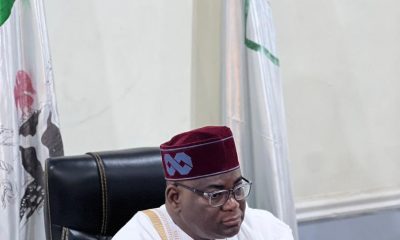
Ahmad Hamisu Gwale The Director General Media and Publicity to the Kano State Government House, Sunusi Bature Dawakin Tofa, has criticised former Kano State Governor, Rabiu Musa Kwankwaso, over his decision to leave the NNPP. Bature, in a reaction posted on his official Facebook page on Sunday, described Kwankwaso’s decision as a betrayal of Mr. Boniface. “Since I joined politics, I have never seen a greater lesson than this. The only reason people say we were betrayed is because we left the NNPP. “We did not say we left the Kwankwasiyya movement, nor did we abandon its ideology, and we did not stop wearing the red cap. “It has now become necessary for us to pray for the Leader, because today he has betrayed himself by leaving the NNPP,” Bature said. Read Also: Radiographers Oppose Health Bills, Warn of Threat to Professional Autonomy Gawuna Missing from Political Radar as APC Battles to Stop Defection Rumours Kano Deputy Governor Resigns Amid Political Storm He added that they are now all in the same position, stating that everyone has in one way or another, betrayed Mr. Boniface, and prayed for God’s guidance and forgiveness. On Sunday, former Kano State Governor and the 2023 presidential candidate of the New Nigeria People’s Party (NNPP), Rabiu Musa Kwankwaso, announced his resignation from the party with immediate effect. In a statement he personally signed, Kwankwaso said his decision followed careful consideration of the country’s political direction and the need to align with a platform offering better prospects for national transformation. He described his time in the party as an honour, noting that the decision to leave was difficult. Last month, the Kano State Governor, Abba Kabir Yusuf, a known loyalist of Kwankwaso, also left the NNPP for the APC, a move widely interpreted as a betrayal of his political mentor.

Feature, National, Politics

Defection: Kwankwaso’s Legacy Under Scrutiny; A Critical Look at his Political Journey Since 1999

When Nigeria returned to democratic rule in 1999, the people of Kano embraced the moment with hope and expectation after years of military governance. Among the prominent figures who emerged at the time was Rabiu Musa Kwankwaso, whose leadership inspired confidence among many citizens eager for progress and representation. More than two decades later, however, Kwankwaso’s political legacy continues to generate debate, with supporters highlighting his achievements and critics questioning the long-term impact of his leadership on Kano’s development. Kwankwaso’s first tenure as governor (1999–2003) was marked by visible infrastructure projects, including roads and public buildings, which were widely welcomed by residents. At a time when tangible government presence was limited, these developments symbolised a new beginning. Yet, some analysts argue that while these projects addressed immediate needs, they did not sufficiently tackle deeper structural challenges, particularly the decline of Kano’s once-thriving industrial economy. Historically a major commercial hub, Kano’s economy had been weakening due to years of policy neglect and infrastructural decay. Critics maintain that a more comprehensive economic strategy might have helped revive industries and reduce dependence on federal allocations. Kwankwaso’s defeat in 2003 by Ibrahim Shekarau marked a turning point. Observers note that while the loss strengthened his political network and grassroots appeal, it also raised questions about the sustainability of the systems established during his administration. Many of the projects, though impactful, were seen as lacking the institutional depth needed for long-term continuity. Read Also: Kwankwaso Resigns from NNPP, Signals New Political Direction Gawuna Missing from Political Radar as APC Battles to Stop Defection Rumours Kano Deputy Governor Resigns Amid Political Storm Returning to office in 2011, Kwankwaso expanded his development agenda with increased infrastructure and an ambitious foreign scholarship programme that benefited thousands of Kano youths. The initiative is widely regarded as one of his most significant contributions, opening educational opportunities for many. However, critics argue that despite these efforts, broader economic transformation remained limited. Rising population growth, unemployment, and declining industrial capacity continued to challenge the state’s development trajectory. Beyond governance, Kwankwaso’s political influence has also shaped Kano’s power dynamics. His role in building a strong political movement popularly known as the Kwankwasiyya has been praised for mobilising grassroots support, but criticised by some for reinforcing a personality-driven political structure. Political analysts further point to the tensions surrounding the Kano Emirate as a significant episode in the state’s recent history. The controversial removal of Muhammadu Sanusi II highlighted deep divisions within the state’s political and traditional institutions, with varying opinions on the factors that led to the crisis. In recent years, Kwankwaso’s shifting political alliances from the PDP to the APC and later to the NNPP, have also drawn mixed reactions. While such moves are common in Nigeria’s political landscape, critics argue that they have contributed to instability and uncertainty within Kano’s political structure. The 2023 elections brought another dimension to the discourse, with the emergence of Abba Kabir Yusuf as governor under the NNPP platform. Subsequent political developments, including evolving relationships between state and federal actors, have further shaped public debate about governance priorities and political strategy. Today, Kwankwaso remains one of Kano’s most influential political figures, with a legacy that reflects both notable achievements and enduring controversies. While many credit him with expanding access to education and improving infrastructure, others believe that the state’s long-term economic and institutional challenges require deeper reflection. As Kano continues to navigate its future, the assessment of past leadership including Kwankwaso’s role, remains central to ongoing conversations about development, governance, and political direction.

Kano, National, Politics

Kwankwaso Resigns from NNPP, Signals New Political Direction

By Umar Idris Shuaibu A former Governor of Kano State and the 2023 presidential candidate of the New Nigeria Peoples Party, Rabiu Musa Kwankwaso, has formally resigned from the party with immediate effect. In a press statement dated March 29, 2026, Kwankwaso said his decision followed ongoing political developments in the country, which he noted require “strategic realignment” to effectively address national challenges. He described his time in the party as a privilege, expressing appreciation for the opportunity to serve as the party’s National Leader and presidential flagbearer during the 2023 general elections. “As a committed and bonafide member of the party, this was not an easy decision to make,” he stated. Read Also: APC Founded to Drive Change, Reduce Poverty — Tinubu Gawuna Missing from Political Radar as APC Battles to Stop Defection Rumours Radiographers Oppose Health Bills, Warn of Threat to Professional Autonomy Kwankwaso, however, explained that the current trajectory of Nigeria’s political landscape necessitated his identification with another platform that offers a better opportunity to bring about meaningful change. He expressed gratitude to the National Chairman of the party, Ajuji Ahmed, the National Working Committee, Board of Trustees, National Executive Committee, and party leaders at all levels for their support during his time in the NNPP. The former governor also acknowledged members of the Kwankwasiyya movement for their loyalty and commitment to the party’s ideals. He noted that despite his resignation, there remains a need for continued collaboration among stakeholders in pursuit of national development and a more prosperous future for Nigeria. Kwankwaso’s exit from the NNPP is expected to further reshape political alignments ahead of the 2027 general elections, amid growing consultations among opposition leaders.

National, News, Politics

APC Founded to Drive Change, Reduce Poverty — Tinubu

By Umar Idris Shuaibu President Bola Ahmed Tinubu has said that the All Progressives Congress (APC) was established as a platform to bring about national transformation, reduce poverty, improve security, and revitalise key government institutions. Tinubu made the remark on Friday in Abuja during the party’s national convention, where he emphasised that the APC was not formed merely to win elections but to build a functional and united Nigeria. According to the President, the party remains a home for all Nigerians committed to strengthening governance, ensuring security, and addressing socio-economic challenges facing the country. Read Also: Radiographers Oppose Health Bills, Warn of Threat to Professional Autonomy “The APC is a platform for those who believe in building a nation where government works effectively, security is guaranteed, and every citizen lives with dignity and hope,” he said. Tinubu recalled that the party was formed 13 years ago through a coalition of political actors who came together to rescue the country from prevailing economic challenges at the time. He reaffirmed that the APC continues to uphold democratic principles aimed at promoting justice, development, and the overall welfare of Nigerians. The President reiterated the party’s commitment to its founding ideals, noting that its vision remains anchored on national unity, inclusive governance, and sustainable development.

Kano, News, Politics

Kwankwaso to Join ADC Monday, Meets Atiku Ahead of Move

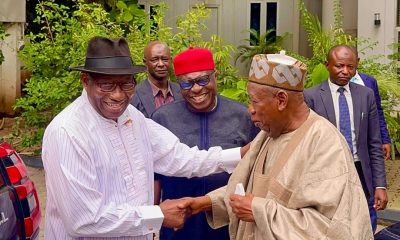
By Umar Idris Shuaibu A former Governor of Kano State and national leader of the New Nigeria Peoples Party, Senator Rabi’u Musa Kwankwaso, has met with former Vice President Atiku Abubakar ahead of his planned defection to the African Democratic Congress on Monday. The meeting, which comes amid intensifying political consultations, is believed to be part of broader opposition efforts to realign ahead of the 2027 general elections. Photos from the engagement, shared by media platforms, indicated that both northern political heavyweights discussed key national and political issues as opposition leaders continue to strategise on possible coalitions. Kwankwaso is expected to formally join the ADC during a registration event scheduled for Monday at Kwankwasiyya House, Miller Road, Bompai, Kano. A former Kano State Commissioner for Science and Technology and ADC Caucus Secretary, Yusuf Ibrahim Kofar-Mata, in a statement, invited the general public to attend the event, noting that it would be led by the former governor. Read Also: Radiographers Oppose Health Bills, Warn of Threat to Professional Autonomy Gawuna Missing from Political Radar as APC Battles to Stop Defection Rumours APC Unveils Full NWC List as Yilwatda, Basiru Retain Top Positions “I am inviting the general public to the registration event of the African Democratic Congress (ADC), which will be led by Sen. Dr. Rabiu Musa Kwankwaso, on Monday, March 30, 2026, at about 12:00 noon,” he said, expressing optimism for a successful exercise. The anticipated defection follows weeks of consultations involving Kwankwaso, members of his Kwankwasiyya movement, and key stakeholders within the ADC. In recent weeks, the former presidential candidate has held a series of high-level meetings with prominent opposition figures, including the ADC National Secretary, Rauf Aregbesola; the Labour Party’s 2023 presidential candidate, Peter Obi; Governor of Oyo State, Seyi Makinde; and the senator representing Bayelsa West, Seriake Dickson. Sources within political circles said the move is part of a wider opposition strategy aimed at challenging the ruling All Progressives Congress (APC) in the next electoral cycle. The development also comes amid a reported rift between Kwankwaso and his political protégé, Governor of Kano State, Abba Kabir Yusuf. Yusuf, widely regarded as a major beneficiary of the Kwankwasiyya political structure, recently defected from the NNPP to the APC alongside several lawmakers and political appointees. Kwankwaso had opposed the move and publicly distanced himself from it, describing it as a betrayal. Political observers say the former governor’s expected defection to the ADC could significantly reshape political alignments in Kano and across the northern region, as opposition forces intensify preparations ahead of the 2027 general elections.

Health, National, News

Radiographers Oppose Health Bills, Warn of Threat to Professional Autonomy

 By Umar Idris Shuaibu, Kano The Association of Radiographers of Nigeria has raised strong objections to the proposed Dental Practitioners Act (Repeal and Re-enactment) Bill, 2026 (HB 2695), warning that its provisions could erode professional autonomy and disrupt Nigeria’s healthcare regulatory system. The concerns were outlined by the National President of the association, Musa Y. Dambele, during a press briefing held at the Nigeria Union of Journalists Secretariat in Kano on Saturday. Dambele described the proposed legislation as a fundamental threat to the practice of radiography, alleging that it seeks to transfer regulatory authority from the Radiographers Registration Board of Nigeria to the Medical and Dental Council of Nigeria. He specifically drew attention to Section 8(1) of the bill, which contains a “notwithstanding clause” granting the MDCN overriding powers over other regulatory bodies. According to him, this provision conflicts with the existing Radiographers Act and could effectively strip the RRBN of its statutory mandate. The ARN president also faulted Section 47 of the bill, which classifies radiology as encompassing all aspects of diagnostic imaging. He argued that such a definition undermines the distinction between radiology and radiography, noting that the latter is a specialised scientific discipline focused on imaging technology, radiation safety, and patient care. Read Also: Association of Radiographers Rejects Illegal Appointment of Board Registrar Dambele further raised concerns over Section 8(1)(k), which empowers the MDCN to regulate the use of technologies such as ultrasound, lasers, and radiofrequency-based devices. He maintained that these tools are integral to radiographic practice and should not be restricted to a single professional body. On disciplinary provisions, he criticised Sections 30 to 32 of the bill, which propose tribunals dominated by medical and dental practitioners to adjudicate cases involving other health professionals. He argued that such arrangements could undermine fair hearing and professional independence. He also expressed reservations over Section 18(3), which mandates that a portion of professional fees be shared with external bodies, including the Nigerian Medical Association, describing the provision as unjustified and capable of distorting regulatory practices. The association further linked the bill with another proposed legislation, HB 2699, describing both as a coordinated effort to weaken radiography through what it termed a “pincer movement.” According to Dambele, while one bill seeks to erode internal regulatory authority, the other introduces external pressures that could constrain the profession. Beyond professional concerns, the ARN president cautioned against provisions that expand ministerial influence over regulatory boards, warning that such measures could introduce political interference into a highly technical sector. He also opposed attempts to dilute the authority of the RRBN in appointing its Registrar, stressing the need to preserve institutional independence. He noted that global best practices in countries such as the United Kingdom, Canada, and Australia support independent professional regulation, adding that any deviation from this model could create tensions within Nigeria’s health sector. Dambele said the position of the association aligns with that of the Joint Health Sector Unions and other healthcare stakeholders who have raised similar concerns. The association, therefore, called on the National Assembly to reject the bill in its current form, uphold professional self-regulation, and initiate broader stakeholder consultations to develop a balanced regulatory framework. He emphasised that radiographers play a critical role in healthcare delivery, including in diagnostic imaging and therapeutic procedures such as X-rays, CT scans, MRI, ultrasound, and radiotherapy, warning that any attempt to centralise control could have implications for patient safety and service delivery. Dambele reiterated the association’s commitment to safeguarding the integrity of the profession and ensuring that healthcare regulation in Nigeria remains inclusive, balanced, and in line with global standards.

National, News, Politics

APC Unveils Full NWC List as Yilwatda, Basiru Retain Top Positions

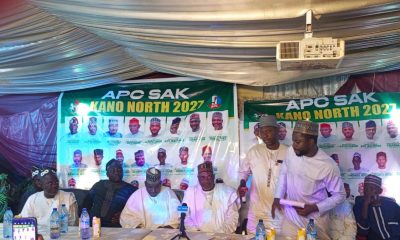
By Umar Idris Shuaibu The All Progressives Congress (APC) has concluded its 8th National Convention in Abuja, reaffirming Nentawe Yilwatda as National Chairman and Ajibola Basiru as National Secretary. The convention, held at Eagle Square, also produced a new National Working Committee (NWC) through a consensus arrangement endorsed by party stakeholders. A notable development was the emergence of Benjamin Obi Nwoye as Deputy National Chairman (South), replacing Emma Eneukwu following consultations within the party. Party sources indicated that zoning considerations and high-level consultations influenced the composition of the new leadership, with Peter Mbah playing a key role in Nwoye’s emergence. Read Also: Mustapha Bala Dawaki and the Prospect of a 2027 Political Comeback Kano Deputy Governor Resigns Amid Political Storm Gawuna Missing from Political Radar as APC Battles to Stop Defection Rumours In his acceptance speech, Yilwatda described his re-election as a call to greater service, pledging unity and commitment to strengthening the ruling party. “We are ready to serve, ready to lead, and ready to build the party together with the nation,” he said, assuring that the leadership would not “fail or falter” in delivering on its mandate. The convention was attended by President Bola Ahmed Tinubu, Vice President Kashim Shettima, governors, lawmakers, and other party leaders. Full List of APC National Working Committee (NWC) National Chairman — Nentawe Yilwatda Deputy National Chairman (North) — Ali Bukar Dalori Deputy National Chairman (South) — Benjamin Obi Nwoye National Secretary — Surajudeen Ajibola Basiru Deputy National Secretary — AbdulKarim Abubakar Kana National Legal Adviser — Murtala Aliyu Kankia National Treasurer — Uguru Mathew Ofoke National Financial Secretary — Haruna Ginsau Deputy National Financial Secretary — Hammam Adamu Ali Kumo National Organising Secretary — Muhammad Sulaiman Argungu Deputy National Organising Secretary — Emeka Okafor National Welfare Secretary — Donatus Enyinnah Nwankpa Deputy National Welfare Secretary — Christopher Michael Akpan National Publicity Secretary — Felix Morka Deputy National Publicity Secretary — Meseko Durosinmi Josiah National Auditor — Abubakar Maikafi Deputy National Auditor — Olugbenga Olayemi National Women Leader — Mary Idele Deputy National Women Leader — Zainab Abubakar Ibrahim National Youth Leader — Dayo Israel Deputy National Youth Leader — Jamaludeen Kabiru National Leader (Persons With Disabilities) — Durotolu Oyebode Bankole Deputy National Legal Adviser — Ibrahim Salawu Deputy National Treasurer — Ben Akak National Ex-Officio (North-Central) — Opawoye Oluwatoyin Bunmi National Ex-Officio (North-East) — Adamu Jallah National Ex-Officio (North-West) — Kano Muhammed Jamu Yusuf National Ex-Officio (South-East) — Ikechukwu Umeh National Ex-Officio (South-South) — Francis Kolokolo National Ex-Officio (South-West) — Bunmi Orinowo

Abuja, National, News, Politics

Tinubu Leads APC Heavyweights as Party Retains Yilwatda at National Convention

By Umar Idris Shuaibu President Bola Ahmed Tinubu on Friday led top chieftains of the All Progressives Congress (APC) to its 8th National Convention held at Eagle Square, where Prof. Nentawe Yilwatda was returned as the party’s National Chairman. The high-profile gathering drew key political figures, including Vice President Kashim Shettima, former APC National Chairman Bisi Akande, First Lady Oluremi Tinubu, Senate President Godswill Akpabio, and Speaker of the House of Representatives Tajudeen Abbas. Also in attendance were Governor of Kwara State and Chairman of the Nigeria Governors’ Forum, AbdulRahman AbdulRazaq, as well as Governor of Imo State and Chairman of APC Governors’ Forum, Hope Uzodimma, among other party stakeholders. Yilwatda’s return emerged through a consensus arrangement, with all members of the National Working Committee (NWC) reaffirmed via an affirmative voice vote during the convention. Read Also: Kano Deputy Governor Resigns Amid Political Storm Gawuna Missing from Political Radar as APC Battles to Stop Defection Rumours APC Northwest Congress: Ganduje Attends Key Party Gathering in Kaduna The revalidated NWC includes Deputy National Chairman (North), Ali Dalori; Deputy National Chairman (South), Emma Eneukwu; National Secretary, Surajudeen Basiru; National Financial Secretary, Bashir Gumel; and National Legal Adviser, Murtala Kankia, among others. The newly endorsed leadership was sworn in immediately and is expected to steer the affairs of the ruling party for the next four years. In his acceptance speech, Yilwatda pledged to build a stronger, more inclusive, and disciplined party, while deepening internal democracy and expanding the APC’s reach across the country. “Our mission is clear: to build a pan-Nigerian party that is transparent, united, and responsive to the aspirations of our people,” he said. He also assured members of an open-door leadership style and expressed optimism that the party would emerge victorious in the 2027 general elections. Yilwatda commended President Tinubu for his leadership, noting that ongoing economic reforms and infrastructure investments under the Renewed Hope Agenda were already yielding positive signs. The convention, which attracted thousands of delegates and party supporters, is widely seen as a defining moment for the APC as it consolidates its internal structure ahead of the next electoral cycle.

Economy, National, News

WAEC Releases 2026 CB-WASSCE Results, Records Improved Performance

By Umar Idris Shuaibu The West African Examinations Council (WAEC) has announced the release of the 2026 First Series Computer-Based West African Senior School Certificate Examination (WASSCE) for private candidates, reporting improved performance and increased participation nationwide. The examination was conducted across Nigeria from January 28 to February 14, while coordination and marking of scripts took place between February 26 and March 13. In a statement issued by WAEC’s Public Affairs Department in Lagos and signed by Moyosola Adesina, Acting Head of Public Affairs, the council disclosed that 608 examiners participated in the marking process. According to the council, a total of 10,523 candidates registered for the examination, representing an 11.49 per cent increase compared to 2025. Out of this figure, 10,480 candidates eventually sat for the examination nationwide. Read Also: Kano State Polytechnic Takes Step Toward University-Affiliated PGD Programmes New VC Unveils Plan to Modernise Curriculum, Introduce Tech-Driven Degrees Why Science College Dawakin Kudu Remains a Pride of Kano’s Educational Heritage Performance analysis showed that 30.95 per cent of candidates obtained credit passes in at least five subjects, while 26.96 per cent secured credits in five subjects, including English Language and Mathematics. This represents a marginal improvement of 5.76 per cent compared to the previous year. The council further revealed that 43 candidates with special needs including visually impaired, hearing impaired, and albino candidates registered for the examination and were adequately supported throughout the process. Gender distribution indicated that female candidates slightly outnumbered males, with 5,374 females (51.28 per cent) compared to 5,106 males (48.72 per cent). WAEC stated that out of the 10,480 candidates who sat for the examination, 8,418 (80.32 per cent) have fully processed results, while 2,062 (19.68 per cent) still have some subjects under processing. It added that 4,598 candidates obtained credits in five subjects, while 3,429 secured credits including English Language and Mathematics, reflecting measurable improvement in overall performance. The council also disclosed that the results of 75 candidates have been withheld over alleged examination malpractice, noting that the cases are currently under investigation and will be reviewed by the appropriate committee. Candidates were advised to access their results through official WAEC platforms and proceed with necessary steps, including online applications for certificate printing. The council reiterated its commitment to upholding the integrity of its examinations and congratulated successful candidates nationwide.

Kaduna, News

El-Rufai Loses Mother as Family Seeks Prayers

By Umar Idris Shuaibu Former Governor of Kaduna State, Nasir El-Rufai, has lost his mother, Umma El-Rufai. The matriarch reportedly passed away on Friday, according to a Facebook post by her grandson, Bello El-Rufai. Bello, who currently represents Kaduna North Federal Constituency in the House of Representatives, disclosed the development on his verified social media page, where he also appealed to the public to offer prayers for the repose of her soul. Read Also: APC Northwest Congress: Ganduje Attends Key Party Gathering in Kaduna Kano Deputy Governor Resigns Amid Political Storm Gawuna Missing from Political Radar as APC Battles to Stop Defection Rumours As of the time of filing this report, the cause of death had not been disclosed. Meanwhile, Nasir El-Rufai is reportedly in the custody of the Independent Corrupt Practices Commission (ICPC) over allegations of corruption. Family sources are yet to announce burial arrangements as condolences continue to pour in from associates and sympathisers.

Scroll to Top