
The Historica Nigeria

2026

Kano, News, Politics

Governor Yusuf Receives Hero’s Welcome in Kano After APC Engagement

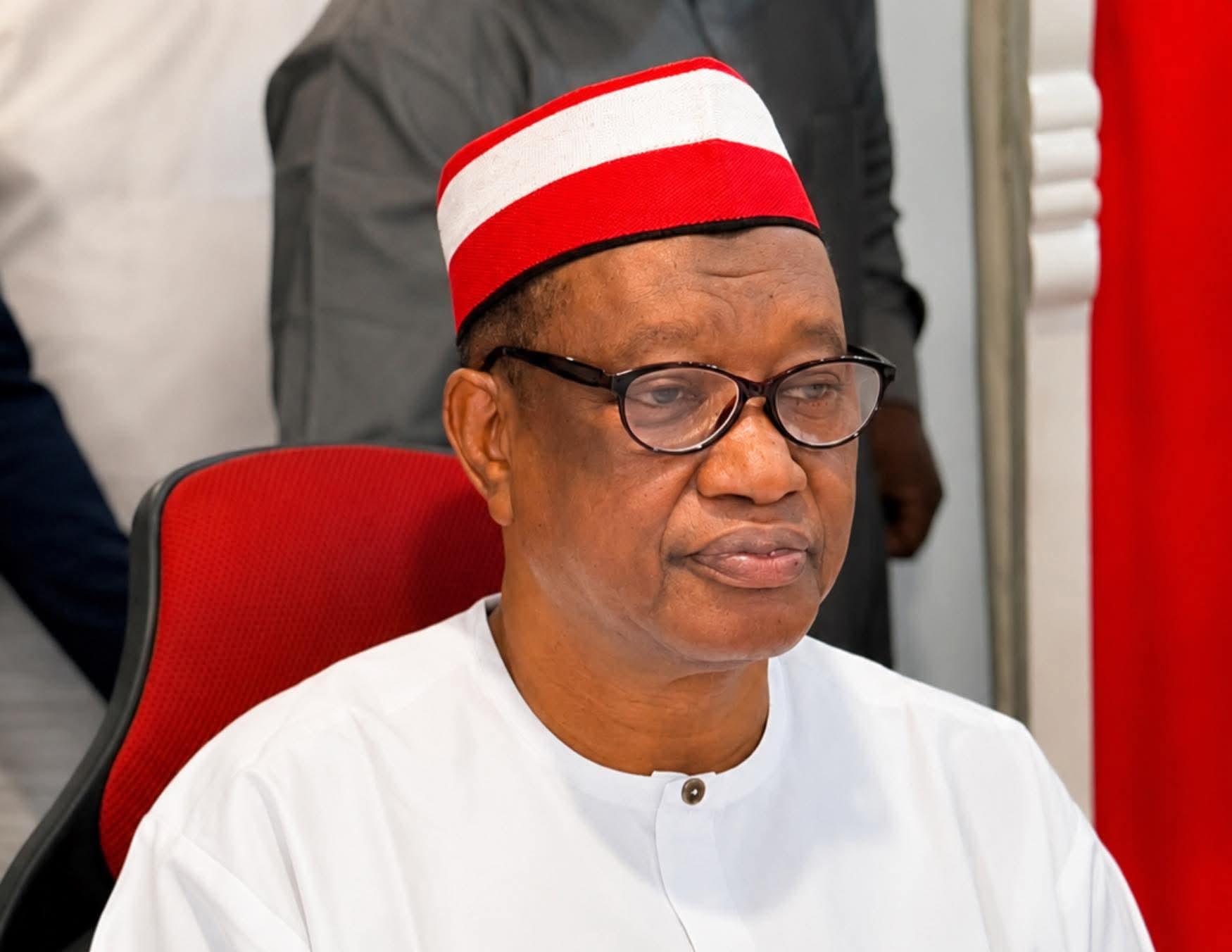
Thousands of residents of Kano State on Saturday trooped out to welcome Governor Abba Kabir Yusuf following his engagements with leaders of the All Progressives Congress (APC) in Abuja. The Historica Nigeria reports that Yusuf was also part of an APC delegation that visited Bauchi State in a move to persuade Governor Bala Mohammed to join the ruling party from the Peoples Democratic Party (PDP). However, Mohammed has yet to formally declare his new political affiliation after his reported fallout with the PDP. The development comes amid shifting political alliances in Kano, following recent engagements involving Yusuf and his estranged political mentor, Rabi’u Musa Kwankwaso, alongside Peter Obi of the African Democratic Congress (ADC). Read Also: Kano Champions North-West Social Protection Plan Amid Funding Challenges Kwankwaso, a leading figure in Kano politics, recently left the New Nigeria Peoples Party (NNPP) and aligned with Obi and other opposition figures under the ADC platform, a move that has deepened political divisions in the state. Yusuf’s return to Kano was marked by a large turnout of supporters who lined major routes from Aminu Kano International Airport through Kofar Mata to the Government House, waving party flags and chanting solidarity songs as his convoy passed. Kano remains one of Nigeria’s most politically strategic states, with a large voter base and a history of influencing national electoral outcomes.

Humanitarian, Kaduna, News

Kano Champions North-West Social Protection Plan Amid Funding Challenges

By Umar Idris Shuaibu Kano State has taken the lead in advancing a coordinated social protection framework in the North-West following the unveiling of a Joint Action Plan by the Kano State Social Protection Agency (KASPA) to deepen collaboration among Kano, Jigawa and Katsina states. The Director General of KASPA, Dr. Fatima Abubakar, presented the plan at the first quarter 2026 two-day Joint Social Protection Technical Working Group meeting held in Kaduna, with support from the UNICEF Kano Field Office. She said the initiative marked a shift from policy formulation to implementation, adding that it outlines priority actions for the next six to 12 months with clearly defined roles for participating states. According to her, the framework is designed to strengthen inter-state coordination through regular engagements, harmonised reporting templates and the designation of focal persons to drive implementation. Abubakar identified sustainable financing as critical to the success of the plan, noting that it incorporates dedicated budget lines, Islamic social finance instruments such as Zakat and Waqf, as well as Public-Private Partnerships. Related: UNICEF Raises Alarm Over Child Poverty as States Push Social Protection Reforms Kano Leads North-West Social Protection Drive With Joint Action Plan KASPA Implements Free Healthcare Programme for Vulnerable Kano Residents She added that the plan prioritises children and vulnerable groups through targeted interventions supported by data-driven systems, harmonised social registries and improved monitoring and evaluation mechanisms. She also said the framework integrates climate-responsive and child-sensitive strategies, while promoting collaboration with communities, civil society organisations and the media. The Chairman of the Social Protection Platform Kano (KASSOP), Comrade Salisu Yusuf, in his presentation, said inadequate funding remained a major challenge affecting programme delivery in the state. He said although policies and programmes were in place, implementation had been weak due to funding constraints. Yusuf urged the Kano State Government to prioritise the release of funds to enable KASPA to effectively execute its mandate. “The implementation of programmes cannot take place without adequate funding. If KASPA is to be assessed since its establishment, the performance is still very low due to these constraints,” he said. He also stressed the need for strict adherence to policy frameworks and measurable indicators to track progress in lifting people out of poverty. Also speaking, an Islamic cleric and Zakat distributor from Jigawa State, Malam Aminu Baba Waziri, called on wealthy individuals to support social protection efforts through proper payment of Zakat. He said effective Zakat distribution could significantly reduce poverty and improve the welfare of vulnerable groups. In his remarks, the Director of Social Protection at the Katsina State Ministry of Budget and Economic Planning, Dr. Tijjani Umar, described poverty as a major threat to human survival. He said the persistence of poverty was largely due to unequal distribution of resources and called on state governments to take ownership of social protection programmes. Umar added that development partners, including UNICEF, were providing technical support, but stressed the need for improved coordination, capacity building and effective utilisaption of funds. He noted that Katsina State had taken steps to address some of the challenges through training of social protection focal persons at state and local government levels. He also advised Ministries, Departments and Agencies to adopt proactive measures, including proper documentation and timely submission of memos, to access funds allocated for programme implementation. Meanwhile, a Director in the Kano State Ministry of Livestock Development, Dalhatu Danladi, called for the review of existing social protection policies, noting that many were nearing expiration. He urged stakeholders to update the policies to reflect current realities and ensure sustainability of social protection programmes.

Humanitarian, Kaduna, News

Kano Leads North-West Social Protection Drive With Joint Action Plan

By Umar Idris Shuaibu Kano State has taken a leading role in advancing a coordinated social protection framework in the North-West, as the Kano State Social Protection Agency (KASPA) unveiled a Joint Action Plan aimed at strengthening collaboration among Kano, Jigawa, and Katsina States. The plan was presented by the Director General of KASPA, Dr. Fatima Abubakar, during the first quarter 2026 two-day Joint Social Protection Technical Working Group (TWG) meeting, with support from the UNICEF Kano Field Office in Kaduna. The initiative marks a shift from policy discussions to practical implementation, outlining priority actions to be executed within the next six to twelve months, alongside clearly defined roles and responsibilities for participating states. Dr. Fatima Abubakar explained that the framework is designed to promote a unified regional system through strengthened inter-state coordination, including regular quarterly TWG meetings, harmonised reporting templates, and the designation of focal persons to ensure effective collaboration. Read Also: UNICEF Raises Alarm Over Child Poverty as States Push Social Protection Reforms 112 Qur’anic Schools join formal education system in Katsina – UNICEF CITAD Distributes School Materials to Nomadic Pupils in Kano, Urges Increased Govt Intervention She further highlighted the importance of sustainable financing in driving social protection programmes, noting that the plan incorporates the creation of dedicated budget lines, mobilisation of Islamic social finance instruments such as Zakat and Waqf, and the exploration of Public-Private Partnerships (PPP) and donor funding opportunities. The KASPA Director General also emphasised the need to prioritise children and other vulnerable groups through the scaling of Universal Child Benefit programmes, with targeted interventions planned for selected local government areas to ensure inclusivity and impact. According to her, the framework places strong emphasis on data-driven governance through the harmonisation of social registries and deployment of digital systems to enhance transparency, improve targeting accuracy, and ensure efficient delivery of interventions. She added that mechanisms for monitoring and evaluation have been incorporated into the plan, including the development of Key Performance Indicators, periodic performance reviews, and improved grievance redress systems to strengthen accountability. Dr. Abubakar noted that the action plan also integrates climate-responsive and child-sensitive strategies, recognising the growing impact of climate change on vulnerable populations and the need to build resilience within communities. She stressed the importance of stakeholder engagement, calling for stronger collaboration with community leaders, civil society organisations, and the media to drive awareness and support for social protection initiatives. The Director General further reiterated the need for continuous capacity building through training, peer learning, and development of operational guidelines to ensure sustainability and effective service delivery. Stakeholders at the meeting expressed optimism that the joint action plan would enhance collaboration among North-West states, accelerate progress in addressing poverty and inequality, and strengthen systems designed to protect vulnerable populations. The development reinforces Kano State’s position as a frontrunner in social protection, particularly with the establishment of KASPA as a dedicated institutional framework, even as Jigawa and Katsina continue efforts to finalise and domesticate their respective social protection laws.

News, Plateau

APC Chairman Hails Tinubu’s Visit to Plateau, Calls for Decisive Action Against Killers

By Umar Idris Shuaibu The National Chairman of the All Progressives Congress (APC), Nentawe Yilwatda, has commended President Bola Ahmed Tinubu for his visit to Plateau State to commiserate with victims of the recent killings in Angwan Rukuba, Jos North Local Government Area, describing it as a demonstration of compassionate and responsive leadership. Yilwatda, in a statement issued through his Special Adviser on Media and Communications Strategy, Abimbola Tooki, said the President’s visit reflects national solidarity at a time when residents of the state are grieving the loss of innocent lives. The APC chairman, who received the President alongside Plateau State Governor Caleb Mutfwang and other political, traditional, and religious leaders, condemned the attack in strong terms, describing it as inhuman, cowardly, and a direct assault on the peace and unity of Plateau State. He said the persistent killings in the state must no longer be treated with routine reactions, stressing the need for deliberate, coordinated, and result-oriented efforts to end the cycle of violence. Read Also: Tinubu Assures Plateau Residents of Lasting Peace After Jos Attack, Vows Justice for Victims According to him, community leaders must take greater responsibility by remaining vigilant and proactive in identifying and reporting suspicious activities within their areas, noting that perpetrators of such attacks often exploit local vulnerabilities. Yilwatda warned that criminals responsible for the violence must no longer be shielded by silence, fear, or complicity, insisting that they must be identified, apprehended, and brought to justice. He also urged security agencies to review and strengthen their operational strategies, noting that outdated methods cannot effectively tackle increasingly sophisticated criminal networks. The APC chairman advocated the deployment of modern technology, including surveillance systems, drones, and intelligence-driven tools, to improve security operations and prevent attacks before they occur. He further highlighted the economic consequences of insecurity in Plateau State, noting that the recurring violence has undermined the state’s tourism potential, agricultural productivity, and overall development. According to him, no meaningful economic growth can be achieved in an environment plagued by fear and instability, warning that continued insecurity could jeopardise the future of young people and discourage investment. Yilwatda called for a collective approach to addressing the crisis, urging traditional rulers, religious leaders, political actors, security agencies, and community stakeholders to work together to restore peace and stability. During the visit, President Tinubu also met with families of victims of the Angwan Rukuba attack, offering condolences and assuring them of the Federal Government’s commitment to justice and support. The APC noted that the visit was not merely symbolic but a clear indication of the Federal Government’s resolve to tackle insecurity and ensure lasting peace in Plateau State. The party reiterated that the lives of citizens remain sacred and must be protected, while those responsible for acts of violence must be held accountable without delay.

Feature, Kano

16 Years After, Rimi’s Pro-People Legacy Still Resonates in Kano

By Umar Idris Shuaibu Kano State on Saturday marked another anniversary of the passing of former governor, Muhammadu Abubakar Rimi, who died on April 4, 2010. Rimi, widely regarded as one of Nigeria’s most influential political figures during the Second Republic, is remembered for his pro-people policies, bold leadership style, and commitment to social justice, which earned him the popular nickname “Limamin Canji” (the Apostle of Change). Born in 1940, Rimi made history as the first democratically elected Governor of Kano State, serving from October 1979 to May 1983 under the platform of the People’s Redemption Party (PRP). During his time in office, he championed mass-oriented reforms aimed at improving the welfare of ordinary citizens. His administration introduced an adult and mass literacy programme that received international recognition from UNESCO in 1983. Read Also: UNICEF Raises Alarm Over Child Poverty as States Push Social Protection Reforms CITAD Distributes School Materials to Nomadic Pupils in Kano, Urges Increased Govt Intervention 2025 in Memoriam: Nigerians and Global Icons Who Left a Lasting Legacy He also made significant contributions to infrastructure and media development, including the establishment of Triumph Publishing Company and City Television, while playing a pioneering role in labour rights by becoming the first Nigerian governor to officially recognise May 1 as Workers’ Day. Rimi’s government abolished controversial taxes such as haraji (personal tax) and jangali (cattle tax), policies that further endeared him to the masses. Beyond Kano politics, he served as Nigeria’s Minister of Communications between 1993 to 1995 and was also a founding member of the Peoples Democratic Party (PDP) His personal life was marked by tragedy, including the murder of his wife, Hajiya Sa’adatu Rimi, in 2006. He later died at the age of 70 after suffering a stroke. Years after his death, Rimi’s legacy continues to resonate in Kano and beyond, with many recalling his fearless approach to governance and dedication to the common man. In recognition of his contributions, the Kano State Government in 2025 approved the construction of an auditorium in his honour at the Nigeria Labour Congress (NLC) headquarters. As tributes pour in, many Nigerians continue to reflect on his enduring impact, asking what memories his name evokes and how his ideals can shape contemporary leadership.

News, Plateau

Tinubu Assures Plateau Residents of Lasting Peace After Jos Attack, Vows Justice for Victims

President Bola Ahmed Tinubu has assured residents of Plateau State that the recent wave of killings in the state capital will not recur, as he visited Jos to commiserate with victims of the Palm Sunday attack in Angwan Rukuba community. Speaking during the visit on Thursday, the President acknowledged the pain and loss suffered by families affected by the attack, which left at least 28 people dead and several others injured. “This will not repeat itself,” Tinubu declared while addressing community leaders and residents, pledging decisive action to restore peace and security in the state. The President noted that no amount of money could compensate for the loss of lives but assured victims of the Federal Government’s support in their time of grief. “No amount of money can bring back the dead, but we will do our best to comfort you, walk with you, and provide the necessary assistance,” he said, expressing sympathy to bereaved families, including one Rhoda Favour, who lost a loved one in the attack. Read Also: CITAD Distributes School Materials to Nomadic Pupils in Kano, Urges Increased Govt Intervention UNIJOS Orders Students to Vacate Hostels Amid Rising Tension in Jos Jos Boils Again: Fresh Attacks Reported After Curfew Lift Tinubu further vowed that those responsible for the violence would be brought to justice, stressing that security agencies had been fully mobilised. “We will find the perpetrators of these dastardly acts,” he said. “The Inspector-General of Police and the Chief of Army Staff are here, and security forces will do what is necessary.” He also disclosed plans to strengthen surveillance in the state, including the deployment of security cameras to enhance intelligence gathering and crime detection. The President’s visit comes days after the coordinated evening assault on Angwan Rukuba, which triggered tension, violent reprisals in surrounding communities, and heightened security concerns across the state. Governor Seeks Sustained Federal Support In his remarks, Plateau State Governor, Caleb Mutfwang, described the attack as a major setback but expressed optimism that the state would overcome the challenge. “This incident is a temporary setback. By the grace of God, we will overcome and continue on the path of peace and prosperity,” Mutfwang said. The governor noted that Plateau had recently experienced relative calm before the latest violence and called for sustained federal support to consolidate security gains. He disclosed that a State Security Council meeting had been convened, with far-reaching decisions taken to address the situation, while security agencies intensify efforts to restore normalcy. Mutfwang also advocated for deeper engagement with the Presidency and other stakeholders to find lasting solutions to the recurring security challenges in the state. “These challenges have faced us for decades. We believe a deeper conversation will help us arrive at lasting peace,” he reiterated.

Education, Kano, News

CITAD Distributes School Materials to Nomadic Pupils in Kano, Urges Increased Govt Intervention

By Umar Idris Shuaibu The Centre for Information Technology and Development (CITAD), has distributed school uniforms and writing materials to pupils of Kamanda Ruga Settlement Nomadic Primary School in Dansoshiya, Kiru Local Government Area of Kano State. The Executive Director of CITAD, Yunusa Zakari Ya’u, described the intervention as timely, noting that nomadic schools particularly those serving Fulani communities have suffered prolonged neglect from policymakers and government authorities. He stressed the urgent need to prioritise education in such communities, pointing out that many children are being denied their fundamental right to access quality education. “It is imperative to address the neglect faced by nomadic schools, as many children within these communities deserve equal access to education,” he said. Read Also: Beyond the Headlines: The Untold Truth behind Nigeria’s Herders-Farmers Clashes Lere: A Historic Fulani Settlement and Cultural Crossroads in Kaduna Why Gobirawa’s Centuries-Old Agrarian Life is at Risk in Kano Earlier, a Fulani leader from the Nomadic Jowrows Association, Malam Idris Shuaibu, commended CITAD for the gesture, describing it as impactful and encouraging for pupils in the community. He noted that the support would boost school attendance and inspire children to pursue education, adding that they represent the future of the community. Malam Idris also called on government at all levels to give greater attention to education, emphasising its importance in harnessing human resources and driving national development. The Headmaster of Kamanda Nomadic Primary School, Nasiru Ibrahim Dangora, expressed appreciation to CITAD for the intervention, while drawing attention to the numerous challenges facing the school. He identified inadequate classrooms, a shortage of teachers for over 300 pupils, lack of toilet facilities, and the absence of basic learning aids such as educational toys needed to motivate the children. Also speaking, the Deputy Director of Nomadic Education at the Kano State Universal Basic Education Board, Ghali Sulaiman, commended CITAD for the initiative, describing it as a rare and impactful intervention. He noted that the school had not benefitted from similar support since its establishment, and praised the organisation for advancing inclusive education in hard-to-reach communities. Sulaiman further highlighted the Kano State Government’s commitment to improving access to education through the construction of nomadic schools across the state. He also urged parents to prioritise formal education for their children, stressing that modern nomadic livelihoods, including cattle rearing and trade, increasingly require basic education and knowledge to remain sustainable. The distribution exercise was supported by teachers of the school, local government officials, traditional authorities, including the Dagacin Dangora, Yusuf Harisu, who represented the District Head of Kiru, as well as other Fulani leaders within the community. The nomadic school was established in 2020 following the implementation of the Ruga settlement initiative by the Kano State Government, under a policy introduced during the administration of former President Muhammadu Buhari. The project, executed during the tenure of former Kano State Governor, Dr. Abdullahi Umar Ganduje, was designed to settle nomadic Fulani communities and reduce constant migration by providing basic social amenities, including 25 units of two-bedroom houses, a police outpost, a milk collection centre, and veterinary services, with plans for expansion to accommodate more herders. The initiative was also aimed at addressing recurring clashes between farmers and pastoralists, largely linked to the absence and encroachment of designated grazing reserves and cattle routes.

Katsina, News

Katsina: Tinubu group unveils CBT coaching for 2,250 JAMB candidates

A political support group, Tinubu/Dikko Assured (TDA 2027), has launched a free computer training programme for 2,250 Joint Admission and Matriculation Board (JAMB) candidates across Katsina State. The initiative was meant for candidates whose registration was sponsored by the campaign group, under the leadership of Umar Ahmad-Zayyad. The training was officially launched for more than 1,000 students from Katsina Zone, on Thursday, at the state Institute of Technology and Management (KTSIM). Speaking at the event, the Katsina State Coordinator of the group, Ibrahim Khalil, explained that the initiative is just one of several programmes being implemented by the organisation. Read Also: APC Stakeholders Endorse Yusuf Buhari for House of Reps Seat in Katsina Speakers at the event commended the efforts of the organisation, particularly its commitment to promoting educational development in the state. The state Deputy Chairman of the All Progressive Congress (APC), Bala Musawa, urged the candidates to remain focused and take full advantage of the training. According to Musawa, such attention will enable the beneficiaries to achieve the intended objectives of the programme. Member representing Katsina Local Government in the State Assembly, Aliyu Abubakar-Albaba, commended the gesture, calling on other groups to also emulate. In his remarks, the TDA Patron, Dr Muttaka Rabe-Darma, assured adequate support to equip the candidates with the required knowledge that will help them to pass the examination. Also speaking, the TDA leader, Zayyad-Ahmad, pledged to sponsor the first school registration for those who score 200 marks or above in the examination. (NAN)

National, News

Tinubu Appoints New PTDF Boss, Renews TCN CEO Tenure

President Bola Ahmed Tinubu has appointed Professor Shu’aibu Shehu Aliyu as the new Executive Secretary of the Petroleum Technology Development Fund (PTDF), while also renewing the tenure of Sule Ahmed Abdulaziz as Managing Director/Chief Executive Officer of the Transmission Company of Nigeria (TCN). The appointments were disclosed in a statement issued on Thursday by the President’s Special Adviser on Information and Strategy, Bayo Onanuga, noting that both decisions take immediate effect. Professor Aliyu replaces Ahmed Galadima Aminu, who recently resigned from the PTDF to pursue his governorship ambition in Adamawa State ahead of the 2027 general elections. The Presidency described the new PTDF helmsman as a distinguished academic and seasoned administrator with vast experience in research, education, and institutional leadership. It added that his appointment underscores President Tinubu’s commitment to strengthening key institutions within Nigeria’s petroleum sector. Read Also: UNICEF Raises Alarm Over Child Poverty as States Push Social Protection Reforms According to the statement, the President expects Aliyu to leverage his expertise to reposition the PTDF for greater impact, particularly in human capital development, innovation, and strategic support for the nation’s oil and gas industry in line with national priorities. In the power sector, President Tinubu also approved the renewal of Engineer Abdulaziz’s appointment as Managing Director/CEO of the Transmission Company of Nigeria for a second and final term, following what was described as a comprehensive assessment of his performance. Under Abdulaziz’s leadership, the TCN has recorded notable improvements in grid stability, expansion of transmission capacity, and the modernisation of the national grid infrastructure. The Presidency further highlighted Abdulaziz’s over three decades of experience in the power sector, as well as his role in advancing regional electricity integration through engagements within the West African Power Pool (WAPP). President Tinubu charged both appointees to discharge their responsibilities with diligence, integrity, and a strong sense of national service, in line with his administration’s Renewed Hope Agenda.

Humanitarian, Kaduna, News

UNICEF Raises Alarm Over Child Poverty as States Push Social Protection Reforms

A Social Protection Specialist with United Nations Children’s Fund (UNICEF) Field Office Kano, Fatimah Musa, has emphasised the critical role of social protection in addressing poverty, vulnerability, and social exclusion, particularly among children and other vulnerable groups. Fatimah Musa made this known during a presentation at a two-day Joint Social Protection Technical Working Group (TWG) meeting, for Katsina, Kano, and Jigawa States, with support from the UNICEF Kano Field Office in Kaduna. She described social protection as a set of policies and programmes designed to prevent and reduce poverty and inequality throughout an individual’s life cycle, with special focus on vulnerable populations. According to her, social protection ensures stable access to income and essential social services such as healthcare and education, thereby reducing exposure to the risks associated with poverty. She noted that children living in poverty often suffer severe deprivation, including lack of access to nutrition, clean water, sanitation, healthcare, shelter, education, and protection. Quoting the United Nations General Assembly, Musa stressed that deprivation is most harmful to children, as it limits their ability to realise their full potential and participate meaningfully in society. Read Also: KASPA Implements Free Healthcare Programme for Vulnerable Kano Residents NSE Kabuga Branch Supports Nasarawa Children’s Home, Plans Career Guidance Initiative UNIJOS Orders Students to Vacate Hostels Amid Rising Tension in Jos She further explained that a child is considered monetarily poor if they live in a household lacking sufficient financial resources to meet basic needs, while multidimensional child poverty occurs when a child experiences deprivation in at least three key areas of wellbeing. Providing data to underscore the severity of the situation, Musa stated that the national monetary child poverty rate currently stands at 47.6 per cent, with Kano at 59.5 per cent, Jigawa at 89.4 per cent, and Katsina at 61.2 per cent. She added that according to the 2022 Multidimensional Poverty Index, the national rate stands at 67.5 per cent, while Kano records 69.2 per cent, Jigawa 85.6 per cent, and Katsina 75.2 per cent, highlighting the scale of deprivation across the region. Musa stressed that the figures reflect the urgent need for strengthened social protection systems to safeguard children and vulnerable populations. In his remarks, the Katsina State Commissioner for Budget and Economic Planning, Malik Anas, reiterated the state government’s commitment to strengthening social protection policies aimed at reducing poverty and protecting vulnerable populations. He said the meeting provided an opportunity for states in the North-West region to deliberate on shared challenges and develop strategies to address poverty and inequality. The commissioner explained that key components of social protection include social assistance, health insurance, and market development, all of which are essential in addressing the unequal distribution of resources among citizens. He cited data from the World Bank and the National Bureau of Statistics indicating that poverty remains a significant challenge in Nigeria, particularly in the North-West region, where poverty rates exceed the national average. According to him, the rising level of poverty underscores the need for comprehensive social protection policies that promote equity, fairness, and improved living standards. Anas warned that extreme poverty exposes young people to risks such as recruitment into banditry and other criminal activities, while also increasing the vulnerability of children to abuse, gender-based violence, and harmful traditional practices. “These challenges have made many children vulnerable in places where they should ordinarily feel safe, including homes, schools, and communities,” he said. He noted that the Katsina State Government, under the leadership of Governor Dikko Umaru Radda, has approved several intervention programmes aimed at reducing poverty and improving the welfare of vulnerable groups. The commissioner also called on participating states to share implementation strategies and strengthen collaboration to achieve sustainable social protection outcomes. He reiterated the ministry’s commitment to supporting programmes that promote a just, equitable, and inclusive society where all citizens, particularly children and women, can live and thrive. Anas urged participants to actively contribute to discussions to ensure the success of the meeting. Findings by ‘The Historica Nigeria‘ indicate that Kano State Government has already taken a significant step by establishing the Kano Social Protection Agency (KASPA) to drive its social protection agenda. However, members of the Technical Working Group from Jigawa State revealed that the state’s Social Protection Law is still awaiting final processes, while Katsina State is also awaiting the Governor’s assent for the law to become fully domesticated. The development underscores varying levels of progress among North-West states in institutionalising social protection frameworks, even as stakeholders continue to advocate for stronger policies and coordinated implementation to address poverty and inequality across the region.

Scroll to Top