The Historica Nigeria

2026

Feature, Kano, Politics

Salihu Sagir Takai and the Politics of Succession in Kano

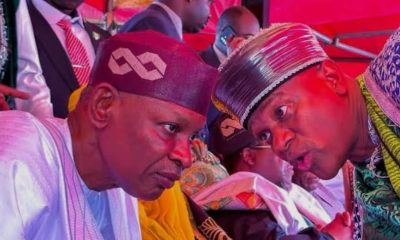
Umar Idris Shuaibu, Kano As impeachment proceedings gather momentum against Kano State Deputy Governor, Aminu Abdussalam Gwarzo, political conversations across the state have shifted toward a consequential question: who could step into the role should the office become vacant? Among the names resurfacing in elite consultations and grassroots discussions is Salihu Sagir Takai, a veteran figure whose political journey has spanned decades and multiple party platforms. Although no official nomination has been announced, Takai’s renewed visibility reflects deeper strategic undercurrents within Kano’s evolving power architecture. A Familiar Contender in Kano’s Electoral History Takai remains one of the most persistent actors in Kano’s modern political arena. He contested the governorship three times under different political platforms, first under the All Nigeria Peoples Party (ANPP) in 2011, later under the Peoples Democratic Party (PDP) in 2015, and subsequently under the Peoples Redemption Party (PRP) in 2019. While those bids did not yield electoral victory, they strengthened his statewide recognition and entrenched his grassroots structures, particularly within rural blocs of Kano South. After his defeat under the Peoples Redemption Party (PRP) in the 2019 governorship election, Takai returned to the All Progressives Congress (APC), where he has since remained an active and fully participating member of the party’s political structure. Read Also: Doguwa Resigns Commissioner Role, Clinches Kano APC Chairmanship Jigawa Politics: Speculation Mounts Over Badaru’s Alleged ADC Moves APC is a Living Party, Ganduje Says as Kano Govt Joins Ruling Platform Political observers often describe him as a resilient mobiliser with cross-party experience and a reputation for sustaining alliances even beyond electoral cycles. The Kano South Factor Takai’s possible consideration cannot be divorced from the regional question. He hails from Kano South Senatorial District, a zone whose political leaders have increasingly pressed for greater representation in key executive positions. Kano’s power-sharing culture has historically attempted to balance Kano North, Kano Central, and Kano South, though perceptions of uneven distribution have persisted over time. For proponents of zoning equity, the deputy governorship presents more than a vacancy; it represents an opportunity to recalibrate regional inclusion and strengthen internal cohesion. A stakeholder from the district, speaking privately, framed the discussion as “a matter of fairness and political stability.” Administrative Footprint and Governance Experience Before his governorship bids, Takai built his administrative credentials within Kano’s executive structure. He served as Commissioner under the administration of Ibrahim Shekarau from 2003 to 2011, overseeing key portfolios including Water Resources and later Local Government and Chieftaincy Affairs. Those roles placed him within the operational core of state governance during a defining political era. He also previously served as Chairman of Takai Local Government, reinforcing his grassroots orientation and consolidating his influence within Kano South’s local political networks. Supporters argue that this blend of executive and local governance experience positions him as a potentially stabilising figure at a delicate political moment. Voices From Within When The Historica Nigeria contacted Malam Abdullahi Musa Huguma, spokesman to the former governorship candidate, he confirmed awareness of consultations involving Kano elders, APC stakeholders, and prominent figures from Kano South. According to Huguma, “Salihu Sagir Takai embodies the leadership qualities Kano requires at this critical stage of its development.” He further described his principal as a politician known for comradeship, integrity, and decorum throughout his public service trajectory. Political Arithmetic and Strategic Timing Yet, succession politics in Kano is rarely determined by experience alone. Deputy governorship considerations typically involve layered calculations, party loyalty, internal stability, electoral viability, and long-term positioning ahead of future contests. With the 2027 electoral horizon gradually influencing political alignments, any appointment could carry strategic implications beyond the immediate circumstance. Analysts note that while repeated electoral contests demonstrate resilience and statewide engagement, party leadership may also weigh electability dynamics and coalition strength in making a final decision. Between Speculation and Negotiation For now, Takai has not publicly addressed the speculation. Whether the conversations translate into formal political action remains uncertain. However, the persistence of his name in succession discourse underscores a familiar reality in Kano politics: experience, zoning considerations, and timing often intersect when power equations shift. Should the deputy governorship seat ultimately become vacant, the debate may move swiftly from speculation to negotiation and Kano South’s long-standing advocacy for strategic inclusion could assume renewed prominence in the state’s political calculus.

Feature, Jigawa, Politics

Jigawa Politics: Speculation Mounts Over Badaru’s Alleged ADC Moves

Despite publicly denying plans to leave the ruling All Progressives Congress (APC) for the African Democratic Congress (ADC), recent political engagements by former Minister of Defence, Muhammed Badaru, have intensified speculation in Jigawa State over a possible defection. The rumour mill was initially stirred by the activities of his supporters within the state. However, it gained traction following a series of high-profile meetings between Badaru and prominent opposition figures. Within a week, the former minister reportedly met twice with Mustapha Lamido, the 2023 PDP governorship candidate and son of former Jigawa governor, Sule Lamido. Mustapha Lamido is widely rumoured to be considering a move to the ADC. Badaru is also said to have held discussions with Ubale Shitu, a former senator and ADC chieftain, as well as with Sule Lamido himself, a notable development given their long-standing political rivalry. A History of Political Tension Relations between Badaru and Lamido have been strained since 2017, when Lamido was prosecuted under the Badaru administration on charges including defamation, criminal intimidation, and disturbance of public peace. The charges were filed under Sections 113, 114, 392, and 397 of the Penal Code. Lamido was remanded in Kiyawa Prison between 2 and 4 May 2017 after a magistrate deferred rulings on his bail application. He was subsequently freed and later cleared of the charges. Against this backdrop, Badaru’s recent meetings with Lamido and other opposition leaders have triggered debate about possible realignments ahead of the 2027 elections. Badaru’s Denial In January, Badaru dismissed reports suggesting he was consulting to join the ADC. “My attention has been drawn to a baseless and speculative report circulating on social media suggesting that I am in consultations to join the African Democratic Congress (ADC),” he said in a statement. “I wish to state categorically that this report is entirely false, unfounded, and a product of political mischief. As one of the founding leaders of the APC, my commitment to the party remains absolute.” Read Also: Kano Assembly Begins Impeachment Process Against Deputy Governor Gwarzo President Tinubu Renews Audi’s Tenure as NSCDC Boss Governor Namadi Commends Dr. Gwaram’s Appointment, Reaffirms Commitment to Kirikasamma College Takeoff He urged party members and the public to disregard what he described as fabrications. When contacted about the apparent contradictions between his public stance and recent engagements, his spokesperson, Mati Ali, said he was unaware of the meetings with opposition leaders. However, an associate, Kafin-Hausa, confirmed on Sawaba Radio that Badaru hosted several opposition figures at his residence and visited Lamido. He described the engagements as Ramadan visits made in the spirit of reconciliation and political peace, referring to Lamido as a “father.” Absence from APC Congress Raises Eyebrows Speculation intensified following Badaru’s absence from recent APC congresses, particularly the state congress where Ahmad Garba was elected state chairman alongside 35 other executive members. The congress was attended by Governor Umar Namadi, national party representatives, and other prominent stakeholders. In his inaugural address, Garba warned against “dual loyalty,” stating that no individual could successfully play politics in isolation. Though he did not mention names, observers interpreted the remarks as a veiled reference to Badaru’s cross-party engagements. No Open Rift with Governor Namadi Despite tensions among supporters, relations between Badaru and Governor Namadi appear cordial. Badaru had publicly endorsed Namadi as his successor and has praised his performance in office. Namadi, for his part, has dismissed claims of internal division within the APC, urging party members to remain focused on governance and resist attempts to create instability. “We have a mandate, and nothing should derail us from the mission given to us by the people,” the governor said in response to rumours of a rift. Underlying Party Frictions Political friction within the Jigawa APC dates back to May 2022, when Namadi emerged as the party’s governorship candidate. Some party elites reportedly underestimated him, viewing him more as a technocrat than a political heavyweight. Since assuming office in May 2023, Namadi has prioritised administrative reforms, civil service restructuring, and transparency measures. While these initiatives have drawn praise from policy analysts, they have also unsettled party loyalists who expected traditional patronage appointments. Dissatisfaction among some supporters has manifested through media criticism and coordinated social media campaigns, with certain minor appointees resigning in protest over alleged marginalisation. Implications for 2027 Political analysts argue that while speculation persists, a major rupture within the APC remains unlikely. Muhammad Haruna, a political commentator in the state, noted that Jigawa’s political culture is relatively stable compared to other Northern states, allowing leaders to maintain influence over the electorate. “While anything is possible in politics, one must ask on what basis Badaru would leave the APC or confront Governor Namadi and President Bola Tinubu,” he said. He suggested that grievances among some of Badaru’s supporters particularly over perceived exclusion from appointments may be fuelling the speculation. For now, neither Badaru nor Namadi has taken any overt step signalling an imminent political divorce. Yet, as the 2027 election cycle approaches, observers say the evolving dynamics in Jigawa’s political landscape bear watching.

National, News

Court Dismisses NDLEA’s Asset Declaration Case Against Abba Kyari

The Federal High Court in Abuja on Thursday dismissed a suit filed by the National Drug Law Enforcement Agency (NDLEA) against suspended Deputy Commissioner of Police, Abba Kyari, over allegations bordering on non-disclosure of assets. Delivering judgment, Justice James Omotosho held that the anti-narcotics agency failed to prove its case beyond reasonable doubt. The judge stressed that the burden of proof rests on the prosecution in criminal matters and ruled that the NDLEA did not sufficiently establish the allegations against Kyari and his younger brothers, Mohammed Kyari and Ali Kyari. Justice Omotosho described the case as “persecution” and subsequently discharged and acquitted the three defendants. The News Agency of Nigeria reports that the NDLEA had filed a 23-count charge against Kyari, a former head of the Police Intelligence Response Team (IRT), and his two brothers. In the charge marked FHC/ABJ/CR/408/2022, the agency alleged that the defendants failed to fully disclose their assets and disguised ownership of several properties. According to the NDLEA, investigations uncovered 14 properties allegedly linked to Kyari, including shopping malls, a residential estate, a polo playground, parcels of land, and farmland located in the Federal Capital Territory (FCT), Abuja, and Maiduguri, Borno State. The agency further alleged that over N207 million and €17,598 were discovered in Kyari’s accounts with Guaranty Trust Bank, United Bank for Africa, and Sterling Bank. The NDLEA accused the defendants of concealing ownership of properties and converting funds, offences it said were punishable under Section 35(3)(a) of the NDLEA Act and Section 15(3)(a) of the Money Laundering (Prohibition) Act, 2011. The defendants had pleaded not guilty to all counts. Counsel to the NDLEA, Sunday Joseph, and defence lawyers Onyechi Ikpeazu (SAN) and Monjok Agom had earlier adopted their respective processes and presented arguments before the court fixed judgment. With Thursday’s ruling, the defendants stand formally discharged and acquitted of all charges.

Uncategorized

IGP Disu Removes Hundeyin as Force Public Relations Officer

The newly inaugurated Inspector-General of Police, Tunji Disu, has relieved Assistant Commissioner of Police Benjamin Hundeyin of his duties as Force Public Relations Officer (FPRO). The decision, finalised on Thursday morning, marks one of the first major administrative changes under the new police leadership. Hundeyin’s removal comes exactly six months after he assumed the role. Sources at the Nigeria Police Force Headquarters in Abuja confirmed that the directive for his exit was issued early Thursday, triggering tension within the Force Public Relations Department as officers await the announcement of a successor. Although the reasons for the development have not been formally disclosed, insiders suggest the move is part of a broader restructuring effort by the new IGP. Read Also: Kano Assembly Begins Impeachment Process Against Deputy Governor Gwarzo DICON-D7G CEO Inspects Site of Nigeria’s First Military Jetty Meet Prof. Ogunsakin and His Team on State Police Creation The development comes less than 24 hours after President Bola Tinubu inaugurated Disu as the 23rd substantive Inspector-General of Police, succeeding Kayode Egbetokun. A reliable source noted that while many expected Hundeyin to serve a longer tenure given his professional background and communication expertise, it is not unusual for a new police chief to appoint his own core management team. “We don’t yet know who will take over from him,” the source said. “High-level changes are common when a new IGP assumes office.” Profile of ACP Hundeyin Hundeyin, a native of Badagry, was appointed FPRO by former IGP Egbetokun. He holds a BA (Hons) in English Language from Lagos State University and a Master’s degree in Legal Criminology and Security Psychology from the University of Ibadan. He also obtained a Certificate in Civil-Military Coordination from the Martin Luther Agwai International Leadership and Peacekeeping Training Centre in Kaduna. A member of the Nigerian Institute of Public Relations (NIPR), the International Public Relations Association (IPRA), and the Chartered Institute of Personnel Management of Nigeria (CIPM), Hundeyin previously served as Police Public Relations Officer at Zone 2 Command Headquarters, Onikan, Lagos. He also participated in the United Nations–African Union Mission in Darfur (UNAMID) in 2020. Transition Underway As IGP Disu begins his tenure, the removal of the Force PRO signals what observers describe as a fast-paced transition period within the police hierarchy. The presidency and police authorities are expected to announce a replacement in the coming days to ensure continuity in the Force’s communication and public engagement operations.

Kano, News, Politics

Kano Assembly Begins Impeachment Process Against Deputy Governor Gwarzo

The Kano State House of Assembly has commenced impeachment proceedings against the Deputy Governor, Comrade Aminu Abdussalam Gwarzo. At a special plenary session held on Thursday, the House served the deputy governor with a notice to respond to allegations said to constitute impeachable offences. The notice, which was read during plenary, contains allegations of gross misconduct, abuse of office, and breach of public trust. Read Also: Doguwa Resigns Commissioner Role, Clinches Kano APC Chairmanship The House Majority Leader, Lawan Husaini, who addressed journalists after the session, confirmed the development, stating that he formally presented the impeachment notice before the House. According to him, the notice was signed by 38 members of the Assembly. He added that following the service of the notice, the deputy governor is expected to respond to the allegations within two weeks, in line with constitutional provisions. Further details are expected as the process unfolds.

Feature, Politics

Time for Buba Galadima to Test His Political Credibility and Capacity in Yobe State

By Said Adam Muhammad There comes a moment in politics when noise must surrender to proof, when loud commentary must submit to measurable structure. That moment has arrived for Buba Galadima. For years, he has positioned himself as a political analyst and insider. Yet the central question remains unanswered: where is the independent structure that proves his political weight? The Politics of Noise Versus the Politics of Structure Nigeria has a familiar category of political actors, individuals who survive not on grassroots machinery or electoral command, but on controversy and microphone dominance. They deploy political brouhaha as a strategy for relevance because they lack demonstrable capacity on the ground. In Hausa, we call them ’yan hayaniya, professional noise makers. They migrate between power blocs, attaching themselves to structures built by others while building none of their own. Their influence is proximity-based, not structure-based. Read Also: Ganduje, Kuku Lead Nigeria’s Airports Into a New Era Kano Polytechnic Gets New Chairman as Yusuf Removes Galadima Understanding Kano Politics: Beyond Anointment and Allegiances Anyone who studies Galadima’s political trajectory, from his time around the late Muhammadu Buhari to earlier alignments during the muhammad Abacha saga, will observe a consistent pattern of movement without institutional consolidation. Alliances shift. Platforms change. Yet no independent political fortress emerges. That is not strategic evolution. That is structural absence. The “I Made the Governor” Assertion Perhaps the most extraordinary claim in his recent outburst was his insistence that he “made” Governor Abba Kabir Yusuf, even suggesting he contributed more to the Governor’s electoral victory than the Governor himself. If such political engineering capacity truly exists, then it demands demonstration. If he possesses that level of electoral machinery, let him return to Yobe State. Let him establish even a councillor through his independent structure. Let him build from ward level upward. Ultimately, let him contest for governor in Yobe and replicate the same “work” he claims to have done in Kano, this time for himself. Political capacity is most convincingly proven when applied to oneself. Yobe, with a population of roughly 3–4 million people, does not experience the same scale of political intensity as Kano, a state of over 15 million people and arguably the most politically competitive terrain in Nigeria. If electoral victories can be engineered with such ease, Yobe should be the ideal laboratory. Let him test his credibility there. The Core of Waiya’s Challenge At the center of this controversy is a very specific and direct challenge made by Comrade Waiya. First: political relevance. Waiya’s argument is straightforward, there is no visible, measurable political structure attributable to Galadima in his home base. No demonstrable grassroots command. No proven independent electoral machinery. Political relevance is not claimed; it is built and tested. Second: performance in office. According to Waiya, his performance during his appointment reflected weak output, limited initiative, and absence of impactful proposals. Public office is not sustained by commentary. It demands innovation, structured programs, and value-adding initiatives capable of justifying public resources. Governments do not release funds into empty space. Funding follows vision. Resources follow documented proposals. Budgets follow structured impact plans. When pressed about his performance, his response was that there was “no money.” But governance does not begin with money, it begins with initiative. A compelling, value-driven proposal attracts funding. A transformative idea earns support. If the ideas were strong enough, they would have been defended, documented, and implemented. Third: failure to respond substantively. Most revealing was his inability to directly address these criticisms during his interview. Rather than provide documented achievements or structured rebuttals, he became visibly agitated when the journalist pressed him on Waiya’s claims. The exchange deteriorated into anger and personal remarks toward the journalist. Strong leaders answer with data. Confident administrators respond with records. Prepared officials rebut with documented achievements. Emotional reactions are not evidence. Governance Under Siege While these exchanges dominate headlines, Governor Abba Kabir Yusuf is navigating one of the most intense opposition climates in Kano’s political history. From prolonged post-election legal battles challenging his mandate, to the Emirate restructuring saga, to sustained internal and external political resistance, this administration has operated under constant pressure. Political hostility has been consistent and coordinated. Yet governance continues. Focus remains intact. Administrative functions move forward. Leadership under sustained pressure is the true test of capacity, and resilience under siege separates substance from spectacle. Few administrations in Kano’s modern history have confronted this degree of organized resistance while maintaining operational continuity. Visible Frustration and Outdated Calculations What has become increasingly evident is the visible frustration in recent public appearances. Excessive defensiveness, boastful assertions, and emotional responses suggest a struggle to preserve relevance rather than exercise it. Political analysis rooted in outdated frameworks cannot interpret today’s realities. Kano’s political terrain has evolved. The electorate is more informed. The dynamics are more complex. Historical proximity to power does not automatically translate into contemporary influence. Old formulas cannot decode new politics. The Final Test The challenge remains clear and open: If there is political relevance, demonstrate it structurally. If there was strong performance, present documented impact. If there is electoral engineering capacity, apply it independently. Return to Yobe. Build structure. Contest. Win. Political credibility is not sustained by volume. It is sustained by verifiable strength. The time for commentary has passed. It is time for a real action and proof.

National, News

DICON-D7G CEO Inspects Site of Nigeria’s First Military Jetty

The Chief Executive Officer of Defence Industries Corporation of Nigeria (DICON-D7G), Mr. Osman Chennar, has led members of the Board of Directors on an inspection visit to the proposed site of Nigeria’s first military jetty, a strategic infrastructure project aimed at strengthening indigenous defence production. The proposed jetty, located near Tin Can Island Port in Lagos, is expected to serve as a key logistics hub for the importation of Completely Knocked Down (CKD) and Semi-Knocked Down (SKD) components, raw materials, and other critical supplies required for local defence manufacturing. Speaking during the visit, Chennar described the project as a “strategic enabler” for Nigeria’s expanding defence manufacturing ambitions, noting that the facility would significantly enhance inbound logistics and streamline supply chain operations. According to him, the jetty will reduce turnaround time, lower transportation costs, and support large-scale production of military equipment, positioning Nigeria as a regional defence hub. He disclosed that DICON-D7G has already commenced production of DG103 rifles in Kaduna for both Nigerian and African markets. The jetty, he added, will further support domestic assembly and manufacturing of small and medium arms, ammunition, tactical drones, unmanned systems, 4×4 and 6×6 Mine-Resistant Ambush Protected (MRAP) vehicles, anti-jammer drones, and other critical military hardware. Read Also: Tinubu swears in Disu as 23rd IGP Meet Prof. Ogunsakin and His Team on State Police Creation DICON–D7G Begins Local Assembly of DG-103 Rifles, Eyes African Export Market Chennar stated that when completed, the project is expected to create employment opportunities for over 2,000 retired military personnel and 5,000 skilled civilians, while boosting the capacity to supply military-grade weapons and ammunition to the Armed Forces of Nigeria and friendly African nations. A member of the Board of Directors, Major General Mainasara Abdul Masanawa (Rtd), said the jetty would also function as an export gateway for finished defence products to allied African countries. He noted that the initiative would deepen regional defence cooperation and reinforce Nigeria’s position as a central hub for military manufacturing on the continent. “The project underscores DICON-D7G’s commitment to reducing reliance on foreign sources for defence equipment and reinforcing self-sufficiency for the Armed Forces of Nigeria, paramilitary organisations, and other security agencies,” Masanawa said. He added that the initiative aligns with the Renewed Hope Agenda of President Bola Tinubu, particularly in achieving defence industrial self-reliance. According to him, strengthening local production capacity will help reduce foreign exchange expenditure on defence imports, enhance local technical expertise, generate employment, stimulate technology transfer, and improve national security through sustainable, homegrown solutions. The project is scheduled for official launch in June 2026, marking what officials describe as a major milestone in Nigeria’s journey toward a resilient and self-sustaining defence industrial base. With the proposed military jetty, DICON-D7G aims to usher in a new phase in Nigeria’s defence manufacturing landscape driven by innovation, strategic autonomy, and regional leadership.

Kano, News

Former Kano Finance Commissioner Prof. Dandago Dies

A former Kano State Commissioner for Finance, Professor Kabiru Isa Dandago, is dead. The renowned accounting and taxation scholar passed away on Wednesday evening at the Aminu Kano Teaching Hospital after a brief illness. Read Also: ASUP NILEST Celebrates Retiring Unionist, Demands Settlement of Entitlements Until his death, Prof. Dandago was a respected professor of Accounting and Taxation at Bayero University Kano, where he made significant contributions to academic research and financial studies. His funeral prayers will take place at his residence in Rijiyar Zaki Kano by 9:am on Thursday.

National, News

Tinubu swears in Disu as 23rd IGP

President Bola Tinubu has officially sworn in Olatunji Disu as the 23rd Inspector-General of Police. The ceremony took place at the Presidential Villa, Aso Rock, Abuja, following the approval of his appointment by the National Police Council on Monday. Disu’s confirmation cleared the final hurdle for his formal assumption of office as the nation’s substantive police chief. During the ceremony, President Tinubu also inaugurated six newly appointed commissioners for the Revenue Mobilization Allocation and Fiscal Commission (RMAFC), as well as two commissioners of the Federal Civil Service Commission. Read Also: Meet Prof. Ogunsakin and His Team on State Police Creation In his remarks shortly after taking the oath of office, IGP Disu expressed gratitude to the President for the confidence reposed in him and pledged to discharge his duties with utmost seriousness and professionalism. He emphasised the importance of collaboration in tackling Nigeria’s security challenges, noting that strong partnerships remain the cornerstone of effective law enforcement operations. The new IGP also reiterated the need for state policing as part of broader reforms aimed at strengthening internal security. President Tinubu, in his charge to the appointees, urged them to demonstrate dedication, commitment, and diligence in the discharge of their responsibilities to the nation. Members of the Federal Executive Council were in attendance at the ceremony.

Feature, National

Meet Prof. Ogunsakin and His Team on State Police Creation

The Inspector-General of Police, Tunji Disu, has inaugurated an eight-member committee to oversee the implementation framework for state policing in Nigeria. At the inauguration ceremony, Disu announced the appointment of Professor Olu Ogunsakin, a renowned scholar in police studies, as chairman of the committee, while Commissioner of Police Bode Ojajuni will serve as secretary. The development marks a significant step toward decentralised policing, a reform initiative currently being championed by President Bola Tinubu. Read Also: IGP Disu Inaugurates State Police Committee, Unveils Policing Vision Tinubu Pushes State Police, Urges Governors to Focus on Poor, Youths Kano Govt Launches Neighbourhood Watch Corps to Strengthen Grassroots Security Describing the committee’s mandate as “significant and timely,” the IGP said the initiative responds directly to growing calls for strengthened internal security and community-responsive policing. “It is my greatest privilege to formally inaugurate this Committee on State Policing. The task before this committee is both significant and timely, as it speaks directly to the demand to strengthen Nigeria’s internal security and ensure that policing remains responsive to the realities of our communities,” Disu said. Committee Members The eight-member panel comprises: Professor Olu Ogunsakin – Chairman CP Bode Ojajuni – Secretary CP Emmanuel Ojukwu (Rtd) DCP Okebuchi Ogora ACP Ikechukwu Okafor CSP Tolulope Ipinmisho Other senior police officers The committee has been given four weeks to submit its report outlining modalities for implementing state police across the country. Profile of the Chairman: Prof. Olu Ogunsakin Professor Olu Ogunsakin is a distinguished academic and policing expert with extensive local and international experience. He currently serves as Director of the National Institute for Police Studies, an affiliate of the Nigeria Police Academy. Ogunsakin holds: A Ph.D. in Police Studies from the University of Exeter, United Kingdom An MA in Criminal Justice from the University of Detroit Mercy, USA A Postgraduate Certificate in Public Mediation from the University of Toronto A BSc in Human Resource Development from the University of Detroit Internationally, he served as Senior Adviser to the City of London Police, where he was appointed Cultural Diversity Adviser and developed standardised operational protocols for over a decade. He also worked as lead consultant on security and policing for the Department for International Development and the British Council in Nigeria. Within Nigeria, Ogunsakin served as Technical Adviser to former Inspector-General of Police, Mohammed Adamu. He has contributed to major policing reforms both in the United Kingdom and internationally, including working with the UK Home Office Specialist Support Unit and serving as Syndicate Director on the Strategic Command Course at Bramshill, the National Policing Improvement Agency’s flagship programme for future Chief Officers. He has lectured at leading global policing institutions, including Interpol, and is widely regarded as one of the foremost experts in contemporary policing practice. Background to State Police Reform State policing refers to the establishment of law enforcement agencies under the authority of individual state governments, rather than the current centrally controlled federal police structure under the Nigeria Police Force. Proponents argue that decentralisation would enhance rapid response to local threats, improve intelligence gathering, and deepen community engagement. Critics, however, warn against possible political interference, funding constraints, and oversight challenges. Recently, President Tinubu urged the leadership of the 10th Senate to initiate constitutional amendments to create the legal framework for state police. During a meeting with governors on February 23, he reiterated his administration’s determination to address insecurity through structural reforms. The newly inaugurated committee is expected to play a pivotal role in shaping that framework.

Scroll to Top