Feature
Education: How we returned 12,000 teachers to classrooms – Majiɗaɗin Kiru

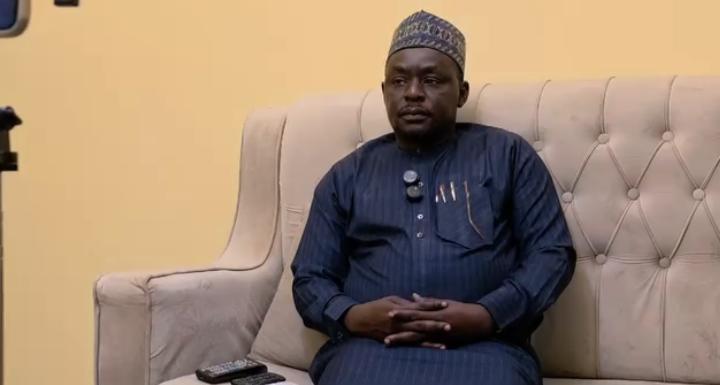
A former Kano State Commissioner for Education, Hon. Muhammad Sanusi Sa’id Kiru, Majiɗaɗin Kiru, has revealed how his tenure saw the redeployment of thousands of qualified teachers to public schools to address staffing shortages amid financial constraints.Majiɗaɗin Kiru said more than 5,900 qualified teachers were redeployed from administrative positions to classrooms, while over 6,900 government-paid teachers working in private schools were recalled to public schools.
He disclosed this during an interview with one of the digital platforms.
The former commissioner explained that the measures were introduced to address the shortage of teachers in public schools when the state government faced difficulties recruiting additional personnel because of limited financial resources.
According to him, an assessment conducted by the Ministry of Education revealed that some public schools had only one teacher, who also served as the headteacher, despite having pupils who needed instruction.
Read Also:
Gaya Polytechnic to Begin with Four Courses as Committee Eyes Year-End Take-Off
Bashir Ahmad to lead Kano APC digital campaign as party unveils 388-member council
All you need to know about Kiru local government area
“In my own local government alone, there were over 57 to 59 schools where the headmaster was the only teacher in the entire school,” he said.
Majiɗaɗin Kiru said the ministry subsequently engaged Local Government Education Secretaries and Zonal Directors to identify practical solutions to the problem.
He explained that the exercise uncovered qualified teachers with National Certificates in Education (NCE) and education degrees who had been deployed to administrative offices, local government councils and other government establishments instead of teaching.
The ministry, he said, recalled and redeployed the affected personnel to classrooms, alongside government-paid teachers who had been posted to private schools.
He maintained that the intervention helped strengthen public education and demonstrated the importance of improving the deployment of existing personnel while addressing recruitment challenges.
The former commissioner added that the impact of educational reforms could not be measured immediately, noting that improvements in teaching and learning required sustained investment and time.
COVID-19 and school development
Reflecting on his tenure, Majiɗaɗin Kiru said the administration introduced new educational initiatives, established schools, renovated existing facilities and organised training programmes for teachers.
He noted that Kano’s large population placed considerable pressure on its educational infrastructure, citing more than 8,000 primary schools and approximately 1,548 secondary schools in the state at the time.
He said the government also took measures to sustain learning during the COVID-19 pandemic by using television and radio broadcasts to reach pupils when conventional classroom activities were disrupted.
Other interventions, according to him, included providing teaching materials, recruiting qualified graduates, promoting teachers and ensuring the timely payment of salaries.
However, he identified inadequate funding as one of the major challenges confronting the education sector during his tenure.
Majiɗaɗin Kiru explained that low revenue allocations at the time left the government with limited resources for fresh recruitment after meeting salary obligations and other essential expenditures.
He said these financial constraints necessitated alternative approaches to addressing the shortage of teachers rather than depending exclusively on new employment.
The former commissioner also acknowledged subsequent efforts by the current administration to recruit teachers, saying the new appointments had further expanded the workforce available to public schools.
He attributed the recruitment drive partly to improved government revenues, while expressing optimism about the future of education in Kano State.
Abba’s return to APC a positive development
On the political situation in Kano State, Majiɗaɗin Kiru described Governor Abba Kabir Yusuf’s return to the All Progressives Congress (APC) as a positive development, arguing that it represented a continuation of the party’s political influence in the state.
He said he had remained in the APC since its formation in 2014, following the merger of parties, including the Action Congress of Nigeria (ACN), Congress for Progressive Change (CPC) and All Nigeria Peoples Party (ANPP).
According to him, the APC governed Kano State until 2023, when it lost the governorship election to the New Nigeria Peoples Party (NNPP).
He maintained that the governor’s return to the APC had strengthened the party’s position and created opportunities for political cooperation among its members.
Responding to concerns that some longstanding APC members were being marginalised following the governor’s return, the former commissioner insisted that he and his associates had not been sidelined.
He cited the position of the current deputy governor, whom he described as a member of their political group, noting that they had previously served together as commissioners in the state government.
Majiɗaɗin Kiru also referred to the appointment of several advisers from within the APC, arguing that such appointments demonstrated the inclusion of members who had remained in the party.
He further explained that committee structures had been established at the local government level to accommodate politicians who had previously held public offices.
According to him, former and serving local government chairmen, state and federal lawmakers, commissioners, special advisers, executive secretaries, managing directors and director-generals were among those eligible to participate in the committees.
He said the arrangements provided a platform for experienced politicians to contribute to decision-making and community development.
The former commissioner acknowledged that political disagreements and complaints were inevitable, particularly when individuals felt their expectations had not been met.
However, he maintained that political inclusion should also be assessed by whether party members had representation in decision-making structures.
“No human being can satisfy everyone except Allah. But we do our best within our means to ensure fairness,” he said.
Why I joined politics
Explaining his decision to enter politics after a career in the civil service, Majiɗaɗin Kiru said political participation offered a broader opportunity to contribute to public service and community development.
He argued that educated and experienced individuals should become involved in politics rather than remain on the sidelines criticising government policies and the conduct of public officials.
According to him, people who understand how government institutions operate can contribute meaningfully to governance by offering advice, taking responsibility and helping to shape public policies.
He said his experience in the civil service had strengthened his desire to serve the public, particularly through employment opportunities for young people.
Majiɗaɗin Kiru added that his ability to assist people while working in the civil service encouraged him to consider how much more he could achieve through an elective or appointive political position.
He also noted that political office could provide opportunities to attract development to one’s community and place of origin.
The former commissioner contested for a seat in the House of Representatives in 2023 but did not secure victory.
He currently serves as Director of Training and Programmes at the Progressive Institute (TPI), and said he remained active in the party’s political activities ahead of the 2027 general elections.
Majiɗaɗin Kiru is a former Kano State Commissioner for Education and a native of Kiru Local Government Area.

NUJ seeks justice for Kaduna journalist facing retrial over Facebook post

APC taps Gaya polytechnic committee chairman for academic mobilisation

NBTE proposes polytechnic act amendment to allow BTech degrees

FRSC prohibits political convoy escorts ahead of 2027 elections

Kano Governor Nominates Retired Air Commodore, Professor, Four Others as Commissioners
ABCOAD Unveils Journal, Bids Farewell to Provost

Nigerian Army Begins DSSC 29/2026 Recruitment, Outlines Eligibility Criteria
2027: NDC Releases Full List of Consensus Candidates in Kano

Gaya Polytechnic Opens Recruitment, Advertises 46 Academic, Non-Academic Positions