Kano
Ganduje: The power of mentorship, loyalty and political mobilisation ahead of 2027

By Umar Idris Shuaibu
In politics, the strength of a leader is often measured by the offices he occupies, the alliances he builds and the influence he commands. Yet another measure deserves equal attention, the people who emerge from the political environment he helps create, the opportunities made available to them and the responsibilities they subsequently assume.
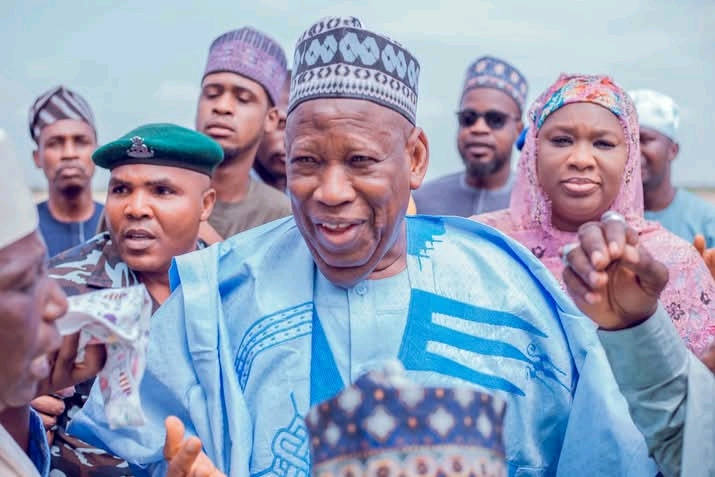
This perspective offers an interesting way to examine the political journey of Dr Abdullahi Umar Ganduje, former Governor of Kano State and immediate past National Chairman of the All Progressives Congress (APC).
Over the years, Ganduje has been associated with the emergence and advancement of several politicians who have gone on to occupy influential positions in government, the National Assembly and party administration. Their individual journeys differ, but their experiences provide a basis for examining the role of political mentorship, opportunity creation and professional development in the making of political leaders.
Among the prominent figures whose careers intersected with Ganduje’s administration or political network are Dr Mariya Mahmoud Bunkure, Minister of State for the Federal Capital Territory; Abubakar Kabir Bichi, Chairman of the House of Representatives Committee on Appropriations; and Murtala Sule Garo, Deputy Governor of Kano State.
Their positions span different levels of government, from the federal executive to the National Assembly and the Kano State Government.
Read Also:
X-Raying The Ganduje Political Powerhouse
Abba Bichi at 45: The making of a lawmaker under Ganduje’s political mentorship
Ganduje: When political influence outlives political office
As Ganduje intensifies his political engagements and participates in mobilisation efforts ahead of the 2027 general elections, these examples provide an opportunity to examine a dimension of his political career that extends beyond personal ambition: the development of a network of politicians whose responsibilities have grown over time.
His story also raises a broader question about political leadership in Nigeria: what does it mean to create opportunities for others, and how can the experience gained through such opportunities contribute to the development of future leaders?
Political grooming: Beyond winning Elections
Political grooming is a process through which emerging politicians acquire experience, develop relationships, understand institutional responsibilities and gradually assume greater roles in public life.
It can take place through party organisation, appointments to public office, participation in political consultations and opportunities to demonstrate leadership at the local, state or national levels.
Effective political grooming does not necessarily mean that an experienced politician determines every stage of another person’s career. Rather, it involves creating an environment in which individuals can gain experience, demonstrate their abilities and build the capacity required for more demanding responsibilities.
Ganduje’s years in Kano politics provide a useful context for examining this process.
As Deputy Governor between 1999 and 2003 and again from 2011 to 2015, he participated in state administration before becoming governor in 2015. His eight-year tenure as governor gave him responsibility for appointing officials, organising government institutions and working with elected representatives and party stakeholders.
He subsequently became APC National Chairman in August 2023, a position that placed him at the centre of the ruling party’s national administration until his departure in 2025.
These positions brought him into contact with politicians and public officials operating at different levels of government.
The extent to which individual careers were shaped by his personal mentorship varies, and each relationship should be assessed on its own merits. Nevertheless, the emergence of politicians associated with his administration into significant positions provides a basis for considering the importance of opportunity, political relationships and institutional experience.
A leader’s legacy can extend beyond personal achievements when others who have benefited from opportunities go on to assume responsibilities of their own.
Mariya Mahmoud Bunkure: From Kano’s education sector to the federal executive
Dr Mariya Mahmoud Bunkure represents one of the clearest examples of a political career that progressed from Kano’s state administration to the Federal Government.
A medical doctor by training, she served as Kano State Commissioner for Higher Education during Ganduje’s administration before her appointment as Minister of State for the Federal Capital Territory in 2023.
Her progression brought her from a state-level executive position into the federal cabinet, where she serves alongside the Minister of the FCT.
The transition is significant because it illustrates how professional expertise and experience acquired within state government can provide a foundation for broader responsibilities.
Mahmoud’s background in medicine and her experience in the education portfolio formed part of her professional profile before her federal appointment. Her subsequent responsibilities have extended her public service career into the administration of the Federal Capital Territory.
Her journey also demonstrates that political advancement often involves a combination of professional qualifications, administrative experience, political relationships and the confidence required to undertake new assignments.
For Ganduje, the significance of such a career is not simply that a former commissioner progressed to a ministerial position. It is that a person who served within his administration subsequently became part of the federal executive.
Political mentorship is most meaningful when opportunities enable people to develop their capabilities and assume responsibilities that require independent judgment and performance.
Mahmoud’s career can therefore be examined within the wider discussion of how state-level appointments may provide pathways to national public service.
Her subsequent record in office remains an important part of any complete assessment of her professional journey.
Abubakar Kabir Bichi: From constituency politics to national legislative responsibility
Another notable example is Abubakar Kabir Bichi, the member representing Bichi Federal Constituency in the House of Representatives and Chairman of the House Committee on Appropriations.
Bichi entered the National Assembly in 2019 and was re-elected in 2023. He initially chaired the House Committee on Works during the Ninth Assembly before assuming leadership of the Appropriations Committee in the 10th Assembly.
His current assignment places him at the centre of the House’s consideration of the Federal Government’s proposed expenditure.
The chairmanship is a significant legislative responsibility, requiring engagement with budget proposals, government institutions and the wider parliamentary process.
Bichi’s political career developed during the period when Ganduje was governor of Kano State. Their public engagements, including a meeting in 2020 when Bichi led members of the House Committee on Works on an oversight visit to Kano, provide documented examples of their interaction within the state’s political and institutional environment.
The precise extent of Ganduje’s personal mentorship should not be assumed solely from their political association. Bichi’s own electoral victories, legislative experience and committee responsibilities have also contributed to his development as a national political figure.
Nevertheless, his trajectory illustrates how politicians operating within a state’s political environment can progress into positions with responsibilities extending far beyond their constituencies.
From representing Bichi Federal Constituency to leading one of the House’s major financial committees, his career demonstrates the importance of institutional experience and the gradual expansion of legislative responsibilities.
His emergence provides a useful example in considering how political networks, opportunities and personal effort can intersect in the development of public leaders.
Murtala Sule Garo: From local governnance to deputy governor
Murtala Sule Garo offers another example of political advancement through different stages of public service.
Before becoming Deputy Governor of Kano State in 2026, Garo served in several political and administrative positions, including Chairman of Kabo Local Government Area, Chairman of the Association of Local Governments of Nigeria in Kano State and Commissioner for Local Government and Chieftaincy Affairs under Ganduje’s administration.
He was also the APC’s deputy governorship candidate in the 2023 Kano State governorship election.
His appointment as deputy governor by Governor Abba Kabir Yusuf in April 2026, followed by his confirmation and swearing-in, placed him in one of the state’s highest executive offices.
Garo’s political journey illustrates the progression that can occur when experience at local government and state levels is followed by greater executive responsibility.
His years in local government administration provided exposure to grassroots politics and the relationship between government and local communities. His subsequent commissioner role placed him within the state executive structure, while his emergence as deputy governor expanded his responsibilities to the highest level of the state’s executive branch after the governor.
Ganduje’s association with Garo is well established in Kano political reporting, and Garo has been described as one of his political protégés.
However, the deputy governor’s emergence also resulted from a separate political process involving Governor Yusuf, party stakeholders and the Kano State House of Assembly.
This distinction matters because political grooming should not be understood as the sole explanation for every subsequent appointment or achievement.
Rather, Garo’s career demonstrates how political relationships, experience in government and changing political circumstances can intersect to create new opportunities for public service.
His present responsibilities will ultimately be assessed by his performance in office and his contribution to the administration of Kano State.
Creating opportunities and building a political network
The careers of Mahmoud, Bichi and Garo differ in important respects. One moved from state government into the federal executive, another progressed through the National Assembly to a major legislative committee, while the third moved through local government and state administration into the deputy governorship.
What connects their stories is the broader political environment in which their careers developed and the opportunities they encountered along the way.
Political networks are often built through years of interaction among elected officials, appointed administrators, party organisers and community stakeholders.
Such networks can provide access to information, political support, professional relationships and opportunities to demonstrate leadership.
But the existence of a network does not automatically establish that every individual within it owes their achievements to one political leader. Each person’s qualifications, electoral mandate, professional record and independent decisions remain important.
A balanced assessment of Ganduje’s contribution should therefore recognise the opportunities associated with his administration and political relationships without overlooking the individual efforts that shaped the careers of those involved.
The broader lesson is that political leadership can create conditions in which others develop. Whether those conditions produce lasting value depends on the capabilities of the individuals, the quality of the institutions they serve and their willingness to discharge their responsibilities effectively.
Ganduje’s leadership beyond his own political career
Ganduje’s public career has moved through several phases, from deputy governor to governor, national party chairman and subsequent campaign-related engagements.
Each position has presented different responsibilities and opportunities to work with people across government and political institutions.
His years as governor placed him in a position to appoint commissioners, work with legislators and coordinate state administration. His time as APC National Chairman brought him into the wider organisation of the ruling party.
These roles provided platforms for political engagement, but the lasting value of leadership is not determined by appointments alone.
A more complete assessment considers how institutions functioned, how responsibilities were discharged and whether people entrusted with public roles contributed meaningfully to their constituencies and the wider public.
The advancement of politicians associated with a particular administration can form part of this assessment, particularly where their careers demonstrate a progression through different levels of responsibility.
At the same time, the public performance of those individuals should be examined independently of their political associations.
This approach allows the discussion of mentorship to move beyond personal allegiance and towards the more substantive question of whether experience and opportunity contribute to better leadership.
From mentorship to responsibility
Mentorship becomes meaningful when it prepares people to take responsibility for their own decisions.
In politics, this means more than helping an individual secure an appointment or win an election. It involves encouraging discipline, understanding the demands of public office and appreciating the importance of accountability.
Those who emerge into positions of authority must demonstrate that they can exercise independent judgment, work within institutional rules and respond to the expectations of the people they serve.
The achievements of political protégés should therefore not be measured solely by their proximity to an influential figure. They should also be assessed through their own performance and contributions.
This is an important distinction in considering Ganduje’s political network.
The positions occupied by Mahmoud, Bichi and Garo demonstrate the different levels of public responsibility to which they have progressed. Their future reputations will depend on what they accomplish in those roles.
For a political mentor, one of the most meaningful outcomes is the emergence of individuals who can perform effectively without relying exclusively on the influence that helped them gain their initial opportunities.
The ultimate objective of political grooming should be to strengthen the quality of leadership and public service.
Ganduje’s September–October engagements: Mobilisation and the preparation to 2027
Ganduje’s recent political activities have brought renewed attention to his continuing role within the APC and the wider preparations for the 2027 general elections.
During the closing weeks of September and the opening weeks of October 2026, he participated in campaign-related activities, engaged political stakeholders and maintained a visible presence in the party’s mobilisation efforts.
On October 6, he visited former President Goodluck Jonathan at his Abuja residence. Although the details of their discussion were not publicly disclosed, the meeting added to his recent engagements with prominent national figures.
Around the same period, Ganduje participated in APC activities associated with women’s mobilisation and preparations for the presidential campaign.
On October 9, he was named Grand Patron of the Diehard Tinubu Support Group and called on supporters to intensify grassroots mobilisation for President Bola Ahmed Tinubu’s re-election bid.
These engagements place political organisation and stakeholder mobilisation at the centre of his current activities.
The challenge for the APC is to translate such activities into coordinated structures capable of communicating its message, engaging communities and sustaining participation across different constituencies.
Experienced politicians can contribute to this process by sharing organisational knowledge, facilitating consultations and helping different stakeholders work towards common objectives.
However, effective mobilisation requires more than prominent endorsements and public appearances. It depends on clear responsibilities, credible messaging, effective coordination and attention to the concerns of citizens.
For Ganduje, the current period provides another opportunity to deploy his political experience in support of the party’s electoral objectives.
The extent to which these efforts contribute to the APC’s preparations will become clearer as the campaign structure develops.
Kano’s changing political equation
The evolving political arrangement in Kano adds another dimension to Ganduje’s current engagements.
Governor Abba Kabir Yusuf’s entry into the APC has brought together political actors whose relationships were previously shaped by different affiliations and competing interests.
On October 14, the Kano APC announced a 155-member Campaign Advisory Council chaired by Yusuf, with Ganduje and other prominent political figures among its members.
The council’s composition reflects the party’s effort to organise its preparations for the 2027 elections through a broad structure involving established political figures and other stakeholders.
Ganduje’s inclusion provides a formal avenue for him to participate in the advisory arrangement. The extent of his responsibilities, however, should be assessed through the council’s actual work and the operational structure established for the campaign.
The development also highlights an important feature of political leadership: the need to work within changing arrangements and cooperate with people whose political backgrounds may differ.
For a politician whose career has involved several transitions, the ability to contribute constructively within a new structure is an important consideration.
The wider challenge for the Kano APC will be to coordinate its different interests, clarify responsibilities and build an organisation capable of functioning beyond the influence of any single individual.
Loyalty, mentorship and the meaning of legacy
Loyalty and mentorship occupy an important place in political relationships, but both acquire greater meaning when linked to responsibility.
Loyalty can strengthen trust and cooperation among political stakeholders. Mentorship can help emerging leaders acquire experience and develop their abilities.
Neither, however, should replace accountability or become an excuse for overlooking the performance of public officials.
Political leaders must remain answerable for their decisions, while those who benefit from opportunities must demonstrate that they are capable of using their positions responsibly.
In this respect, Ganduje’s wider political story offers an opportunity to examine how relationships and experience can contribute to the development of political careers.
The emergence of figures such as Mahmoud, Bichi and Garo into influential positions provides concrete examples of individuals whose careers intersected with his administration or political network.
Their individual records, qualifications and responsibilities remain distinct, but their experiences help illustrate the broader relationship between political opportunity and leadership development.
A meaningful legacy is built not simply by the number of people associated with a leader, but by the quality of the institutions they serve and the contributions they make to society.
Looking ahead to 2027
As the 2027 elections approach, Ganduje’s political activities are increasingly centred on stakeholder engagement, party mobilisation and participation in the APC’s evolving campaign arrangements.
His recent appointments and engagements provide a platform for continued political participation, while the changing structure of Kano APC presents new opportunities and challenges for coordination.
Beyond the immediate electoral contest, his political journey raises a wider question about what experienced leaders leave behind.
The development of future leaders, the creation of opportunities and the transfer of institutional knowledge can all contribute to a lasting political legacy. Their value, however, is ultimately determined by what those who receive such opportunities do with them.
Mahmoud’s responsibilities in the federal executive, Bichi’s role in the House of Representatives and Garo’s position as Kano’s deputy governor demonstrate the different paths through which political careers can progress.
Their experiences provide a basis for examining the relationship between professional development, political association and public responsibility without reducing their achievements to a single individual’s influence.
For Ganduje, the next chapter will be shaped by how he applies his experience to the APC’s preparations for 2027 and how the political relationships he has built contribute to the party’s organisation.
Ultimately, the enduring measure of political mentorship is not simply the emergence of protégés into public office. It is whether they become capable leaders who exercise sound judgment, strengthen institutions and deliver meaningful service to the people they represent.

Kano APC loses former NPA MD Aminu Dabo

Kano Governor Mourns NUJ Vice Chairman’s Mother

‘Youths are partners today, not just leaders of tomorrow’ – Mariya Bunkure
Ganduje: The power of mentorship, loyalty and political mobilisation ahead of 2027

KANO AT A CROSSROADS: A CALL FOR IMPARTIALITY, OBJECTIVITY AND AN END TO SELECTIVE OUTRAGE OVER THE KANO EMIRATE DISPUTE

ABCOAD Unveils Journal, Bids Farewell to Provost

Nigerian Army Begins DSSC 29/2026 Recruitment, Outlines Eligibility Criteria

2027: NDC Releases Full List of Consensus Candidates in Kano

Gaya Polytechnic Opens Recruitment, Advertises 46 Academic, Non-Academic Positions