The Historica Nigeria

2026

Education, Kaduna, News

Kaduna Polytechnic Has Shaped Industries, Public Service — Gov Uba Sani

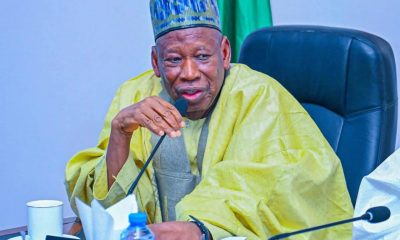
Governor Uba Sani has described Kaduna Polytechnic as a vital centre for technical education, innovation, entrepreneurship and professional excellence that has produced graduates contributing significantly to industries, institutions and public service. The governor stated this during the institution’s 70th anniversary and combined convocation ceremony held at the Tudun Wada Main Campus in Kaduna on Saturday. Speaking at the event, Governor Sani, an alumnus of the institution, emphasised the importance of technical and vocational education in driving sustainable development, industrialisation and economic growth. “No society can attain sustainable development without investing deliberately in knowledge, skills and innovation,” he said. Read Also: KSP Partners JOSTUM to Offer PGD Courses in Management, Social Sciences Why Science College Dawakin Kudu Remains a Pride of Kano’s Educational Heritage Photos: KASPA Leads Kano Delegation on Learning Visit to Jigawa Social Protection Programmes According to him, polytechnics should occupy a central place in Nigeria’s development agenda because they serve as engines of productivity, enterprise and human capital development. The governor disclosed that the Kaduna State Government is currently sponsoring 775 students in various programmes at Kaduna Polytechnic as part of efforts to remove financial barriers and expand access to quality technical education. “This intervention reflects our determination to ensure that talented young people, regardless of background, can acquire the skills necessary to contribute meaningfully to society,” he added. Governor Sani further revealed that his administration has established three Institutes of Vocational Training and Skills Development located in Rigachikun, Samaru Kataf and Soba. According to him, the institutes are equipped with modern facilities and certified by the National Board for Technical Education as among the best-equipped skills development centres in the country. He said the institutes offer specialised training in welding, solar technology, information technology and artificial intelligence to prepare young people for the evolving global economy. The governor also highlighted ongoing reforms at the famous Panteka Market, which he described as Africa’s largest informal skills hub. According to him, the market has been modernised with improved infrastructure, training facilities and modern tools aimed at supporting over 38,000 apprentices and integrating traditional craftsmanship with modern production techniques. Governor Sani disclosed that the restructured Panteka Market has surpassed Kenya’s Jua Kali initiative, which had long been regarded as Africa’s largest informal vocational training centre. He also directed immediate steps toward the construction of a new lecture theatre complex within Kaduna Polytechnic and promised rehabilitation of roads within the institution’s campuses to improve the learning environment. The governor called on the private sector, alumni associations, development partners and philanthropic organisations to support Kaduna Polytechnic through infrastructure partnerships, research funding and mentorship programmes. “The future of our nation depends substantially on the quality of institutions we build today,” he reiterated.

International, News

French Judge to Probe Khashoggi Murder Following Complaint Against Saudi Crown Prince

A French judge is set to examine the murder of Saudi journalist Jamal Khashoggi following complaints filed against Saudi Crown Prince Mohammed bin Salman by international human rights organisations. Khashoggi, a columnist for and a known critic of the Saudi leadership, was killed inside the Saudi consulate in Istanbul, Turkey, in 2018 while seeking documents related to his planned marriage. The legal complaint was submitted during Mohammed bin Salman’s visit to France in July 2022 by Democracy for the Arab World Now (DAWN) and Trial International. The push for legal action has also received support from several rights organisations and press freedom groups, including Reporters Without Borders (RSF). Read Also: Federation oil earnings drop by N78bn despite rise in global crude prices Speaking ahead of the judicial review, RSF lawyer Emmanuel Daoud described Khashoggi’s killing as an “abominable crime” allegedly planned “at the highest level of the Saudi state.” Another lawyer representing Trial International, Henri Thulliez, stated that there should no longer be any obstacle to opening a formal judicial investigation into what he described as an “atrocious crime.” During the administration of former United States President Joe Biden, the US government released an intelligence assessment in 2021 linking Mohammed bin Salman to the killing. However, former US President Donald Trump reportedly appeared to dismiss the allegations during a November 2025 meeting with the Saudi Crown Prince at the Oval Office, stating that “he knew nothing about it.”

News, Zamfara

Zamfara Records First Hajj Flight from Gusau International Airport

Zamfara State on Friday recorded its first-ever Hajj flight departing from the newly constructed Gusau International Airport, as 415 intending pilgrims boarded a Max Air flight bound for Saudi Arabia. The development was disclosed in a statement issued by the spokesperson to Governor Dauda Lawal, Sulaiman Idris. According to the statement, the inaugural flight, operated by Max Air with flight number NGL270, conveyed 288 male and 127 female pilgrims to the Kingdom of Saudi Arabia for the 2026 Hajj exercise. Speaking during the departure ceremony, Governor Lawal described the event as a historic milestone and a major fulfilment of his administration’s campaign promises. Read Also: FROM VISION TO REALITY: Matawalle’s Legacy Takes Zamfara to the Global Stage “I am happy today that our pilgrims will be flying directly from Gusau International Airport to the Kingdom of Saudi Arabia for this year’s pilgrimage,” the governor stated. “Many doubted this would become a reality, but today it has. We began building this International Airport on June 18, 2024,” he added. Lawal noted that the airport would significantly ease the burden previously faced by pilgrims who had to travel to Kano or Sokoto before boarding Hajj flights. According to him, the new development would reduce travel stress and enable pilgrims to reach Saudi Arabia in less than four hours. The governor further disclosed that discussions were already ongoing with airline operators to commence commercial flight operations from the airport. He thanked the people of Zamfara State for their support and prayers, while wishing the intending pilgrims a successful Hajj exercise and safe return. Lawal also urged the pilgrims to pray for peace, progress and development in Zamfara State and Nigeria at large.

Business, Economy, National, News

Federation oil earnings drop by N78bn despite rise in global crude prices

Federation oil earnings from the Nigerian National Petroleum Company Limited Production Sharing Contract (PSC) profit distribution declined by N78.71bn in March 2026 despite a sharp increase in global crude oil prices during the same period. Reports presented at Federation Account Allocation Committee meetings and obtained by Sunday PUNCH showed that total PSC distribution to the Federation Account dropped from N121.34bn in February 2026 to N42.64bn in March 2026, representing a decline of 64.9 per cent. The figure was also significantly lower than the N204.96bn recorded in March 2025. The decline occurred despite Brent crude prices rising above $100 per barrel during the first quarter of 2026 amid escalating tensions in the Middle East and fears of disruptions to global oil supply routes. Further analysis showed that total PSC distribution for the first quarter of 2026 stood at N180.05bn, compared to N438.54bn recorded during the same period in 2025, indicating a decline of N258.49bn. Read Also: FG Sets Transition Plan for Direct Oil Revenue Payments to Federation Account The reports also revealed major changes in Nigeria’s oil revenue sharing framework following Executive Order 9 signed by President Bola Ahmed Tinubu in February 2026. Under the previous arrangement, PSC profits were shared using a 30:30:40 formula, with deductions made for NNPC management fees and frontier exploration funds before the Federation received its share. However, the new directive abolished those deductions and mandated full remittance of PSC revenues into the Federation Account. Despite the reforms, actual oil revenue inflows remained weak. Reports indicated that while projected oil and gas revenue from NNPC for Q1 2026 stood at N1.41tn, actual inflows amounted to only N180.05bn, leaving a shortfall of about N1.23tn. Economic experts attributed the situation to factors such as low production output, delayed remittance cycles, crude lifting arrangements and previous forward oil sales agreements entered into by the NNPC. Speaking on the development, the Chief Executive Officer of the Centre for the Promotion of Private Enterprise, Dr. Muda Yusuf, noted that oil revenue performance depends not only on global prices but also on production levels and remittance structures within the sector. He added that previous forward crude sales used to finance refinery rehabilitation projects may still be affecting the direct inflow of oil revenues into government accounts.

News, Sport

Super Falcons to Face Senegal in Double-Header Friendly Ahead of WAFCON

Nigeria’s Super Falcons will face Senegal Women’s National Football Team in a double-header international friendly during the June FIFA women’s international window as preparations intensify for the 2026 Women’s Africa Cup of Nations (WAFCON). The 10-time African champions are scheduled to take on the Teranga Lionesses on June 5 and 8 at the Remo Stars Stadium in Ogun State. The fixtures are expected to form a key part of the team’s preparations ahead of the continental tournament scheduled to hold in Morocco next year. Details of the encounters were confirmed on social media platform X by Super Falcons Show. Read Also: Ranchers Bees Return to NPFL After 16-Year Absence The friendlies come after Nigeria’s proposed training tour of the United Kingdom, which included a planned friendly match against Jamaica, was cancelled due to scheduling complications linked to FIFA’s official women’s international window. Reports indicated that the timing of the proposed tour would not have compelled clubs to release players for the fixtures. With the UK training tour shelved, the Senegal friendlies are expected to provide coach Justine Madugu and his technical crew an opportunity to assess players, test tactical systems and strengthen team cohesion ahead of the WAFCON campaign. The matches are also expected to support Nigeria’s long-term preparations toward qualification for the 2027 FIFA Women’s World Cup in Brazil. Senegal are considered a strong regional opponent, with observers expecting their physical and organised style of play to provide Nigeria with a competitive tactical test across both fixtures. The Super Falcons, widely regarded as the most successful women’s football team in Africa, will be aiming to fine-tune their squad as they pursue another continental title.

Feature, National

My Dream Dangote: A Vision of Ambition, Entrepreneurship, and Legacy

By Abubakar Sidi Akibu  In a continent where millions of young people continue searching for opportunities amid economic uncertainty and social limitations, one young entrepreneur has chosen to transform inspiration into vision and ambition into purpose. For Abubakar Sidi Akibu, entrepreneurship is not merely about wealth creation. It is about building institutions, creating opportunities, inspiring future generations, and contributing meaningfully to Africa’s economic transformation. His forthcoming book, My Dream Dangote: The Journey of Vision, Ambition, and Legacy in Africa, reflects the mindset of a determined young African who believes greatness can emerge from the continent and compete globally through discipline, consistency, patience, and strategic thinking. At the center of the book lies the towering inspiration drawn from Aliko Dangote, whose remarkable rise from businessman to globally respected industrialist continues to motivate millions of young Africans. Read Also: Umar Idris Shuaibu: The Journalist Redefining Culture, Ethics, and Public Service in Nigeria According to the author, Dangote’s journey reshaped his understanding of success, leadership, and long-term vision. “His story proved that greatness is not determined by background or circumstances but by vision, courage, consistency, and commitment,” Akibu explained in the manuscript’s opening chapter. The book presents a motivational reflection on entrepreneurship, leadership, resilience, and the power of dreaming beyond temporary limitations. It also captures the realities many young Africans face while striving to build meaningful futures amid uncertainty and limited opportunities. Structured across fifteen chapters, the publication explores themes ranging from discovering purpose and understanding business principles to leadership, discipline, failure, influence, and legacy building. Through personal reflections and entrepreneurial insights, Akibu narrates how his interest in business development gradually evolved into a larger vision of building impactful institutions capable of creating employment and long-term value for society. As the founder of A+ AROMAS NIGERIA LIMITED, the author explained that his vision extends beyond personal achievement. He believes true success should be measured not only by financial accomplishments but also by influence, contribution, and the ability to inspire others. The book equally seeks to encourage young Africans not to abandon their ambitions because of fear, criticism, poverty, or temporary setbacks. Rather, it emphasizes persistence, discipline, patience, and consistency as essential pillars for sustainable success. “Dreams only become reality when belief is combined with action, discipline, and consistency,” the author stated. Beyond admiration for Dangote’s achievements, My Dream Dangote also represents the beginning of the author’s own entrepreneurial vision and long-term aspiration to build globally respected African businesses capable of leaving lasting impact across generations. The work positions itself not simply as a business narrative but as a motivational call for young Africans to believe in their potential, embrace long-term thinking, and pursue purposeful leadership capable of transforming society. For many readers, especially aspiring entrepreneurs across Africa, the message remains clear: greatness does not begin with resources alone. It begins with vision, determination, discipline, and the courage to persist despite obstacles. As Africa continues producing a new generation of ambitious entrepreneurs and innovators, books such as My Dream Dangote may further resuscitate confidence among young people seeking to redefine the continent’s future through enterprise, leadership, and legacy.

Feature, Zamfara

FROM VISION TO REALITY: Matawalle’s Legacy Takes Zamfara to the Global Stage

Lawal Umar Muradun, Zamfara  Kudos to the Executive Governor of Zamfara State, His Excellency Governor Dauda Lawal, for demonstrating uncommon leadership and continuity in governance by sustaining and advancing the monumental Zamfara State International Airport project in Gusau. This visionary project, first conceived during the administration of His Excellency Mahmuda Aliyu Shinkafi, gained remarkable momentum under the immediate past administration of His Excellency Dr. Bello Mohammed Matawalle, MON, Matawallen Maradun, whose determination and foresight ensured that the dream moved from paper to reality despite enormous criticism and financial challenges. At the early stages, many, both within the elite and among the general public have strongly opposed the project, just as they criticized the modernization of the Government House in Gusau. Yet, true leaders are remembered not for yielding to pressure but for seeing opportunities where others see impossibilities. Matawalle remained focused, courageous, and committed to the future of Zamfara State. Today, history has vindicated that vision. Read Also: Separating Fact from Fiction: Contextualizing the Allegations Against Bello Matawalle Alhamdulillah! Governor Dauda Lawal also deserves commendation for rising above political sentiments to complete and sustain this legacy project for the benefit of the people. Today, Zamfara stands proud as the state witnesses its first-ever international flight from Gusau to the Kingdom of Saudi Arabia, a landmark achievement that symbolizes growth, connectivity, and progress. More inspiring is the fact that the operation is being handled by an indigenous airline, Max Air, owned by the renowned Katsina-born business mogul, Alhaji Dahiru Barau Mangal. Indeed, the people of Masarautar Katsinan Gusau, Zamfara State, and the entire Zamfara community have every reason to celebrate and appreciate the contributions of leaders such as Yarima, Mamuda, Yari, Matawalle, and Dauda toward the growth and transformation of the state. Allah Ya saka mu su da alkhairi, Ya ci gaba da ba su hikima da lafiya domin hidimtawa al’umma. Pride fills me as Zamfara continues to rise. ✍️ Lawal Umar Maradun, Ph.D, fnipr, arpa, Manager Corporate Affairs, Nigerian Agricultural Insurance Corporation, NAIC, Abuja.

Kano, News

Gaya Emirate Council Reinstates Panda Village Head

The Gaya Emirate Council has reinstated Alhaji Ibrahim Sabo Muhammad as the Village Head of Panda in Albasu Local Government Area of Kano State, bringing an end to his suspension from office. The decision was contained in an official letter issued by the Emirate Council and signed by the Senior Councillor for Administration, Wamban Gaya, Alhaji Dr. Mansur Ibrahim Gaya. Read Also: Why Tarauni Remains a Pillar of Kano’s Metropolitan Development All You Need to Know About Kiru Local Government Area Lere: A Historic Fulani Settlement and Cultural Crossroads in Kaduna According to the letter, the reinstatement took effect from Friday, May 15, 2026, following the approval of the Emir of Gaya. The council expressed confidence that Alhaji Ibrahim Sabo Muhammad would continue to provide responsible and just leadership to the people of Panda area. The development is expected to restore stability within the traditional leadership structure of the area and strengthen local administration under the Gaya Emirate Council.

Humanitarian, Kano, News

Kano Immunisation Advocacy Group Seeks Recruitment of Routine Immunisation Officers

The Kano Community of Practice on Immunisation, Budget Tracking, Advocacy and Accountability (Kn-CoP), in collaboration with the BOOST Project implemented by Save the Children International, on Thursday paid an advocacy visit to the Office of the Permanent Secretary, Kano State Ministry of Local Government and Chieftaincy Affairs. The delegation, led by the Chairman of Kn-CoP, Comrade Salisu Yusuf, commended the ministry for granting them audience and acknowledged the existing partnership between the Community of Practice and relevant stakeholders in promoting accountability and improving service delivery within the health sector. Speaking during the visit, Yusuf said sustained collaboration among stakeholders has continued to produce positive outcomes, particularly in strengthening routine immunisation services across local government areas in Kano State. He, however, called for the recruitment of more permanent routine immunisation officers instead of relying on ad hoc personnel for immunisation exercises. Read Also: Rethinking Nigeria’s Agricultural Survival Strategy Kano Tricycle Unions Join Immunisation Drive as BOOST Mobilises 130 Leaders Photos: KASPA Leads Kano Delegation on Learning Visit to Jigawa Social Protection Programmes According to him, employing permanent staff would enhance commitment, continuity and efficiency in the delivery of immunisation services across communities. Yusuf noted that only properly engaged and retained personnel would be able to provide the level of consistency and results required in routine immunisation programmes. During the visit, the Kn-CoP delegation also presented an advocacy brief and a souvenir to the Permanent Secretary as part of its stakeholder engagement and advocacy efforts. Responding on behalf of the Permanent Secretary of the Ministry, Fatima Adamu Barde, the Director of Salary and Wages, Abdullahi Muhammad Gwarzo, appreciated the commitment and advocacy efforts of the Community of Practice and assured the delegation of the ministry’s support. He urged the group to also engage local government authorities to ensure effective implementation of immunisation exercises at the grassroots level. Gwarzo further advised the delegation to strengthen collaboration with the Kano State Primary Healthcare Management Board, describing it as the parent agency responsible for healthcare services within the local government system. He assured the delegation of the ministry’s commitment toward supporting initiatives aimed at improving healthcare delivery and immunisation coverage across Kano State. The director also encouraged the Community of Practice to extend similar advocacy visits to the Primary Healthcare Management Board and other relevant agencies involved in healthcare administration at the local government level.

Agriculture, Feature, National

Rethinking Nigeria’s Agricultural Survival Strategy

By Mustapha Nuhu Wali, mni, FCNA, FCCSA As the farming season approaches, Nigeria finds itself at a critical crossroads. Much of the national conversation has focused on the rising cost of fertilizers, seeds, and other agricultural inputs. While these concerns are valid, they only scratch the surface of a deeper structural challenge confronting the country, particularly Northern Nigeria, where agriculture is both livelihood and lifeline. The real issue is not simply affordability; it is sustainability. Farmers across states such as Kano State, Kaduna State, Niger State, and Benue State are not just struggling with high input costs; they are grappling with uncertainty and a broken economic cycle. For a small-scale farmer today, purchasing just one bag of fertilizer requires selling two to three bags of maize produced in the previous season—maize that itself was cultivated at significantly high cost. This reality makes reinvestment into farming increasingly difficult, if not impossible. Will they be able to access inputs on time? Will insecurity allow them to cultivate their land? And perhaps most importantly, will they be able to sell their produce at a fair price after harvest? A major concern is policy inconsistency. On one hand, government encourages local production; on the other, it opens the door to food imports through waivers that can undercut local farmers. This contradiction weakens confidence and discourages investment in agriculture. Read Also: 300-Year-Old Kano Farming Settlement Faces Extinction Over Sand Mining Food Waivers Threaten Northern Agriculture, Says Wali FG Launches FarmerMoni Programme, 22,000 Farmers to Benefit There is also the growing impact of global supply dynamics. The ongoing crisis in the Middle East, an important source of nitrogen and petrochemical inputs used in fertilizer production poses a significant risk. Any disruption in supply chains will inevitably translate into higher costs locally. To some extent, private sector investments have helped cushion the impact. Companies like Indorama Eleme Petrochemicals and Dangote Fertilizer have significantly improved domestic supply of urea and NPK fertilizers. Without these investments, the current situation would likely be far worse. However, their efforts alone are not sufficient to guarantee long-term sustainability. There is a need to integrate these production gains into a broader national strategy that ensures affordability, accessibility, and efficiency in distribution. Equally important is the need to revisit the performance of legacy public-sector fertilizer assets, particularly those historically located in Rivers State. If they are not contributing meaningfully, then policy attention should shift toward revamping or restructuring them. Beyond production, distribution remains a major bottleneck. Inputs often do not reach smallholder farmers on time or at the right price. At the same time, state interventions remain fragmented. A coordinated regional approach is urgently needed. But perhaps the most overlooked aspect of the current crisis is its security dimension. When farming becomes unviable, rural populations migrate to urban centres, increasing unemployment and social pressure. Over time, this translates into insecurity. Nigeria cannot afford to treat agriculture as a seasonal concern. It must be treated as a strategic priority. First, there must be policy coherence. Agricultural policies must align with trade policies to protect local producers. Second, domestic production capacity must be strengthened. Third, distribution systems must be improved. Fourth, security in farming communities must be addressed. Finally, smallholder farmers must be supported directly. Between 2015 and 2017, under Muhammadu Buhari, targeted interventions supported fertilizer blending plants and improved access. That experience offers useful lessons, but the current challenge requires going further. Nigeria must rethink its agricultural survival strategy. The goal should not just be to survive the next farming season, but to build a system that can withstand shocks and ensure food security. The stakes are too high for incremental solutions. What is required is bold, coordinated, and forward-looking action.

Scroll to Top