The Historica Nigeria

2026

Feature, National, News

Gowon reveals how Ojukwu allegedly sought military backing for Azikiwe against Balewa in 1964

By The Historica Nigeria Fresh historical revelations have emerged from the newly released memoir of former Nigerian Head of State, Yakubu Gowon, shedding more light on the deep political tensions that engulfed Nigeria’s First Republic before the January 1966 military coup. In his memoir titled My Life of Duty and Allegiance, launched in Abuja on Tuesday, Gowon narrated how the late Chukwuemeka Odumegwu Ojukwu allegedly initiated discussions with fellow military officers in 1964 on possible military intervention to resolve the constitutional crisis between then President Nnamdi Azikiwe and Prime Minister Abubakar Tafawa Balewa. The memoir revisits one of the most sensitive political periods in Nigeria’s history, when ethnic mistrust, electoral controversies and regional rivalries threatened the fragile unity of the young nation barely four years after independence. The 1964 political deadlock Nigeria’s 1964 general election triggered a major constitutional crisis after allegations of electoral malpractice and widespread boycott by sections of the opposition dominated by Azikiwe’s National Council of Nigerian Citizens (NCNC) and its allies. The political atmosphere became increasingly tense as Azikiwe, Nigeria’s ceremonial President and Commander-in-Chief, reportedly resisted inviting Tafawa Balewa to form a new government following the disputed polls. For nearly 24 hours, Nigeria was left without a functioning federal government, creating anxiety across the country and fears of institutional collapse. Read Also: Between Discipline and Dissent: Musa Bamaiyi and the Burden of Command Rimi’s Education Legacy Linked to Late Abdulhamid Hassan’s Reforms 16 Years After, Rimi’s Pro-People Legacy Still Resonates in Kano According to Gowon, the crisis exposed the fragile nature of Nigeria’s parliamentary democracy and intensified regional political competition among the North, East and West. Ojukwu’s alleged secret discussions At the time of the crisis, Gowon was a Lieutenant-Colonel serving as Adjutant General of the Nigerian Army, while Ojukwu held the position of Quartermaster General. Gowon recounted how he unexpectedly walked into Ojukwu’s office while searching for Lt-Colonel David Ejoor, only to discover Ojukwu, Ejoor and Colonel Victor Banjo deeply engaged in political discussions. According to him, Ojukwu openly informed him that they had been reviewing the growing political conflict between Azikiwe and Balewa and were considering possible military intervention in favour of Azikiwe. Gowon said the discussions appeared designed to create what he described as a “broad-based national military action,” involving officers from different regions of the country. He explained that Ojukwu represented the East, Banjo the West, Ejoor the Mid-West, while he, Gowon, represented the North. “To them, I represented the missing link of the jigsaw puzzle,” Gowon wrote. The former Head of State stated that he immediately rejected the idea, insisting that the military had no constitutional role in determining political outcomes or taking sides in civilian disputes. He maintained that the military owed loyalty to the government of the day, particularly Prime Minister Tafawa Balewa, who remained the substantive Head of Government under Nigeria’s parliamentary system. Gowon further disclosed that he warned the officers against embarking on any unconstitutional adventure, recalling his response during the discussion: “God helps anyone that starts any trouble.” Road to the January 1966 coup The political crisis of 1964 and the violent unrest that followed in parts of Western Nigeria significantly weakened public confidence in the First Republic. Within months, some young military officers staged Nigeria’s first coup in January 1966, leading to the assassination of Prime Minister Tafawa Balewa, Northern Premier Sir Ahmadu Bello, Western Premier Samuel Ladoke Akintola and Finance Minister Festus Okotie-Eboh. Several senior northern military officers, including Brigadier Zakariya Maimalari, were also killed during the coup. Although the coup eventually failed, Major General Johnson Aguiyi-Ironsi emerged as Nigeria’s first military Head of State. However, Ironsi’s inability to decisively prosecute the coup plotters deepened suspicion and resentment in parts of Northern Nigeria, eventually leading to the July 1966 counter-coup and retaliatory killings. Gowon later emerged as Head of State following the counter-coup, while Ojukwu subsequently declared the secession of the Republic of Biafra, leading Nigeria into a devastating 30-month civil war that ended in 1970. Fresh insight into Nigeria’s troubled past The memoir offers rare insider perspectives into the intrigues, mistrust and political calculations that shaped Nigeria’s early post-independence years. It also revives longstanding debates over the role of the military in Nigeria’s politics, the collapse of the First Republic and the personalities whose ambitions, fears and decisions altered the course of the nation’s history. For many historians and political analysts, the revelations contained in Gowon’s memoir further underscore how unresolved regional rivalries, political intolerance and institutional weaknesses contributed to Nigeria’s descent into military rule and civil conflict during its formative years.

Nasarawa, News, Politics

Former IGP Mohammed Adamu threatens APC exit over alleged injustice in Nasarawa primary

Former Inspector General of Police, Mohammed Adamu Abubakar, has threatened to dump the All Progressives Congress (APC) following what he described as injustice and manipulation during the just-concluded governorship primary election in Nasarawa State. Adamu, who addressed journalists in Lafia on Saturday, alleged that the outcome of the primary election was altered in favour of the preferred candidate of the state government, Ahmed Aliyu Wadada, despite claiming that he secured a landslide victory during the exercise. The former police boss expressed dissatisfaction with the conduct and outcome of the primary, insisting that the declaration of Wadada as winner did not enjoy the support of the majority of APC members and stakeholders across the state. According to him, over 90 percent of party stakeholders in Nasarawa State rejected the outcome of the exercise due to the alleged irregularities that trailed the process. Read Also: APC risks losing key Kano figure as NDC moves for Mustapha Bala Dawaki Why federal influence does not always guarantee victory at home How three former ministers lost out in Northeast APC governorship primaries He called on the party’s appeal committee and the national leadership of the APC to urgently review the results and ensure justice is done, expressing confidence that the party leadership still has the opportunity to resuscitate the confidence of aggrieved supporters through fairness and transparency. “Should justice prevail, we shall continue our journey within the APC. However, if justice is denied, we shall communicate to you the next line of action and the political platform under which we shall contest the 2027 governorship race,” he stated. Adamu reiterated that his ambition to reposition Nasarawa State remains alive, stressing that he possesses the political support and capacity to contest and win the 2027 governorship election either within the APC or on another political platform. He also appealed to his supporters to remain calm, peaceful and law-abiding while awaiting the final decision of the party leadership on the matter. The development has further highlighted the growing post-primary tensions within the APC ahead of the 2027 elections, as several federal appointees and influential political figures in states such as Bauchi, Gombe and Kano have also faced intense political battles, controversial primary outcomes and internal party power struggles in recent times.

International, News, Religious

Hausa, Fulfulde, Yoruba, Igbo Among 50 Languages Approved for Hajj 2026 Arafah Sermon

Saudi Arabia has announced that the Day of Arafah sermon for Hajj 2026 will be translated into 50 international languages, including major Nigerian languages such as Hausa, Fulfulde, Yoruba and Igbo, in a move aimed at expanding the global reach of the annual Islamic sermon. The announcement was made by Sheikh Prof. Dr. Abdulrahman bin Abdulaziz Al-Sudais at the conclusion of a scientific forum titled Saudi Arabia’s Efforts in Serving the Religious System at the Two Holy Mosques. According to the General Presidency of Religious Affairs at Masjid al-Haram and Masjid an-Nabawi, the sermon will be broadcast globally through its digital platforms and official channels, including The Islamic Information. This year’s Day of Arafah sermon will be delivered by Sheikh Dr. Ali bin Abdulrahman Al-Hudhaifi, who is also the Imam and Preacher of Masjid an-Nabawi. He is expected to deliver the sermon at Masjid Namirah during the peak of Hajj rites. Read Also: Former APC National Chairman Ganduje Embarks on Hajj Pilgrimage Pantami Urges Northern Muslims to Invest in Media, Warns of Communication Deficit French Judge to Probe Khashoggi Murder Following Complaint Against Saudi Crown Prince Initially, authorities had announced that the sermon would be translated into 35 languages. However, the latest update confirmed that the number has now been increased to 50 languages to accommodate more Muslim communities across the world. The approved languages include English, Urdu, French, Persian, Malay, Indonesian, Russian, Turkish, Chinese, Bengali, Hausa, Tagalog, Hindi, Malayalam, Thai, Igala, Pashto, Tamil, Azerbaijani, Uzbek, Balochi, Kurmanji, Spanish, Portuguese, Swahili, Amharic, Somali, Yoruba, Fulfulde, Kanuri, Italian, German, Bosnian, Dutch, Swedish, Albanian, Japanese, Korean, Khmer, Wolof, Bambara, Nepali, Tajik, Kyrgyz, Punjabi, Igbo, Zabarma, Vietnamese, Burmese and Jola. The inclusion of Hausa, Fulfulde, Yoruba, Igbo, Kanuri and Igala is expected to further strengthen access to Islamic teachings for millions of Nigerian Muslims and West African audiences during the Hajj season. Muslims around the world are expected to watch the live Arafah sermon feed on the Day of Arafah through official broadcasting channels and digital platforms.

Kano, News, Politics

Kano Deputy Governor Lauds Orderly APC Presidential Primary in Garo Ward

The Deputy Governor of Kano State, Murtala Sule Garo, has commended the peaceful conduct of the All Progressives Congress (APC) presidential primary election held in Garo Ward, Kabo Local Government Area of Kano State. Garo made the commendation shortly after casting his vote at his polling unit in Garo Ward, describing the exercise as a clear demonstration of the party’s commitment to internal democracy and grassroots participation. The Deputy Governor praised the orderly and peaceful manner in which party members trooped out to participate in the exercise while adhering strictly to the party’s guidelines. Read Also: APC risks losing key Kano figure as NDC moves for Mustapha Bala Dawaki Why federal influence does not always guarantee victory at home Aminu Bayero Moves to Hold Eid-el-Kabir Durbar in Kano “We are really grateful to our elders, women and youths for coming out en masse to cast your votes,” Garo stated. He noted that the ward has remained one of the strongholds of the APC in Kano State, stressing that party supporters in the area have consistently demonstrated loyalty, patriotism and commitment to the ruling party. “Since 2015, APC has never lost in this ward. Therefore, we are really grateful once again to all citizens of this ward,” he added. Also speaking, the Ward Secretary of the party, Hon. Abba Salisu Me Wake, who supervised the voting exercise, disclosed that over 770 votes were cast in favour of President Bola Ahmed Tinubu, affirming him as the winner in the ward. He expressed optimism over the future of the party ahead of the 2027 General Election and prayed for sustained peace, unity and developmental progress across the country.

Kano, News, Politics

APC risks losing key Kano figure as NDC moves for Mustapha Bala Dawaki

There are indications that the National Democratic Congress (NDC) is making strategic moves to attract the Chief of Staff to the National Chairman of the All Progressives Congress (APC), Prof. Nentawe Yilwatda, Hon. Mustapha Bala Dawaki, ahead of the 2027 general elections. The development is linked to growing controversies surrounding the APC primary process in the Dawakin Kudu/Warawa Federal Constituency of Kano State. The Kwankwasiyya-backed NDC is said to be considering Dawaki a strong political figure whose possible entry into the party could significantly alter the political equation within the constituency. Speaking with ‘The Historica Nigeria’, one of Dawaki’s political associates, Ibrahim Dawaki, said the former lawmaker had already lost out in the ongoing consensus arrangement within the APC. According to him, if Dawaki eventually loses the party primaries expected to hold in the coming weeks, there is every tendency that he may consider leaving the APC for another political platform. Read Also: Mustapha Bala Dawaki and the Prospect of a 2027 Political Comeback How three former ministers lost out in Northeast APC governorship primaries Former APC National Chairman Ganduje Embarks on Hajj Pilgrimage “Now he has even lost out in the consensus arrangement, and if he loses the primaries coming in some weeks, he may decide to leave the party,” Ibrahim Dawaki said. “And by doing so, APC will be losing one of its strongest political hands within the constituency.” Hon. Mustapha Bala Dawaki, popularly known as Mai Gidan Ruwa, represented the Dawakin Kudu/Warawa Federal Constituency in the House of Representatives for three consecutive terms between 2011 and 2023. During his stay at the National Assembly, he served as Chairman of the House Committee on Housing and Habitat and became known for constituency projects, educational interventions, and youth empowerment programmes across Dawakin Kudu and Warawa local government areas. Beyond politics, Dawaki is also recognised as a corporate finance expert with academic qualifications from Bayero University Kano (BUK), Coventry University in the United Kingdom, and Dundee Business School in Scotland. He currently serves as Chief of Staff to the National Chairman of the APC, Prof. Nentawe Yilwatda.

Kano, News, Politics

ADC Tarauni House of Reps Aspirant Calls for Justice, Rejects Alleged Illegal Primaries

An aspirant for the House of Representatives seat under the African Democratic Congress (ADC) for Tarauni Federal Constituency, Hon. Muhammad Radhi Aminu, has raised concerns over alleged plans by some party officials to recognize what he described as an unauthorized primary election allegedly conducted by Hon. Nasiru Baballe Ila. Hon. Radhi Aminu stated that upon the arrival of the official primary election committee led by Mr. John Ayuba, all aspirants were invited for a meeting aimed at resolving the issue through consensus. According to him, the committee chairman clearly informed the aspirants that no valid primary election had earlier taken place, stressing that only the committee mandated by the party leadership possessed the authority to conduct such an exercise. Read Also: Why federal influence does not always guarantee victory at home Former APC National Chairman Ganduje Embarks on Hajj Pilgrimage How three former ministers lost out in Northeast APC governorship primaries He further explained that the committee encouraged all aspirants to resolve the matter amicably by agreeing on a consensus candidate in order to avoid unnecessary division within the party. While noting that consultations and consensus discussions are still ongoing, Hon. Radhi Aminu expressed concern over reports suggesting attempts to endorse the alleged parallel primary election. He therefore called on the national leadership of the ADC to urgently intervene and ensure fairness, transparency, and justice for all aspirants involved in the process. “Our position remains clear. We will not accept anything other than a properly conducted direct primary election or a genuine consensus arrangement approved by the party,” he stated. Hon. Radhi Aminu also reaffirmed his loyalty and commitment to the success of the ADC at all levels, urging party stakeholders to protect the integrity of the democratic process within the party.

Feature, National, Politics

Why federal influence does not always guarantee victory at home

Recent governorship primaries across parts of Nigeria, particularly in the Northeast, have once again highlighted the difficult political terrain many former federal appointees face when attempting to transition from national appointments into state-level electoral politics. The experiences of former ministers such as Yusuf Maitama Tuggar, Professor Isa Ali Pantami, Saidu Alkali, and former Nigerian National Petroleum Company (NNPC) executive Bala Maijama’a Wunti have reignited conversations over whether visibility and influence at the federal level automatically translate into political control within home states. While Tuggar and Wunti lost the All Progressives Congress (APC) governorship primary in Bauchi State, Pantami and Alkali withdrew from the Gombe governorship race over alleged irregularities and concerns surrounding the credibility of the process. The developments have again reinforced a long-standing political reality in Nigeria, that federal appointments may provide national recognition, but state politics remains deeply rooted in grassroots structures, local alliances, political loyalty networks, and internal party dynamics. Unlike federal appointments, where technocratic competence, loyalty to the presidency, or professional expertise often play major roles, governorship contests are largely influenced by ward-level mobilisation, community relationships, political patronage systems, and years of sustained grassroots engagement. Read Also: How three former ministers lost out in Northeast APC governorship primaries Reps Member Gagdi Fails to Secure APC Ticket for Third Term Aminu Bayero Moves to Hold Eid-el-Kabir Durbar in Kano Many politicians who spend years operating within Abuja’s administrative and policy circles often gradually lose direct contact with local political networks needed to survive competitive elections back home. In Bauchi State, immediate past Minister of Foreign Affairs, Yusuf Maitama Tuggar, resigned from President Bola Tinubu’s cabinet to pursue his governorship ambition under the APC platform. However, he lost the primary election to former Bauchi State Governor, Mohammed Abdullahi Abubakar. Announcing the results, Chairman of the APC Governorship Primary Election Committee, retired Assistant Inspector General of Police, John Bassey Abang, declared that Mohammed Abubakar secured 57,517 votes to emerge as the party’s candidate. Tuggar polled 26,001 votes, while former top NNPC executive Bala Maijama’a Wunti finished third with 13,648 votes. Wunti, a prominent technocrat and businessman, had built a 34-year career within the Nigerian oil industry, serving in several strategic leadership positions before retiring from the NNPC Limited. In neighbouring Gombe State, former Minister of Communications and Digital Economy, Professor Isa Ali Pantami, and former Minister of Transportation, Senator Saidu Alkali, both withdrew from the APC governorship primary before the exercise was concluded. The two former ministers cited alleged violations of the Electoral Act, lack of transparency, and concerns over the credibility of the direct primary process. Pantami, through a statement issued by the Pantamiyya Movement, said his team was denied critical information regarding accreditation procedures, collation centres, and voting arrangements. Alkali also alleged that previous APC primaries conducted within parts of Gombe State lacked transparency and failed to comply with democratic standards. Despite the controversies, the APC Governorship Primary Election Committee declared Dr. Jamilu Isiyaku Gwamna winner of the exercise with 247,161 votes. Professor Pantami scored 12,120 votes, while Senator Alkali secured 11,612 votes. Speaking with ‘The Historica Nigeria’, senior political scientist at Bayero University Kano (BUK), Professor Kamilu Sani Fagge, said many politicians who secure federal appointments often neglect grassroots political structures in their home states. According to him, many appointees mistakenly assume that occupying influential federal positions automatically guarantees political loyalty back home. “Most of them forget the people and political stakeholders at home. They disconnect from the grassroots unless they need political support,” Professor Fagge said. “And people observe these things closely. They may remain silent, but they do not easily forget.” He stressed that political success goes beyond public profile, elite exposure, or impressive credentials. “As a politician, it is not always about distributing money. It is about maintaining relationships with people through projects, empowerment, employment opportunities, support for youths, assistance to the elderly, and other forms of engagement,” he said. Professor Fagge explained that politicians who sustain such relationships over time often build strong grassroots loyalty capable of supporting their ambitions during elections. “By doing so, people will make sure you succeed in whatever political position you aspire to,” he added. He further noted that many politicians mistakenly assume national popularity automatically translates into grassroots political strength, whereas state politics is often controlled by deeply entrenched local interests and long-standing party structures. The political scientist also warned that politicians who remain politically inactive within their states while enjoying federal appointments may struggle to regain local relevance when seeking elective offices. “Those hiding in Abuja until they develop political ambition should understand that people are becoming more politically conscious,” he said. He pointed to recent APC primaries where aspirants with strong academic qualifications and elite exposure lost to candidates considered more connected to grassroots communities. “In politics, it is not always about who has the best curriculum vitae. It is about who can deliver, fulfill promises, and positively impact the lives of the people,” he stated. Professor Fagge further advised public office holders to use their positions to create broader social impact rather than focusing only on personal or family interests. “Even in appointments, politicians should endeavour to help society because what they earn is too significant to benefit only themselves and their immediate families,” he added. The situation, according to political watchers, is not entirely new in Nigerian politics. In Kano State, prominent legal practitioner and former senior official of the Nigerian National Petroleum Corporation (NNPC), Inuwa Waya, also faced similar political realities during the 2023 governorship contest. Despite his national exposure, experience, and perceived political influence, he lost the APC governorship ticket to Nasiru Yusuf Gawuna, who was then serving as Deputy Governor under the administration of the immediate past National Chairman of the All Progressives Congress (APC) and Chairperson of the Board of the Federal Airports Authority of Nigeria (FAAN), Dr. Abdullahi Umar Ganduje. As preparations for the 2027 general elections intensify, the experiences of some former ministers and federal appointees are once again reinforcing a familiar lesson in Nigerian

Kano, News

NEMA receives 497 stranded Nigerians from Niger Republic

By Ramatu Garba, Kano The National Emergency Management Agency (NEMA) has repatriated 497 Nigerian migrants from Niamey to Kano. The agency received the returnees at the Malam Aminu Kano International Airport, Kano, on Friday at about 12:40 p.m. Dr Nura Abdullahi, Head of Operations, NEMA Kano Office, said the exercise was a voluntary repartruation, and not a forced evacuation. “It is a voluntary repatriation of Nigerians from Niger Republic. The returnees were brought back by the Federal Government through the Ministry of Foreign Affairs,” he said. Abdullahi said the operation was a tripartite arrangement involving the Nigerian Mission in Niger Republic, the Ministry of Foreign Affairs and the International Organisation for Migration (IOM), to ensure the safe and dignified return of stranded Nigerians. Read Also: How three former ministers lost out in Northeast APC governorship primaries Aminu Bayero Moves to Hold Eid-el-Kabir Durbar in Kano Former APC National Chairman Ganduje Embarks on Hajj Pilgrimage He said the returnees comprised 174 males, 97 females, 137 boys and 89 girls from Kano, Jigawa, Borno, Kaduna among others. According to Abdullahi, the agency, in collaboration with relevant stakeholders caters for the returnees upon arrival. He said the National Commission for Refugees, Migrants and Internally Displaced Persons provided drugs to the Nigerian Red Cross medical team for returnees with health challenges. Abdullahi attributed the migration of many of the returnees to the search for better economic opportunities abroad, adding that most of them were likely heading to Libya but returned after realising the journey was unsafe. The NEMA official said the agency provided meals, and after physical verification and profiling they would be transported back to their respective states. While advising Nigerians to eschew travelling to seek for greener pastures in other countries, Abdullahi said that, “no country is better than their country of origin.” One of the returnees, Sani Hamisu from Kano State, said he travelled to Libya in search of better opportunities after facing financial hardship. “I wanted to support my family as the first son and also get married, so I decided to travel to Libya,” he said. “In the desert, there was no water and no food, many died. Once your water finishes, nobody can help you even with a cup of water,” he said. He said that he had spent six years in Libya doing different menial jobs, and eventually returned home empty-handed. “IOM rescued us in the desert and took us back to Niger Republic before we were brought to Nigeria,” he said. Another returnee, Harira Muhammad, a mother of two from Borno, said she travelled to Libya eight months ago to support her sick husband. “My husband was knocked down by a car during a Boko Haram attack, and has had a leg fracture since then. “I travelled to Libya in search of greener pastures, but we were attacked by bandits who collected our money,” she said. She urged the government to support them with business grants to enable them to rebuild their lives and care for their families.

Kano, News

Aminu Bayero Moves to Hold Eid-el-Kabir Durbar in Kano

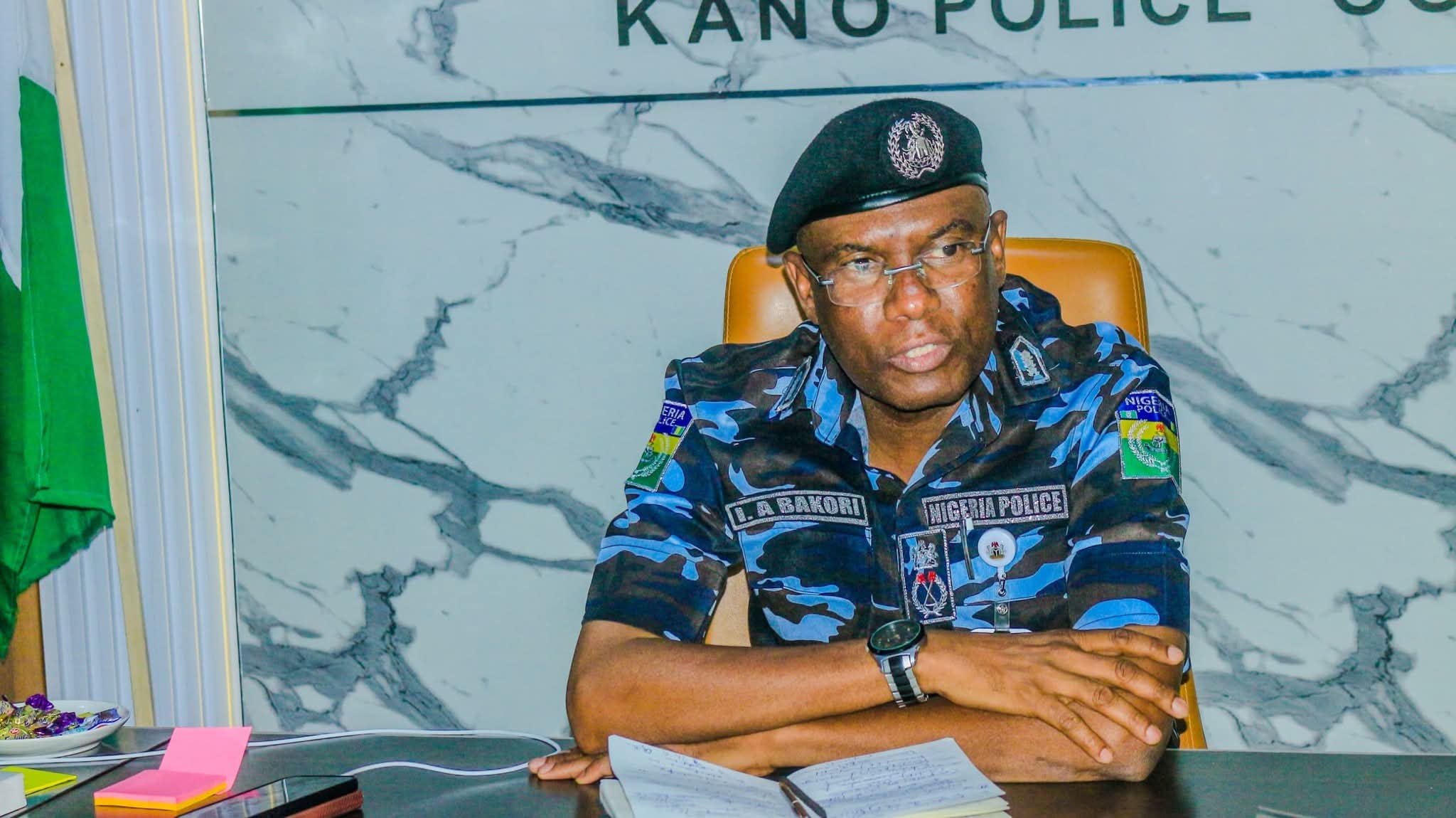
The 15th Emir of Kano, Alhaji Aminu Ado Bayero, has formally notified security agencies of plans to conduct the 2026 Eid-el-Kabir Durbar festivities from the Nasarawa Palace in Kano. The notification was conveyed in separate letters addressed to the Kano State Commissioner of Police, Ibrahim Bakori, and the State Director of the Department of State Services (DSS). Copies of the letters, dated May 17, 2026, were made available to The Historica Nigeria on Saturday. The correspondence, signed by the private secretary to the Emir, Abdullahi Kwaru, stated that preparations had commenced for the annual Sallah celebrations scheduled to begin on May 27, 2026. Read Also: How three former ministers lost out in Northeast APC governorship primaries Former APC National Chairman Ganduje Embarks on Hajj Pilgrimage Intervention Brings Relief to Struggling Bauchi Nomadic School According to the letters, the decision to hold the Durbar followed meetings of members of the Kano Emirate Council. “The outcome of the meetings of Kano Emirate Council members indicated the observance of Durbar festivities as provided in the attached programme,” the letter stated. The emirate explained that the Durbar remains one of Kano’s major cultural and traditional events, during which the Emir rides through the city on horseback alongside district heads and other council members to greet residents and receive homage from subjects. “Durbar festivities are annual events that enable His Highness to go round the city with his council members on horseback with royal paraphernalia to see his people and his subjects also to greet him,” the letter added. The emirate assured security agencies that the three-day event would be conducted peacefully and appealed for their cooperation and support throughout the celebrations. “While anticipating your usual cooperation and support, please accept the assurance of His Highness’ esteemed regards,” the correspondence stated. The planned Durbar comes amid heightened public attention surrounding traditional Sallah celebrations in Kano, particularly following the ongoing emirship dispute involving Aminu Ado Bayero and Muhammadu Sanusi II.

Feature, Politics, Weekend Digest with The Historica Nigeria

How three former ministers lost out in Northeast APC governorship primaries

By Umar Idris Shuaibu The governorship primaries of the All Progressives Congress (APC) in parts of Northeast Nigeria have reshaped the political fortunes of three former ministers under the administration of President Bola Ahmed Tinubu and former President Muhammadu Buhari. Former Minister of Foreign Affairs, Yusuf Maitama Tuggar, alongside former Minister of Communications and Digital Economy, Professor Isa Ali Ibrahim Pantami, and former Minister of Transportation, Saidu Alkali, all failed to secure their party’s governorship tickets ahead of the 2027 general elections. While Tuggar suffered outright defeat at the polls in Bauchi State, Pantami and Alkali withdrew from the race in Gombe State, alleging irregularities and lack of transparency in the conduct of the primaries. Tuggar loses Bauchi APC ticket In Bauchi State, former Foreign Affairs Minister Yusuf Tuggar was defeated by former governor of the state, Barrister Mohammed Abubakar, SAN, during the APC governorship primary election. Tuggar had recently resigned his ministerial appointment to pursue his governorship ambition under the APC platform. Read Also: Former APC National Chairman Ganduje Embarks on Hajj Pilgrimage Intervention Brings Relief to Struggling Bauchi Nomadic School Why PCACC is Investigating Kano’s Former Head of Service Announcing the result, Chairman of the APC Governorship and House of Assembly Primaries Committee for Bauchi State, retired Assistant Inspector General of Police John Bassey Abang, said Mohammed Abubakar secured 57,517 votes to emerge winner of the exercise conducted on Friday, May 22, 2026. Tuggar polled 26,001 votes to finish second behind the former governor. Other aspirants in the race included Bala Maijama’a Wunti, Nura Manu Soro, Kabir Baba Ma’aji, Baba Abubakar Suleiman, and Yakubu Abdullahi. The outcome marked a major political setback for Tuggar, whose resignation from the Federal Executive Council was seen by supporters as a strategic move to strengthen his governorship bid. Pantami withdraws under protest In neighbouring Gombe State, former Minister of Communications and Digital Economy, Professor Isa Ali Pantami, withdrew from the APC governorship primary hours before the exercise. Pantami, who had earlier rejected the consensus arrangement that produced businessman Jamilu Isyaku Gwamna as preferred aspirant, cited alleged violations of the Electoral Act and failure by party officials to provide necessary information regarding the conduct of the direct primary election. In a statement issued on behalf of the Pantamiyya Movement by Barrister Ibrahim M. Attahir, Pantami said several letters written to party organs requesting details about accreditation procedures, voting arrangements, and collation centres were ignored. The former minister argued that the process lacked transparency and failed to meet democratic standards. According to the statement, Pantami decided to withdraw after consultations with stakeholders and supporters across Gombe State. The statement further claimed that grassroots party members, particularly youths and women believed to form Pantami’s major support base, were sidelined during earlier National Assembly primaries conducted in the state. Despite his withdrawal, Pantami urged supporters to remain peaceful and law-abiding, while assuring them that the movement would announce its next political direction in due course. Sa’idu Alkali also pulls out Another former minister affected by the Gombe APC primary controversy was former Minister of Transportation, Saidu Alkali, who also withdrew from the governorship race over alleged irregularities. In a statement issued by his media aide, Umar Jibrin, Alkali said he lost confidence in the credibility of the process following what he described as manipulation and lack of transparency in previous APC primaries conducted in the state. He alleged that the exercises failed to comply with provisions of the Electoral Act guiding direct primaries and claimed results were allegedly manufactured without genuine voting. Alkali further accused party officials of failing to provide adequate logistics and equal opportunities to aspirants. According to him, participating in the governorship primary under such circumstances would amount to endorsing a flawed process. Although he withdrew from the race, Alkali reaffirmed his loyalty to the APC and appealed to the party’s national leadership to cancel the disputed exercises and organise fresh, credible primaries. Political signals ahead of 2027 The developments in Bauchi and Gombe have triggered fresh conversations about internal democracy, consensus arrangements, and the growing political uncertainty facing some high-profile aspirants within the APC ahead of the 2027 elections. Political observers believe the outcomes also highlight the influence of entrenched state political structures and the challenges former federal appointees may face when attempting to transition into state-level electoral contests. While Tuggar’s defeat came directly through the ballot, the withdrawals of Pantami and Alkali reflected deeper concerns over trust, transparency, and internal party processes in Gombe State politics.

Scroll to Top