The Historica Nigeria

2026

Kano, News, Politics

Ex-Kano Deputy Governor Gawuna Completes ADC Registration, Receives Membership Card

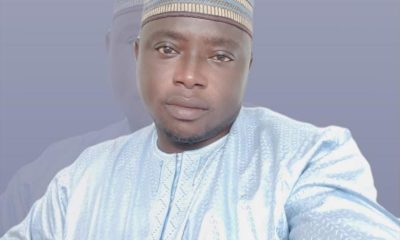
By Umar Idris Shuaibu A former Deputy Governor of Kano State, Nasiru Yusuf Gawuna, has formally joined the African Democratic Congress (ADC) after completing his registration and receiving his membership card in his Gawuna Ward. Gawuna was accompanied during the exercise by former Kano State Governor and ex-presidential candidate, Rabi’u Musa Kwankwaso, a dominant political figure in Kano who also recently joined the ADC following his resignation from the New Nigeria Peoples Party (NNPP). The development comes on the heels of Gawuna’s resignation as Chairman of the Board of the Federal Mortgage Bank of Nigeria (FMBN), as well as his exit from the ruling All Progressives Congress (APC). Read Also: APC Founded to Drive Change, Reduce Poverty — Tinubu Kwankwaso Officially Joins ADC After Quitting NNPP Gawuna’s journey from Kano politics to national service His defection is seen as part of the growing political realignments in Kano State, as key actors reposition ahead of future electoral contests. Observers say the presence of Kwankwaso at the registration underscores the strengthening alliance within the ADC, which is rapidly emerging as a platform for opposition convergence in the state and beyond.

Katsina, Politics

Katsina Commissioner resigns to contest Funtua Senatorial seat

The Katsina State Commissioner for Environment, Hamza Sule Faskari, has resigned to contest for the Funtua Senatorial seat. The decision was in compliance with the guidelines of the Independent National Electoral Commission (INEC) for public office holders intending to contest in the 2027 elections. The News Agency of Nigeria (NAN) reports that the electoral body has directed all public office holders intending to contest to resign their positions on or before March 31, 2026. Read Also: Ex-Kano Deputy Governor Gawuna Dumps APC, Signals Possible New Alignment Sule Faskari announced his decision on Monday in Katsina when he visited the office of the Secretary to the State Government (SSG), Abdullahi Garba Faskari, to formally submit his resignation letter. He expressed appreciation to the Governor of Katsina State, Dikko Umar Radda, for the opportunity to serve the people as a commissioner. The former commissioner also reaffirmed his commitment to remain loyal and continue supporting the governor and the All Progressives Congress (APC). Sule-Faskari further thanked the people of Katsina State for the support and cooperation they have given him during his tenure as commissioner. (NAN)

National, News, Politics

Court Ends NNPP Crisis, Restores Party Leadership to Founder

The Court of Appeal sitting in Owerri has delivered a decisive judgement in the protracted leadership crisis within the New Nigeria People’s Party (NNPP), affirming Boniface Okechukwu Aniebonam as the recognised leader of the party. In its ruling, the appellate court set aside an earlier decision of the Abia State High Court in Uzuakoli, which had vacated its previous judgement delivered in favour of the faction led by Aniebonam. The appellate court held that the lower court erred in granting a motion that effectively reversed its own earlier judgement, thereby upholding all three grounds of appeal filed by the Aniebonam-led faction. The dispute stems from a November 2024 judgement of the Uzuakoli High Court in Suit No. HUZ/11/2024, which had recognised the Board of Trustees of the NNPP under Aniebonam. However, in June 2025, the same court granted an application that set aside that ruling, following a motion filed by Rabi’u Musa Kwankwaso. Read Also: Radiographers Oppose Health Bills, Warn of Threat to Professional Autonomy Ex-Kano Deputy Governor Gawuna Dumps APC, Signals Possible New Alignment APC Founded to Drive Change, Reduce Poverty — Tinubu Dissatisfied with the reversal, the Aniebonam faction approached the Court of Appeal in Owerri (Appeal No. CA/OW/271/2025), arguing that the trial judge lacked the jurisdiction to sit on appeal over his own judgement. Delivering its verdict, the Court of Appeal agreed with the appellants, restoring the earlier judgement and effectively recognising Aniebonam as the legitimate leader of the party he founded in 2001. Legal representation in the matter saw Onitsha-based senior counsel, Sir Azubike Anazor, appear for Aniebonam, while Abuja-based Eyitayo Fatogun, SAN, represented Kwankwaso. The NNPP, which fielded Kwankwaso as its presidential candidate in the 2023 general elections, has been embroiled in internal disputes over its leadership structure, with rival factions laying claim to control of the party.

Kano, News, Politics

Ex-Kano Deputy Governor Gawuna Dumps APC, Signals Possible New Alignment

By Umar Idris Shuaibu A former Deputy Governor of Kano State, Nasiru Yusuf Gawuna, has resigned his membership of the All Progressives Congress (APC), in a move that adds to ongoing political realignments in the state. Gawuna’s resignation was conveyed in a letter dated March 29, 2026, addressed to the APC chairman of Gawuna Ward in Nassarawa Local Government Area, where he described the decision as “voluntary and personal.” “I hereby formally resign my membership from the All Progressives Congress (APC), effective March 29, 2026,” the letter read. Read Also: Gawuna Resigns as FMBN Board Chairman, Signals Political Move Ahead of Defection The former deputy governor expressed appreciation to the party for the opportunities afforded him during his time as a member. Gawuna, who was the APC governorship candidate in Kano State during the 2023 general elections, is expected to visit his ward in Nassarawa Local Government Area on Tuesday to formally register as a member of the African Democratic Congress (ADC), a move that could confirm speculations about his next political destination. However, his resignation comes at a time of heightened political activity and shifting alliances in Kano State ahead of future electoral contests. Sources close to the former deputy governor revealed that he is expected to hold a crucial meeting with former Kano State governor, Rabi’u Musa Kwankwaso, on Monday night at the latter’s residence on Miller Road in Kano.

Humanitarian, Kano, News

CoP Engages Kano Assembly Leadership on Health Funding, Policy Gaps

By Umar Idris Shuaibu The Kano Community of Practice on Accountability (CoP) has called for improved service delivery, timely release of funds, and strengthened legislative oversight following an advocacy visit to the Kano State House of Assembly. The delegation, led by its Chairman, Comrade Salisu Yusuf, met with the Clerk and Permanent Secretary of the Assembly, Malam Nasiru Magaji, in Kano. Speaking during the visit, Yusuf said the engagement was part of efforts to address gaps identified in the CoP scorecard, particularly in service delivery and budget implementation within the state. He explained that the group had initially planned to meet with the House Committee on Health but had to redirect the visit after learning that members of the committee were away on official engagements. Read Also: Radiographers Oppose Health Bills, Warn of Threat to Professional Autonomy BOOST Project Strengthens Community Mobilisation Through Kano Tricycle Associations Forum Ajumawa Commends Community of Practice on Accountability Over Zero-Dose Project “We used the opportunity to meet with the Clerk/Permanent Secretary to share our findings and explore ways to improve service delivery, ensure timely release of funds, and strengthen the oversight functions of the Assembly,” Yusuf said. The CoP chairman noted that key concerns raised during the meeting included gaps in budget tracking and delays in fund releases, which he said have implications for effective healthcare service delivery. Responding, Magaji assured the delegation of the Assembly’s commitment to addressing the issues raised. He pledged to explore mechanisms that would enhance oversight functions to ensure timely disbursement of funds. On policy development, the Clerk advised the group to channel proposals through legislative processes, including presenting them as private bills to be sponsored by lawmakers or supported by development partners for consideration by the Assembly. Magaji commended the CoP for its advocacy efforts and reaffirmed the Assembly’s readiness to support initiatives that promote the development and well-being of residents across Kano State. As part of the visit, the CoP chairman, alongside Kano-based journalist Umar Idris Shuaibu, presented a branded T-shirt and cap from the BOOST Project to Magaji as a gesture of appreciation. The BOOST Project, currently being implemented in Gezawa and Ungoggo Local Government Areas, is designed to improve immunisation coverage and reduce the number of zero-dose and missed vaccinations among children. Implemented by Save the Children International with support from GlaxoSmithKline, the initiative aims to deploy scalable strategies to enhance access to life-saving vaccines, with plans underway to expand its reach to other parts of the state. Stakeholders at the meeting expressed optimism that stronger collaboration between government institutions and development partners would significantly improve immunisation outcomes and overall healthcare delivery for children in Kano State.  

Kano, News, Politics

Kano South Lawmakers Hold Crucial Talks Over Political Future, Raise Concerns Against Governor Yusuf

By Umar Idris Shuaibu Lawmakers representing Kano South Senatorial District on Monday convened a high-level meeting in Abuja to deliberate on their political future, amid growing dissatisfaction with the leadership of Kano State Governor, Abba Kabir Yusuf. The meeting, described by insiders as “critical,” was led by Senator Kawu Sumaila and held at his office, drawing the attendance of key members of the House of Representatives, including Alhassan Ado Doguwa, Kabiru Alhassan Rurum, Abdulmumin Jibrin and Abdullahi Rogo. The development comes on the heels of a noticeable rift within political ranks in Kano, following the reported absence of Sumaila and Rurum from an enlarged meeting earlier convened by Governor Yusuf with members of the All Progressives Congress (APC) in the State and National Assembly. An aide to Senator Sumaila, Muttaka Babura, told ‘The Historica Nigeria‘ that the Abuja meeting though close door centred on charting a new political direction for Kano South, citing what participants described as “political neglect” of the zone by the state government. Read Also: Radiographers Oppose Health Bills, Warn of Threat to Professional Autonomy Gawuna Resigns as FMBN Board Chairman, Signals Political Move Ahead of Defection Kwankwaso Officially Joins ADC After Quitting NNPP Sources at the meeting revealed that the lawmakers raised concerns over alleged marginalisation, claiming that key decisions affecting Kano South were being taken without adequate consultation with elected representatives and stakeholders from the region. “We are engaging with serving and former lawmakers, as well as party leaders who have recently been sidelined from Kano South,” a source disclosed. “We are also consulting prominent businessmen, clerics and other stakeholders to determine the best political path forward.” Despite the growing tension, another source indicated that the aggrieved lawmakers may hold a meeting with Governor Yusuf later on Monday night to present their position and explore possible resolutions. While there has been no official confirmation of a planned defection, speculations are mounting over a possible alignment with the African Democratic Congress (ADC), especially if ongoing grievances remain unresolved.

National, News

Tinubu Appoints CAC Chairman, Names NPC Commissioners, Confirms Adviser

President Bola Ahmed Tinubu has approved a fresh round of appointments across key federal institutions, naming a new Chairman for the Corporate Affairs Commission (CAC), nominating seven commissioners for the National Population Commission (NPC), and confirming a Special Adviser on Political Economy. In a statement issued by presidential spokesman Bayo Onanuga on Monday, the President appointed Senator Ibrahim Ida as Chairman of the Corporate Affairs Commission. Ida, a former senator who represented Katsina Central, holds a Master’s degree in Banking and Finance from the University of Ibadan and a Bachelor of Laws degree from the University of Abuja. He previously served as Commissioner of Finance in Katsina State and later as a Permanent Secretary in the Federal Civil Service. The President also nominated seven individuals as Federal Commissioners of the National Population Commission, subject to confirmation by the National Assembly. They include Kolawole Oladipupo Alabi (Ekiti), Nasiru Mu’azu (Zamfara), Usman Abubakar Tuggar (Bauchi), Dr Isaka Alada Yahaya (Kwara), Prof. Sadiq Isah Radda (Katsina), Suleiman Umar (Jigawa), and Hon. Chiso Abdullahi Dattijo (Sokoto). Read Also: Radiographers Oppose Health Bills, Warn of Threat to Professional Autonomy Gawuna Resigns as FMBN Board Chairman, Signals Political Move Ahead of Defection Kwankwaso Officially Joins ADC After Quitting NNPP According to the statement, the nominations are intended to fill existing vacancies and strengthen the commission’s capacity, complementing other commissioners already in office. In a related development, President Tinubu appointed Dr Yusuf Mohammed from Kano State as Chairman of the Federal Polytechnic, Kaltungo, further expanding leadership across federal institutions. The President also confirmed the appointment of Bala Mohammed Bello as Special Adviser on Political Economy. Bello, an indigene of Taraba State, holds a Bachelor’s degree in Accounting and a Master of Business Administration from Ahmadu Bello University. He previously served as a Deputy Governor of the Central Bank of Nigeria (CBN) and as Executive Director (Corporate Services) at the Nigerian Export-Import Bank between 2017 and 2022. President Tinubu expressed confidence in the capacity of the newly appointed officials to contribute meaningfully to the administration’s Renewed Hope Agenda and its commitment to improving the living conditions of Nigerians. The appointments are expected to undergo legislative confirmation where required, in line with constitutional provisions.

Kano, National, Politics

Kwankwaso Officially Joins ADC After Quitting NNPP

By Umar Idris Shuaibu Former presidential candidate of the New Nigeria Peoples Party (NNPP) and ex-Governor of Kano State, Rabi’u Musa Kwankwaso, has formally joined the African Democratic Congress (ADC), marking a significant development in Nigeria’s evolving political landscape ahead of the 2027 general elections. Kwankwaso completed his registration with the party on Monday at Gidan Kwankwasiyya, Miller Road, Bompai, Kano, where he was issued his membership card in the presence of top opposition figures. Among those who attended the event were ADC National Chairman and former Senate President, David Mark; former Sokoto State Governor, Aminu Tambuwal; former Minister of Transportation, Rotimi Amaechi; former Labour Party presidential candidate, Peter Obi; Dino Melaye; and former National Chairman of the All Progressives Congress (APC), John Odigie-Oyegun, among others. The defection follows Kwankwaso’s resignation from the New Nigeria People’s Party (NNPP), which he announced on Sunday, citing the need for strategic political realignment. Read Also: Gawuna Resigns as FMBN Board Chairman, Signals Political Move Ahead of Defection “I wish to formally announce my resignation from the New Nigeria Peoples Party with immediate effect,” he said in a statement. The former Minister of Defence described his decision as difficult, given his longstanding role within the party, but emphasised that prevailing political realities necessitated a new direction. “As a committed and bona fide member of the party, this was not an easy decision to make. However, considering the current trajectory of the nation’s political landscape, which calls for strategic realignment, I have found it necessary to identify with another political platform that offers the best opportunity to effectively change the nation,” Kwankwaso stated. He expressed appreciation to the NNPP leadership, including National Chairman Ajuji Ahmed, as well as members of the party’s National Working Committee, Board of Trustees, and supporters across all levels. Kwankwaso also acknowledged the commitment of members of the Kwankwasiyya Movement, noting that their shared political vision would continue to shape future engagements. “We shall continue to collaborate and work together towards charting a better and more prosperous future for our dear nation,” he added. Political observers say the move signals a major shift in opposition dynamics, as key figures continue to realign in preparation for the 2027 general elections, potentially reshaping the balance of power across the country.

Kano, National, Politics

Gawuna Resigns as FMBN Board Chairman, Signals Political Move Ahead of Defection

By Umar Idris Shuaibu A chieftain of the All Progressives Congress in Kano State and Chairman of the Governing Board of the Federal Mortgage Bank of Nigeria (FMBN), Nasiru Yusuf Gawuna, has resigned from his position, citing compliance with directives linked to Nigeria’s electoral laws. Gawuna’s resignation, conveyed in a letter dated March 27, 2026, takes immediate effect. The former governorship candidate of the APC in Kano is reportedly set to complete his defection to the African Democratic Congress on Tuesday, amid ongoing political realignments involving Rabi’u Musa Kwankwaso. In the letter, Gawuna stated that his decision was in line with a presidential directive requiring political appointees to step down ahead of political activities. “My resignation is in strict compliance with the President’s directive requiring all political appointees to step down in accordance with the provisions of the Electoral Act,” he said. Read Also: Gawuna Missing from Political Radar as APC Battles to Stop Defection Rumours He expressed appreciation to Bola Ahmed Tinubu for the opportunity to serve, describing his tenure as both an honour and a privilege. “I am profoundly grateful to His Excellency, President Bola Ahmed Tinubu, for the opportunity to serve. It has been a privilege to contribute to the growth and development of the Federal Mortgage Bank of Nigeria and our country,” Gawuna noted. The former FMBN board chairman also reflected on his next political steps, stating that he has entrusted his future to divine guidance. “I place my future in the hands of Allah (SWT), and I seek His guidance on my next course of action,” he added. Gawuna further assured of a smooth transition process, pledging to hand over responsibilities in line with established procedures. “I remain committed to ensuring a seamless transition and will hand over all responsibilities in accordance with established procedures and directives,” he said. His resignation is expected to further reshape the political landscape in Kano as alignments intensify ahead of the 2027 general elections.

Feature, Kano, Politics

The Godfather Who Mistook Democracy for Personal Ownership

By Murtala Muhammed Rijiyar Zaki Democracy is, at its most essential, an act of trust. Citizens go to the polls, cast their votes, and place in the hands of an elected individual the authority to govern on their behalf. That authority is borrowed, not given. It is conditional, not absolute. It belongs, in the final and irreducible sense, to the people who granted it, and it must be exercised in their interest, not in the interest of whoever helped engineer its acquisition. This elementary principle, the very foundation upon which every credible democracy in the world is constructed is the principle that Rabi’u Musa Kwankwaso has spent the better part of three decades systematically, deliberately, and quite unapologetically violating. His violation of it is not accidental. It is not the product of ignorance or misunderstanding. It is the logical expression of a political philosophy that has always placed personal ownership above democratic accountability, and godfather authority above the sovereign will of the people. To understand the full weight of this charge, one must first understand what godfatherism actually means in the Nigerian political context, and why it is not merely an inconvenient feature of our democracy but a fundamental corruption of it. Read Also: APC Founded to Drive Change, Reduce Poverty — Tinubu APC Unveils Full NWC List as Yilwatda, Basiru Retain Top Positions Why Engr. Abba Ganduje is Still Needed in Dawakin Tofa Federal Constituency A political godfather, in the Nigerian tradition, is a figure who uses his resources, his organization, and his influence to install candidates in elective office, with the understanding that those candidates, once elected, will govern not primarily in the interest of the electorate but in the interest of the godfather. The elected official becomes, in this arrangement, less a representative of the people and more a proxy for the man who put him there. The voters, in this model, are not principals whose mandate the elected official is obligated to honor. They are a mechanism, a crowd to be mobilized and demobilized at the godfather’s discretion. This is the model that Kwankwaso has perfected, refined, and deployed with extraordinary effectiveness across his political career. He did not invent godfatherism in Nigerian politics. But he has practiced it at a scale, with a sophistication, and with a degree of institutional embedding that sets him apart. Kwankwasiyya is not simply a network of political supporters. It is a parallel governance structure, a shadow system that has operated alongside formal government in Kano State. In this system, real decisions, appointments, and policy directions are filtered through one central authority. The most instructive way to understand this model is to examine what happens when loyalty gives way to independence. The case of Dr. Abdullahi Umar Ganduje is perhaps the most telling. Once a trusted deputy and successor, his decision to govern independently triggered a prolonged political conflict that destabilised Kano’s political environment. That conflict consumed years of political energy, distorted governance, and deepened divisions within the state. Now, the same pattern appears to be repeating itself with Abba Kabir Yusuf. Having risen through the Kwankwasiyya structure, his emergence as governor came with expectations of loyalty and alignment. But governance demands independence and that independence has again been interpreted as betrayal. Yet, what is described as betrayal is, in reality, democracy functioning as it should. The people of Kano did not elect a movement. They elected a man. That mandate belongs to the electorate not to any political benefactor. Kwankwaso’s reaction reflects a deeper issue: the confusion between influence and ownership. When influence begins to demand obedience, democracy begins to erode. To claim betrayal in such a context is to suggest that public office is privately owned, a notion fundamentally incompatible with democratic principles. The scholarship programme, often cited as a major achievement, must also be viewed within this framework. While it delivered real educational benefits, it also created a structure of political loyalty and expectation. Beneficiaries were not just students, they became part of a political machinery, bound by obligation as much as opportunity. There is also the broader impact on governance. Where loyalty to a political patron outweighs accountability to the people, decision-making becomes distorted. Appointments reflect allegiance rather than competence. Policies serve networks rather than citizens. Over time, these distortions accumulate into systemic underdevelopment. Kano’s structural challenges ranges from unemployment, industrial decline, and dependence on federal allocations, cannot be separated from this governance model. They reflect the long-term consequences of a system that has been accountable to the wrong authority. True political mentorship offers a different model. A mentor builds leaders who can stand independently, govern effectively, and serve the public interest without external control. By that standard, the pattern observed here reflects not mentorship, but dependency. The people of Kano have a right to leadership that is accountable solely to them. They have a right to a governor whose primary obligation is the mandate they granted at the ballot box. Anything less undermines the very essence of democracy. Governor Abba Kabir Yusuf’s insistence on governing independently is not a betrayal. It is a reaffirmation of democratic principles. It is the system working as it should. For decades, Kwankwaso has built a political movement, but in doing so, appears to have mistaken that movement for a mandate. Organisational strength is not the same as democratic legitimacy. Mobilising support is not equivalent to owning authority. Nigeria’s democracy remains under pressure from forces that seek to convert public office into private control. But each assertion of independence by elected officials represents a step away from that model. Kano does not belong to any individual. It belongs to its people. And the continued insistence on that truth is what will ultimately define the state’s democratic future.

Scroll to Top