
Abuja
APC’s rising star: The woman Ganduje trusted with the future

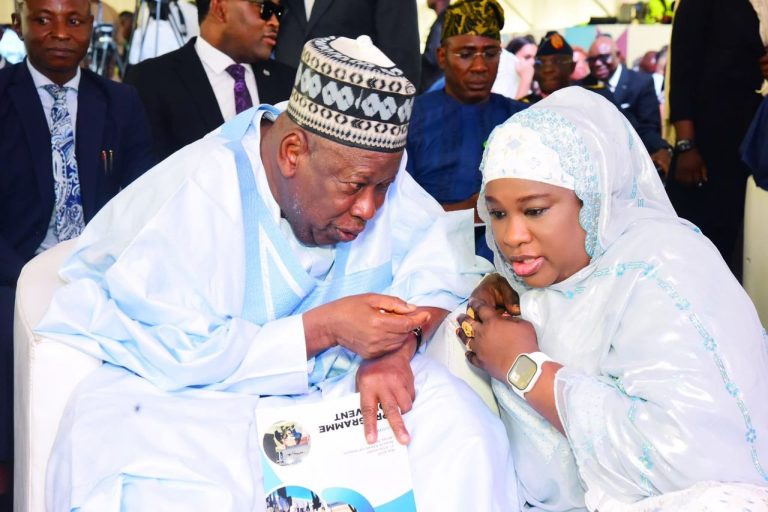
By Umar Idris Shuaibu
In politics, opportunities may come unexpectedly, but enduring relevance is often built on years of preparation, trust and performance. Across Nigeria’s political landscape, where public office is frequently shaped by alliances and confidence, Dr. Mariya Mahmoud Bunkure’s rise from Kano State to the Federal Executive Council stands as a story of quiet determination, professional competence and strategic leadership.
Today, as the Minister of State for the Federal Capital Territory (FCT), she occupies one of the country’s most strategic public offices, working alongside the Minister of the FCT, Barrister Nyesom Wike, to implement President Bola Ahmed Tinubu’s Renewed Hope Agenda. Yet her journey to Abuja did not begin in the nation’s capital. It started in the historic town of Bunkure in Kano State, where the values of discipline, service and education laid the foundation for a career that would eventually reach the highest levels of national governance.
Unlike many political figures whose careers began through activism or electoral politics, Dr. Mariya entered public service through her professional background as a medical doctor. Her training in medicine cultivated a disciplined approach to problem-solving, attention to detail and a deep appreciation of public welfare, as qualities that would shape her administrative style.
Her transition into politics came during the administration of former Kano State Governor, Dr. Abdullahi Umar Ganduje, who appointed her Commissioner for Higher Education. It was a portfolio that demanded both policy direction and administrative coordination at a time when the state’s tertiary education sector faced increasing expectations for reform, improved infrastructure and expanded access.
Read Also:
How to apply for FRSC recruitment 2026 as portal opens nationwide
Bago directs arrest of farmers cultivating cattle routes, hate preachers
Kano Invests ₦55.48bn in Education, Healthcare, Roads, Rural Development
Within government circles, Dr. Mariya quickly earned a reputation for being methodical rather than theatrical. She preferred consultation to confrontation and implementation to publicity. Those who worked with her observed an administrator who believed that lasting reforms were achieved through institutional strengthening rather than political grandstanding.
During her tenure, efforts were directed toward improving governance within higher institutions, supporting educational development and promoting greater opportunities for students, particularly young women pursuing higher education. Although much of her work unfolded away from media attention, it strengthened her standing within the Kano State Executive Council.
It was during these years that the professional relationship between Dr. Mariya Mahmoud and Governor Ganduje evolved into one built on confidence and mutual respect. In public administration, trust is seldom granted casually. It is earned through consistency, discretion and the ability to deliver assigned responsibilities without unnecessary controversy.
For Ganduje, who would later emerge as National Chairman of the All Progressives Congress (APC), Dr. Mariya represented a new generation of technocrats capable of translating government policies into practical results. Her calm disposition, loyalty to institutional processes and commitment to assigned responsibilities distinguished her among the commissioners who served under his administration.
Political observers often note that effective leadership also involves identifying and mentoring capable successors. Throughout Nigeria’s democratic history, many leaders have sought to elevate individuals whose competence aligns with their vision of governance. Dr. Mariya’s eventual transition to the federal level reflects that broader tradition of political mentorship rooted in performance and confidence.
When President Bola Ahmed Tinubu constituted his cabinet following the 2023 general election, Dr. Mariya Mahmoud Bunkure emerged as one of Kano State’s representatives in the Federal Executive Council through her appointment as Minister of State for the Federal Capital Territory.
The appointment carried significance beyond regional representation. It placed her within an administration that had identified the transformation of Abuja as one of its flagship priorities under the Renewed Hope Agenda. Working alongside the Minister of the FCT, Barrister Nyesom Wike, she became part of an ambitious programme aimed at accelerating infrastructure development, improving public services and extending government interventions to satellite communities that had long awaited attention.
Since assuming office, Dr. Mariya has steadily carved out a complementary role within the Federal Capital Territory Administration. While the Minister provides overall political leadership and strategic direction, the Minister of State has become a visible advocate for implementation, stakeholder engagement and institutional coordination.
Her public engagements have reflected a consistent focus on infrastructure as a catalyst for development. Whether inspecting ongoing road projects, commissioning completed facilities or representing the administration at national events, she has repeatedly emphasised that development should extend beyond Abuja’s city centre to include rural communities and satellite towns.
Under the current administration, she has disclosed that more than 200 road construction projects have either been completed or substantially delivered across the Federal Capital Territory. According to her, the administration inherited numerous abandoned projects but deliberately prioritised their completion while initiating new infrastructure across all six Area Councils and the territory’s sixty-two political wards.
For Dr. Mariya, infrastructure is not merely about roads and bridges. It is about improving mobility, expanding economic opportunities and enhancing the daily lives of residents.
That philosophy has also informed her advocacy for expanded water supply across the FCT. She has actively participated in the commissioning of major water projects designed to provide safe drinking water to communities such as Karu and Bwari, describing access to clean water as fundamental to public health, dignity and sustainable development.
Her commitment to balanced development has equally been evident through support for urban renewal initiatives, including the remodeling of Abuja’s iconic City Gate and the promotion of private-sector investment through projects such as Abuja City Walk. In her view, public infrastructure and private investment should complement one another in building a modern capital city capable of attracting businesses, tourism and international confidence.
Beyond physical infrastructure, Dr. Mariya has consistently promoted participatory governance. During stakeholder engagements and policy dialogues, she has argued that governance should no longer operate as a one-way process in which government merely announces decisions. Instead, citizens should actively participate in shaping policies, monitoring implementation and contributing ideas that strengthen public service delivery.
This emphasis on openness and accountability reflects a governance philosophy grounded in consultation rather than exclusion.
Her role has also extended beyond the borders of the Federal Capital Territory. She has represented the administration at national and international events, including the commissioning of the new ECOWAS headquarters in Abuja, where she described regional cooperation as essential to peace, integration and sustainable development across West Africa.
Residents of the capital city described Dr. Mariya Mahmoud Bunkure as one of the administration’s most dependable public officials, not because she seeks media attention, but because of her consistent presence across major policy initiatives and development programmes.
Her public communication style reinforces this perception. Rather than presenting projects as individual achievements, she routinely acknowledges the leadership of President Bola Ahmed Tinubu, the strategic direction of Minister Nyesom Wike and the contributions of lawmakers, traditional institutions, development partners, contractors, security agencies, civil servants and residents. Such messaging reflects an institutional approach to governance that places collective responsibility above personal acclaim.
For many young women across Kano State and Northern Nigeria, Dr. Mariya’s story carries broader significance. At a time when conversations around women’s participation in governance continue to evolve, her journey demonstrates that professional excellence, integrity and sustained public service remain powerful pathways to leadership.
Her career also highlights Kano State’s continuing contribution to Nigeria’s national leadership. Over the years, the state has produced administrators, technocrats and political leaders who have served at the highest levels of government. Dr. Mariya now joins that tradition, bringing experience acquired in state governance to one of the country’s most strategic federal institutions.
As Nigeria confronts growing challenges relating to urban expansion, infrastructure, public service delivery and inclusive development, leaders capable of combining technical competence with collaborative governance are likely to become increasingly valuable.
Whether history ultimately remembers Dr. Mariya Mahmoud Bunkure primarily as a medical doctor, education administrator or federal minister, one fact already stands out. Her rise has not been defined by loud political rhetoric but by steady public service, institutional loyalty and a willingness to shoulder greater responsibility whenever called upon.
In many respects, her journey validates the confidence reposed in her by Dr. Abdullahi Umar Ganduje while simultaneously demonstrating President Bola Ahmed Tinubu’s commitment to assembling a government that combines political experience with professional expertise. From the classrooms and institutions of Kano to the corridors of power in Abuja, Dr. Mariya Mahmoud Bunkure continues to build a career that reflects service above self, leadership through collaboration and a steadfast commitment to national development.
As Abuja continues its transformation under the Renewed Hope Agenda, her contribution reminds Nigerians that lasting governance is rarely the work of one individual. It is achieved through trusted partnerships, complementary leadership and a shared commitment to improving the lives of citizens. In that unfolding story, Dr. Mariya Mahmoud Bunkure has emerged as one of the notable women helping to shape the future of Nigeria’s capital and, by extension, the future envisioned by those who first entrusted her with public office.

Mass Education: Kano expands learning centres to over 300, introduces new skills

Kano Civil Service: Govt moves to address manpower gaps through recruitment
2027: Ganduje and APC heavyweights prepare for a defining political contest

Insecurity: Gunmen kill Islamic cleric, visitor in Dutsin-Ma

Every Kano State Lawmaker Should Support Governor Abba Kabir Yusuf, Regardless of Party Affiliation – Dr. Baffa Babba Dan’agundi
ABCOAD Unveils Journal, Bids Farewell to Provost

Nigerian Army Begins DSSC 29/2026 Recruitment, Outlines Eligibility Criteria
2027: NDC Releases Full List of Consensus Candidates in Kano

Gaya Polytechnic Opens Recruitment, Advertises 46 Academic, Non-Academic Positions

Gaya Polytechnic to Begin with Four Courses as Committee Eyes Year-End Take-Off
-
 Kano6 days ago
Kano Governor Nominates Retired Air Commodore, Professor, Four Others as Commissioners
-
 Feature2 days ago
Kano Poly MFB: A bank closed, an investigation launched, but where are the answers?
-
 Kano4 days ago
2027: Kano Governor Names Former Education Commissioner Kiru Campaign Spokesperson II