The Historica Nigeria

Author name: Umar Idris Shuaibu

National, News

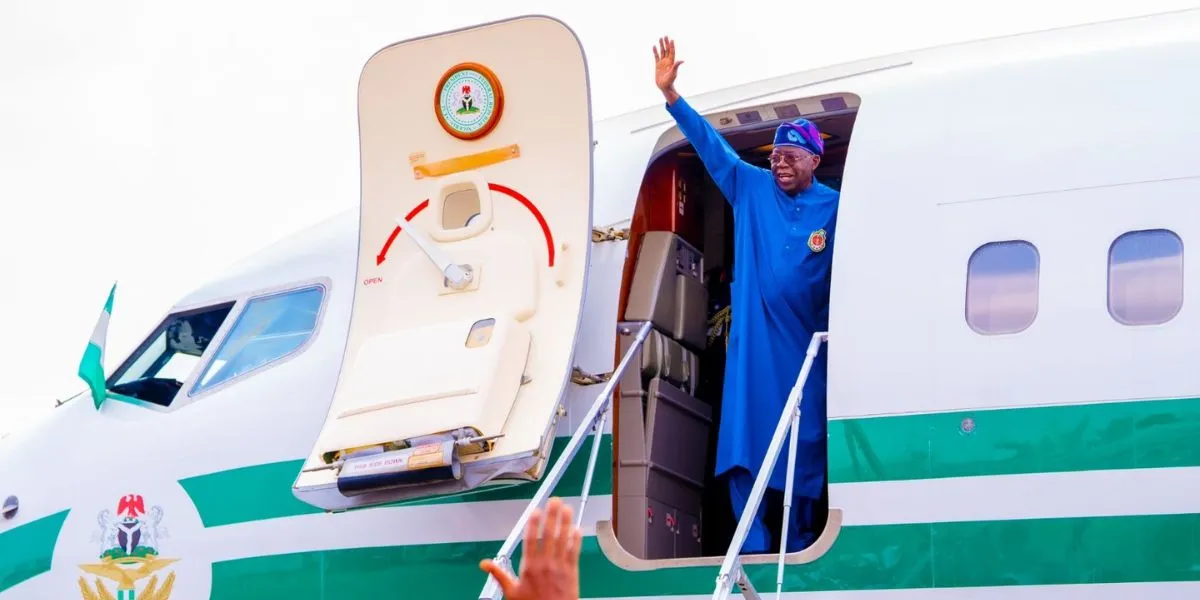
Photos: President Tinubu Signs Landmark Tax Reform Bills into Law

President Bola Ahmed Tinubu has signed into law four landmark tax reform bills aimed at unifying Nigeria’s fragmented tax system and enhancing transparency in the country’s fiscal policy framework. The newly enacted laws are designed to eliminate duplication, simplify tax administration, boost investor confidence, and create a fairer and more transparent tax environment. Read Also: Nigerian Navy Launches High-Tech Agricultural Initiative to Boost Food Security The signing ceremony took place on Thursday at the Presidential Villa in Abuja, where President Tinubu described the development as a bold and foundational shift in Nigeria’s fiscal policy direction. The laws signed include the Nigeria Tax Bill (Fair Taxation), the Nigeria Tax Administration Bill, the Nigeria Revenue Service (Establishment) Bill, and the Joint Revenue Board (Establishment) Bill. Details later.. Photo News:

Abuja, Agriculture, National, News

Nigerian Navy Launches High-Tech Agricultural Initiative to Boost Food Security

In a move to support the Federal Government’s drive for food security, the Nigerian Navy has launched an innovative agricultural initiative through its Admiralty Integrated Farms Limited (ADIFAL). This was revealed during the unveiling of ADIFAL’s Coordination Centre and logo in Abuja. Speaking at the event, the Chief of Naval Staff, Vice Admiral Emmanuel Ogalla represented by Rear Admiral Ibrahim Dewu, said the initiative aligns with President Bola Tinubu’s directive for the Armed Forces to engage in farming to address key national challenges. These include food insecurity, the herder-farmer conflict, banditry, and kidnapping. Ogalla praised naval personnel for embracing the farming initiative with commitment and patriotism and commended the ADIFAL team for their dedication. He emphasized the importance of civil-military cooperation in achieving national development goals, especially in agriculture. He urged that interactions with civilians should be respectful and focused on shared national interests. Read Also: Provost Gwaram Unveils FCAPT Progress, Seeks Urgent Completion of Bunkure Campus He further noted that ADIFAL’s success will not only contribute to food sufficiency but also foster peace and stability across Nigeria. In his remarks, the Managing Director and CEO of ADIFAL, Rear Admiral Julius Nwago, said food, nutrition, and security are global priorities. He noted that other countries also engage their military in agriculture to strengthen food security. Nwago explained that ADIFAL would use a comprehensive precision agriculture model that covers all stages of farming from planning and land clearing to harvesting and processing. This model will be supported by advanced technologies including Artificial Intelligence (AI) and Machine Learning (ML), which will help maximize yield, reduce waste, and improve decision-making. To enable this, ADIFAL has created a centralized Agro-Precision Farming Platform. The digital platform collects data from satellites, radar, drones, and live audio-visual feeds to offer intelligent recommendations to farmers. Housed at the ADIFAL Coordination Centre, the system includes predictive and generative AI tools that provide real-time responses to farmer inquiries throughout the farming season.

National, News

President Tinubu to Sign Four Critical Tax Reform Bills into Law

President Bola Ahmed Tinubu will on Thursday sign into law four significant tax reform bills aimed at transforming Nigeria’s fiscal and revenue framework. The announcement was made on Wednesday in Abuja through a statement by the Presidential Spokesperson, Mr Bayo Onanuga. According to the News Agency of Nigeria (NAN), the bills are the Nigeria Tax Bill (Ease of Doing Business), the Nigeria Tax Administration Bill, the Nigeria Revenue Service (Establishment) Bill, and the Joint Revenue Board (Establishment) Bill. Read Also: Tinubu Commissions N31bn Idu-Zuba Expressway to Ease Traffic, Boost Development The bills were passed by the National Assembly following wide-ranging consultations with various interest groups and stakeholders. Onanuga stated that, once signed into law, the new tax legislation is expected to greatly improve tax administration, enhance revenue generation, and strengthen the business environment. The reforms are also designed to boost both domestic and foreign investment. The Nigeria Tax Bill aims to consolidate Nigeria’s fragmented tax laws into a single harmonised statute. By reducing the multiplicity of taxes and eliminating duplication, it seeks to make tax compliance easier and promote a more business-friendly climate. The Nigeria Tax Administration Bill provides a unified legal and operational framework for tax administration across the federal, state, and local governments, ensuring consistency and efficiency nationwide. The Nigeria Revenue Service (Establishment) Bill repeals the existing Federal Inland Revenue Service Act and establishes a more autonomous and performance-oriented national revenue agency, known as the Nigeria Revenue Service. The Joint Revenue Board (Establishment) Bill is intended to create a formal structure that will enhance cooperation among revenue authorities at all levels of government. It also includes oversight mechanisms such as the establishment of a Tax Appeal Tribunal and an Office of the Tax Ombudsman to address taxpayer grievances and ensure fairness. The bill signing ceremony will take place at the Presidential Villa in Abuja. Dignitaries expected to witness the event include the Senate President, the Speaker of the House of Representatives, the Majority Leaders of both chambers, and the Chairmen of the Senate and House Committees on Finance. Also expected are the Chairman of the Nigeria Governors’ Forum, Chairman of the Progressive Governors’ Forum, the Minister of Finance and Coordinating Minister of the Economy, and the Attorney General of the Federation. (NAN)

Kano, News

Kano Government Congratulates New NUJ Correspondents’ Chapel Leadership

The Kano State Commissioner for Information and Internal Affairs, Comrade Ibrahim Abdullahi Waiya, has congratulated the newly inaugurated executive members of the Nigeria Union of Journalists (NUJ), Correspondents’ Chapel, Kano State chapter, led by Comrade Murtala Adewale of The Guardian newspaper. In a statement issued on behalf of the state government, Comrade Waiya described their emergence through a peaceful and democratic process as a strong testament to the trust and confidence their colleagues have in their capacity to lead with integrity, vision, and a deep sense of responsibility. He also commended the immediate past leadership of the Chapel for its dedication and impactful service, noting that it had laid a solid foundation for continued growth and professionalism within the media community. Read Also: Kano Online Media Chapel Invites Digital Journalists to Join as Membership Drive Begins The Commissioner acknowledged the strategic role of the Correspondents’ Chapel in shaping public discourse and projecting government policies to the broader public. He referred to the Chapel as the lens through which the world views developments in Kano State. Waiya urged members of the Chapel to remain committed to the core values of accuracy, objectivity, and fairness in their reportage, particularly in an era where misinformation and fake news pose serious challenges to responsible journalism. “As a Ministry, we reaffirm our commitment to deepening collaboration with the media, especially in areas of capacity building and professional development for journalists across the state,” he stated. He expressed confidence that under the new leadership, the relationship between the Ministry and the Correspondents’ Chapel would be further strengthened through mutual trust and cooperation. The Commissioner concluded by wishing the new executives a successful and productive tenure. Signed: Sani Abba Yola Director, Special Duties Kano State Ministry of Information and Internal Affairs 26th June 2025

National, News

Federal Government Postpones Paramilitary Recruitment Exercise

The Federal Government has announced the postponement of recruitment into paramilitary services under the Ministry of Interior. This was disclosed in a statement issued on Wednesday by the Civil Defence, Correctional, Fire and Immigration Services Board (CDCFIB). According to the statement, the recruitment portal, which was initially scheduled to open on Thursday, 26th June 2025, will now open on Monday, 14th July 2025. Read Also: Massive Paramilitary Recruitment Begins June 26: A Golden Opportunity for Nigerian Youth The Board also released a new official portal address for the application process: recruitment.cdcfib.gov.ng. Prospective applicants are advised to take note of the new date and portal address. The CDCFIB emphasized that all applications are free of charge, warning applicants to disregard any request for payment. The statement added that the Board regrets any inconvenience the change in schedule may have caused the public.

Kano, News

Kano Declares Thursday Public Holiday to Mark Islamic New Year 1447 AH

The Kano State Government has declared Thursday, June 26, 2025, as a public holiday to mark the beginning of the Islamic New Year, 1447 After Hijrah. Governor Abba Kabir Yusuf congratulated Muslim faithful on witnessing the New Year, which commences with the month of Muharram, the first month of the Islamic lunar calendar. This was made known in a statement issued on Wednesday by the Commissioner for Information and Internal Affairs, Ibrahim Abdullahi Waiya. Read Also: Kano Governor Orders Immediate Rehabilitation of College for French and Chinese Languages The Governor urged the people of the state and the Muslim Ummah at large to use the occasion for deep reflection on their actions over the past year and to offer prayers for lasting peace, unity, and prosperity in Kano State and Nigeria. He also reaffirmed his administration’s unwavering commitment to improving the living standards of the citizens through inclusive, people-focused governance.

National, News

Massive Paramilitary Recruitment Begins June 26: A Golden Opportunity for Nigerian Youth

In a welcome move that could shape the future of thousands of Nigerian youths, the Federal Government has announced a nationwide recruitment drive into four major paramilitary agencies under the Ministry of Interior. Starting from Thursday, June 26, 2025, the application portal will open for eligible Nigerians to apply for positions in the Nigerian Correctional Service (NCoS), Nigerian Immigration Service (NIS), Federal Fire Service (FFS), and the Nigeria Security and Civil Defence Corps (NSCDC). According to the Civil Defence, Correctional, Fire and Immigration Board (CDCFIB), all applications must be submitted online via https://recruitment.cdcfib.org within three weeks of the portal’s launch. The Board’s Secretary, Major General Abdulmalik Jubril (Retired), emphasized that the application process is completely free and warned that multiple applications by the same candidate would lead to automatic disqualification. “This is not just a job opportunity, it is a national call to duty,” he said. “We are looking for passionate, qualified, and physically fit Nigerians who are ready to contribute to national security, fire prevention, correctional reform, and border management.” What Are the Available Positions? The recruitment covers three categories of positions across the four services: Superintendent, Inspectorate, and Assistant Cadres, offering a wide range of opportunities based on different educational qualifications: Superintendent roles for degree holders in Medicine, Law, Mechanical, Civil, or Chemical Engineering (specific to NCoS and FFS). Assistant Superintendent II positions for BSc and HND holders across FFS, NSCDC, and NIS. Inspectorate Cadre positions for registered nurses, midwives, ND and NCE holders. Assistant Cadre positions for secondary school leavers with GCE, SSCE, NECO, or equivalent qualifications, requiring a minimum of four or five credits. Applicants must be: Nigerian citizens, aged 18 to 35 years Medically fit, with no criminal or financial record Holders of the required qualifications as listed in the application guidelines Advice for Applicants The Federal Fire Service, in a related post on its official X (formerly Twitter) handle, issued a warning to applicants about potential fraud. “Beware of fraudsters. The recruitment is free. No payment is required at any stage,” the post read. Why This Matters This recruitment comes at a time when youth unemployment in Nigeria remains a major concern. With over 33% of the youth population actively seeking jobs, opportunities like this not only provide employment but also a sense of purpose and national pride. As economic hardship and job scarcity continue to affect millions, this recruitment exercise is a chance for young Nigerians especially graduates, diploma holders, and even those with secondary school certificates to take their future into their own hands. It is a rare opportunity to join the uniformed services, gain job security, access career advancement, and play a crucial role in nation-building. Be Ready As the recruitment portal goes live at 12:00 am on Thursday, June 26, 2025, aspiring candidates are advised to stay awake, gather all necessary documents, and apply early to avoid last-minute glitches or disqualification. This is more than a job, it’s a step toward purpose, dignity, and national service. Stay alert. Stay ready. Nigeria needs you. For full details and application, visit https://recruitment.cdcfib.org Follow @FireServiceNG and @CDCFIB on X for updates.  

Abuja, National, News

Tinubu Commissions N31bn Idu-Zuba Expressway to Ease Traffic, Boost Development

President Bola Ahmed Tinubu has commissioned the newly completed right-hand service lane of the 16-kilometre Inner Northern Expressway (INEX) linking Ring Road 3 (RR3) to the Outer Northern Expressway (Murtala Muhammed Way), spanning Idu to Zuba in Abuja. Represented by Deputy Senate President Barau Jibrin, the President praised FCT Minister Nyesom Wike for executing the N31 billion project, noting it will ease traffic congestion, improve connectivity, and support business and housing growth in the area. Wike revealed that the project, initially awarded in 2014 at N7 billion, stalled for 11 years due to poor funding and inflation. He expressed gratitude to President Tinubu for reviving it, adding that the Idu-Zuba corridor is crucial for industrial development and investor confidence. Read Also: Photos: Tinubu Inaugurates Greater Abuja Water Project to Expand Clean Water Access The Minister disclosed that a private firm has offered to complete the left-hand lane under a tax credit scheme and called on the Ministry of Finance to expedite necessary approvals. Wike also highlighted ongoing engagements with regulatory bodies to resolve issues affecting project timelines, including railway crossing approvals. He announced that the remaining seven FCT projects, including the Mabushi Bus Terminal and INEC Annex, will be commissioned on June 17.  

Education, Kano, News

Kano Governor Orders Immediate Rehabilitation of College for French and Chinese Languages

In a renewed effort to rejuvenate the education sector through improved teaching and learning infrastructure, Kano State Governor Abba Kabir Yusuf has ordered the immediate and comprehensive rehabilitation of the state-owned College for French and Chinese Languages. The directive followed an unscheduled visit by the Governor to the college, located in Kwankwaso town, Madobi Local Government Area. Speaking during the visit, Governor Yusuf said his purpose was to personally assess the condition of the facilities, as well as the welfare of both students and staff. He commended the impressive performance of the students, particularly their fluency in French and Chinese, but raised concerns about the dilapidated state of the infrastructure. “I’m here on an unscheduled visit to see, firsthand, the living conditions of our students and teachers, as well as to assess the infrastructural state of the school,” Governor Yusuf said. “I am very impressed with the students’ performance, especially their fluency in speaking Chinese. However, I am concerned about the deplorable state of the infrastructure.” Read Also: Gov. Yusuf Condemns Brutal Killing of Two Kano Indigenes in Makurdi He immediately directed the Commissioner for Works to commence comprehensive renovation of all buildings and other deteriorating structures within the school premises. The Governor emphasized that his administration will prioritize the swift rehabilitation of all existing facilities. The visit underscores the state government’s commitment to educational advancement and global language proficiency, positioning Kano as a hub for international language studies in Nigeria. Signed:Comrade Ibrahim Abdullahi WaiyaHonourable Commissioner for Information and Internal AffairsJune 24, 2025

National, News

CITAD Marks Development Data Day, Calls for Inclusive, People-Centered Data Systems in Nigeria

The Centre for Information Technology and Development (CITAD) has joined the global community to commemorate Development Data Day, also known as World Development Information Day, by calling for urgent investments in inclusive, transparent, and people-centered data systems across Nigeria. The global observance, instituted by the United Nations General Assembly, highlights the transformative role of data in addressing development challenges and achieving the Sustainable Development Goals (SDGs). CITAD marked the occasion by urging Nigerian policymakers and stakeholders at all levels to prioritize data generation, accessibility, and application for impactful development planning. In a statement signed by its Executive Director, Y.Z. Ya’u, CITAD emphasized that accurate and disaggregated data is essential in tackling Nigeria’s persistent issues, including insecurity, governance inefficiencies, poor health systems, environmental degradation, and the growing effects of climate change. Read Also: Provost Gwaram Unveils FCAPT Progress, Seeks Urgent Completion of Bunkure Campus This year’s theme, “Advancing Global Cooperation for Sustainable Development,” resonates strongly in Nigeria, where poverty, unemployment, inequality, and limited access to healthcare and education are further compounded by fragmented and outdated data systems. CITAD raised concerns that the absence of reliable, inclusive data hampers evidence-based policymaking and perpetuates the exclusion of vulnerable populations—particularly women, youth, and persons with disabilities. “Nigeria’s data ecosystem is in dire need of reform. The country continues to face significant deficits in timely, gender-disaggregated, and geo-specific data. Without these, national development plans risk being misaligned and ineffective,” Ya’u said. According to a 2022 study by the Universal Service Provision Fund (USPF), over 27 million Nigerians in 97 underserved communities still lack access to the internet. This digital divide, now exacerbated by the 2025 mobile data tariff hikes, poses a major barrier to inclusive participation in the digital economy and civic life. Despite these challenges, CITAD highlighted notable progress through its community-based interventions. Its Digital Livelihood Programme, launched in 2016, has trained hundreds of women and girls in Northern Nigeria in web design, digital marketing, and data literacy. The organization has also piloted community networks in collaboration with international partners, including the UK’s FCDO Digital Access Programme and the Association for Progressive Communications (APC), bringing connectivity to previously unserved regions of Kano, Bauchi, Kaduna, and Abuja. These grassroots initiatives, CITAD noted, have also prompted policy engagement with key agencies such as the Nigerian Communications Commission (NCC) and the National Information Technology Development Agency (NITDA). Further, CITAD has held regular trainings in data analysis for government officials, civil society actors, and academics—building capacity in the use of tools such as Stata, R, and Python for development planning and policy advocacy. Ya’u cited encouraging developments, such as the Bauchi State government’s allocation of land to CITAD for rural digital centers, as evidence that community-led solutions are gaining recognition. Beyond CITAD’s efforts, national initiatives like the Federal Government’s 3 Million Technical Talent (3MTT) Programme, implemented through the Ministry of Communications and NITDA, are training young Nigerians in areas like data science, cybersecurity, and artificial intelligence—key steps toward a more knowledge-based economy. CITAD concluded its statement with several urgent recommendations. Government at all levels must significantly increase investment in data infrastructure and human capital development. Funding should be allocated for the modernization of data systems, training of personnel, and deployment of digital tools that enable real-time and inclusive data collection, especially in underserved regions. There is also a need for greater collaboration and standardization across Ministries, Departments, and Agencies (MDAs), with the adoption of unified data protocols to improve coordination and policy coherence. CITAD called for formal recognition and funding of community networks as part of national ICT policy, to bridge connectivity gaps in rural areas. These networks, the organization stressed, should be viewed as complementary to mainstream telecommunications infrastructure. Equally important is digital equity and data literacy. Expanding digital tools and training—particularly for women, youth, and persons with disabilities—will ensure broader participation in the data economy. Existing initiatives like 3MTT should be decentralized and scaled nationwide. CITAD also urged institutionalization of open data practices. Government agencies must commit to transparency and support the development of civic tech innovations that promote accountability and citizen engagement. To strengthen Nigeria’s capacity for data analysis and visualization, more investment is needed in training civil servants, researchers, and CSOs in the use of modern analytical tools. CITAD’s experience shows that such efforts can directly enhance governance and public service delivery. CITAD emphasized that data is not merely a technical issue, but a governance and human rights imperative. “Without inclusive, accurate, and accessible data, Nigeria cannot achieve the 2030 Agenda or ensure that no one is left behind,” Ya’u said. As part of its ongoing commitment, CITAD pledged to continue supporting citizen-led accountability, digital rights, and inclusive data ecosystems.

Scroll to Top