Kano
Garo’s Nomination Reflects Yusuf’s Vision for Stability, Continuity in Kano

By Umar Idris Shuaibu, Kano
Governance, at its most fundamental level, is not a series of isolated decisions. It is a coherent and sustained act of institutional will, expressed through the accumulation of choices that, taken together, reveal the values, the priorities, and the long-term vision of the leader making them.
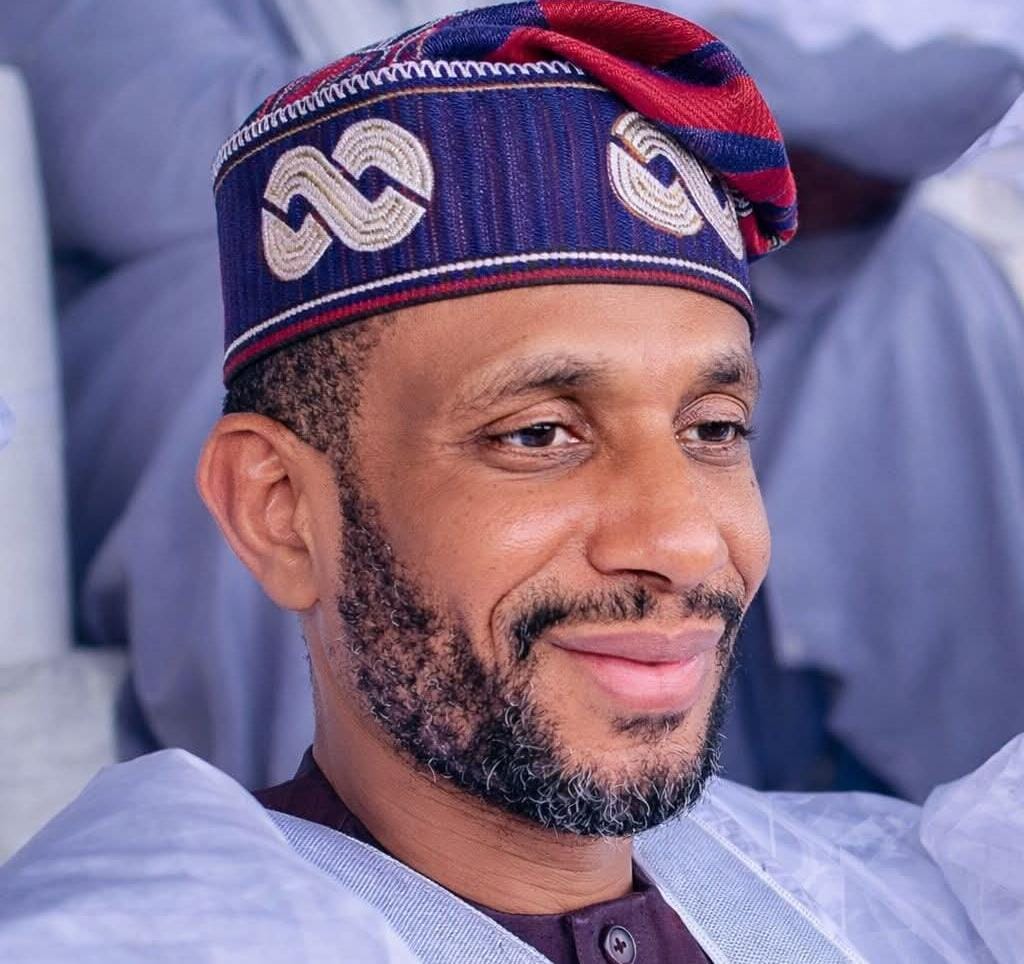
Every appointment a governor makes, every vacancy he fills, every partner he chooses to place beside him at the highest levels of the state’s executive, is a window into his understanding of what governance requires, what his people deserve, and what kind of state he intends to build by the time his tenure is complete. When Governor Abba Kabir Yusuf transmitted the name of Alhaji Murtala Sule Garo to the Kano State House of Assembly on April 22, 2026, for screening and confirmation as Deputy Governor, he opened precisely such a window. And what it reveals about his governance vision for Kano is both illuminating and deeply reassuring
The context in which this nomination was made is inseparable from its meaning. Kano’s political space had been in active turbulence for months, shaped by the seismic consequences of Governor Yusuf’s defection from the New Nigeria Peoples Party to the All Progressives Congress, the resignation of former Deputy Governor Abdussalam Gwarzo on March 27, 2026, amid impeachment proceedings triggered by disagreements over party affiliation, and the fierce public debate about loyalty, identity, and political direction that those events generated across the state.
In the midst of that turbulence, a lesser political leader might have been tempted to make a hasty appointment, to fill the vacancy quickly with a figure whose primary qualification was political convenience rather than governance competence, and to move on. Governor Yusuf chose a different path entirely. He took his time. He consulted widely. He thought carefully. And he arrived at a nomination that speaks not to the pressures of the moment but to the demands of the long term.
Read Also:
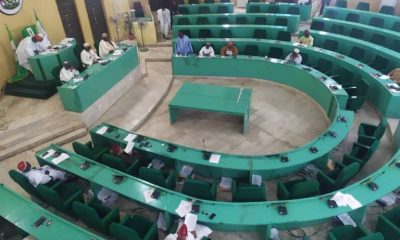
Kano Lawmakers Conclude Screening of Deputy Governor Nominee Garo
That choice, deliberate and consultative rather than reactive and expedient, is itself a governance statement
It says that this administration understands the difference between managing a political crisis and building a governance legacy. It says that the vacancy created by Gwarzo’s departure was not merely a constitutional inconvenience to be resolved at the earliest opportunity but a governance challenge to be addressed with the full weight of strategic thought and stakeholder engagement that it deserved. And it says, most importantly, that the person chosen to fill that vacancy was selected not because of what his appointment would do for the politics of the moment but because of what his presence in the deputy governor’s office will do for the governance of the state across the remainder of this administration’s term and beyond
Murtala Sule Garo brings to this moment a profile that is uniquely suited to the three governance imperatives that his nomination signals most clearly: stability, continuity, and consolidation. These are not abstract governance concepts. In the specific context of Kano State in April 2026, they are urgent, concrete, and measurable requirements that the administration’s development agenda depends upon for its successful execution. Stability, in this context, means the restoration of a fully constituted and functionally coherent executive that can manage the complex, multi-layered demands of governing Nigeria’s most populous state without the distraction, the vulnerability, and the institutional incompleteness that a deputy governor vacancy inevitably creates. Garo’s nomination addresses that requirement directly and comprehensively
His reputation as a calm, strategic, and calculated political actor, his well-documented ability to navigate complex political environments without generating unnecessary friction, and his long-established relationships with the diverse stakeholder communities across Kano’s 44 local government areas make him precisely the stabilising presence that the executive requires at this juncture. In a political terrain where competing elite interests, factional pressures, and legislative-executive dynamics create a continuous requirement for careful management and diplomatic skill, a deputy governor whose defining political characteristics include consensus-building, strategic pragmatism, and cross-factional accessibility is not merely a useful addition to the executive. He is an essential one. Continuity, in this context, means the uninterrupted pursuit of the development agenda that Governor Yusuf’s administration has been executing since May 2023, an agenda anchored on the Kano First philosophy and expressed through the most ambitious budget in the state’s history, a N1.477 trillion appropriation for 2026 with 68 percent directed at capital projects, historic investments in education that produced Kano’s first-place ranking in the 2025 NECO results, women and youth empowerment programmes that have disbursed over N334 million to 6,680 women entrepreneurs and more than N800 million to over 5,300 young people, agricultural revitalisation through 199,000 bags of fertiliser, 11 approved mini-dams, and expanded extension worker deployment, and a security architecture strengthened by 2,000 trained Neighbourhood Watch operatives across the state. All of that work is in motion
All of it requires sustained executive focus, institutional coherence, and leadership alignment to deliver the outcomes that the people of Kano have been promised and that the data already shows are beginning to materialise. A deputy governor whose career has been defined by institutional commitment, administrative discipline, and a governance philosophy centred on community-driven, locally responsive delivery is a deputy governor who will protect and advance that continuity rather than disrupt it
Garo’s experience as Commissioner for Local Government and Chieftaincy Affairs is particularly relevant to the continuity imperative. The Kano First Agenda’s most tangible outcomes, the empowerment programmes, the infrastructure projects, the agricultural interventions, the security structures, are delivered not from the corridors of Government House but through the 44 local government areas of the state, each with its own administrative dynamics, its own community priorities, and its own relationship with the state executive. A deputy governor who has spent years at the intersection of state policy and local government implementation, who has managed the relationships between formal administrative structures and traditional authority systems, and who has built a statewide network of trust and engagement across every local government area through his tenure as ALGON Chairman, is a deputy governor who can ensure that the administration’s development agenda reaches every community in Kano with the fidelity and the effectiveness that the governor’s vision demands
Consolidation, in this context, means the deliberate and strategic strengthening of the APC coalition in Kano, the deepening of the political relationships, the broadening of the stakeholder base, and the building of the institutional structures that will carry the administration through the remainder of its current term and position it competitively for the 2027 electoral cycle. This is perhaps the most politically sensitive of the three imperatives, and it is the one that Garo’s profile addresses with the greatest precision and the most compelling credibility. His candidacy as the APC’s Deputy Governorship candidate in the 2023 general elections, his ward-level mobilisation work across all 44 local government areas of the state, his deep relationships with party structures, community leaders, traditional institutions, women’s groups, and youth organisations in every corner of Kano, and his reputation as a loyal party man who rose through the APC’s organisational ranks through long-term commitment rather than opportunistic positioning, all combine to make him the ideal instrument of political consolidation for an administration that is simultaneously managing the consequences of a major defection and building the foundations of a new and broader political coalition. The public response to Garo’s nomination has provided the most immediate and powerful confirmation of the consolidation logic behind it.
The spontaneous street celebrations that erupted across Kano metropolis and beyond within hours of the announcement, the viral videos of youths chanting “Sai Abba” and “Sai Garo” through major roads, carrying portraits of the governor and his nominee in scenes of genuine and unmanufactured popular enthusiasm, were not merely expressions of personal affection for a well-liked politician. They were expressions of public relief, of the relief that a population feels when its government demonstrates, through a specific and consequential decision, that it is thinking clearly, acting strategically, and choosing its partners with the care and the seriousness that the responsibilities of governance demand
That relief is itself a governance outcome. A population that trusts its government’s judgment is a population that is more likely to engage with its programmes, support its initiatives, absorb its policies, and extend the patience that ambitious development agendas inevitably require. By making a nomination that has generated genuine and widespread public confidence, Governor Yusuf has strengthened not only his executive team but his broader governance environment, creating the conditions of public trust and political stability within which his administration’s most ambitious objectives can be most effectively pursued
The nomination of Murtala Sule Garo is, in the final analysis, a portrait of a governor who knows exactly what he is doing and exactly why he is doing it. It is a portrait of a leader who has looked at the governance challenges before him, assessed the political landscape around him, and made a choice that addresses both with the intelligence, the foresight, and the strategic clarity that Kano’s 20 million people have every right to expect from the man they elected to lead them. Stability, continuity, and consolidation are not merely words in a governance document. Under Governor Abba Kabir Yusuf, they are becoming the defining characteristics of a state that is moving, with deliberate and unstoppable purpose, toward the future its people deserve.

Kano Civil Service: Govt moves to address manpower gaps through recruitment
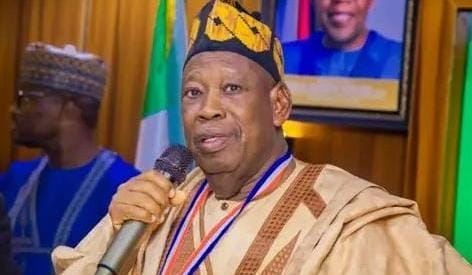
2027: Ganduje and APC heavyweights prepare for a defining political contest

Insecurity: Gunmen kill Islamic cleric, visitor in Dutsin-Ma

Every Kano State Lawmaker Should Support Governor Abba Kabir Yusuf, Regardless of Party Affiliation – Dr. Baffa Babba Dan’agundi

Nigeria records no cases after patient’s evacuation to Switzerland – WHO
ABCOAD Unveils Journal, Bids Farewell to Provost

Nigerian Army Begins DSSC 29/2026 Recruitment, Outlines Eligibility Criteria
2027: NDC Releases Full List of Consensus Candidates in Kano

Gaya Polytechnic Opens Recruitment, Advertises 46 Academic, Non-Academic Positions