The Historica Nigeria

Politics

Kano, National, Politics

Defection Politics: How Yusuf’s APC Move Is Reshaping Kano’s Power Map

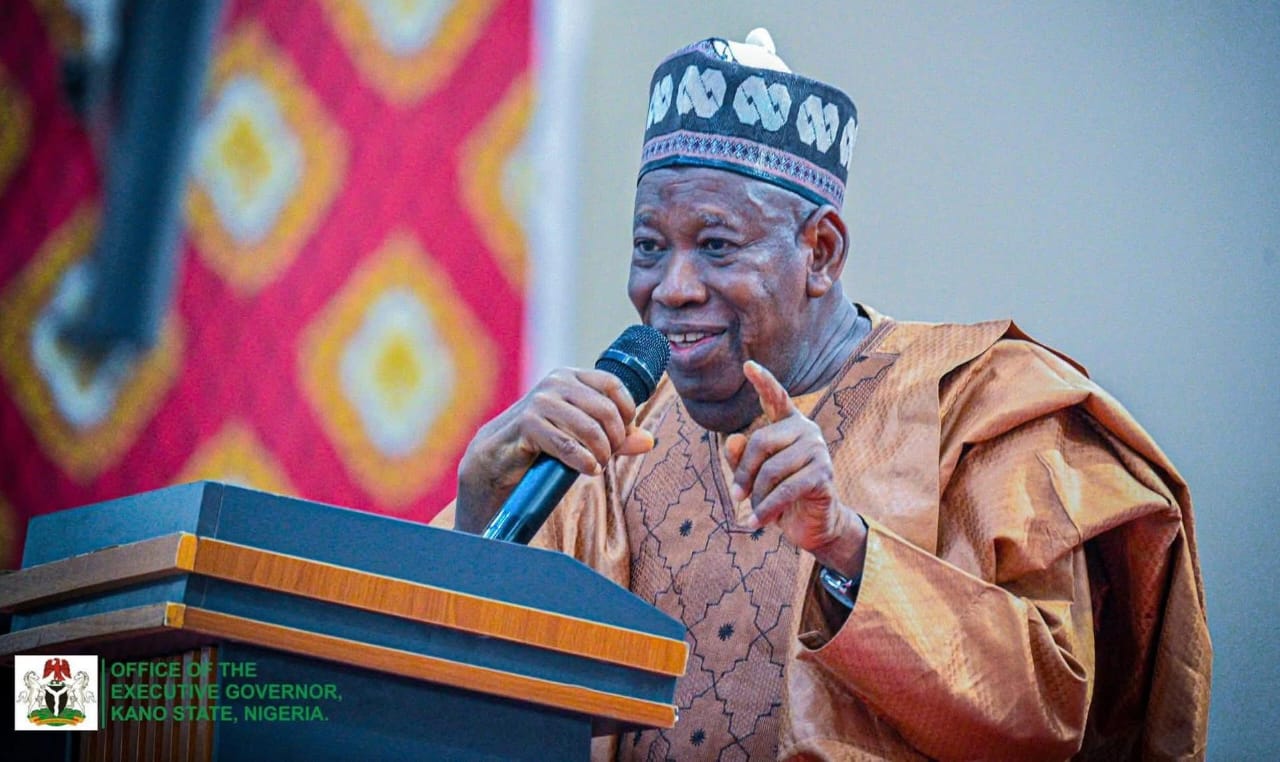
Umar Idris Shuaibu, Kano Kano State politics appears to be heading into another defining phase as the rift between Governor Abba Kabir Yusuf and the leader of the New Nigeria Peoples Party (NNPP), Senator Rabiu Musa Kwankwaso, continues to widen. At the heart of the growing discord is Governor Yusuf’s reported readiness to defect from the NNPP to the ruling All Progressives Congress (APC), a move that has triggered intense political maneuvering within the state and beyond. In response, Kwankwaso is said to have opened a loyalty register for political office holders, aimed at ascertaining allegiance to his leadership and the Kwankwasiyya Movement. The political tension played out publicly when Governor Yusuf marked his 63rd birthday in Abuja, the Federal Capital Territory (FCT), surrounded by top government officials and party chieftains. Kwankwaso, conspicuously absent from the celebration, was reportedly in Kano holding “engagement meetings” with NNPP stakeholders, particularly loyalists within the Kwankwasiyya Movement. Sources familiar with the situation say the moves and counter-moves by both leaders have sharply polarised the NNPP, creating visible cracks among its ranks, including federal lawmakers from Kano State. While the governor has secured the backing of the 40-member Kano State House of Assembly, led by Speaker Jibril Isma’il Falgore, as well as all 44 local government chairmen, support at the National Assembly level appears divided. Read Also: Why Ganduje Matters as Kano Politics Enters a Defining Moment Kano Governor Yusuf’s APC Defection Postponed APC Eyes Control of 30 States as Governor Yusuf Considers Defection Out of the 21 members of the House of Representatives from Kano State, 13 were elected on the platform of the NNPP. However, only Mukhtari Umar Zakari, who represents Tarauni Federal Constituency, has openly opposed the planned defection. Others, including Aliyu Sani Madaki (Dala), Abdulmumin Jibrin (Bebeji/Kiru), Yusuf Rabiu (Sumaila/Takai), and Sani Abdullahi (Karaye/Rogo), have already defected to the APC. Similarly, Kabiru Usman of Rano/Bunkure/Kibiya Constituency, who won a rerun election under the NNPP, and Sagir Ibrahim Koki (Kano Municipal) have also crossed over to the ruling party. Although the governor’s formal defection was initially scheduled for an earlier date, it was postponed by the APC national leadership to January 12. In the original arrangement, Vice President Kashim Shettima and APC National Chairman, Nentawe Yilwatda, were expected to receive Yusuf into the party. Party insiders say the event was rescheduled to allow further consultations, particularly with National Assembly members and key stakeholders who are yet to fully align with the move. A close aide to the governor disclosed that Yusuf is yet to officially register at his ward or obtain an APC membership card, steps required for a formal defection. Beyond party symbolism, Yusuf’s anticipated defection is widely seen as part of a broader political realignment aimed at securing a strong leadership position within the Kano APC and consolidating his prospects ahead of the 2027 governorship election. The move has, however, been firmly rejected by Kwankwaso, who is speculated to be considering a switch to the African Democratic Congress (ADC) in protest. Sources say Yusuf’s exit would deal a significant blow to the Kwankwasiyya Movement, a political structure Kwankwaso has repeatedly warned must not be betrayed without consequences. The disagreement between both leaders has already claimed an early casualty. Hashimu Dungurawa, a known Kwankwaso loyalist, was removed as NNPP state chairman and replaced by Alhaji Abdullahi Zubairu Abiya as Acting Chairman. A Kano State High Court upheld Dungurawa’s suspension, barring him from acting in that capacity pending the determination of the suit. However, the NNPP national secretariat dismissed the leadership change as invalid and proceeded to dissolve the party’s ward, local government, and state executive committees indefinitely. Within the APC, Yusuf’s expected entry is being treated as a major political gain. Party leaders believe it could strip the NNPP of its only governorship seat and significantly weaken its national standing, while strengthening APC’s dominance in Kano State ahead of the 2027 general election. The existing APC power bloc in Kano, led by the immediate past National Chairman of the All Progressives Congress (APC) and Chairperson of the Board of the Federal Airports Authority of Nigeria (FAAN), Dr. Abdullahi Umar Ganduje, alongside Deputy President of the Senate, Barau Jibrin, has openly expressed readiness to work with the governor. Ganduje, along with the APC State Chairman, Abdullahi Abbas, has urged Yusuf to feel free to join the ruling party. Yet, political observers warn that Yusuf’s arrival could also trigger internal realignments within the APC. His presence may complicate the governorship ambitions of Deputy Senate President Barau Jibrin, who has been positioning himself for the ticket, potentially reshaping negotiations, alliances, and voter calculations across the state. While Barau has remained largely indifferent to the unfolding developments, Senator Rufai Sani Hanga (Kano Central) has stayed with Kwankwaso in the NNPP. In contrast, Senator Abdurrahman Kawu Sumaila (Kano South), who defected to the APC last year, is no longer aligned with the Kwankwasiyya Movement. As Kano politics continues to shift, the unfolding realignments signal a high-stakes contest that may redefine political loyalties and power structures well ahead of the 2027 elections.

Kano, National, Politics

Why Ganduje Matters as Kano Politics Enters a Defining Moment

By Umar Idris Shuaibu As political calculations intensify ahead of the 2027 general elections, the All Progressives Congress (APC) finds itself navigating one of the most delicate moments in Kano State’s recent political history. With Governor Abba Kabir Yusuf reportedly weighing a defection to the APC, the party’s capacity to manage expansion without internal disruption has come sharply into focus. At the centre of this evolving equation stands Dr. Abdullahi Umar Ganduje, the immediate past National Chairman of the APC and current Chairperson of the Board of the Federal Airports Authority of Nigeria (FAAN), whose political relevance has become even more pronounced in this defining moment. In a political climate increasingly shaped by shifting loyalties and transactional alliances, Ganduje represents a rare political asset, a leader whose influence is anchored in structure, institutional memory, and tested loyalty. His importance to the APC at this juncture is not symbolic. It is strategic. Any major political movement in Kano, particularly one involving a sitting governor, inevitably intersects with Ganduje’s longstanding role as the party’s chief stabilising force in the state. Kano remains Nigeria’s most politically consequential state by population, and its alignment carries national implications. As such, Governor Yusuf’s potential entry into the APC is not merely a local affair but a national calculation requiring careful management. Integrating such a move demands credibility, restraint, and deep understanding of the party’s internal dynamics qualities that Ganduje has consistently demonstrated over the years. Ganduje’s political strength is rooted in his successful stewardship of Kano as governor, during which the APC consolidated its grassroots dominance and demonstrated electoral resilience. That foundation did not erode with time; rather, it evolved into broader national relevance. His tenure as APC national chairman further positioned him as a custodian of party discipline, someone trusted to balance competing interests without compromising institutional order. At a time when political defections often inflame internal tensions, Ganduje’s role becomes that of a bridge between old party loyalists and new entrants, between ambition and structure, and between Kano’s political past and its emerging realities. His approach, defined by dialogue rather than confrontation, offers the APC a pathway to accommodate new alliances without alienating existing stakeholders. Equally significant is Ganduje’s loyalty to President Bola Ahmed Tinubu and the APC. In moments when political actors recalibrated their positions for personal advantage, Ganduje remained consistent, reinforcing the trust placed in him by the party’s national leadership. That consistency now positions him as one of the few figures capable of managing sensitive negotiations around Yusuf’s reported defection without fracturing party cohesion in Kano. Read Also: APC Eyes Control of 30 States as Governor Yusuf Considers Defection Kano Politics: Ganduje’s Leadership Remains APC’s Strongest Asset Beyond Betrayal: The Real Politics Behind Abba Kabir Yusuf’s Calculated Move Beyond politics, Ganduje’s administrative relevance further strengthens his standing. His appointment as FAAN Board Chair is widely viewed as recognition of his capacity to combine political insight with governance competence. It underscores the perception of him as a leader whose utility extends beyond elections into the realm of statecraft. As Kano’s political landscape braces for possible realignment, the APC’s success will depend less on the optics of defection and more on how such a transition is managed. In this context, Ganduje’s influence is indispensable. His deep familiarity with Kano’s political structures, coupled with his credibility within the APC hierarchy, makes him a critical anchor in ensuring that any expansion strengthens rather than destabilises the party. Ultimately, political parties endure not merely by attracting new members but by preserving order, trust, and institutional discipline. As Governor Yusuf weighs his next move, the APC’s confidence rests in leaders who understand timing, balance, and loyalty. In that equation, Dr. Abdullahi Umar Ganduje is not just a political asset, he is a stabilising constant at a moment when Kano politics demands careful hands.

National, Politics

Beyond Ministerial Boundaries: Wike’s Assault on APC Hierarchy Must Stop

By Muhammad Kabir Sani Hotoro As a staunch supporter and committed stakeholder of the All Progressives Congress (APC), it has become increasingly difficult to remain silent while the institutional health of our party is subjected to persistent strain. The recent vitriolic outbursts by the Minister of the Federal Capital Territory (FCT), Nyesom Wike, against the APC National Secretary, Senator Ajibola Basiru, go beyond a mere regional disagreement. They reflect a troubling attempt to import the destructive culture of political godfatherism into the APC, a culture that hollowed out and ultimately weakened the PDP. For those of us who believe firmly in party supremacy, such external overreach into the authority of the National Secretariat represents a red line that must not be crossed. The facts are clear and well documented. Senator Ajibola Basiru, acting within his constitutional mandate as National Secretary and custodian of the APC’s institutional integrity, simply called for respect for the office of an elected governor. His intervention followed derogatory references to an incumbent governor as a “so-called governor,” a rhetoric capable of eroding democratic norms and party discipline. His position was measured, responsible, and consistent with the values of the APC. The reaction from Minister Wike, however, was deeply troubling. Despite being a guest within an APC-led federal administration, he responded with crude threats, warning the National Secretary to “steer clear” of Rivers State and suggesting that he might “get burnt.” Such language typifies the brand of political intimidation and indiscipline that the APC has consistently rejected. Declaring an entire state a “no-go area” for a principal national officer of the party is an affront not only to Senator Basiru but to every card-carrying APC member across the country. The APC is founded on the principle of party supremacy. Senator Basiru’s mandate is national, not regional. As head of the National Secretariat, his responsibilities span the entire federation. Any attempt to confine his authority to a particular state or zone is a dangerous misconception that undermines the National Working Committee (NWC) and weakens party cohesion. Read Also: Wike Warns APC National Secretary Against Interfering in Rivers Affairs Basiru Warns Wike Against Destabilising APC, Says He Lacks Locus Kwankwaso Cautions Loyalists Against Betrayal in Kano Politics Support for President Bola Ahmed Tinubu, commendable as it may be, does not confer the right to bypass party hierarchy or intimidate its leadership. One cannot be a guest in a house and proceed to threaten the landlord. Under the leadership of the amiable National Chairman, Professor Nentawe Goshwe Yilwatda, the NWC must rise as a united family to address this growing indiscipline. Silence at this stage is no longer an option. The National Chairman is respectfully urged to formally direct the APC structure in Rivers State to affirm unambiguous loyalty to the sitting Governor, who remains the party leader in the state by law and convention. Maintaining parallel or shadow structures to appease the ego of an outsider is a recipe for internal chaos. Beyond condemnation, the NWC should formally document and report this pattern of conduct to Mr President. For the sake of the APC’s “Renewed Hope” agenda and the long-term stability of the party, it is imperative to recommend the immediate removal of Nyesom Wike from his ministerial position. The APC cannot continue to accommodate a guest who deploys the powers of his office to blackmail and undermine the very party that provides the platform for his relevance. Nyesom Wike must be reminded, firmly and unequivocally, that the APC is not a refuge for PDP-style political rascality. If he desires to influence the internal affairs of the party, the honourable path is clear: resign his guest status, formally join the APC at the ward level, and submit to the authority of the party’s constitution, the National Chairman, and the National Working Committee. The APC National Secretary has both the right and the constitutional duty to uphold party standards in every corner of the federation. Any attempt to intimidate or “burn the hands” of the party’s leadership must be met with swift, decisive, and principled disciplinary action.

National, Politics

Basiru Warns Wike Against Destabilising APC, Says He Lacks Locus

The National Secretary of the All Progressives Congress (APC), Senator Ajibola Basiru, has warned the Minister of the Federal Capital Territory (FCT), Nyesom Wike, to desist from what he described as attempts to destabilise the ruling party, insisting that the minister should resign his appointment if he cannot refrain from interfering in the party’s internal affairs. Basiru issued the warning in a strongly worded statement released on Monday in Abuja, following what he described as repeated verbal attacks by the FCT minister against his person and office. According to the APC scribe, his comments calling for respect for sitting governors whom he described as leaders of the party in their respective states were “innocuous” and should not have attracted what he termed “uncouth responses” from a serving member of the Federal Executive Council. Basiru maintained that it was incompatible for Wike to remain in the cabinet of an APC-led government while allegedly creating confusion within the party’s structures. “He cannot be in the Federal Executive Council of an APC government and be causing confusion within any organ or structure of the party at any level, using the leverage of that same office. The honourable thing to do is to resign his appointment as minister,” Basiru said. He further argued that Wike lacked the standing to meddle in the internal affairs of the APC, stressing that the minister was not a member of the party. Read Also: Wike Warns APC National Secretary Against Interfering in Rivers Affairs Beyond Betrayal: The Real Politics Behind Abba Kabir Yusuf’s Calculated Move APC Eyes Control of 30 States as Governor Yusuf Considers Defection “Our records indicate that Minister Nyesom Wike is not a member of our party, APC, so he lacks the locus to dabble into the affairs of our party,” he stated. Basiru also dismissed claims suggesting he had an interest in Rivers State funds, describing such allegations as baseless and inconsistent with his personal record. “I take strong exception to the allusion that I am interested in the N600 billion allocations of Rivers State. My records of service are those of integrity and commitment. I am not an opportunist,” he said. The APC national secretary emphasised that his responsibilities were nationwide and not limited to his home state of Osun, noting that his role required oversight of party affairs across the country. “As the National Secretary of the APC, my activities are not confined to Osun State. I am the head of the National Secretariat of the party, and I have the authority to oversee party affairs nationwide,” Basiru said. Wike’s Warning Earlier on Monday, Wike had warned Basiru to steer clear of Rivers State politics, declaring the state a “no-go area” for political interference. The warning was issued during the minister’s visit to Oyigbo Local Government Area of Rivers State, where he accused some political actors of exploiting reports of N600 billion in the state’s coffers to make reckless statements about Rivers affairs. Wike’s remarks followed comments attributed to the APC Vice Chairman (South-South), Victor Giadom, who reportedly referred to Governor Siminalayi Fubara as a “so-called governor” during visits to Khana and Gokana local government areas. Reacting to Giadom’s comments, Basiru had described them as unfortunate, insisting that the office of a governor deserved respect regardless of political differences. “The office of the governor is an exalted position, and whoever occupies it must be respected, irrespective of political differences,” Basiru had written in a Facebook post. Basiru Responds Responding to Wike’s warnings, Basiru insisted that his comments on Rivers APC affairs did not amount to interference in the governance of the state but were part of his constitutional duties as national secretary of the party. “My responsibility is to protect the interests of the APC and all its members and structures. My comments regarding the affairs of the party in Rivers State cannot be construed as undue interference,” he said. Basiru also rejected what he described as veiled threats from the FCT minister, stating that he would not be intimidated. “My faith is in God, and I will not succumb to cheap threats. Minister Wike is not God and may be overplaying his political card,” he added. He further maintained that Wike’s public support for President Bola Ahmed Tinubu did not automatically translate to membership of the APC. “Millions of Nigerians who are not members of the APC also support Mr President. His support does not make him a member of our party,” Basiru said. The APC scribe warned that any attempt to destabilise the party in Rivers State would not be tolerated, adding that the APC would resist what he described as the importation of “PDP-style politics” into its structures.

Politics, Rivers

Political Talks Emerge Over Possible Bid by Wike’s Son for House of Reps Seat

Speculation is mounting within Rivers State political circles following reports that a son of the Minister of the Federal Capital Territory (FCT), Nyesom Wike, may be positioning to contest the Obio-Akpor Federal Constituency seat in the House of Representatives ahead of the 2027 general elections. Sources familiar with the development said consultations are already ongoing, with the former Rivers State governor reportedly introducing his son to political associates and close allies as part of early engagements. The move, according to the sources, is aimed at testing political acceptance within the constituency and consolidating grassroots support ahead of a possible declaration. The younger Wike, said to be about 25 years old, is reportedly preparing to challenge for the seat currently occupied by Rt. Hon. Kingsley Chinda, the Minority Leader of the House of Representatives and a key political figure in Rivers State. Read Also: Wike Warns APC National Secretary Against Interfering in Rivers Affairs Beyond Betrayal: The Real Politics Behind Abba Kabir Yusuf’s Calculated Move PAYMISH Co-founder Ties the Knot in Gombe Although no official announcement has been made by the Wike family or the Peoples Democratic Party (PDP), the reports have sparked widespread debate across political and public spaces in the state. Observers say the development has raised discussions around political succession, youth participation in governance, and internal party dynamics within the PDP, particularly in Obio-Akpor Local Government Area. As of the time of filing this report, neither the FCT Minister nor his aides have issued an official response to the reports.

Kano, Politics

Beyond the Godfather’s Shadow: Why Governor Abba Kabir Yusuf Chose Kano Over a Provincial Presidential Quest

By Kabiru Sani Maiwanki Dandago (Gwale LGA) The recent pronouncements by Senator Rabiu Musa Kwankwaso regarding Governor Abba Kabir Yusuf’s strategic political recalibration have finally stripped away the façade, exposing the profound ideological fissures within the NNPP. In a caustic address delivered this January 2026, the Senator characterized the Governor’s newfound autonomy as a “betrayal” more egregious than that of his predecessor, Abdullahi Ganduje. However, in this vitriolic attempt to cast himself as the victim of political infidelity, Kwankwaso inadvertently betrayed a disconcerting truth: he viewed the incumbent administration not as a sovereign executive entity, but as a subordinate instrument of his personal political estate. Senator Kwankwaso’s admission that he expected the Kano State government to function as a “geopolitical centrifuge” to project his hegemony into neighboring territories is remarkably candid. It implies that his patronage of the current administration was never rooted in the socio-economic advancement of the Kano populace, but was instead a cynical stratagem to treat the state’s commonwealth as a private war chest for a singular, ego-driven presidential odyssey. The depth of the Senator’s desperation is now laid bare. His recent public appeal asking anyone with access to the Governor to “beg him to come back” reveals a leader who has finally grasped the magnitude of his loss. Read Also: APC Eyes Control of 30 States as Governor Yusuf Considers Defection Most telling, however, is the Senator’s demand that the Governor should “assign and surrender the seat” if he leaves the movement. This demand is the height of political confusion. The Governorship of Kano is a constitutional mandate belonging to the people, not a government agency or a piece of furniture to be “returned” to a benefactor’s private residence. By resisting this role, Governor Abba Kabir Yusuf has committed what Kwankwaso perceives as an unpardonable “sin” of independence. His refusal to allow the Kano State treasury to be cannibalized for regional political expansion is a resounding victory for fiscal prudence and administrative transparency. He has chosen to be the custodian of the people’s trust rather than a puppet for personal ambition, and in doing so, he has redefined the essence of leadership in Kano for 2026 and beyond.

Kano, National, Politics

Tinubu Praises Yusuf’s Leadership, Development Strides in Kano at 63

Umar Idris Shuaibu, Kano President Bola Ahmed Tinubu has congratulated the Governor of Kano State, Abba Kabir Yusuf, on the occasion of his 63rd birthday, praising his leadership qualities and contributions to the development of the state. In a statement issued on Sunday by his Special Adviser on Information and Strategy, Bayo Onanuga, the President described Governor Yusuf as a leader of integrity, humility and dedication to public service. Tinubu noted that these attributes have been evident in Yusuf’s administration since his election in 2023 on the platform of the New Nigeria Peoples Party (NNPP), adding that the governor’s leadership has driven notable infrastructural development across Kano State. The President commended the governor’s declaration of a state of emergency in the education sector, saying the move has contributed to improved performance by Kano students in the National Examinations Council (NECO) examinations. Read Also: APC Eyes Control of 30 States as Governor Yusuf Considers Defection Kano Governor Yusuf’s APC Defection Postponed Kano 2027: Deputy Governor Gwarzo, Kofar Mata Emerge as Potential NNPP Candidates “Governor Yusuf’s administration in Kano, the bastion of progressive politics in the North, reflects a renewed commitment to grassroots development and improving the welfare of the talakawa, as championed by the late Malam Aminu Kano,” the statement said. Tinubu also acknowledged Yusuf’s prior experience in public service, particularly his tenure as commissioner overseeing key portfolios in the state, noting that it prepared him for the infrastructural initiatives currently underway. According to the President, the governor has embarked on extensive urban renewal projects, including the construction of bridges and road networks, with at least five kilometres of roads built in each local government area of the state. He reiterated that the education emergency declared by the Yusuf administration has yielded measurable gains, especially in students’ academic outcomes at the national level.

Kano, Politics

Kano Advisers Urge Political Maturity, Reaffirm Loyalty to Governor

The Kano State Special Advisers’ Forum has called for restraint, maturity and responsible conduct among political actors amid the evolving political atmosphere in the state. In a statement issued on Saturday and signed by its Secretary, Dr. Idris Salisu Rogo, the forum said politics, by nature, allows for differing opinions and alignments, but stressed that political engagement must be guided by respect, decorum and a shared commitment to the peace and progress of Kano State. The advisers cautioned political appointees, party members, supporters and the general public against the use of inflammatory language, personal attacks, threats and the disclosure of private communications, noting that such actions undermine public trust and distract from governance. According to the forum, Kano State has a long-standing tradition of political awareness and civility which must be preserved, especially at critical moments in the state’s political journey. Read Also: APC Eyes Control of 30 States as Governor Yusuf Considers Defection Unchecked Sand Mining Threatens 300-Year-Old Farming Community in Kano Cervical Cancer Claims One Life Every Two Minutes, UN Says The Special Advisers’ Forum reaffirmed that the Executive Governor of Kano State remains the leader of the government and holds the ultimate authority on political direction and decision-making. It pledged its loyalty and alignment with any political decisions taken by the governor in the interest of the state and its citizens. The forum also expressed collective support for the governor’s ongoing efforts in promoting good governance, people-oriented policies, infrastructural development, social welfare programmes and reforms aimed at improving the lives of residents. It said the achievements recorded across key sectors under the governor’s leadership were visible and should be safeguarded and strengthened. The advisers urged all stakeholders to place the interests of Kano State above personal sentiments or political rivalries, calling for constructive, responsible and patriotic engagement. They emphasized that unity within government and mutual respect among political actors are essential for stability, effective governance and the realization of the administration’s development agenda. The forum reaffirmed its commitment to promoting dialogue, internal cohesion and responsible communication in support of the governor’s leadership and the broader development objectives of Kano State.

National, Politics

APC Remains Dominant Ahead of 2027, Says Yilwatda

The National Chairman of the All Progressives Congress (APC), Professor Nentawe Yilwatda, has dismissed concerns about the future of the ruling party beyond the administration of President Bola Ahmed Tinubu, insisting that the APC has the structure, leadership depth and resilience to endure. Yilwatda made the assertion on Friday while appearing on Channels Television’s Hard Copy programme, amid growing debates over leadership succession within the party ahead of the 2027 general elections. According to him, the survival and stability of the APC are not dependent on any single individual, noting that the party existed and functioned effectively before Tinubu became president and has continued to do so under his leadership. He recalled President Tinubu’s instrumental role in the formation of the APC ahead of the 2015 general elections, as well as his leadership of the reconciliation committee established by former President Muhammadu Buhari in 2018 to address internal disputes within the party. Yilwatda said Tinubu’s intervention at the time helped to unify warring factions and significantly contributed to the party’s victory in the 2019 general elections, despite Tinubu not occupying any executive office then. Read Also: APC Eyes Control of 30 States as Governor Yusuf Considers Defection Kano Governor Yusuf’s APC Defection Postponed Kano Politics: Ganduje’s Leadership Remains APC’s Strongest Asset He added that Tinubu would remain an influential figure within the APC even after leaving office, describing him as a national leader whose political experience, network and strategic insight would continue to be valuable to the party. The APC chairman also dismissed claims that the party is losing ground in the North ahead of the 2027 polls, citing the outcome of the August 2025 by-elections as evidence of sustained support. According to him, the APC recorded victories in several northern states, including Kebbi, Kano, Kaduna, Adamawa, Kogi and Niger, losing only one House of Assembly seat during the exercise. Yilwatda said the results reflect the party’s acceptance across different regions, religious groups and ethnic communities, stressing that the APC remains the most dominant political party at the grassroots level nationwide.

Kano, Politics

Kwankwaso Stands with NNPP as Rogo Renews Political Allegiance

The leader of the Kwankwasiyya Movement, Engr. Dr. Rabiu Musa Kwankwaso, has no involvement in any reported plan by the Governor of Kano State, Alhaji Abba Kabir Yusuf, and some of his close associates to defect to the All Progressives Congress (APC). Supporters of the movement have clarified that Kwankwaso remains firmly committed to the New Nigeria Peoples Party (NNPP), symbolised by the book, and has neither endorsed nor participated in any discussions regarding a political realignment. In response to the ongoing speculations, residents of Rogo Local Government Area have publicly reaffirmed their loyalty and allegiance to Engr. Dr. Rabiu Musa Kwankwaso, describing him as a symbol of progressive politics and people-oriented leadership. Read Also: Kano Governor Yusuf’s APC Defection Postponed The community, under the leadership of Engr. Haruna Ibrahim Rogo, PhD, MNSE, emphasised that Kwankwaso’s political ideology continues to resonate strongly with grassroots supporters, particularly among those who identify with the principles of social justice, inclusiveness, and development-driven governance. They called on members of the Kwankwasiyya Movement to remain united and steadfast within the NNPP, stressing the importance of cohesion as the political landscape continues to evolve.

Scroll to Top