Kano
Kano Politics: Ganduje’s Structure Gains Fresh Momentum After Deputy Governor Confirmation

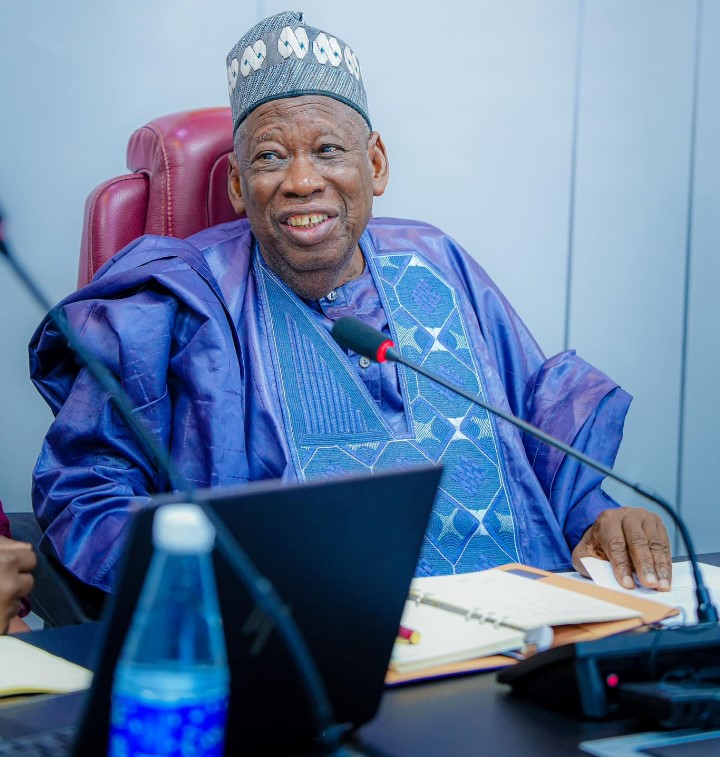
The political atmosphere in Kano has once again shifted with the confirmation and growing consolidation of Murtala Sule Garo as Deputy Governor, a development that has stirred fresh conversations about structure, loyalty, and long term political stability in the state.
In the middle of this unfolding alignment remains a familiar and influential figure, Abdullahi Umar Ganduje, the immediate past National Chairman of the All Progressives Congress and Chairperson of the Board of the Federal Airports Authority of Nigeria, whose political footprint in Kano continues to shape current realities.
Across political circles, Garo’s emergence is being interpreted as more than a routine appointment. Many stakeholders see it as a reinforcement of an established political network that has remained active even after transitions in office. For supporters, it signals continuity within a structure that has long been associated with organisation, discipline, and electoral coordination.
Ganduje’s political journey in Kano spans decades, including eight years as governor, during which he navigated the complexities of grassroots politics, elite bargaining, and administrative governance. Those close to the political space argue that this experience helped him build a system that remains deeply rooted in local communities across the state.
Read Also:
Ganduje Links Rising Begging in North to Poor Support for Disabled Persons
Emulating Grassroots Empowerment: Lessons from Professor Hafsat Ganduje’s Model
Kano Political Shift: Ganduje Hails Reps’ Defection to APC
It is this structure, analysts say, that continues to define political mobilisation in Kano today. From ward level engagement to higher level coordination, his network is often described as one of the most organised political systems in northern Nigeria, capable of influencing both party stability and electoral outcomes.
Within current political discussions, attention is increasingly turning to how this structure could shape future electoral contests, particularly as both federal and state level political actors position themselves for upcoming cycles. Some party stakeholders believe that maintaining cohesion in Kano will be critical for broader political success, including the second term considerations of President Bola Ahmed Tinubu and Governor Abba Kabir Yusuf.
Supporters of Ganduje argue that his strength lies not only in influence but in his ability to manage competing interests within a complex political environment. They point to his record of balancing loyalty, ambition, and institutional structure as a key reason his relevance has endured beyond tenure.
The emergence of Garo as Deputy Governor has further reinforced this perception among political watchers, who view it as a development that strengthens internal alignment and potentially reduces fragmentation within the political space.
Beyond immediate political calculations, Ganduje’s influence is also tied to his deep understanding of Kano’s political terrain. Having served as commissioner under different administrations and later as governor, he is widely regarded as someone who understands the state’s political geography, from rural communities to urban centres.
As Kano continues to adjust to new political realities, one point remains consistent among observers. The structure built over time has not disappeared, and its influence is still visible in ongoing alignments and decisions.
For many within the political landscape, the conclusion is simple. In Kano politics, structure matters, and Ganduje remains one of the most defining figures behind that structure.

Katsina takes governance to 361 wards with community development programme

Pantami wins fresh PDP governorship primary in Gombe

INEC sets October 9 for nationwide PVC collection

Goje’s Electoral War: The Confrontation with Tinubu, Governor Inuwa, Usman Kumo and the APC Candidates Ahead of 2027

Tinubu ends working vacation, heads to Lagos for Abiola film premiere
ABCOAD Unveils Journal, Bids Farewell to Provost

Nigerian Army Begins DSSC 29/2026 Recruitment, Outlines Eligibility Criteria
2027: NDC Releases Full List of Consensus Candidates in Kano

Gaya Polytechnic Opens Recruitment, Advertises 46 Academic, Non-Academic Positions