The Historica Nigeria

National

National, News, Religious

Eid-el-Kabir: Sultan Announces Commencement of Zul-hijjah

Muhammad Sa’ad Abubakar, the Sultan of Sokoto and President-General of the Nigerian Supreme Council for Islamic Affairs (NSCIA), has declared Monday, May 18, 2026, as the first day of Zul-hijjah 1447AH. The declaration was contained in a statement issued on Sunday by the Sultanate Council Sokoto and signed by the Chairman of the Advisory Committee on Religious Affairs, Sambo Wali Junaidu. According to the statement, the Sultan officially announced the commencement of the twelfth month of the Islamic calendar, a sacred period during which Muslims across the world perform the annual Hajj pilgrimage and prepare for the Eid-el-Kabir celebrations. Read Also: Saudi Arabia Announces 2026 Hajj and Eid al-Adha Dates The Sultanate Council called on Muslims in Nigeria and across the globe to use the holy month for prayers, sacrifice, and charitable acts aimed at promoting peace, unity, and national progress. The council also urged Muslim faithful to uphold the teachings and values of Islam while continuing to pray for stability, harmony, and development in the country. Zulhijjah remains one of the most significant months in Islam, particularly because it includes the Hajj pilgrimage and the celebration of Eid-el-Kabir, observed by millions of Muslims worldwide.

International, National, News, Religious

Saudi Arabia Announces 2026 Hajj and Eid al-Adha Dates

Saudi Arabia’s Supreme Court has announced that Monday, May 18, 2026, will mark the beginning of Dhul-Hijjah, the twelfth month of the Islamic calendar. According to the Saudi Press Agency (SPA), pilgrims performing the 2026 Hajj pilgrimage will observe the Day of Arafat on Tuesday, May 26, corresponding to Dhul-Hijjah 9, while Eid al-Adha celebrations will commence on Wednesday, May 27. The Day of Arafat is regarded as the spiritual climax of the annual Hajj pilgrimage, during which millions of Muslims gather at Mount Arafat near the holy city of Mecca for prayers, supplications, and reflection. Eid al-Adha, one of the most significant celebrations in Islam, commemorates the willingness of Prophet Ibrahim to sacrifice his son in obedience to Almighty Allah before a ram was provided as a substitute, according to Islamic tradition. Read Also: French Judge to Probe Khashoggi Murder Following Complaint Against Saudi Crown Prince The festival is traditionally observed with congregational prayers, family gatherings, and the ritual sacrifice of livestock, with portions of the meat distributed among relatives, neighbours, and less privileged members of society. The announcement comes as Saudi authorities intensify preparations for the 2026 Hajj season, with extensive operational plans aimed at ensuring smooth crowd management, safety, and efficient movement of pilgrims from across the world.

Business, Economy, National, News

Federation oil earnings drop by N78bn despite rise in global crude prices

Federation oil earnings from the Nigerian National Petroleum Company Limited Production Sharing Contract (PSC) profit distribution declined by N78.71bn in March 2026 despite a sharp increase in global crude oil prices during the same period. Reports presented at Federation Account Allocation Committee meetings and obtained by Sunday PUNCH showed that total PSC distribution to the Federation Account dropped from N121.34bn in February 2026 to N42.64bn in March 2026, representing a decline of 64.9 per cent. The figure was also significantly lower than the N204.96bn recorded in March 2025. The decline occurred despite Brent crude prices rising above $100 per barrel during the first quarter of 2026 amid escalating tensions in the Middle East and fears of disruptions to global oil supply routes. Further analysis showed that total PSC distribution for the first quarter of 2026 stood at N180.05bn, compared to N438.54bn recorded during the same period in 2025, indicating a decline of N258.49bn. Read Also: FG Sets Transition Plan for Direct Oil Revenue Payments to Federation Account The reports also revealed major changes in Nigeria’s oil revenue sharing framework following Executive Order 9 signed by President Bola Ahmed Tinubu in February 2026. Under the previous arrangement, PSC profits were shared using a 30:30:40 formula, with deductions made for NNPC management fees and frontier exploration funds before the Federation received its share. However, the new directive abolished those deductions and mandated full remittance of PSC revenues into the Federation Account. Despite the reforms, actual oil revenue inflows remained weak. Reports indicated that while projected oil and gas revenue from NNPC for Q1 2026 stood at N1.41tn, actual inflows amounted to only N180.05bn, leaving a shortfall of about N1.23tn. Economic experts attributed the situation to factors such as low production output, delayed remittance cycles, crude lifting arrangements and previous forward oil sales agreements entered into by the NNPC. Speaking on the development, the Chief Executive Officer of the Centre for the Promotion of Private Enterprise, Dr. Muda Yusuf, noted that oil revenue performance depends not only on global prices but also on production levels and remittance structures within the sector. He added that previous forward crude sales used to finance refinery rehabilitation projects may still be affecting the direct inflow of oil revenues into government accounts.

Feature, National

My Dream Dangote: A Vision of Ambition, Entrepreneurship, and Legacy

By Abubakar Sidi Akibu  In a continent where millions of young people continue searching for opportunities amid economic uncertainty and social limitations, one young entrepreneur has chosen to transform inspiration into vision and ambition into purpose. For Abubakar Sidi Akibu, entrepreneurship is not merely about wealth creation. It is about building institutions, creating opportunities, inspiring future generations, and contributing meaningfully to Africa’s economic transformation. His forthcoming book, My Dream Dangote: The Journey of Vision, Ambition, and Legacy in Africa, reflects the mindset of a determined young African who believes greatness can emerge from the continent and compete globally through discipline, consistency, patience, and strategic thinking. At the center of the book lies the towering inspiration drawn from Aliko Dangote, whose remarkable rise from businessman to globally respected industrialist continues to motivate millions of young Africans. Read Also: Umar Idris Shuaibu: The Journalist Redefining Culture, Ethics, and Public Service in Nigeria According to the author, Dangote’s journey reshaped his understanding of success, leadership, and long-term vision. “His story proved that greatness is not determined by background or circumstances but by vision, courage, consistency, and commitment,” Akibu explained in the manuscript’s opening chapter. The book presents a motivational reflection on entrepreneurship, leadership, resilience, and the power of dreaming beyond temporary limitations. It also captures the realities many young Africans face while striving to build meaningful futures amid uncertainty and limited opportunities. Structured across fifteen chapters, the publication explores themes ranging from discovering purpose and understanding business principles to leadership, discipline, failure, influence, and legacy building. Through personal reflections and entrepreneurial insights, Akibu narrates how his interest in business development gradually evolved into a larger vision of building impactful institutions capable of creating employment and long-term value for society. As the founder of A+ AROMAS NIGERIA LIMITED, the author explained that his vision extends beyond personal achievement. He believes true success should be measured not only by financial accomplishments but also by influence, contribution, and the ability to inspire others. The book equally seeks to encourage young Africans not to abandon their ambitions because of fear, criticism, poverty, or temporary setbacks. Rather, it emphasizes persistence, discipline, patience, and consistency as essential pillars for sustainable success. “Dreams only become reality when belief is combined with action, discipline, and consistency,” the author stated. Beyond admiration for Dangote’s achievements, My Dream Dangote also represents the beginning of the author’s own entrepreneurial vision and long-term aspiration to build globally respected African businesses capable of leaving lasting impact across generations. The work positions itself not simply as a business narrative but as a motivational call for young Africans to believe in their potential, embrace long-term thinking, and pursue purposeful leadership capable of transforming society. For many readers, especially aspiring entrepreneurs across Africa, the message remains clear: greatness does not begin with resources alone. It begins with vision, determination, discipline, and the courage to persist despite obstacles. As Africa continues producing a new generation of ambitious entrepreneurs and innovators, books such as My Dream Dangote may further resuscitate confidence among young people seeking to redefine the continent’s future through enterprise, leadership, and legacy.

Agriculture, Feature, National

Rethinking Nigeria’s Agricultural Survival Strategy

By Mustapha Nuhu Wali, mni, FCNA, FCCSA As the farming season approaches, Nigeria finds itself at a critical crossroads. Much of the national conversation has focused on the rising cost of fertilizers, seeds, and other agricultural inputs. While these concerns are valid, they only scratch the surface of a deeper structural challenge confronting the country, particularly Northern Nigeria, where agriculture is both livelihood and lifeline. The real issue is not simply affordability; it is sustainability. Farmers across states such as Kano State, Kaduna State, Niger State, and Benue State are not just struggling with high input costs; they are grappling with uncertainty and a broken economic cycle. For a small-scale farmer today, purchasing just one bag of fertilizer requires selling two to three bags of maize produced in the previous season—maize that itself was cultivated at significantly high cost. This reality makes reinvestment into farming increasingly difficult, if not impossible. Will they be able to access inputs on time? Will insecurity allow them to cultivate their land? And perhaps most importantly, will they be able to sell their produce at a fair price after harvest? A major concern is policy inconsistency. On one hand, government encourages local production; on the other, it opens the door to food imports through waivers that can undercut local farmers. This contradiction weakens confidence and discourages investment in agriculture. Read Also: 300-Year-Old Kano Farming Settlement Faces Extinction Over Sand Mining Food Waivers Threaten Northern Agriculture, Says Wali FG Launches FarmerMoni Programme, 22,000 Farmers to Benefit There is also the growing impact of global supply dynamics. The ongoing crisis in the Middle East, an important source of nitrogen and petrochemical inputs used in fertilizer production poses a significant risk. Any disruption in supply chains will inevitably translate into higher costs locally. To some extent, private sector investments have helped cushion the impact. Companies like Indorama Eleme Petrochemicals and Dangote Fertilizer have significantly improved domestic supply of urea and NPK fertilizers. Without these investments, the current situation would likely be far worse. However, their efforts alone are not sufficient to guarantee long-term sustainability. There is a need to integrate these production gains into a broader national strategy that ensures affordability, accessibility, and efficiency in distribution. Equally important is the need to revisit the performance of legacy public-sector fertilizer assets, particularly those historically located in Rivers State. If they are not contributing meaningfully, then policy attention should shift toward revamping or restructuring them. Beyond production, distribution remains a major bottleneck. Inputs often do not reach smallholder farmers on time or at the right price. At the same time, state interventions remain fragmented. A coordinated regional approach is urgently needed. But perhaps the most overlooked aspect of the current crisis is its security dimension. When farming becomes unviable, rural populations migrate to urban centres, increasing unemployment and social pressure. Over time, this translates into insecurity. Nigeria cannot afford to treat agriculture as a seasonal concern. It must be treated as a strategic priority. First, there must be policy coherence. Agricultural policies must align with trade policies to protect local producers. Second, domestic production capacity must be strengthened. Third, distribution systems must be improved. Fourth, security in farming communities must be addressed. Finally, smallholder farmers must be supported directly. Between 2015 and 2017, under Muhammadu Buhari, targeted interventions supported fertilizer blending plants and improved access. That experience offers useful lessons, but the current challenge requires going further. Nigeria must rethink its agricultural survival strategy. The goal should not just be to survive the next farming season, but to build a system that can withstand shocks and ensure food security. The stakes are too high for incremental solutions. What is required is bold, coordinated, and forward-looking action.

National, News, Taraba

Court Sentences Ex-Power Minister Saleh Mamman to 75 Years Over N33.8bn Fraud

A Federal High Court sitting in Abuja has sentenced former Minister of Power, Saleh Mamman, to 75 years imprisonment over a N33.8 billion money laundering and fraud case. The former minister was convicted on all 12 counts filed against him by the Economic and Financial Crimes Commission (EFCC), bordering on alleged money laundering and conspiracy. Delivering judgment, Justice James Omotosho sentenced Mamman to seven years imprisonment each on 10 counts, while he received three years and two years respectively on counts four and five. The court ruled that the sentences would run consecutively without the option of fine, except on count four, where the convict was given an option of a N10 million fine. Justice Omotosho also ordered the forfeiture of foreign currencies recovered from the former minister, alongside four properties in Abuja traced to him during investigations. The EFCC had arraigned Mamman in July 2024 on allegations of conspiring with officials of the Ministry of Power and some private companies to illegally divert and convert N33.8 billion meant for the Zungeru and Mambilla hydroelectric power projects. He had pleaded not guilty to the 12-count charge marked FHC/ABJ/CR/273/2024. During the trial, the anti-graft agency presented 17 witnesses and tendered 43 exhibits before the court in support of its case. On May 7, the court convicted Mamman in absentia after finding that the prosecution had established his culpability beyond reasonable doubt. The court subsequently issued a warrant for his arrest. At Wednesday’s proceedings, counsel to the convict, Mohammed Ahmed, informed the court that he was unaware of Mamman’s whereabouts, adding that attempts to reach him through his phone lines were unsuccessful. Following the sentencing, Justice Omotosho directed all security agencies to collaborate with Interpol to ensure the arrest of the former minister. The court further ruled that the jail term would commence from the date of his arrest.

Economy, National, News

Why Nigeria Seeks Fresh $1.25bn World Bank Loan Under Tinubu Administration

The administration of President Bola Ahmed Tinubu is advancing plans to secure a fresh $1.25 billion loan from the World Bank as part of ongoing efforts to support economic reforms, investment growth and job creation initiatives in Nigeria. Findings indicate that the proposed facility, titled Nigeria Actions for Investment and Jobs Acceleration, has reached an advanced stage in the World Bank approval process and is expected to be presented before the institution’s board on June 26, 2026. At the current exchange rate of N1,361.4 to one dollar, the proposed facility is estimated at approximately N1.70 trillion, underscoring the scale of financing being pursued by the Federal Government amid ongoing fiscal and monetary reforms. Read Also: Why Kiru/Bebeji ‘Consensus’ May End in Court NDC Fixes Presidential Form at N60m Ahead of 2027 Elections Abuja Screening Exposes Cracks in Kano APC Consensus Plans The planned borrowing is expected to become the second-largest World Bank loan secured under the Tinubu administration if approved. It would rank behind the $1.5 billion Reforms for Economic Stabilisation to Enable Transformation Development Policy Financing facility obtained by the administration in June 2024. The latest move comes amid growing concerns over Nigeria’s rising debt profile and increasing dependence on external financing to stabilise the economy and implement key development programmes. Economic analysts say the proposed loan is aimed at supporting investment expansion, boosting productivity and accelerating job creation as the government continues to pursue reforms targeted at improving economic performance. However, concerns have also been raised over the sustainability of Nigeria’s debt burden, with critics warning that continued borrowing could place additional pressure on the country’s public finances if not effectively managed. The Federal Government has consistently maintained that ongoing reforms and strategic financing are necessary to reposition the economy and attract long-term investment into critical sectors. (Punch)

National, News, Politics

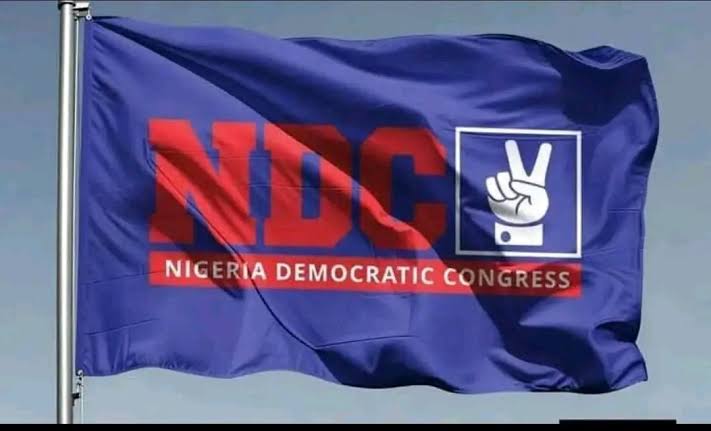
NDC Fixes Presidential Form at N60m Ahead of 2027 Elections

The Nigeria Democratic Congress (NDC) has released its timetable for the sale of nomination forms, screening of aspirants and conduct of primary elections ahead of the 2027 general elections. The party announced that its presidential nomination form will cost N60 million, comprising N20 million for the Expression of Interest form and N40 million for the nomination form. According to a statement jointly signed by the party’s National Chairman, Sen. Moses Cleopas Zuwoghe, and National Secretary, Barr. Ikenna Morgan Enekweizu, governorship aspirants will pay N30 million, including N10 million for the Expression of Interest form and N20 million for the nomination form. The statement further disclosed that senatorial aspirants would pay N8 million, while forms for the House of Representatives and State House of Assembly would cost N6 million and N2.5 million respectively. The party stated that the sale of forms will commence on Wednesday, May 13, 2026, and end on Monday, May 18, 2026. Read Also: Why Kiru/Bebeji ‘Consensus’ May End in Court INEC Attendance at NDC Convention Ends Registration Speculation Abuja Screening Exposes Cracks in Kano APC Consensus Plans According to the timetable released by the party, screening and interview of aspirants will hold between May 19 and May 21, 2026, to determine the eligibility of contestants for the party primaries. The NDC advised all aspirants to appear before the screening panel with their relevant credentials and supporting documents. It added that appeals arising from the screening exercise would be entertained on May 25 and 26, while primary elections for various elective positions are scheduled for May 27 and 28, 2026. The party also fixed its presidential primary election for May 29, 2026, in Abuja, noting that governorship primaries would be conducted at the local government level. According to the statement, all aspirants will be required to sign an undertaking in line with the party’s guidelines and code of conduct. The NDC assured members and aspirants of a transparent, inclusive and democratic process throughout the exercise. The party further disclosed that it would adopt the “open secret ballot” system during its primaries to ensure credibility, fairness and internal democracy in the selection of candidates ahead of the 2027 polls.

National, News

Why Tinubu Created New Homeland Security Office Amid Rising Security Concerns

President Bola Ahmed Tinubu has established a new Office of the Special Adviser on Homeland Security as part of efforts to strengthen Nigeria’s internal security architecture amid growing insecurity and evolving security threats across the country. The development, announced yesterday, has generated widespread discussions among Nigerians, legal experts and security analysts over the role and possible impact of the new office on the nation’s security framework. The Presidency appointed retired Major General Adeyinka Famadewa as Special Adviser on Homeland Security to oversee the coordination of the new structure. According to the Presidency, the office is designed to complement existing security institutions by improving intelligence coordination, strengthening internal security response mechanisms and enhancing collaboration among security agencies. The new arrangement is also expected to function within the broader national security framework already supervised by the Office of the National Security Adviser. Read Also: 2027: Tinubu Support Group Appoints Ganduje As Grand Patron, Holds Consultation With VP Shettima Insecurity: Benue Spent Only N111m from N41bn Security Budget in Q1 — Report What to Know About Kano’s Deputy Governor, Murtala Sule Garo Officials say the creation of the office became necessary due to the complexity of Nigeria’s security challenges, which include terrorism, banditry, kidnapping, communal clashes and other forms of internal violence. The move is aimed at providing a more focused and coordinated approach to homeland security management, especially in response to rising public concern over security effectiveness across different parts of the country. However, the development has also triggered debate among some Nigerians who question whether establishing an additional security office will translate into measurable improvements on the ground. Security analysts argue that the effectiveness of the new office will depend largely on clear operational mandates, strong inter-agency coordination and avoidance of overlap with existing security structures. The initiative comes as the Tinubu administration continues to roll out reforms targeted at improving national security and strengthening institutional capacity in response to emerging threats.

Abuja, National, News

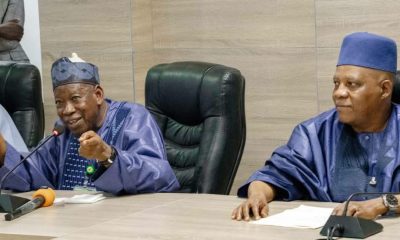
2027: Tinubu Support Group Appoints Ganduje As Grand Patron, Holds Consultation With VP Shettima

By Umar Idris Shuaibu The immediate past National Chairman of the All Progressives Congress (APC) and Chairperson of the Board of the Federal Airports Authority of Nigeria (FAAN), Abdullahi Umar Ganduje, has received a courtesy visit from members of Matasan Arewa for Tinubu (MAT) 2027 as part of the group’s mobilisation efforts ahead of the 2027 general elections. The delegation, led by the Director General of MAT 2027, Hon. Mahmud Babaliya Aftaka, reaffirmed the group’s support for President Bola Ahmed Tinubu and commended Ganduje for his leadership role in strengthening the APC across the country. During the visit, the group described Ganduje as a strong pillar of the ruling party whose political experience and guidance continue to inspire Northern youths toward active participation in democratic processes. MAT 2027 also announced the appointment of Ganduje as its Grand Patron in recognition of his contributions to party development and youth mobilisation. Speaking during the meeting, Ganduje stressed the critical role of youths in sustaining democracy and shaping the political future of Northern Nigeria and the country at large. Read Also: What to Know About Kano’s Deputy Governor, Murtala Sule Garo Why Kiru/Bebeji ‘Consensus’ May End in Court Abuja Screening Exposes Cracks in Kano APC Consensus Plans “The youth are the foundation of this very important organisation, especially considering the political situation in the country and particularly in the northern part of Nigeria today,” he said. “There is no doubt that the youth are the alpha and omega of democracy, especially as we are approaching another election period.” The former Kano State governor cautioned against divisive politics rooted in religion, ethnicity and regional sentiments, noting that such narratives do not support national growth and unity. “The misconception many people have about politics in Nigeria is becoming a very dangerous trend. An association like this, made up of young men and women, is in a strong position to change the narrative,” he stated. “When one section of the country keeps blaming another section, it does not contribute to national development.” Ganduje further emphasised the need for Northern Nigeria to develop a clear socio-economic blueprint capable of addressing the region’s pressing developmental challenges. “What is most important for Northern Nigeria today is to have a clear development agenda and blueprint. Instead of blaming others based on religion, ethnicity, tribe or geographical location, we should focus on development,” he added. He identified youth unemployment as one of the major challenges confronting the region and advocated practical solutions through skills acquisition, entrepreneurship and educational reforms. According to him, education should go beyond certificate acquisition and focus more on practical and professional skills capable of making young people self-reliant and employable. Ganduje also called for free and compulsory education at both primary and secondary school levels to ensure equal access to quality education for all children regardless of financial background. In a related development, Ganduje also held a meeting with Vice President Kashim Shettima alongside Hon. Abdullahi Mahmud Gaya, who currently serves as an Independent Non-Executive Director at the Nigeria Sovereign Investment Authority (NSIA), Chairman of the House Committee on Appropriation, Engr. Abba Kabir Bichi, and former Minister as well as former Kano State Deputy Governor, Engr. Abdullahi Tijjani Muhammad Gwarzo, at his residence in Abuja as part of ongoing political consultations ahead of the 2027 general elections.

Scroll to Top