The Historica Nigeria

National

National, News

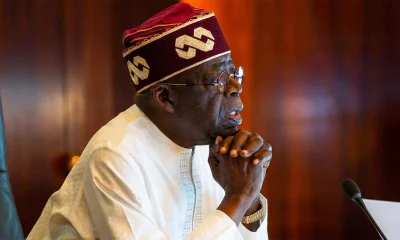
Tinubu says states no longer struggle to pay salaries as governors float N100,000 minimum wage proposal

President Bola Ahmed Tinubu has expressed satisfaction with the improving financial position of state governments, stating that many states are no longer dependent on federal interventions to meet salary obligations. The President made the remarks on Friday while hosting members of the Nigeria Governors’ Forum (NGF), led by Vice President Kashim Shettima, during a Sallah homage at his Lagos residence. Reflecting on his journey to the presidency, Tinubu described the period leading to the 2023 election as one of the most challenging moments of his political career, marked by intense political and legal battles. “At the time, I faced the challenge of trying to become the President of the Federal Republic of Nigeria. It was very challenging and tough for those who stood with me. Some kept faith, and instead of dodging the bullets, I took them,” the President said. Read Also: Ganduje breaks silence on Kwankwaso remarks, recalls 1998 Kano primaries NDC: Kwankwaso Settles for Aminu Abdussalam in Kano, Gawuna Gets Kano Central Ticket Associate Professor Amina Ganduje’s Quiet March into Nigeria’s Intellectual Elite Tinubu acknowledged the support of governors and party members who remained loyal despite uncertainties surrounding the policies his administration would eventually implement. According to him, Nigeria has successfully moved away from the threat of economic collapse and is beginning to witness the gains of key economic reforms introduced by his administration. “Instead of bankruptcy, Nigeria has survived. The economy has recovered and is growing. Agriculture is improving, food supply is increasing, and infrastructure projects are progressing across the country,” he stated. The President commended governors for helping to sustain public confidence and patience during the implementation of reforms, which he described as difficult but necessary. He noted that macroeconomic indicators have improved significantly, while abandoned infrastructure projects are being revived and the housing sector is witnessing renewed growth. “I am glad that out of the governors who previously relied on federal interventions, states are no longer struggling to pay salaries. No more,” Tinubu added. Speaking on behalf of the governors, the Chairman of the Nigeria Governors’ Forum and Governor of Kwara State, AbdulRahman AbdulRazaq, said the removal of fuel subsidy and other fiscal reforms had strengthened the financial capacity of states. He noted that many state governments have been able to clear salary and pension arrears, reduce debt burdens, and execute critical infrastructure and social investment programmes. “I think the nation was shocked by the audacity of Mr President to implement that policy, but today the country has benefited immensely from it,” AbdulRazaq said. The Kwara governor further suggested that the national minimum wage could eventually rise to N100,000 as state finances continue to improve. Also speaking, Chairman of the Progressive Governors’ Forum and Governor of Imo State, Hope Uzodinma, commended Tinubu’s leadership, describing his economic reforms as bold measures that helped stabilise the country. “You have virtually recovered Nigeria from the brink of collapse to a state of stability and survival,” Uzodinma said, adding that governors had assessed the President’s performance and awarded him a “100 per cent” score. Kano State Deputy Governor, Alhaji Murtala Sule Garo, represented Governor Alhaji Abba Kabir Yusuf at the meeting.

National, News, Politics

Atiku Abubakar clinches ADC presidential ticket ahead of 2027 election

Former Vice President Atiku Abubakar has emerged winner of the presidential primary of the African Democratic Congress (ADC), securing the party’s ticket ahead of the 2027 general election. The party announced that Atiku polled 1,846,370 votes to defeat his closest rival, former Rivers State governor Rotimi Amaechi, who scored 504,117 votes, while businessman Mohammed Hayatu-Deen polled 177,120 votes. In his acceptance speech, Atiku commended the ADC for what he described as a demonstration that democracy remains alive within the party, despite wider concerns about the political environment in the country. He also expressed concern over challenges faced by opposition parties and leaders nationwide. “We demonstrated that while democracy is being strangled and squashed by the ruling party and its operatives, democracy is alive and well in the African Democratic Congress,” he said. Read Also: Associate Professor Amina Ganduje’s Quiet March into Nigeria’s Intellectual Elite The National Chairman of the ADC, Senator David Mark, said the party ensured a free contest that allowed members to freely choose their preferred candidate. He noted that although the exercise was not perfect, it reflected democratic participation and provided room for improvement. Mark added that all the aspirants were qualified, but only one could emerge as the party’s flagbearer. The presidential primary, which intensified on Monday, saw Atiku, Amaechi, and Hayatu-Deen compete in a nationwide direct primary conducted across Nigeria’s 8,809 wards using the Option A4 voting system. While Atiku praised the process, both Amaechi and Hayatu-Deen rejected the outcome, alleging irregularities. Amaechi, a former Minister of Transportation, described the process as flawed, citing alleged voter disenfranchisement, and rejected the results announced by the party. Similarly, Hayatu-Deen said he would not attend the announcement of the results, alleging widespread irregularities and stating that he would seek further advice on his next steps. Atiku and Amaechi both joined the ADC in July 2025 as part of a wider opposition realignment ahead of the 2027 elections. However, former Anambra State governor Peter Obi reportedly moved to the Nigeria Democratic Congress (NDC) alongside former Kano State governor Musa Kwankwaso. With the conclusion of the primary, Atiku Abubakar is now set to lead the ADC into the 2027 presidential election as the party seeks to position itself as a major opposition force against the ruling All Progressives Congress (APC).

Education, National, News

FG Reaffirms Commitment to Inclusive, Quality Education on 2026 Children’s Day

The Minister of Education, Maruf Tunji Alausa, has restated the Federal Government’s commitment to providing inclusive and quality education for every Nigerian child as part of activities marking the 2026 Children’s Day celebration. Alausa made the pledge on Wednesday while hosting children from different schools and backgrounds at the Federal Ministry of Education headquarters in Abuja, alongside disability advocate and actress Dera Osadebe. According to a statement issued by the minister’s media aide, Ikharo Attah, the event was organised to amplify the voices of Nigerian children and strengthen national efforts toward inclusive education and child development. Speaking during the event, Alausa described Children’s Day as a reminder of the nation’s responsibility to invest in children through education, well-being, and equal opportunities. Read Also: Associate Professor Amina Ganduje’s Quiet March into Nigeria’s Intellectual Elite “Today is about celebrating the strength, creativity, and limitless potential of our children. Every Nigerian child deserves to feel seen, heard, encouraged, and supported to achieve their dreams regardless of background or circumstance,” the minister said. He commended Dera Osadebe for her advocacy for children living with disabilities and autism, noting that her efforts continue to inspire conversations around empathy and equal opportunities. “Dera’s courage and passion reflect the resilience and brilliance that exist in millions of Nigerian children. Her voice continues to inspire important conversations around inclusion, empathy, and equal opportunity for every child,” he added. Alausa said the celebration aligns with President Bola Ahmed Tinubu’s Renewed Hope Agenda, which prioritises child development, inclusive education, youth empowerment, and expanded access to quality learning opportunities nationwide. He urged children across the country to remain confident, develop their talents, and contribute positively to society, assuring them of continued government support in creating an enabling environment for learning and growth. The ministry also reaffirmed its commitment to protecting children’s rights and well-being through policies and programmes aimed at promoting inclusive education, safe learning spaces, and equal opportunities across Nigeria.

Africa, International, National

A+ AROMAS CEO Abubakar Sidi Akibu Honoured with African Business Award

The Chief Executive Officer of A+ AROMAS NIGERIA LIMITED, Abubakar Sidi Akibu, has been honoured with the Distinguished Young Business Icon Award by the African Entrepreneurship and Leadership Forum. The recognition was presented in acknowledgement of his contributions to entrepreneurship development, youth empowerment and business leadership initiatives across Africa. Reacting to the award, Abubakar Sidi Akibu expressed gratitude to Almighty Allah for the recognition, describing the honour as a reflection of hard work, consistency, vision and the collective support of family, mentors, friends, customers and supporters of A+ AROMAS Nigeria Limited. Read Also: Associate Professor Amina Ganduje’s Quiet March into Nigeria’s Intellectual Elite He noted that the recognition would further motivate him to continue building impactful initiatives capable of inspiring young entrepreneurs and contributing positively to society. The A+ AROMAS CEO also reaffirmed his commitment towards promoting entrepreneurship, innovation and youth empowerment across Nigeria and the African continent. The African Entrepreneurship and Leadership Forum is known for recognising outstanding individuals making remarkable contributions in business, leadership, innovation and community development.

Kano, National, Profile

Associate Professor Amina Ganduje’s Quiet March into Nigeria’s Intellectual Elite

By Umar Idris Shuaibu, Kano In every generation, societies are blessed with individuals whose commitment to excellence, service and intellectual growth distinguish them from the crowd. One of such personalities quietly carving a niche for herself in Kano State and Nigeria at large is Associate Professor Dr. Amina Abdullahi Umar Ganduje, a medical doctor, public health expert, academic and administrator whose achievements continue to inspire many young professionals. Born into a prominent family as the daughter of the former Kano State Governor and immediate past National Chairman of the APC, Dr. Abdullahi Umar Ganduje, Dr. Amina has consistently demonstrated that success is best earned through hard work, discipline and merit rather than family influence. From her undergraduate days at University of Maiduguri where she studied Medicine, she distinguished herself as a focused and determined individual with a passion for healthcare and human development. Her professional journey after graduation further reflected her commitment to service, particularly during her time as a Medical Officer at Hasiya Bayero Paediatric Hospital under the Kano State Ministry of Health. Driven by an unrelenting quest for knowledge and professional growth, Dr. Amina pursued postgraduate medical training with remarkable dedication. In an achievement considered rare in the medical profession, she successfully passed her Primaries, Part I and Part II examinations at first sitting and became a Fellow of the West African College of Physicians within one of the shortest possible periods. Read Also: Former APC National Chairman Ganduje Embarks on Hajj Pilgrimage Emulating Grassroots Empowerment: Lessons from Professor Hafsat Ganduje’s Model How Abba Ganduje’s Empowerment, Solar Projects are Impacting Kano Communities Her passion for public health and disease control equally pushed her into the highly competitive Field Epidemiology training programme under the CDC-supported African Field Epidemiology Network coordinated through Ahmadu Bello University. The programme, known for its rigorous selection process and demanding academic structure, admits only a limited number of candidates yearly. Yet, Dr. Amina emerged among the top-performing candidates, a feat that further underscored her academic brilliance and resilience. Notably, she remains among the few indigenous medical doctors from Kano State to attain such a prestigious qualification in field epidemiology and public health practice. Her qualifications and expertise subsequently earned her a lecturing position in the Department of Community Medicine at Bayero University Kano and Aminu Kano Teaching Hospital, where she has continued to mentor medical students and public health scholars while contributing meaningfully to research, policy discussions and healthcare development. Colleagues and students often describe her as disciplined, accessible and intellectually resourceful. Beyond the classroom, her contributions to public health interventions and policy implementation have further positioned her as one of the emerging female leaders in Kano State’s healthcare sector. Her managerial and leadership abilities became even more evident during her involvement in major public health interventions, including malaria control initiatives and the COVID-19 response period. During the Coronavirus pandemic, Dr. Amina worked tirelessly alongside other healthcare professionals and stakeholders in efforts aimed at containing the spread of the virus in Kano State. Her dedication, professionalism and sense of duty earned admiration from colleagues and health partners alike. Despite her demanding professional responsibilities as a medical doctor, academic and researcher, she has also remained committed to family life, balancing motherhood, mentorship and public service with admirable composure. In another landmark achievement, Dr. Amina Abdullahi Umar Ganduje was, in November last year, elevated to the rank of Associate Professor of Public Health by Bayero University Kano. The prestigious promotion came in recognition of her immense contributions to public health research, academic excellence, teaching and community health development. It equally stands as a reflection of years of dedication, resilience and impactful service within the medical and academic communities. Today, Associate Professor Amina Ganduje represents a growing generation of accomplished young professionals redefining leadership through competence, knowledge and service to humanity. Her journey serves as a source of inspiration to young women, medical practitioners and students across Nigeria, proving that excellence remains attainable through determination, consistency and hard work. Indeed, Kano State and Nigeria at large can take pride in individuals like Associate Professor Amina Ganduje, whose growing profile in public health and academia continues to project hope for a brighter future.

Abuja, Kaduna, Kano, National, News

Eid-el-Kabir: FG opens completed Abuja-Kaduna-Kano road sections for travelers

The Minister of Works, David Umahi, has directed the contractor handling the Abuja-Kaduna-Kano Road reconstruction project, to immediately open all completed sections of the highway to ease movement during the Eid-el-Kabir celebrations. Umahi said the directive was aimed at ensuring safer and smoother journeys for commuters travelling across the corridor during the festive period. According to a statement issued in Abuja on Monday by the minister’s Media Aide, Francis Nwaze, the Federal Government is committed to improving traffic flow and reducing hardship for road users during the Sallah holidays. The minister also disclosed that an earlier accident recorded along the route had been fully cleared, while security agencies had been strategically deployed across key points of the highway to maintain law and order. Read Also: Former APC National Chairman Ganduje Embarks on Hajj Pilgrimage APC National Chairman’s Chief of Staff, Mustapha Bala Dawaki, Defects to NDC Why federal influence does not always guarantee victory at home He assured motorists and travellers of improved safety and better traffic management throughout the Eid-el-Kabir celebrations. Sections of the Abuja-Kaduna-Kano highway had earlier been closed to traffic to allow contractors handling ongoing reconstruction works to fast-track completion of the critical road project. The Abuja-Kaduna-Kano highway remains one of Nigeria’s busiest and most strategic road corridors, linking the Federal Capital Territory with several northern states and facilitating commercial and social activities across the region.

National, News

Nigeria’s Clean Energy Push Threatened as Cooking Gas Prices Climb

Cooking gas prices have continued to rise sharply across several parts of Nigeria, with consumers in Lagos, Ogun and the Federal Capital Territory (FCT) paying as high as N2,000 per kilogramme amid worsening supply shortages and rising operational costs in the liquefied petroleum gas (LPG) sector. Findings by ‘The Historica Nigeria’ on Monday showed that LPG prices now range between N1,400 and N2,000 per kilogramme in different locations across the country. In Ikorodu, Lagos State, cooking gas was sold for N1,800 per kilogramme, representing a significant increase from N1,300 recorded about a month ago. Similarly, residents around Afeeze Bus Stop in Ogba, Lagos, reportedly purchased the product at N2,000 per kilogramme, up from N1,500 within the last three weeks. Consumers in Akoka, Yaba, bought cooking gas at N1,500 per kilogramme, while residents in Ojota paid N1,400 per kilogramme. Read Also: Unlocking The Economic Potential of Nigeria’s Shea Industry 300-Year-Old Kano Farming Settlement Faces Extinction Over Sand Mining Intervention Brings Relief to Struggling Bauchi Nomadic School In Ogun State, particularly around the RCCG camp area in Mowe, the product was also sold for N2,000 per kilogramme, while residents in Owerri, Imo State, purchased it at N1,500 per kilogramme. Across the Federal Capital Territory, prices also varied, with residents in Lugbe buying the product at N1,480 per kilogramme and those in Lokogoma paying as high as N1,600 per kilogramme. Reacting to the development, the Nigerian Association of Liquefied Petroleum Gas Marketers (NALPGAM) expressed concern over the worsening LPG supply challenges affecting the country. In a joint statement signed by the association’s President, Edu Inyang, and Executive Secretary, Bassey Effiong, NALPGAM disclosed that consumers nationwide are now paying over N1,500 per kilogramme for cooking gas. The association explained that operators currently spend between N25.2 million and N26.2 million to procure a 20-metric-tonne truck of LPG, depending on the location. According to the marketers, the persistent rise in cooking gas prices and unstable supply have imposed severe hardship on households, food vendors, small-scale businesses and low-income earners who rely on LPG for daily cooking. NALPGAM warned that the development could reverse years of progress made by both the government and private investors toward promoting clean cooking energy as an alternative to firewood, charcoal and kerosene. The association further identified supply shortages, high depot prices, logistics bottlenecks and increasing operational costs as major factors driving the crisis in the sector. It cautioned that without urgent intervention, the situation could further worsen food inflation, force many LPG businesses to shut down, trigger job losses and undermine Nigeria’s clean energy objectives. NALPGAM therefore called on the Federal Government and key industry stakeholders, including the Ministry of Petroleum Resources, the Nigerian Midstream and Downstream Petroleum Regulatory Authority (NMDPRA), NNPC Limited, domestic gas producers and terminal operators, to urgently intervene and stabilise the LPG market. The association also recommended increased domestic gas allocation, improved product availability, transparent distribution systems, reduced importation and storage bottlenecks, as well as strategic measures aimed at stabilising prices across the country.

National, News, Religious

Eid-el-Kabir: Federal Govt Announces Two-Day Public Holiday

The Federal Government has declared Wednesday, May 27 and Thursday, May 28, 2026, as public holidays to mark this year’s Eid-el-Kabir celebration. The announcement was made on Monday by the Minister of Interior, Olubunmi Tunji-Ojo, through a statement issued by the Permanent Secretary of the ministry, Magdalene Ajani. According to the statement, the declaration reflects the Federal Government’s respect for the faith, values and spiritual heritage of millions of Muslims in Nigeria observing the festival alongside the global Islamic community. Read Also: APC National Chairman’s Chief of Staff, Mustapha Bala Dawaki, Defects to NDC Former APC National Chairman Ganduje Embarks on Hajj Pilgrimage Why federal influence does not always guarantee victory at home Tunji-Ojo congratulated Muslim faithful both in Nigeria and in the diaspora, describing Eid-ul-Adha as a festival deeply rooted in sacrifice, obedience to Almighty Allah and compassion for humanity. The minister urged Nigerians to use the Sallah period to pray for peace, security and prosperity in the country. “The Federal Government urges all Nigerians to use this period for prayer and sober reflection, asking for divine guidance upon the country as it continues its pursuit of peace, security and prosperity for every citizen,” the statement read. He also called on citizens to embrace the values of brotherhood, unity, tolerance and peaceful coexistence during the festive season. The Federal Government further wished Muslims across the country a peaceful, blessed and joyous Eid-el-Kabir celebration.

Kano, National, News, Politics

APC National Chairman’s Chief of Staff, Mustapha Bala Dawaki, Defects to NDC

Hon. Mustapha Bala Dawaki, the Chief of Staff to the National Chairman of the All Progressives Congress (APC), Prof. Nentawe Goshwe Yilwatda, has officially defected from the ruling party to the Nigeria Democratic Congress (NDC). Dawaki was on Sunday afternoon received by former Kano State Governor and leader of the Kwankwasiyya movement, Rabiu Musa Kwankwaso, at his Miller Road residence in Kano. The former APC chieftain was formally welcomed into the Kwankwasiyya fold during the visit, where he was decorated with the symbolic red Kwankwasiyya cap in the presence of supporters and political associates. Read Also: APC risks losing key Kano figure as NDC moves for Mustapha Bala Dawaki Why federal influence does not always guarantee victory at home How three former ministers lost out in Northeast APC governorship primaries His defection is already generating political reactions within Kano and beyond, considering his strategic position within the national leadership structure of the APC. Dawaki had served as Chief of Staff to the APC National Chairman, making his movement to the NDC one of the notable political developments in Kano State as alignments ahead of the 2027 general elections continue to unfold. Though the reasons behind his decision to leave the APC were not officially stated, the development is expected to further reshape political calculations within the state’s evolving political landscape. The reception at Kwankwaso’s Miller Road residence also underscored the continued political influence of the Kwankwasiyya movement as parties intensify grassroots mobilization ahead of future electoral contests. The development also validates an earlier report by ‘The Historica Nigeria’ published two days ago, which exclusively hinted at Hon. Mustapha Bala Dawaki’s planned defection from the APC to the NDC and his anticipated alignment with the Kwankwasiyya political movement in Kano State.

Feature, National, News

Gowon reveals how Ojukwu allegedly sought military backing for Azikiwe against Balewa in 1964

By The Historica Nigeria Fresh historical revelations have emerged from the newly released memoir of former Nigerian Head of State, Yakubu Gowon, shedding more light on the deep political tensions that engulfed Nigeria’s First Republic before the January 1966 military coup. In his memoir titled My Life of Duty and Allegiance, launched in Abuja on Tuesday, Gowon narrated how the late Chukwuemeka Odumegwu Ojukwu allegedly initiated discussions with fellow military officers in 1964 on possible military intervention to resolve the constitutional crisis between then President Nnamdi Azikiwe and Prime Minister Abubakar Tafawa Balewa. The memoir revisits one of the most sensitive political periods in Nigeria’s history, when ethnic mistrust, electoral controversies and regional rivalries threatened the fragile unity of the young nation barely four years after independence. The 1964 political deadlock Nigeria’s 1964 general election triggered a major constitutional crisis after allegations of electoral malpractice and widespread boycott by sections of the opposition dominated by Azikiwe’s National Council of Nigerian Citizens (NCNC) and its allies. The political atmosphere became increasingly tense as Azikiwe, Nigeria’s ceremonial President and Commander-in-Chief, reportedly resisted inviting Tafawa Balewa to form a new government following the disputed polls. For nearly 24 hours, Nigeria was left without a functioning federal government, creating anxiety across the country and fears of institutional collapse. Read Also: Between Discipline and Dissent: Musa Bamaiyi and the Burden of Command Rimi’s Education Legacy Linked to Late Abdulhamid Hassan’s Reforms 16 Years After, Rimi’s Pro-People Legacy Still Resonates in Kano According to Gowon, the crisis exposed the fragile nature of Nigeria’s parliamentary democracy and intensified regional political competition among the North, East and West. Ojukwu’s alleged secret discussions At the time of the crisis, Gowon was a Lieutenant-Colonel serving as Adjutant General of the Nigerian Army, while Ojukwu held the position of Quartermaster General. Gowon recounted how he unexpectedly walked into Ojukwu’s office while searching for Lt-Colonel David Ejoor, only to discover Ojukwu, Ejoor and Colonel Victor Banjo deeply engaged in political discussions. According to him, Ojukwu openly informed him that they had been reviewing the growing political conflict between Azikiwe and Balewa and were considering possible military intervention in favour of Azikiwe. Gowon said the discussions appeared designed to create what he described as a “broad-based national military action,” involving officers from different regions of the country. He explained that Ojukwu represented the East, Banjo the West, Ejoor the Mid-West, while he, Gowon, represented the North. “To them, I represented the missing link of the jigsaw puzzle,” Gowon wrote. The former Head of State stated that he immediately rejected the idea, insisting that the military had no constitutional role in determining political outcomes or taking sides in civilian disputes. He maintained that the military owed loyalty to the government of the day, particularly Prime Minister Tafawa Balewa, who remained the substantive Head of Government under Nigeria’s parliamentary system. Gowon further disclosed that he warned the officers against embarking on any unconstitutional adventure, recalling his response during the discussion: “God helps anyone that starts any trouble.” Road to the January 1966 coup The political crisis of 1964 and the violent unrest that followed in parts of Western Nigeria significantly weakened public confidence in the First Republic. Within months, some young military officers staged Nigeria’s first coup in January 1966, leading to the assassination of Prime Minister Tafawa Balewa, Northern Premier Sir Ahmadu Bello, Western Premier Samuel Ladoke Akintola and Finance Minister Festus Okotie-Eboh. Several senior northern military officers, including Brigadier Zakariya Maimalari, were also killed during the coup. Although the coup eventually failed, Major General Johnson Aguiyi-Ironsi emerged as Nigeria’s first military Head of State. However, Ironsi’s inability to decisively prosecute the coup plotters deepened suspicion and resentment in parts of Northern Nigeria, eventually leading to the July 1966 counter-coup and retaliatory killings. Gowon later emerged as Head of State following the counter-coup, while Ojukwu subsequently declared the secession of the Republic of Biafra, leading Nigeria into a devastating 30-month civil war that ended in 1970. Fresh insight into Nigeria’s troubled past The memoir offers rare insider perspectives into the intrigues, mistrust and political calculations that shaped Nigeria’s early post-independence years. It also revives longstanding debates over the role of the military in Nigeria’s politics, the collapse of the First Republic and the personalities whose ambitions, fears and decisions altered the course of the nation’s history. For many historians and political analysts, the revelations contained in Gowon’s memoir further underscore how unresolved regional rivalries, political intolerance and institutional weaknesses contributed to Nigeria’s descent into military rule and civil conflict during its formative years.

Scroll to Top