
National
FG approves N45bn biosecurity system for five international airports

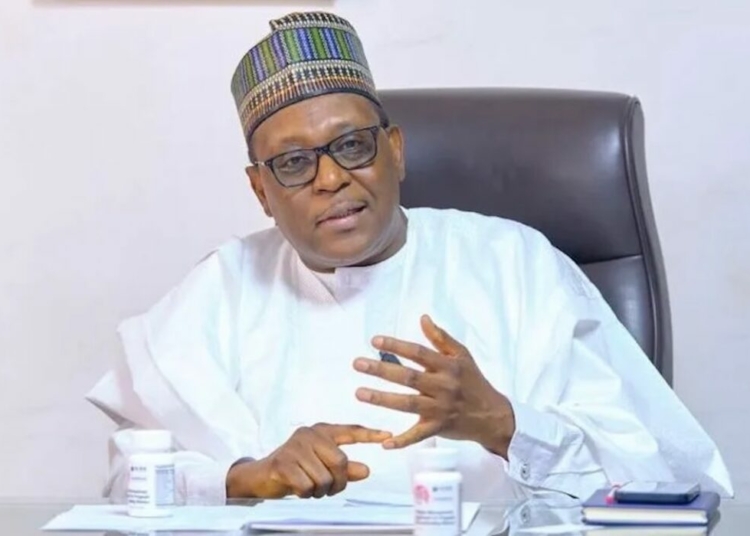
The Federal Government has approved a N45.08 billion investment in an integrated biosecurity and disease surveillance system for five international airports to strengthen Nigeria’s preparedness for infectious disease outbreaks and improve the early detection of public health threats.
The Coordinating Minister of Health and Social Welfare, Professor Ali Pate, disclosed this on Wednesday while briefing State House correspondents after the Federal Executive Council (FEC) meeting presided over by President Bola Tinubu at the Presidential Villa, Abuja.
Pate said the project would be implemented through a 20-year public-private partnership (PPP) agreement with the BioHealth Consortium, providing a framework for the development and operation of the proposed health security infrastructure.
He explained that the initiative would strengthen disease surveillance at major international entry points, reduce the risk of imported infections and improve the country’s capacity to respond swiftly to emerging public health emergencies.
Read Also:
FG offers workers N70,000 monthly transport allowance amid rising living costs
KANOPOLY’s Leadership Puzzle: New Registrar Appointed, Former One Returns
Kano Assembly Passes Bill to Establish State Police
“Since COVID, we have known that there are significant vulnerabilities in terms of public health threats crossing borders, and the need for coordinated technology-driven systems for early warning, detection and response to emerging infectious disease threats,” the minister said.
According to him, Nigeria receives more than 18 million passengers annually through its airports, making effective surveillance systems essential to protecting public health and sustaining economic activities.
Pate added that the proposed infrastructure would support evidence-based decision-making, improve coordination among relevant agencies and strengthen Nigeria’s compliance with international health regulations.
“The implementation of this system will support evidence-based decision-making, improve inter-agency coordination, compliance with international health regulations, and our ability to deploy more advanced technologies beyond what we currently have,” he said.
The five airports selected for the initial phase are Murtala Muhammed International Airport, Lagos; Nnamdi Azikiwe International Airport, Abuja; Mallam Aminu Kano International Airport, Kano; Port Harcourt International Airport; and Akanu Ibiam International Airport, Enugu.
The minister said the system would deploy advanced pathogen detection and monitoring technologies, including aircraft wastewater surveillance, air and surface sampling, and specialised biosurveillance equipment for screening cargo and baggage for potential biological threats.
Clarifying the project’s scope, Pate said it was designed to detect a broad range of dangerous pathogens rather than focus on a single disease.
“This is not Ebola. It is all pathogens of huge public health threats,” he stated.
The minister said concerns over emerging and re-emerging infectious diseases, including Ebola, had reinforced the need to strengthen health security at Nigeria’s international entry points.
He also disclosed that Nigeria had recorded an Ebola infection in October, adding that the affected patient had recovered while health authorities continued contact tracing, surveillance and other precautionary measures.
Pate said the government had activated the necessary containment protocols to prevent further transmission and stop the disease from spreading within communities.
“Our goal is to contain it. We don’t want to be in a situation whereby we have community transmission,” he said.
He explained that people who had come into contact with the infected individual were being monitored to ensure compliance with quarantine requirements.
On financial assistance for quarantined individuals, the minister said the support was intended to encourage compliance with public health protocols and ensure the effective implementation of containment measures.
According to him, quarantine can deprive individuals of their regular income and create difficulties for those with family responsibilities and limited financial resources, potentially undermining adherence to public health directives.
“They have a livelihood, and you ask them to stay in quarantine. They have a family. The compliance with that quarantine, they may find ways to evade it, and that will put everybody at risk,” he added.

FG approves N45bn biosecurity system for five international airports

KANOPOLY’s Leadership Puzzle: New Registrar Appointed, Former One Returns

N70,000 transport allowance: TUC demands N300,000 salary, pensioners protest exclusion

Zero-Dose Children: BOOST Project, Gezawa Stakeholders Move to Close Immunisation Gaps

Kano Assembly Passes Bill to Establish State Police
ABCOAD Unveils Journal, Bids Farewell to Provost

Nigerian Army Begins DSSC 29/2026 Recruitment, Outlines Eligibility Criteria

2027: NDC Releases Full List of Consensus Candidates in Kano

Gaya Polytechnic Opens Recruitment, Advertises 46 Academic, Non-Academic Positions

Gaya Polytechnic to Begin with Four Courses as Committee Eyes Year-End Take-Off
-
 Feature2 days ago
KANOPOLY: How a medically incapacitated Rector heads a Polytechnic with over 45 PhD holders
-
 Feature4 days ago
Kano Poly MFB: A bank closed, an investigation launched, but where are the answers?
-

 Education2 days ago
Mass Education: Kano expands learning centres to over 300, introduces new skills