Feature
Kano realignment puts Ganduje at centre of 2027 politics

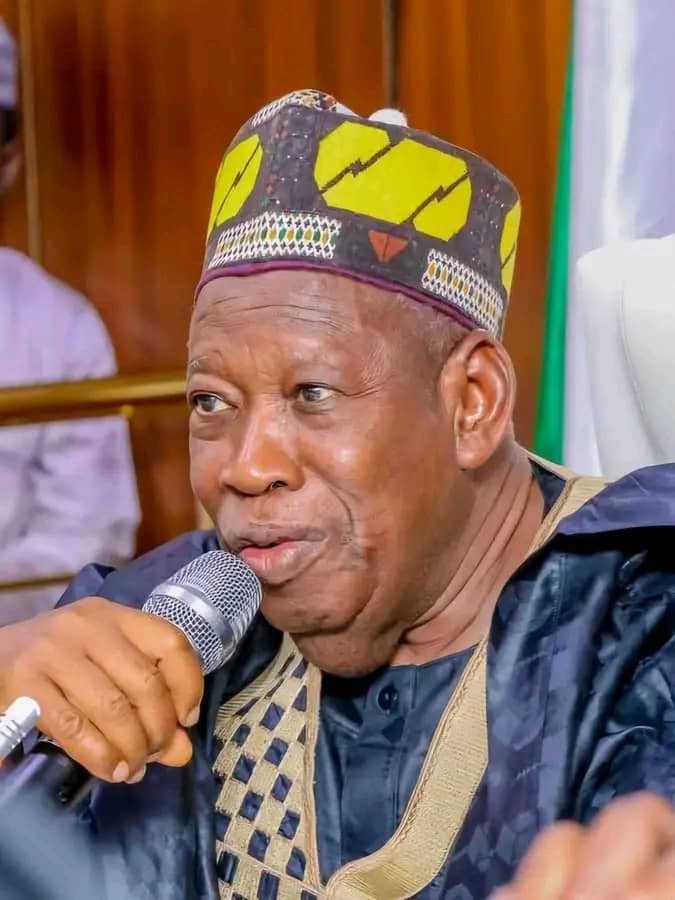
The ongoing political realignment in Kano State ahead of the 2027 elections is bringing the political influence of former governor and immediate past National Chairman of the All Progressives Congress, Dr Abdullahi Umar Ganduje, back into focus, a party stalwart has said.
A Ganduje loyalist, Umar Idris Shuaibu, made the observation in an exclusive interview with Arewa PUNCH on Thursday, saying the former governor’s new role in the APC Presidential Campaign Council and recent political movements in the state had reinforced his relevance in Kano politics.
Ganduje was recently appointed Director of Stakeholders’ Mobilisation in the APC Presidential Campaign Council, a position that has given his political activities a fresh national dimension ahead of the 2027 presidential election.
According to Shuaibu, Ganduje’s experience in grassroots mobilisation, party organisation and stakeholder engagement could become significant as the APC seeks to consolidate its political base in Kano.
“Ganduje remains a major political factor in Kano because of his experience, networks and understanding of the political terrain. His new assignment gives him an opportunity to bring those relationships together and strengthen the APC ahead of 2027,” Shuaibu said.
Read Also:
AfSNET 2026: Ganduje, Otu move to upgrade Calabar airport
Ganduje’s Kano Gambit: The Political Realignment Shaping Tinubu’s 2027 Chances
Ganduje: Tinubu’s Reforms Are Restoring Government’s Capacity to Deliver
He said the former governor’s influence should not be judged merely by his previous positions, arguing that his long-standing relationships with political stakeholders and grassroots actors remained relevant to the emerging political contest.
“Ganduje has been in Kano politics for decades. He has been Deputy Governor, Governor and National Chairman of the APC, so he understands both the grassroots and the national political structure. That experience is an advantage at a time when political alliances are changing,” he stated.
The development comes amid a series of political movements in the state, including the defection of former Kano Commissioner for Agriculture, Dr Baraka Sani, and her political associates and support groups to the APC.
Sani also unveiled the Coalition of Progressive Groups, an umbrella platform designed to bring together various socio-economic and political interests, in another indication of the alliances being formed ahead of the elections.
Shuaibu said the recent movements showed that the political landscape was changing and that the APC could benefit if it was able to properly integrate new entrants into its existing structures.
“What we are seeing is a realignment of political interests. People are making choices based on where they believe the political future lies, and the responsibility of the APC now is to accommodate these people and convert the new alliances into a strong grassroots structure,” he said.
The development is taking place against the broader political contest between the APC and the Kwankwasiyya movement, which remains one of the most influential political structures in Kano.
The Kwankwasiyya movement has recently faced defections involving prominent political figures, including a sitting governor, serving senators and members of the House of Representatives.
The departures have raised questions about whether the movement can retain the political strength and electoral dominance it demonstrated during the 2023 general elections.
Shuaibu argued that the APC’s growing political activities could put additional pressure on the Kwankwasiyya structure ahead of the next election.
“The Kwankwasiyya movement cannot take Kano for granted anymore. The political environment has changed, and the defections we are witnessing show that some of the assumptions about permanent political loyalty are no longer valid,” he said.
For the APC, however, the growing number of political entrants presents both an opportunity and a challenge, as the party will have to convert the emerging alliances into effective grassroots mobilisation ahead of 2027.
Ganduje’s new assignment places him at the centre of that mobilisation effort. Since assuming the responsibility, he has continued to receive political groups and stakeholders associated with the presidential campaign.
The Presidential Youth Unity Cup recently visited the former governor and conferred on him the position of Grand Patron. Another engagement involved the National Grand Leader of the Grassroots Mobilisation Platform for Good Governance in Nigeria for Asiwaju and Shettima.
Ganduje also paid a special visit to the Director-General of the APC Presidential Campaign Council, Senator Abdul’aziz Yari, at his residence.
The series of engagements has heightened attention on Ganduje’s role in the campaign machinery, particularly his ability to use longstanding political relationships and networks to mobilise support.
The former governor has also expressed confidence in President Bola Ahmed Tinubu’s prospects in the 2027 presidential election, including the APC’s ability to defeat its opponents in Kano.
At one political gathering, Ganduje suggested that the era of the Kwankwasiyya movement in Kano was approaching its end. On another occasion, he expressed confidence that Tinubu would secure a sweeping victory in the state.
Ganduje’s political career spans several levels of government and party leadership. He served as deputy governor and governor of Kano before becoming National Chairman of the APC, giving him experience in grassroots politics, executive administration, party organisation and national political negotiations.
However, Shuaibu said the APC must not rely solely on prominent defections or political personalities if it wants to translate the current realignment into electoral success.
“Defections are important, but they are not enough. What matters is whether the APC can build structures from the ward level to the local government level and ensure that the people who are joining the party are properly integrated into the mobilisation process,” he said.
Kano remains strategically important to the presidential election because of its large electorate and history of intense political competition. The ability of political parties to consolidate support in the state could therefore have consequences beyond the governorship race.
Against this backdrop, Ganduje’s role could become particularly important to the APC as the party seeks to rebuild and expand its support base in Kano.
Whether his renewed political engagement will translate into electoral gains, however, will depend on the ability of the APC to manage competing interests, strengthen its grassroots structures and maintain unity as the election approaches.
With alliances shifting and established political structures facing new challenges, Ganduje’s activities are likely to remain a major feature of Kano’s political landscape as the 2027 elections draw closer.
Source: Punch Newspaper

Kano Civil Service: Govt moves to address manpower gaps through recruitment
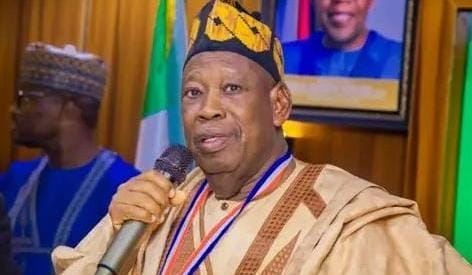
2027: Ganduje and APC heavyweights prepare for a defining political contest

Insecurity: Gunmen kill Islamic cleric, visitor in Dutsin-Ma

Every Kano State Lawmaker Should Support Governor Abba Kabir Yusuf, Regardless of Party Affiliation – Dr. Baffa Babba Dan’agundi

Nigeria records no cases after patient’s evacuation to Switzerland – WHO
ABCOAD Unveils Journal, Bids Farewell to Provost

Nigerian Army Begins DSSC 29/2026 Recruitment, Outlines Eligibility Criteria
2027: NDC Releases Full List of Consensus Candidates in Kano

Gaya Polytechnic Opens Recruitment, Advertises 46 Academic, Non-Academic Positions