Feature
962 Forfeited Homes: Why Aliyu’s ICPC Is Beginning To Redefine What Asset Recovery Means

By Mahmoud Ibrahim Kwari
WHEN corruption assets are recovered, the real question is not simply how much was seized, how many properties were forfeited or how many cases were filed. The more important question is what happens to those assets afterwards. In the Kaba District of Abuja, the answer is beginning to take a more meaningful shape: land linked to an alleged $65 million housing project, covering about 27.92 hectares, is now back in public hands with the prospect of delivering 962 housing units to Nigerian families.
The Independent Corrupt Practices and Other Related Offences Commission (ICPC), under its Chairman, Dr. Musa Adamu Aliyu, SAN, formally handed over the forfeited landed properties at Kaba District to the Federal Mortgage Bank of Nigeria (FMBN), following a final forfeiture order of the Federal High Court. Beyond the ceremony itself, the development offers an opportunity to examine a bigger question: what should integrity and progress look like in Nigeria’s anti-corruption campaign?
Uk Boy’s “Karuwa” Becomes a Major Hit, Surpassing 600K TikTok Uses and Millions of Streams
The answer, perhaps, lies in the transformation of recovered assets from symbols of corruption into instruments of public good.
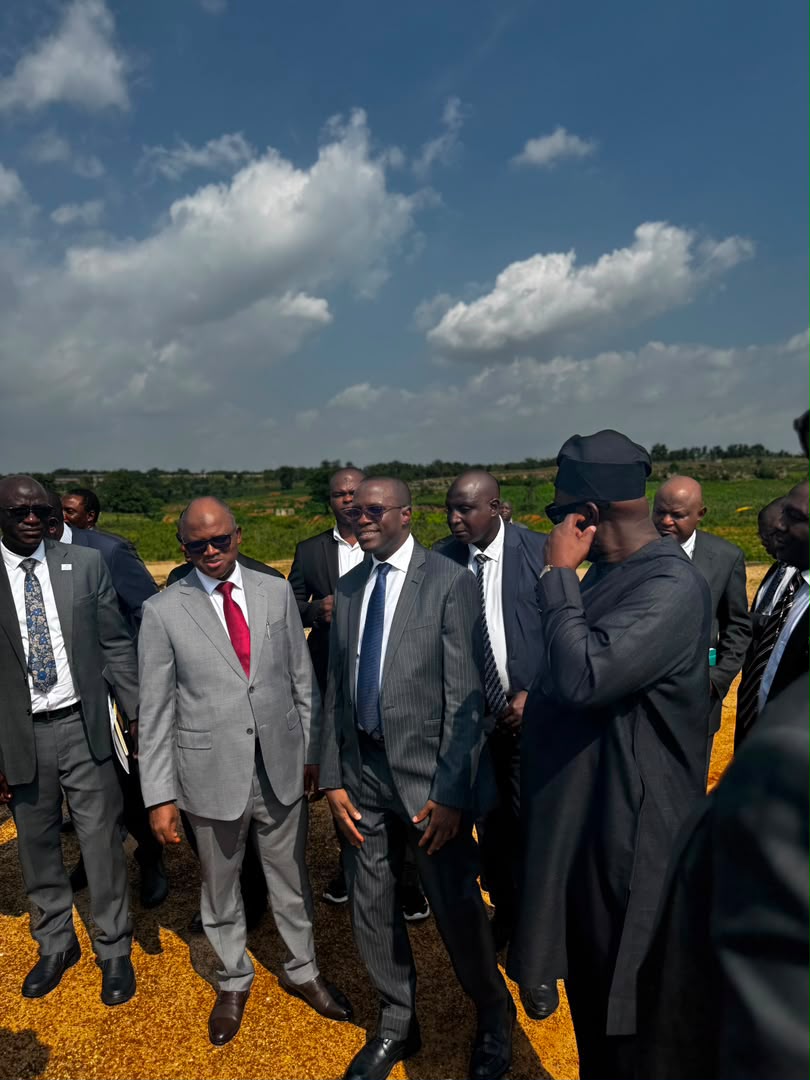
The handover took place on Tuesday, the twenty first of July, 2026 at the site of the Goodluck Jonathan Estate in Kaba District, Abuja, with Dr. Aliyu leading the ICPC delegation and the Managing Director and Chief Executive Officer of FMBN, Mr. Shehu Usman Osidi, alongside senior officials of both institutions, witnessing the event.
For Dr. Aliyu, the occasion was more than an administrative transfer of land. It represented what asset recovery should ultimately accomplish in a country where the public has often watched recovered properties remain locked in legal, administrative or bureaucratic limbo.
The ICPC chairman made a particularly important point: asset recovery without proper management is incomplete.
That principle deserves attention.
For years, Nigeria’s anti-corruption conversation has largely revolved around arrests, investigations, prosecutions, convictions and forfeitures. Those are important components of accountability. But the public benefit of anti-corruption efforts becomes much more tangible when an asset recovered from an alleged unlawful activity is returned to productive use.
The Kaba project therefore provides an interesting test case.
The land was originally part of a housing project conceived by FMBN in 2012. The project was financed through a $65 million loan facility secured by Good Earth Power Nigeria Limited in partnership with an American firm and was intended to produce 962 housing units.
According to the ICPC, investigations established that the loan was completely diverted, with no housing units constructed, while some of the funds were allegedly routed through Bureaux de Change and taken outside the country.
That story is sadly familiar in Nigeria: a project is conceived for the public good, financing is secured, expectations are raised, but somewhere along the line, the purpose for which the money was provided disappears.
What makes the Kaba development different is the possibility that the story could now end differently.
Instead of the land remaining abandoned, the Federal High Court has directed that it be returned to FMBN, the institution identified as the victim of the alleged unlawful activity. More importantly, the court directed ICPC and FMBN to monitor and supervise the construction of the proposed 962 housing units to completion and ensure their allocation to the intended end users.
That is where the real significance of the development lies.
The court’s order, granted on December 11, 2025, by Justice M. G. Umar of the Federal High Court, Abuja Judicial Division, in Suit No. FHC/ABJ/CS/1124/2025, ordered the final forfeiture of two plots in Cadastral Zone D12, Kaba District.
One of the plots measures approximately 122,015.80 square metres, while the other measures about 157,198.30 square metres. Together, they constitute the land on which the housing project is expected to rise.
The court also directed the Federal Republic of Nigeria, through ICPC, to facilitate the handover of the properties to FMBN and mandated the two institutions to supervise the development of the housing estate.
A joint committee is expected to oversee the process, with ICPC’s Constituency and Executive Project Tracking Division representing the Commission.
This is where the leadership style of Dr. Aliyu becomes relevant.
His emphasis on the productive use of recovered assets reflects an understanding that Nigerians are increasingly interested in outcomes rather than headlines.
The public does not simply want to hear that billions of naira or valuable properties have been recovered. Nigerians want to know what those recoveries eventually mean for ordinary people.
A recovered house should become a house. Recovered land should become productive land. Recovered funds should return to the public through projects that improve lives.
In the case of Kaba, the proposed 962 housing units provide an unusually clear measure of success.
If the homes are completed, properly allocated and occupied by the intended beneficiaries, the project will demonstrate how anti-corruption enforcement can move beyond punishment and become an instrument of development.
It will also provide a powerful answer to those who sometimes question the practical value of asset recovery.
It is against this backdrop that the growing institutional recognition of Dr. Aliyu’s leadership at the ICPC becomes noteworthy.
The recent encounter with some police officers that mounted an illegal check point to extort money from motorists in Abuja, has attested to the integrity of the ICPC’s boss where he has shown practical example of what he preaches as the head of Anti-graft Agency.
The officers extorted N53,000 from him and he followed them very closely, and told someone to send the money to him upon the officers’ demand.
They took the ICPC Chair to a POS, where he paid the charges, while the officers withdrew the money and shared it among themselves, after which he reported them to the police authority.
At a press conference few days after the incidence, the FCT Commissioner of Police confirmed that the suspects carried out the act outside their duty post, and that they converged from various divisions and moved to the Banex Plaza area of Abuja City, where they mounted a checkpoint.
He said the four suspects perpetrated the act and ran away before they were declared wanted and arrested.
“We are going to make sure that they are severely punished, while those to be dismissed will definitely be dismissed. This I can assure you” said the police Commissioner.
This is a great test to personal integrity and commitment to fight corruption by Dr Aliyu, which was reflected and extended to institutional leadership by example.
Prior to this, the Chairman has received commendations from different quarters, including recognition attributed to the Senate Committee on Federal Character and Inter-Governmental Affairs for transparency, accountability and inclusiveness during National Assembly oversight engagements.
The United Nations Office on Drugs and Crime (UNODC) has also been associated with commendation of the Commission’s drive in asset recovery, efforts to close systemic loopholes and its attention to accountability at the grassroots and local-government levels.
There have also been commendations surrounding ICPC’s collaboration with the Federal Road Safety Corps and efforts to introduce integrity-focused reforms and contactless systems in the transport sector, aimed at reducing opportunities for corrupt practices.
But perhaps the most striking feature of Aliyu’s tenure is not necessarily the commendations themselves. It is the apparent effort to connect anti-corruption enforcement with institutional reform.
That distinction matters.
An anti-corruption agency cannot arrest its way out of corruption. It cannot prosecute its way out of corruption either. Sustainable progress requires prevention, institutional strengthening, technology, transparency, accountability and consequences for wrongdoing.
This appears to be one of the areas where Aliyu has sought to leave an imprint.
The Commission has pursued technology-driven prevention mechanisms, including digital scorecards and AI-powered public reporting tools, while the chairman has advocated greater responsibility among judges, lawyers as well as tertiary institutions as moral gatekeepers and drivers of empirical research into illicit financial flows.
These initiatives may not always generate the drama associated with high-profile arrests, but they are potentially more important in the long run.
There is also another aspect of Aliyu’s leadership that deserves consideration.
During his inaugural press briefing in Abuja, the ICPC chairman made an unusual commitment. He said he would personally participate in the prosecution of major cases.
“I will lead by example,” he said, pledging to personally appear in ICPC cases in court.
He described the commitment as an effort to demonstrate that integrity, accountability and transparency must become part of the fabric of Nigerian society.
He subsequently fulfilled that pledge by personally appearing at a High Court in Kano in a case involving allegations of fund misappropriation by the Kano State Government through its 44 local government caretaker chairmen.
The significance of that decision was not simply that the chairman appeared in court. It was the message that the head of an anti-corruption institution was willing to put his professional reputation and legal expertise behind the cases being pursued by his organization.
That is what leading from the front means.
The case itself generated considerable legal controversy.
The defendants, including the state Commissioner for Local Government and Deputy Governor, had previously obtained an interim court order restraining ICPC from conducting further investigations, summoning or interrogating individuals involved in the matter.
Their lawyers also challenged the jurisdiction of the Commission and argued that multiple agencies investigating the same matter amounted to “forum shopping” and an “abuse of court process.”
They further alleged that ICPC had breached an earlier injunction by continuing its investigation.
Aliyu, however, challenged the legal standing of the caretaker chairmen, relying on a Supreme Court position concerning the legality of appointing caretaker chairmen in place of democratically elected local government officials.
The chairman’s argument was straightforward: those holding positions whose legality was itself under challenge could not, in his view, use the legal system as a shield against accountability.
The allegations remain subject to judicial determination, and the courts will ultimately decide the substantive issues.
Yet the episode demonstrated Aliyu’s willingness to personally engage with difficult institutional and legal questions rather than leave everything to subordinates.
This brings us back to Kaba.
The 962-unit housing project could become one of the clearest demonstrations of what successful asset recovery should look like.
The land, according to the ICPC, had remained unutilised after the original housing project failed to materialise. FMBN’s Managing Director, Shehu Osidi, acknowledged this when he thanked ICPC for recovering and handing over the property for its intended purpose.
He noted that the land had been abandoned and left unused for some time, describing the ICPC’s intervention as evidence of a commitment to protecting public assets and ensuring that forfeited properties are put to productive use for Nigerians.
That is a powerful endorsement because it speaks to the ultimate purpose of recovery.
The ICPC chairman’s position that the success of the Kaba intervention should be judged by the completion and fair allocation of the homes is therefore particularly important.
The project should not be allowed to become another abandoned estate.
The land has been recovered. The court has provided the legal framework. FMBN has taken possession for the intended purpose. ICPC has been mandated to monitor the process.
The next stage is delivery. And delivery is where integrity is ultimately tested.
There is a temptation in public life to measure leaders by the number of arrests they make, the value of properties they recover or the number of high-profile cases they announce.
Those figures matter, but they are not the whole story.
The deeper measure is whether institutions become stronger under their leadership and whether ordinary Nigerians can eventually feel the impact of their work.
For Aliyu, the Kaba project presents precisely such an opportunity.
If 962 families eventually move into homes built on land recovered through an anti-corruption process, the story will no longer be merely about forfeiture.
It will be about restitution.
It will be about taking something allegedly diverted from its original purpose and restoring it to the purpose for which it was intended.
It will also demonstrate that the fight against corruption does not have to end in a courtroom.
It can end in a school, a hospital, a road, a factory or, in this case, a home.
That is why the Kaba District development deserves to be followed closely.
The responsibility now falls on both ICPC and FMBN to ensure that the process remains transparent, properly supervised and insulated from the very abuses that necessitated the recovery in the first place.
The joint committee must do more than exist on paper. It must track progress, identify obstacles, ensure compliance and provide Nigerians with credible information about the development.
The intended beneficiaries must also remain at the centre of the process.
A housing estate recovered for the public must ultimately serve the public.
The broader lesson is that integrity in public office should not be defined merely by the absence of personal corruption.
Integrity should also mean doing the right thing with public power.
It should mean recovering what belongs to the people and ensuring that it is not lost again through bureaucratic neglect.
It should mean prosecuting cases fairly, strengthening institutions, closing loopholes, embracing technology and ensuring that recovered assets deliver measurable benefits.
This is why the Kaba handover represents more than another event in the calendar of the ICPC.
It offers a practical illustration of the intersection between integrity and progress.
Dr. Musa Adamu Aliyu’s leadership will ultimately be judged not by the rhetoric surrounding his tenure but by what remains after it.
If the 962 homes rise from the Kaba landscape, if they are completed to the required standards, if they reach the families for whom they were intended, and if the process remains transparent from beginning to end, then the ICPC would have achieved something more significant than recovering land.
It would have shown Nigerians what recovered public wealth can become.
And that may be one of the most persuasive forms of anti-corruption advocacy possible: not merely telling Nigerians that corruption has consequences, but showing them that accountability can produce progress.
For News Point Nigeria, that is the bigger story behind Kaba not simply the land that was forfeited, but the homes that could rise from it; not simply the alleged wrongdoing that led to the forfeiture, but the public good that should emerge from the recovery.
The true victory will be when Nigerians can look at the completed 962-unit estate and say: this is what recovered public assets are supposed to do.
Kwari, a journalist writes from Abuja.

Why The Sun will honour Ganduje with lifetime achievement award

Idris assures NIPR of FG support for 2026 World PR forum
NECO releases 2026 SSCE results, 58.67% record five credits including English, Maths

Pantami’s PDP ticket nullified as court orders fresh Gombe primary

Ganduje calls for commitment to nation-building, democratic sustainability
ABCOAD Unveils Journal, Bids Farewell to Provost

Nigerian Army Begins DSSC 29/2026 Recruitment, Outlines Eligibility Criteria
2027: NDC Releases Full List of Consensus Candidates in Kano

Gaya Polytechnic Opens Recruitment, Advertises 46 Academic, Non-Academic Positions