The Historica Nigeria

Abuja

Abuja, National, Politics

Why Tinubu Needs Ganduje To Win 2027

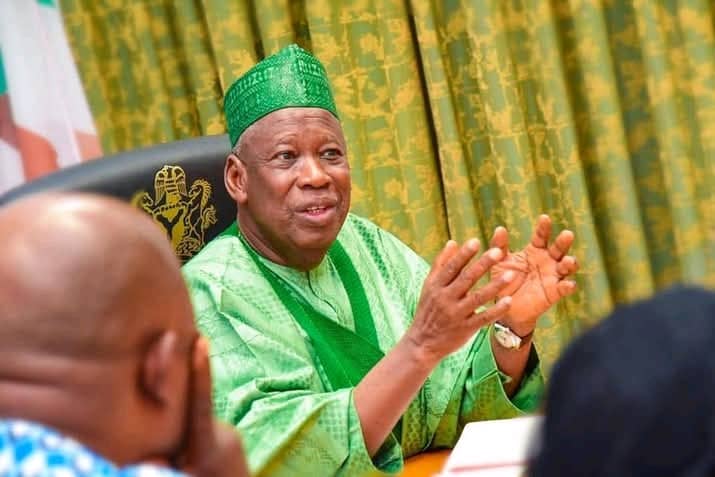
By Umar Idris Shuaibu, Kano Former Kano State Governor and immediate past National Chairman of the All Progressives Congress (APC), Dr. Abdullahi Umar Ganduje, is increasingly being recognized as a key political figure whose experience and influence could be critical to President Bola Ahmed Tinubu’s re-election bid in 2027. Observers believe that Dr. Ganduje’s depth of political experience, strategic foresight, and extensive network across Nigeria position him as one of the strongest assets within the ruling party. “Ganduje is a man who understands Nigerian politics at every level,” a political analyst said. “He navigates challenges with foresight and strategy, turning potential crises into opportunities for party growth and unity. If the APC truly wants to retain power in 2027, the President cannot afford to underestimate the value Ganduje brings.” During Ganduje’s tenure as APC National Chairman, the party witnessed a notable wave of defections that strengthened its national presence. Many influential politicians from opposition parties joined the APC under his leadership, reshaping political alignments in several states. Related: Inside Ganduje’s Political Blueprint That Keeps Strengthening APC Nationwide One of the most remarkable defections was that of Abdulmumin Jibrin Kofa, a close ally of former Kano State Governor Rabi’u Musa Kwankwaso and a leading figure in the New Nigeria People’s Party (NNPP). His return to the APC was widely seen as a major realignment in Kano politics, attributed to Ganduje’s persuasive political skills and strategic outreach. “Ganduje played a central role in persuading key opposition figures to cross over,” said another source familiar with the development. “These moves were not just symbolic—they brought tangible political strength and structure to the APC across the country.” Dr. Ganduje’s political journey has been marked by consistency and strategic depth. He served as Deputy Governor under Engr. Rabi’u Musa Kwankwaso, later became Governor of Kano State (2015–2023), and subsequently held the position of APC National Chairman. This combination of executive governance and party leadership experience gives him a unique political edge. “Few leaders possess Ganduje’s mix of experience, political wisdom, and strategic insight,” a political commentator noted. “He knows how to read the political terrain and position the party for maximum advantage.” Read Also: Ganduje’s Achievements Still Define Kano, Despite NNPP’s Attempts to Erase Them In Kano, most major political stakeholders have now aligned with the APC, effectively consolidating the state’s political base under Ganduje’s influence. Analysts suggest this consolidation has broader implications for the 2027 elections, strengthening APC’s prospects both in Kano and nationally. “The alignment of Kano’s political heavyweights into the APC sends a strong message,” one analyst explained. “It demonstrates Ganduje’s continued relevance and his ability to shape politics beyond his immediate sphere.” As preparations intensify ahead of the 2027 general elections, political observers believe Ganduje’s political acumen and nationwide influence could play a decisive role in securing APC’s continued dominance. “His network across states, understanding of internal party dynamics, and ability to manage opposition challenges make him indispensable to the 2027 strategy,” said one commentator. “He has the capacity to unite factions, bring key stakeholders together, and ensure the APC remains cohesive and strong.” Ganduje’s experience, they argue, could make the crucial difference between a divided party and a united front ready for victory. “He understands that elections are not won by chance—they require planning, coordination, and execution. His counsel to President Tinubu could be the factor that transforms strategy into success,” another observer added. As the APC continues to chart its path toward 2027, Dr. Ganduje stands out not just as a former governor or ex-party chairman, but as a statesman and strategist whose experience, influence, and leadership remain vital to the ruling party’s future. “President Tinubu’s 2027 victory will depend on unity, strong alliances, and strategic foresight,” an analyst reiterated. “And Ganduje has consistently proven he can deliver all three.” Umar Idris Shuaibu is a public commentator and political analyst based on Kano. shuaibuumaridris@gmail.com

Abuja, National, News

Tinubu Meets Sultan Amid Global Discourse on Religious Freedom

President Bola Tinubu on Friday met with the Sultan of Sokoto, Alhaji Muhammad Sa’ad Abubakar, at the State House, Abuja. The meeting, which was held behind closed doors, came just days after the President received the Archbishop of Abuja, Bishop Ignatius Ayau Kaigama, as part of his ongoing consultations with religious and traditional leaders across the country. According to the President’s Special Assistant on Social Media, Mr. Dada Olusegun, who confirmed the engagement in a post on X, the discussion aimed at promoting dialogue and strengthening social trust among Nigerians. Read Also: Tinubu Strengthens Kano Ties With Appointment of Salihu Sagir Takai Presidency sources revealed that the meeting formed part of the President’s broader consultations with moral and cultural leaders to consolidate peace, enhance national unity, and address emerging social challenges. The sources added that these engagements align with the administration’s Renewed Hope Agenda, which emphasizes inclusivity, interfaith cooperation, and sustainable national stability. The consultations also come amid global discourse on religious freedom, following the recent designation of Nigeria by the United States as a “Country of Particular Concern.” While the U.S. raised concerns over alleged violations of religious rights, the Federal Government has since dismissed the claims, maintaining that Nigeria’s Constitution fully guarantees freedom of religion and interfaith harmony.

Abuja, Education, News

University of Abuja Governing Council Appoints New Vice-Chancellor

The 11th Governing Council of the University of Abuja (now Yakubu Gowon University) has announced the appointment of Professor Hakeem Babatunde Fawehinmi as the new substantive Vice-Chancellor of the institution. The appointment was made during the 80th Extraordinary Meeting of the Council, held on Friday, November 7, 2025, under the chairmanship of Senator Olanrewaju Tejuoso. According to a statement signed by Dr. Habib Yakoob, Acting Director of Information and University Relations, the appointment takes effect from Tuesday, February 10, 2026, for a single, non-renewable tenure of five years. Read Also: Northwest University Kano Appoints Professor Aisha Garba Habib as Acting Vice Chancellor “Professor Fawehinmi is currently the Vice-Chancellor of the Nigerian British University,” the statement added. Meanwhile, the Council also approved the extension of the tenure of the Acting Vice-Chancellor, Professor Mathew Adamu, until February 10, 2026. Professor Adamu was first appointed Acting Vice-Chancellor on August 11, 2025, by the Federal Government. The Council’s latest decision followed thorough deliberations during its 80th Extraordinary Meeting.

Abuja, National, News

Senate Fast-Tracks Six Bills in One Sitting Under Deputy Senate President

Six bills successfully scaled the first reading stage during plenary at the Senate on Wednesday, the Deputy Senate President, Senator Barau I. Jibrin, has announced on his social media platforms. According to Senator Jibrin, two of the bills were also considered and passed for second reading after robust debate among lawmakers. He stated, “The first is the Bill for an Act to establish a comprehensive framework for the transition to electric vehicles in Nigeria, promote local manufacturing, ensure environmental sustainability, and drive economic growth, 2025. The second is a Bill for an Act to establish the National Centre for Information and Communication Technology, Nkanu West, Enugu State, and for other related matters, 2025.” Read Also: Barau Jibrin Reaffirms Tinubu’s Commitment to Quality Healthcare, Inspects Seven Projects at AKTH He added that both bills were committed to the relevant committees for further legislative scrutiny. The Senate also deliberated on a motion moved by Senator Sani Musa on the demise of former Senator Ibrahim Musa Kontagora. Senator Jibrin recalled, “Senator Kontagora, who represented Niger North Senatorial District from 2011 to 2015, passed away in August. We observed a minute of silence in his honour and resolved to send a delegation to console his family and the government of Niger State.” The Deputy Senate President described the day’s proceedings as “a demonstration of the Senate’s commitment to legislative efficiency while honouring past leaders who have contributed to Nigeria’s democratic journey.”

Abuja, National, News

Tinubu Approves Appointment of Five New Permanent Secretaries

President Bola Tinubu has approved the appointment of five new Permanent Secretaries to fill existing vacancies in the Federal Civil Service. The Head of the Civil Service of the Federation (HCSF), Mrs. Didi Walson-Jack, disclosed this in a statement issued by the Director of Information and Public Relations, Mrs. Eno Olotu, on Monday in Abuja. According to the statement, the newly appointed Permanent Secretaries are Ibrahim Ozi from the Federal Capital Territory, Ezemama Chidiebere from Imo State, Garba Usman representing the North Central Geo-Political Zone, Mohammed Ishiyaku from the North East, and Ukaire Chigbowu from the South East. Read Also: Meet Air Vice Marshal Sunday Kelvin Aneke, Nigeria’s New Chief of Air Staff Walson-Jack said the appointments followed a rigorous and transparent selection process in line with President Tinubu’s commitment to meritocracy and excellence in the public service. She charged the new Permanent Secretaries to bring their wealth of experience and professionalism to bear in the discharge of their duties, in order to strengthen service delivery and support the government’s development objectives. The Head of Service commended President Tinubu for his commitment to transparency, merit-based recruitment, and professionalism in the Federal Civil Service, noting that the appointments reflect the administration’s dedication to building a competent and results-driven public service that meets the needs of Nigerians.

Abuja, Kano, National, News

15% Ad-Valorem Import Duty on Petrol and Diesel: Balancing Protectionism and Public Interest

Veteran Labour Leader and Member of the National Institute (mni), Comrade Mustapha Nuhu Wali, has commended the Federal Government’s introduction of a 15 percent ad-valorem import duty on petrol and diesel, describing it as a strategic policy geared toward promoting local refining, industrial protection, and long-term national development. In a statement issued on Friday and made available to newsmen, Wali noted that the policy, approved by President Bola Ahmed Tinubu, represents a deliberate economic shift aimed at reducing Nigeria’s overdependence on imported refined petroleum products while boosting domestic production capacity. According to him, the measure — which places a value-based import tax on refined fuels — is expected to protect investments in local refineries such as the Dangote Refinery and the NNPCL’s rehabilitated plants, ensuring they remain viable and competitive in the Nigerian market. Read Also: Fuel Import Duty Hikes: Tinubu Approves 15% Ad-Valorem Tariff Food Waivers Threaten Northern Agriculture, Says Wali The Green Imperative Is Not Just a Federal Government Project — It Is a Lifeline for Northern Nigeria’s Agricultural Future Comrade Wali, however, cautioned that while the policy is sound from an industrial and fiscal perspective, its implementation must be carefully managed to prevent a disproportionate burden on ordinary Nigerians and small-scale enterprises. “In the short term, consumers and small businesses may experience slight increases in fuel costs, but the long-term benefits far outweigh these temporary challenges. The policy will stabilize fuel prices, reduce pressure on foreign exchange, and create sustainable jobs through increased domestic refining,” Wali stated. He explained that the 15% ad-valorem duty aligns with protectionist economic strategies adopted by countries seeking to industrialize and strengthen internal value chains. Wali emphasized that effective oversight and transparency are crucial for the success of the policy. “Government must ensure that the policy is implemented with fairness and accountability, balancing the interests of local investors with the welfare of the general public,” he said. The labour veteran urged the Federal Government to accompany the measure with social protection programs to cushion the impact on low-income households and transport-dependent sectors. He further noted that the policy, if sustained, could mark a turning point in Nigeria’s quest for energy security and economic self-reliance. “This initiative is a bold step toward achieving energy independence and reviving industrial growth. It’s a signal that Nigeria is ready to take control of its economic destiny,” Wali added. The introduction of the 15% ad-valorem duty forms part of broader fiscal and industrial reforms aimed at repositioning Nigeria’s downstream oil and gas sector for competitiveness, investment, and long-term stability.

Abuja, National, News

Photos: Senate Confirms President Tinubu’s New Service Chiefs After Security Screening

The Nigerian Senate has screened and confirmed the new Service Chiefs appointed by President Bola Ahmed Tinubu, marking a major step in the administration’s ongoing efforts to strengthen national security and improve coordination among the armed forces. The confirmed Service Chiefs include General Olufemi Oluyede as Chief of Defence Staff, Major-General Waheedi Shaibu as Chief of Army Staff, Air Vice Marshal Kennedy Aneke as Chief of Air Staff, and Rear Admiral Idi Abbas as Chief of Naval Staff. President Tinubu’s letter requesting their confirmation was read by Senate President Godswill Akpabio during Tuesday’s plenary, urging lawmakers to give “expeditious consideration” to the nominees. According to the Presidency, the appointments form part of a strategic realignment designed to deepen professionalism, boost morale, and enhance inter-agency cooperation in tackling security challenges across the country. Read Also: Meet Rear Admiral Idi Abbas From Kano, Nigeria’s New Chief of Naval Staff Maj. Gen. Waidi Shaibu: A Seasoned Commander Taking Charge of the Nigerian Army Meet Air Vice Marshal Sunday Kelvin Aneke, Nigeria’s New Chief of Air Staff The Service Chiefs, accompanied by senior military officers, arrived at the National Assembly Complex at about 10:00 a.m. for the screening, which was conducted under tight security. Senators held both open and closed sessions to assess the nominees’ qualifications and readiness for the roles. Presiding over the session, Senate President Godswill Akpabio described the process as a constitutional responsibility aimed at ensuring that only the most competent and patriotic officers are entrusted with protecting the nation. “The screening is part of our constitutional duty. It is aimed at ensuring that only the most competent and patriotic officers are entrusted with safeguarding the nation. There is no need to ask them too many questions because we will be having a closed-door session with them,” Akpabio said. Deputy Senate President, Senator Jibrin Barau, urged the nominees to remain loyal to the President and the Constitution, stressing that discipline and unity of command are key to achieving national security objectives. “We urge all the nominees to be loyal to the Commander-in-Chief and loyal to our Constitution. This is the underpinning in service—loyalty. We are confident that, with your commitment and the zeal of Mr. President, total security will be achieved,” Barau stated. During the screening, the nominees pledged their readiness to serve the country with dedication and professionalism. Air Vice Marshal Kennedy Aneke, the new Chief of Air Staff, said: “As the Chief of Air Staff, my duties are clear—to secure the lives, liberties, and aspirations of Nigerians through the power of air operations, in collaboration with my colleagues in the military and other security agencies.” Following the interactive session, the Senate moved into a closed-door meeting in line with parliamentary tradition to discuss sensitive security matters before officially confirming the nominees. It would be recalled that President Tinubu had met with the new military leaders on Monday, where they reportedly discussed current security challenges ahead of their formal assumption of duty. On October 24, President Tinubu approved a shake-up in the nation’s military hierarchy, appointing General Olufemi Oluyede as Chief of Defence Staff to replace General Christopher Musa. Major-General Waheedi Shaibu was named Chief of Army Staff, Air Vice Marshal Kennedy Aneke as Chief of Air Staff, and Rear Admiral Idi Abbas as Chief of Naval Staff. Major General Emmanuel Undiendeye retained his position as Chief of Defence Intelligence. With the Senate’s confirmation, the new Service Chiefs are now expected to immediately assume office and drive forward the President’s agenda for a safer and more secure Nigeria.

Abuja, Feature, National, Politics

Inside Ganduje’s Political Blueprint That Keeps Strengthening APC Nationwide

Nigeria’s current political landscape is witnessing a remarkable shift — one that analysts say bears the unmistakable imprint of Dr. Abdullahi Umar Ganduje, the immediate past National Chairman of the All Progressives Congress (APC) and Chairperson of the Board of the Federal Airports Authority of Nigeria (FAAN). The recent declaration by Taraba State Governor, Dr. Agbu Kefas, to defect from the Peoples Democratic Party (PDP) to the ruling APC has stirred national debate. But beyond the headlines lies a deeper narrative — one tied to the strategic groundwork Ganduje laid during his tenure as the APC’s helmsman. Under Ganduje’s leadership, the APC experienced one of its most stable and strategic organizational phases. He did not merely lead a political party — he built a political machinery grounded in policy, ideological clarity, and institutional discipline. Related: Political Realignment: Taraba’s Kefas Eyes APC for Greater Federal Inclusion Ganduje rebuilt APC from crisis to dominance APC Consolidates Strength Across Nigeria Ahead of 2027 Elections During his time as National Chairman, Ganduje consolidated the party’s internal unity, oversaw the resolution of lingering intra-party crises, and strengthened relationships between national and subnational leaders. This renewed cohesion, experts argue, is what has now positioned the APC as the dominant force attracting governors, legislators, and party stalwarts from the opposition. Dr. Ganduje’s tenure also recorded significant electoral victories across key states. His ability to bridge divides among stakeholders and sustain dialogue between federal and state party structures contributed immensely to the APC’s successes in off-season and by-elections. It was a tenure marked by strategic negotiation, inclusivity, and political foresight. Perhaps his most enduring contribution to Nigeria’s political space was the establishment of the Progressive Institute — a think tank envisioned as the party’s policy, research, and ideological center. The institute was designed not only to strengthen the APC’s internal policy framework but also to serve as a national policy incubation hub, focusing on governance, public administration, and development strategy. According to political observers, the Progressive Institute has become a quiet powerhouse, producing policy recommendations, conducting political risk assessments, and providing intellectual depth to party reforms. “It is one of Ganduje’s most transformative legacies,” noted a senior party insider, “because it ensures that the APC’s political agenda is backed by research and evidence.” This long-term institutional thinking explains why, today, the APC remains the natural destination for defecting governors and influential politicians. The party’s dominance, structure, and strategic stability — all nurtured under Ganduje’s leadership — have created a gravitational pull too strong for many to resist. Even as he left office as National Chairman, Ganduje’s imprint remains visible in the party’s growing influence. His philosophy of “progressivism with discipline” continues to guide internal decisions, while his diplomatic approach to inter-party dialogue still shapes the tone of Nigeria’s political engagement. Governor Agbu Kefas’s defection, and similar moves from other state leaders, reflect the continuing legacy of Ganduje’s groundwork — a legacy rooted in inclusiveness, strategy, and ideological conviction. As Nigeria inches closer to the next electoral cycle, one thing remains clear: the Ganduje effect is far from over. The structures he built, the alliances he nurtured, and the policies he institutionalized have redefined Nigeria’s political map and strengthened the APC’s position as the party of national cohesion. In the words of a Kano-based political analyst, “What Ganduje did for the APC was not just to lead it — he engineered a system. And that system is now producing results long after he has left the stage.”

Abuja, National, News

Tinubu Forwards List of New Service Chiefs to Senate for Screening

President Bola Ahmed Tinubu has written to the Senate, seeking the screening and confirmation of the newly appointed Service Chiefs. The request was contained in a formal letter read on the floor of the Senate on Tuesday by Senate President Godswill Akpabio. According to the correspondence, the nominees include General Olufemi Oluyede as Chief of Defence Staff, Major-General Waheedi Shaibu as Chief of Army Staff, Rear Admiral Idi Abbas as Chief of Naval Staff, Air Vice Marshal Kennedy Aneke as Chief of Air Staff, and Major-General Emmanuel Undiendeye as Chief of Defence Intelligence. Read Also: Niger Delta Leaders Push Jonathan to Support Tinubu Following the reading of the letter, Senate President Akpabio directed that the nominees be referred to the Committee of the Whole for screening and possible confirmation next week. President Tinubu had earlier, on Monday, met with the newly appointed Service Chiefs behind closed doors at the Presidential Villa, Abuja. Further details on the screening process are expected in the coming days.

Abuja, Kano, National, Politics

Ganduje’s Era: The Golden Years of Infrastructure in Kano

By Umar Idris Shuaibu, Kano In the history of Kano State’s development, few leaders have left a legacy as profound and visible as Dr. Abdullahi Umar Ganduje, CON, the immediate past National Chairman of the All Progressives Congress (APC) and current Chairperson of the Board of the Federal Airports Authority of Nigeria (FAAN). During his tenure as Governor of Kano State from 2015 to 2023, Dr. Ganduje transformed the state through bold infrastructural development, urban renewal projects, and capital investments that continue to shape the daily lives of residents. His administration’s focus on physical development, human capital growth, and institutional reforms earned him recognition as one of Kano’s most visionary leaders in recent decades. Across eight years, the former governor turned Kano into a vast construction site, with flyovers, hospitals, schools, and road networks springing up across the state. Many citizens still recall that period as a time of purposeful leadership and practical governance. Transforming Urban Kano One of the defining hallmarks of Ganduje’s administration was the modernization of Kano’s urban landscape. Determined to ease congestion and beautify the city, he embarked on an ambitious program of constructing flyovers, underpasses, and dual carriage roads. Read Also: Ganduje’s Achievements Still Define Kano, Despite NNPP’s Attempts to Erase Them Even Out of Office, Ganduje Remains the Soul of APC — Party Loyalist Kwankwaso’s Conditions Unrealistic, Says Ganduje-Led Kano APC Projects such as the Ado Bayero Flyover, the Aminu Dantata Flyover, and the Kofar Ruwa Underpass stand today as monuments of urban transformation. These structures not only improved traffic flow but also gave Kano a modern outlook befitting its status as the commercial nerve center of Northern Nigeria. Healthcare and Education Ganduje’s vision extended beyond infrastructure to the health and education sectors. His government initiated and completed several landmark projects, including the Kano Cancer Treatment Centre — one of the most advanced oncology facilities in the region. In the education sector, he championed a free and compulsory basic education policy to ensure that every child in Kano had access to learning. He also established new tertiary institutions and upgraded existing ones, particularly the transformation of Northwest University, now Yusuf Maitama Sule University, into a model center of learning with improved academic standards. Rural Development and Agriculture While the city experienced modernization, the Ganduje administration also prioritized rural development. Extensive road networks were constructed to link communities, and farmers received support through agricultural input programs and irrigation schemes. The establishment of the Dansoshiya Grazing Reserve Project remains one of his most notable initiatives. Designed to address the herders-farmers crisis, the project provided housing, veterinary services, and sustainable grazing facilities for pastoral communities. It later served as a reference point for national livestock policies and contributed to the formation of the Federal Ministry of Livestock Development. Industrial Growth and Policy Reforms Dr. Ganduje also revitalized Kano’s commercial and industrial base. The completion of the Kano Economic City and the Dawakin Tofa Industrial Park boosted trade and small-scale enterprises. His government encouraged industrial investors and promoted private sector partnerships to enhance job creation. Beyond infrastructure, Ganduje introduced several policy innovations, including the creation of the APC Progressive Institute (TPI), a think tank that fosters leadership and policy development within the party. The institute remains an example of his forward-thinking approach to governance and capacity building. Legacy of Progress Today, years after leaving office, the impact of Dr. Abdullahi Umar Ganduje’s leadership remains evident across Kano. Roads, bridges, hospitals, schools, and public institutions reflect his administration’s focus on progress and continuity. Many residents believe his era marked a golden chapter in Kano’s developmental journey — one characterized by visible achievements and long-term investments. From the city to rural communities, his infrastructural footprint continues to inspire admiration and debate among citizens and observers alike. Indeed, when it comes to capital projects and visionary development, Dr. Abdullahi Umar Ganduje stands unmatched in the history of Kano State.

Scroll to Top