National
Ganduje: When Experience, Loyalty and Political Reach Become a National Asset – Kiru


By Hon. Muhammad Sanusi S. Kiru, FCIA
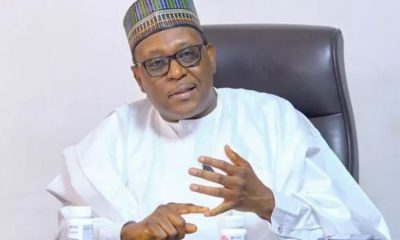
I must begin by commending Umar Idris Shuaibu for his thoughtful piece, “Ganduje’s Moment: From APC Chairman to Chief Stakeholder Mobiliser.” At a time when political commentary is increasingly dominated by sensational headlines, partisan attacks and hurried conclusions, Umar deserves appreciation for looking beyond titles to examine the continuing political relevance of our leader, mentor and political godfather, His Excellency, Dr. Abdullahi Umar Ganduje. His central argument is important: political relevance does not necessarily disappear when public or party office changes. In Ganduje’s case, the office may have changed, but the experience, relationships, institutional memory, political networks and capacity for strategic engagement accumulated over several decades remain. If anything, those qualities become particularly valuable when politics moves from administering a political party to the delicate business of building and sustaining the broad coalition required to win a national election.
While Umar’s article is commendable, the Ganduje story is considerably deeper than could be captured in the piece. Dr. Ganduje is not a product of political accident, nor is his prominence traceable to a single election, appointment or political opportunity. His career has been built progressively through decades of public administration and practical politics. He served as Deputy Governor of Kano State from 1999 to 2003, subsequently undertook responsibilities at the Lake Chad Basin Commission, returned as Deputy Governor from 2011 to 2015, and was elected Governor of Kano State in 2015, serving two terms until 2023 before eventually assuming responsibility at the highest level of our great party as National Chairman of the All Progressives Congress. Very few contemporary Nigerian politicians possess this combination of administrative experience, grassroots political engagement, executive governance, intergovernmental exposure and national party management. These different responsibilities have exposed him to virtually every dimension of practical politics thereby managing government, understanding bureaucracy, building political structures, conducting elections, managing competing interests, dealing with political leaders across the federation and navigating the disagreements that inevitably accompany a large national political family.
It is against this background that his present assignment in stakeholder mobilisation should be understood. Stakeholder mobilisation is not a ceremonial responsibility, nor is it simply about organising rallies, convening meetings or appearing before television cameras. In a country as vast, diverse and politically complex as Nigeria, it is fundamentally about relationships, trust, negotiation, reconciliation, persuasion and coalition-building. Presidential elections are not won from Abuja alone; they are fought through states, senatorial districts, federal constituencies, local governments, wards and polling units. Between a national campaign headquarters and the ordinary voter exists an enormous network of governors, legislators, party executives, former office holders, political elders, traditional and community leaders, youth and women organisations, professional groups, religious and opinion leaders and grassroots political actors. Bringing these diverse interests behind a common political objective requires far more than an impressive designation. It requires somebody who understands the language of politics and, perhaps more importantly, understands politicians.
Read Also:
Ganduje’s Moment: From APC Chairman to Chief Stakeholder Mobiliser
Ganduje: Tinubu’s Reforms Are Restoring Government’s Capacity to Deliver
Ganduje’s political capital: The weight behind his new APC assignment
This is where Ganduje’s experience assumes particular significance. As a former National Chairman of the APC, he interacted directly with virtually every layer of the party’s national structure and acquired an intimate understanding of the peculiar political circumstances of different states, personalities, tendencies, grievances and competing interests within the party. He participated in managing victories as well as disagreements, giving him an institutional memory that cannot be manufactured overnight or acquired from textbooks. Added to this is his remarkable political resilience. Politics inevitably produces moments of triumph and disappointment; positions come and go, alliances are tested and circumstances change. What distinguishes enduring political actors is their capacity to remain composed, relevant and committed when the circumstances around them change. Ganduje has demonstrated that capacity repeatedly. His relationship with President Bola Ahmed Tinubu is equally important in appreciating the strategic logic of the present responsibility. President Tinubu himself is an experienced political organiser whose political career has been built substantially around organisation, alliances, negotiation and the painstaking cultivation of relationships. Deploying a politician of Ganduje’s experience to stakeholder mobilisation therefore makes political sense: experience is being deployed where experience matters.
For those of us privileged to have learnt politics under Dr. Ganduje’s leadership, his greatest strength cannot adequately be measured by the offices he has occupied. It lies also in his patience, accessibility, capacity to listen, understanding of political structures and ability to sustain relationships across different political tendencies. He understands that politics is fundamentally a human enterprise. Structures are important, but structures are operated by people; manifestos are important, but people must be persuaded to believe in them; campaigns are necessary, but political actors must first be brought together to prosecute them. This becomes particularly important as the APC approaches 2027. Every ruling party seeking another electoral mandate must continuously strengthen its internal cohesion, listen to its members, address legitimate grievances, reconnect with stakeholders and broaden its support base. There will inevitably be competing ambitions, differences of opinion and peculiar local political challenges. Effective stakeholder mobilisation must therefore involve identifying political fault lines early, opening channels of communication, strengthening confidence among party leaders and connecting national campaign objectives with political realities at state and grassroots levels.
Ganduje’s Kano background adds another important dimension, although it would be a serious mistake to restrict his political relevance to Kano. Kano remains one of Nigeria’s most politically consequential states and one of the country’s great centres of democratic participation. Anyone who has successfully navigated its intensely competitive political environment for decades has undergone a formidable political education. But Ganduje’s subsequent exposure as National Chairman transformed that extensive state-level experience into a national network. He therefore approaches the 2027 assignment with a valuable combination of deep grassroots political experience and extensive national exposure. There is also an important lesson in his transition from National Chairman to stakeholder mobiliser: leadership does not always require occupying the highest chair in the room. Sometimes, genuine leadership means deploying one’s accumulated experience in support of a larger collective objective. For a man who has served as Deputy Governor, Governor and National Chairman of the governing party, another title by itself adds little to his résumé. What matters is the opportunity to deploy decades of accumulated political capital in the service of the party, its leadership and the electoral success of President Bola Ahmed Tinubu and Vice President Kashim Shettima as 2027 approaches.
This is why I agree with Umar Idris Shuaibu’s central proposition that Ganduje’s political moment is not necessarily behind him, although I would take the argument further. Politicians of Ganduje’s generation and experience become particularly valuable when their accumulated knowledge, contacts and political capital are consciously deployed to mentor younger politicians, stabilise political structures, reconcile competing interests and build bridges across constituencies. For us, Dr. Abdullahi Umar Ganduje is more than a former Governor or former National Chairman; he remains our leader, mentor and political godfather, under whose political tutelage many have learnt that politics requires patience, consultation, loyalty, organisation, perseverance and the capacity to accommodate different interests without losing sight of the larger objective. His career demonstrates the difference between political office and political relevance: offices have tenure, positions have beginning and ending dates, but experience has no statutory tenure; relationships do not automatically expire when an office changes hands; and political knowledge accumulated over decades cannot be removed by changing the nameplate on an office door.
The challenge before Dr. Ganduje is therefore significant. His success should ultimately be judged not by where his designation appears on the campaign council’s organisational chart, but by his contribution to strengthening the APC’s political coalition, the stakeholders he brings together, the differences he helps resolve, the relationships he strengthens, the bridges he builds and the additional political support these efforts generate. Umar Idris Shuaibu deserves commendation for drawing public attention to this important phase of Ganduje’s political journey. His piece offers a valuable perspective, even though the subject is far deeper than a single newspaper feature can exhaust. The complete Ganduje story stretches across decades of public administration, grassroots politics, executive governance, party organisation and national political engagement.
As 2027 approaches, therefore, the more consequential question is not simply, “What office does Ganduje occupy today?” It is: what can the APC and President Tinubu achieve by effectively deploying the experience, networks, institutional memory and political reach of Abdullahi Umar Ganduje? The answer will ultimately be written in the political bridges built, alliances strengthened, grievances resolved and coalition assembled ahead of the election. For some, leaving a major office represents the closing of a political chapter. For Dr. Abdullahi Umar Ganduje, CON, it may simply represent the opening of another, in which the authority of office gives way to the authority of experience, relationships, resilience and political wisdom. And perhaps that is the deeper meaning of Ganduje’s moment.
Hon. Muhammad Sanusi S. Kiru, FCIA

Tinubu’s Kaduna Campaign Eve: Dan’agundi leads thousands of supporters to governor Uba Sani in Massive show of solidarity

Gwarzo’s exclusion: NDC races against time as INEC deadline nears

2027: Mariya Bunkure takes key women affairs role in Kano APC campaign

2027: Kano Governor Names Former Education Commissioner Kiru Campaign Spokesperson II

Sa’adatu Rimi College of Education Hosts NCCE Training as Experts Push Practical Agricultural Education

ABCOAD Unveils Journal, Bids Farewell to Provost

Nigerian Army Begins DSSC 29/2026 Recruitment, Outlines Eligibility Criteria

2027: NDC Releases Full List of Consensus Candidates in Kano

Gaya Polytechnic Opens Recruitment, Advertises 46 Academic, Non-Academic Positions