Feature
Modernising Nigeria’s Airports: The Ganduje-Kuku Reform Agenda

By Umar Idris Shuaibu
Nigeria’s aviation industry is undergoing one of its most significant periods of institutional and infrastructural transformation in recent years. Long confronted by ageing infrastructure, operational inefficiencies, security concerns and increasing passenger expectations, the sector is now witnessing reforms aimed at repositioning the nation’s airports as modern gateways for commerce, tourism, investment and national development.
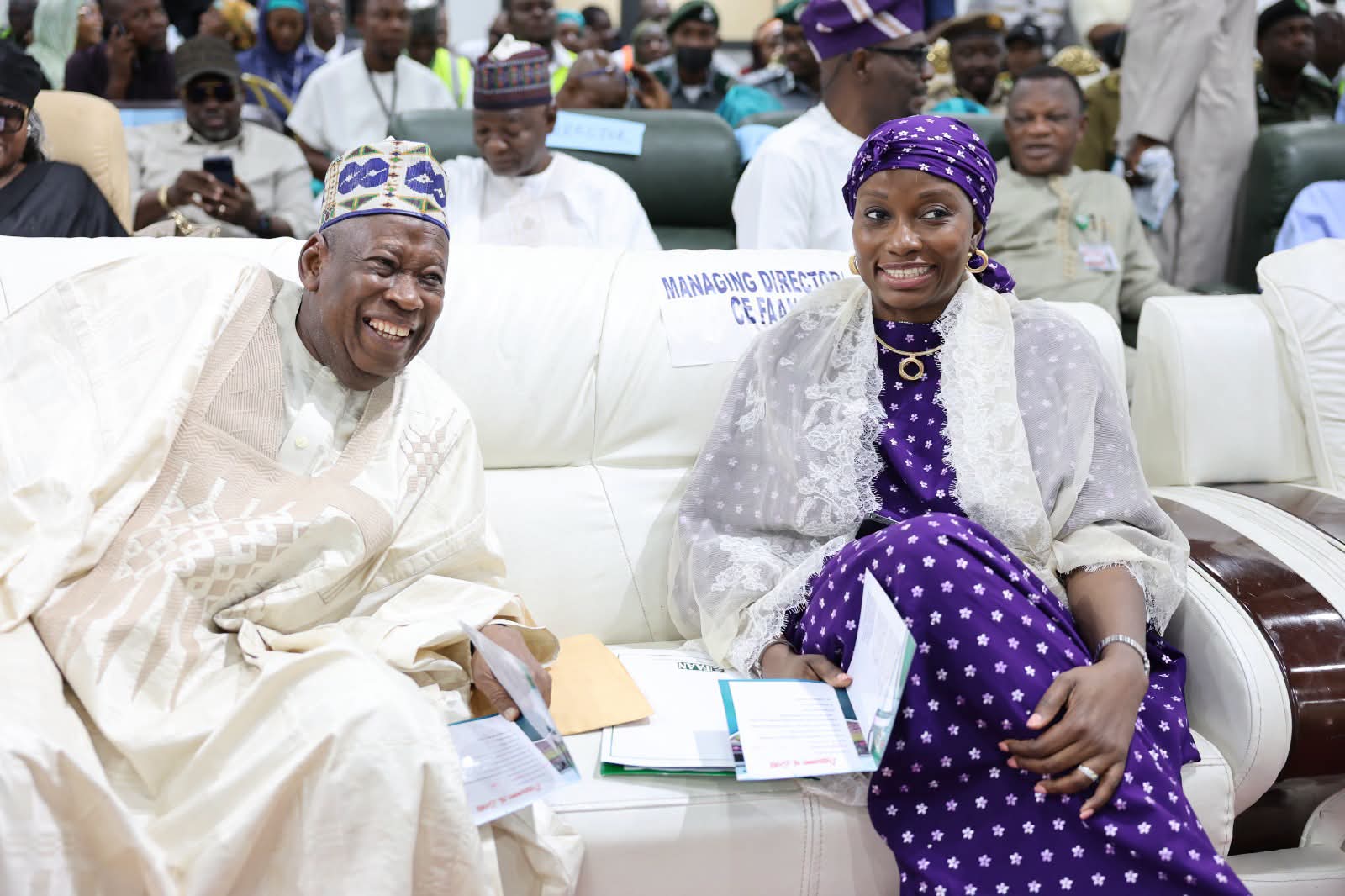
At the centre of this transformation are two leaders with distinct but complementary responsibilities, the Chairman of the Board of the Federal Airports Authority of Nigeria (FAAN), Dr. Abdullahi Umar Ganduje, and the Managing Director and Chief Executive of FAAN, Mrs. Olubunmi Kuku.
While Ganduje provides strategic leadership at the Board level, Kuku oversees the day-to-day execution of policies and projects that are redefining airport management across Nigeria. Their collaboration has steadily driven reforms focused on infrastructure renewal, operational efficiency, digital innovation, environmental sustainability and improved passenger experience.
Strategic leadership meets operational excellence
Every successful public institution requires a clear distinction between governance and management.
As Board Chairman, Ganduje provides policy direction, strategic oversight and institutional guidance, ensuring that FAAN’s programmes align with the Federal Government’s aviation agenda under President Bola Ahmed Tinubu.
Read Also:
Tinubu to Governors: Stop building flyovers where they are not needed
Ganduje Settles APC Councillors’ Disputes, Groups Merge, Back Tinubu-Shettima
Ganduje, Keyamo Commission Upgraded Kano Airport Terminal
His role has been instrumental in strengthening governance, supporting long-term planning and providing the policy backing required for management to implement ambitious reforms.
On the operational side, Kuku has emerged as one of the leading reformers within Nigeria’s aviation sector, driving projects that prioritise efficiency, safety, customer satisfaction and financial sustainability.
The synergy between strategic oversight and operational leadership has become one of FAAN’s defining strengths.
Renewing airport infrastructure
Perhaps the most visible aspect of FAAN’s reforms has been the massive investment in airport infrastructure.
At the Murtala Muhammed International Airport (MMIA), Lagos, rehabilitation works on Runway 18R/36L, Taxiway B and terminal facilities have significantly improved operational capacity and passenger movement.
Infrastructure upgrades have equally reached airports in Kano, Katsina, Jos, Enugu, Ilorin, Minna and several other locations, where improvements in power supply, terminal expansion, airfield lighting and operational facilities have enhanced service delivery.
A major milestone in this nationwide infrastructure renewal was recently recorded at the Mallam Aminu Kano International Airport, where the remodelled Muhammadu Adamu Dankabo Domestic Terminal was commissioned, reaffirming the Federal Government’s commitment to modernising Nigeria’s aviation infrastructure.
The upgraded terminal now features improved baggage handling systems, modern check-in facilities, enhanced passenger lounges, upgraded air-conditioning systems and other critical facilities designed to deliver a safer, faster and more comfortable travel experience.
During the commissioning, the Minister of Aviation and Aerospace Development, Festus Keyamo, announced that President Bola Ahmed Tinubu had approved ₦46 billion for the resurfacing and reconstruction of MAKIA’s second runway under the Renewed Hope Agenda.
According to the minister, the project will significantly improve operational efficiency and position Kano Airport to compete with other leading international airports across the world. He also described Kano as the commercial hub of Northern Nigeria, noting its strategic importance to Nigeria’s economy and aviation industry.
Keyamo further disclosed that work has commenced on the upgrade of the airport’s Hajj Terminal, with contractors already mobilised to site. He explained that both projects form part of the Federal Government’s comprehensive airport modernisation programme aimed at improving passenger comfort, operational efficiency, safety and service delivery nationwide.
Speaking during the ceremony, FAAN Managing Director and Chief Executive, Mrs. Olubunmi Kuku, described the upgraded terminal as another demonstration of the Authority’s commitment to providing world-class airport facilities while improving passenger experience across Nigeria.
Similarly, FAAN Board Chairman, Dr. Abdullahi Umar Ganduje, commended President Tinubu and the Ministry of Aviation for prioritising critical aviation infrastructure in Kano. He noted that the reconstruction of the second runway, the upgraded domestic terminal and the ongoing Hajj Terminal project would further strengthen Kano’s position as one of Nigeria’s foremost commercial and aviation gateways, enhancing regional connectivity and supporting economic growth.
Rather than temporary repairs, FAAN’s approach has increasingly focused on long-term infrastructure renewal capable of supporting future aviation growth.
Sustainability moves to the forefront
One of the Authority’s most innovative reforms has been its deliberate embrace of environmentally sustainable airport operations.
Recent initiatives at MMIA introduced a technology-driven waste management programme featuring digital colour-coded recycling bins, marking the beginning of a circular economy model within Nigeria’s aviation industry.
The programme seeks to reduce landfill waste, improve recycling, lower carbon emissions and support future waste-to-energy projects.
Minister of Aviation and Aerospace Development, Festus Keyamo, has also directed that new airport infrastructure incorporate renewable energy technologies, including solar-powered systems, further reinforcing the Federal Government’s commitment to greener aviation.
Ganduje described the initiative as an innovative response to climate change, noting that efficient waste recycling would reduce methane emissions while creating new economic opportunities through resource recovery and electricity generation.
Earlier, FAAN also introduced electric buses and vehicles at the Nnamdi Azikiwe International Airport, Abuja, to facilitate passenger movement while reducing carbon emissions, another milestone in Nigeria’s transition towards sustainable aviation.
Investing in human capital
Infrastructure alone cannot transform an institution.
Recognising this, FAAN has continued investing heavily in staff development through specialised training programmes covering airport management, aviation security, engineering, firefighting, emergency response and safety management.
Partnerships with the Nigerian College of Aviation Technology (NCAT), ICAO-certified institutions and the Airport Management Professional Accreditation Programme (AMPAP) have further strengthened workforce capacity, helping align Nigerian airport operations with international best practices.
Enhancing safety and security
Safety remains the foundation of global aviation.
FAAN has expanded the deployment of advanced surveillance systems, modern screening technologies and improved communication infrastructure across several airports.
The recertification of major international airports, including Mallam Aminu Kano International Airport and Port Harcourt International Airport, demonstrates sustained compliance with international aviation safety standards.
These achievements reinforce confidence among airlines, regulators and passengers alike.
Digital transformation and institutional reforms
Another major pillar of FAAN’s transformation has been the modernisation of internal systems.
Improved revenue management, digital financial monitoring, enterprise resource planning solutions and enhanced transparency have strengthened institutional accountability while improving operational efficiency.
These reforms have enabled better decision-making, more effective resource utilisation and stronger corporate governance.
Putting passengers first
Modern airports are measured not only by physical infrastructure but by the quality of service they provide.
Under Kuku’s leadership, FAAN has upgraded passenger lounges, expanded facilities for families and persons with disabilities, improved customer service mechanisms and enhanced terminal comfort.
The recently upgraded Pilgrims’ Terminal at MMIA reflects this commitment.
The facility now features a 300-seat waiting hall, VIP and VVIP lounges, free high-speed Wi-Fi, a fully air-conditioned mosque and modern security screening equipment, significantly improving the experience of intending pilgrims.
Supporting humanitarian aviation
FAAN’s transformation extends beyond commercial aviation.
During a recent visit to Maiduguri, Ganduje commissioned the United Nations Humanitarian Air Service (UNHAS)/World Food Programme (WFP) Terminal Building at the General Muhammadu Buhari International Airport.
The facility is expected to strengthen humanitarian logistics and improve emergency response operations across Nigeria’s North-East, where humanitarian air services remain critical.
Ganduje also inspected the ongoing construction of a modern airport clinic intended to enhance healthcare services for airport personnel, passengers and other stakeholders, reaffirming FAAN’s commitment to improving support infrastructure across the country’s airports.
Building Nigeria’s aviation future
Although significant work remains, the progress recorded over the past two years demonstrates a clear institutional commitment to reform.
Through the strategic leadership of Dr. Abdullahi Umar Ganduje and the operational management of Mrs. Olubunmi Kuku, FAAN has embarked on a transformation agenda that goes beyond infrastructure to include governance reforms, environmental sustainability, digital innovation, workforce development, passenger satisfaction and international competitiveness.
The recent transformation at Mallam Aminu Kano International Airport, backed by President Tinubu’s approval of ₦46 billion for the reconstruction of the airport’s second runway, further illustrates the Federal Government’s determination to build modern aviation infrastructure capable of supporting Nigeria’s economic ambitions. Together with the remodelling of the Muhammadu Adamu Dankabo Domestic Terminal and the ongoing Hajj Terminal upgrade, Kano is steadily reclaiming its place as one of West Africa’s leading aviation and commercial gateways.
As Nigeria continues to modernise its aviation sector, the Authority’s ongoing reforms offer a framework for building safer, greener, more efficient and globally competitive airports.
If sustained, these efforts will not only strengthen air transportation but also position Nigeria’s airports as strategic drivers of economic growth, regional connectivity and national development.
Umar Idris Shuaibu is a Kano based digital journalist
shuaibuumaridris@gmail.com

Kano SEMA donates cows, foodstuff to 13 rehabilitation centres

APC clinches Dawakin Kudu Assembly seat in by-election

Bandits demand N30m ransom for six Zamfara Imams

The AI Race: Can Humanity Agree Before it Loses Control?

2027: INEC to apply lessons from bye-elections
ABCOAD Unveils Journal, Bids Farewell to Provost

Nigerian Army Begins DSSC 29/2026 Recruitment, Outlines Eligibility Criteria

2027: NDC Releases Full List of Consensus Candidates in Kano

Gaya Polytechnic Opens Recruitment, Advertises 46 Academic, Non-Academic Positions