Feature
What to Know About Kano’s Deputy Governor Nominee, Murtala Sule Garo

By Umar Idris Shuaibu, Kano
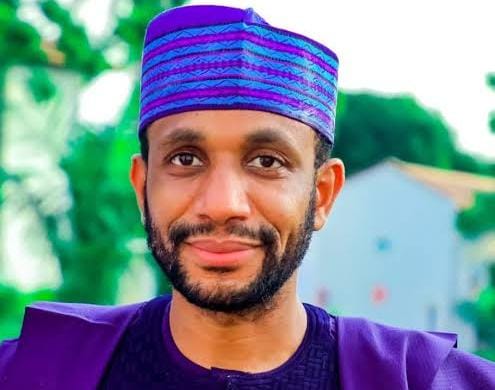
As the Kano State House of Assembly prepares to screen Murtala Sule Garo for the position of Deputy Governor, attention has once again shifted to a political figure whose career has been shaped by grassroots engagement, administrative experience, and strategic relevance within Kano’s evolving power structure.
Garo, a prominent name in Kano politics, is widely known for his role as former Commissioner for Local Government and Chieftaincy Affairs, where he carved a niche as a bridge between government institutions and traditional authority. His emergence as a nominee under the administration of Abba Kabir Yusuf is being closely watched, not only for what it represents politically, but also for what it signals about the direction of governance in the state.
Born and raised in Kano State, Garo’s early life was shaped by the socio-cultural realities of northern Nigeria, where tradition, religion, and community leadership play defining roles in everyday life. Growing up within this environment, he developed an appreciation for the delicate balance between modern governance and traditional institutions, an understanding that would later define much of his public service career. His upbringing, rooted in values of discipline, respect for elders, and civic responsibility, contributed to a political outlook that prioritises community engagement and inclusive leadership.
Educated within Kano, Garo passed through the state’s primary and secondary school system before advancing to tertiary education, where he acquired the knowledge and training necessary for administrative and governance roles. While details of his academic institutions remain largely understated in the public domain, his professional trajectory reflects a solid grounding in public administration, policy coordination, and leadership. His education is widely regarded as instrumental in shaping his communication skills and his ability to navigate the complexities of governance in a politically vibrant state like Kano.
Read Also:
Kano Governor Nominates Murtala Garo as Deputy Governor
KSP Partners JOSTUM to Offer PGD Courses in Management, Social Sciences
Oluremi Tinubu’s Kano Visit Signals Support for Innovation, Youth Development – KASPA DG
Garo’s political rise was neither abrupt nor accidental. It evolved through years of active participation in grassroots politics, where he built strong connections with ward leaders, community stakeholders, and party structures. His tenure as Chairman of Kabo Local Government Area marked a significant phase in his career, providing him with firsthand experience in local governance and public administration. It was during this period that he established a reputation for accessibility and responsiveness, qualities that resonated with constituents and strengthened his grassroots appeal.
His subsequent appointment as Commissioner for Local Government and Chieftaincy Affairs during the administration of Dr. Abdullahi Umar Ganduje elevated his profile and expanded his influence across Kano’s political landscape. In that capacity, he oversaw the coordination of local government activities while managing the often-sensitive relationship between the state government and traditional rulers. His responsibilities included strengthening traditional institutions, supervising local councils, promoting effective grassroots governance, and enhancing collaboration between state authorities and local structures.
Report says that his tenure was characterised by consistent engagement with emirs, district heads, and local government officials, fostering improved communication and cooperation across governance levels. This experience not only deepened his institutional knowledge but also enabled him to build a network that cuts across political, cultural, and administrative divides, an asset that continues to define his relevance.
Beyond his formal roles, Garo has remained an influential political actor, particularly within the All Progressives Congress (APC), where he is regarded as a loyal stakeholder and strategic mobiliser. His ability to maintain relevance despite shifting political alignments in Kano underscores a measured approach to politics, one that blends loyalty with adaptability. Known for his calm disposition and calculated decision-making, he is often described by observers as a politician who understands the pulse of local governance and the importance of sustained community engagement.
His nomination as Deputy Governor is therefore being interpreted as more than a routine political appointment. For the administration of Abba Kabir Yusuf, it may represent a strategic effort to consolidate grassroots support, strengthen institutional linkages, and broaden political inclusivity in a state where power dynamics are both complex and deeply rooted.
As the screening process by the Kano State House of Assembly unfolds, political observers are keenly watching how Garo’s experience, alliances, and leadership style will be assessed in relation to the demands of the office. His track record in local governance and his familiarity with traditional institutions are expected to feature prominently in considerations about his suitability for the role.
Regardless of the eventual outcome, Garo’s journey offers insight into the workings of Kano’s political system, where grassroots connection, administrative competence, and strategic positioning often define the path to leadership. His re-emergence at this critical moment underscores a broader reality in the state’s politics: influence, once established, rarely fades; it simply repositions itself in anticipation of the next opportunity.
As Kano watches and waits, the screening of Murtala Sule Garo may well mark the beginning of a new chapter, not only in his political career but in the evolving governance structure of the state.

Nigeria records no cases after patient’s evacuation to Switzerland – WHO

Kano Assembly Clears Six Commissioner Nominees for Executive Council

Kogi Police investigate as two officers die in fatal shooting at Ajaokuta

EFCC opens recruitment for graduates, ND holders, SSCE candidates

Kano Poly MFB: A bank closed, an investigation launched, but where are the answers?
ABCOAD Unveils Journal, Bids Farewell to Provost

Nigerian Army Begins DSSC 29/2026 Recruitment, Outlines Eligibility Criteria
2027: NDC Releases Full List of Consensus Candidates in Kano

Gaya Polytechnic Opens Recruitment, Advertises 46 Academic, Non-Academic Positions