Feature
How Abba Kabir Yusuf is Positioning Kano as the Commercial and Industrial Capital of Northern Nigeria

By Saminu Umar, Ph.D
Senior Lecturer, Department of Information and Media Studies, Bayero University, Kano
There is a particular kind of political courage that does not announce itself with drama, does not seek the validation of crowds, and does not wait for the approval of godfathers. It is the kind that sits quietly inside a budget document, within policy decisions, and in deliberate efforts to reverse decades of economic decline. It is the courage that signals, through action rather than rhetoric, that a great city will not accept a diminished destiny.
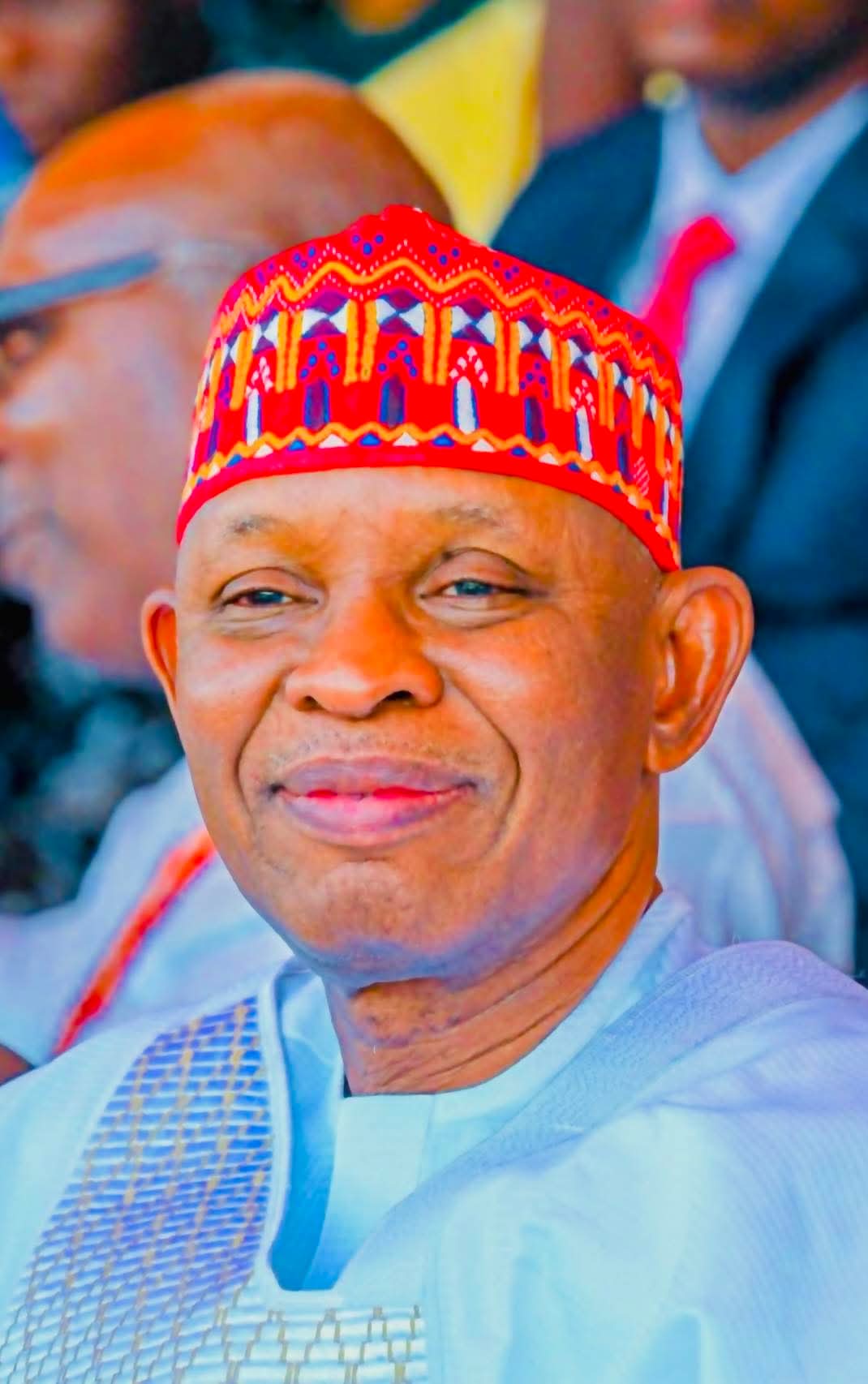
That is the story unfolding in Kano under Governor Abba Kabir Yusuf.
To fully appreciate what is being built, one must first confront what Kano had become before May 2023. Once the undisputed commercial and industrial capital of Northern Nigeria, Kano’s legacy was rooted in centuries-old trans-Saharan trade, thriving textile industries, and iconic groundnut pyramids that symbolised agricultural wealth. Its leather industry, anchored in the historic Kofar Mata Dye Pits, connected the city to global markets.
But decades of policy neglect, energy challenges, and deindustrialisation gradually eroded that legacy. Industrial hubs such as Sharada, Bompai, and Challawa fell into decline, while economic productivity slowed.
Governor Yusuf inherited that reality—and has since moved to reverse it.
The clearest reflection of his ambition lies in the 2026 budget: a historic ₦1.477 trillion appropriation, the largest in Kano’s history. Notably, 68 percent is allocated to capital projects, with ₦346.2 billion for infrastructure, ₦405.3 billion for education, and ₦212.2 billion for healthcare. These are not the figures of a government managing decline; they represent a deliberate strategy to rebuild economic foundations.
Read Also:
Kano at the Heart of Nigeria’s Innovation Revolution: Why Sub-National Resource Mapping Matters Now
Kano’s Strategic Turn: Federal Partnership Begins to Yield Tangible Gains
Infrastructure investments—ranging from road expansion to solar streetlights and market renovations—are designed to reposition Kano as a competitive commercial hub. Equally important is execution capacity, with over 80 percent performance recorded in the previous budget cycle, signalling a shift from planning to delivery.
Beyond infrastructure, the administration has prioritised human capital. Kano’s emergence as the top-performing state in the 2025 NECO results reflects renewed focus on education, supported by teacher recruitment, school rehabilitation, and expanded scholarships. The establishment of Kano State Polytechnic in Gaya further strengthens technical and vocational training.
Healthcare reforms, including the Abba Care Scheme and hospital upgrades, alongside targeted investments in women and youth empowerment, demonstrate a broader strategy: building a workforce capable of sustaining industrial growth.
More than ₦334 million has been disbursed to women entrepreneurs across all 44 local government areas, while over ₦800 million has supported youth-focused programmes. These initiatives are structured to drive economic participation rather than short-term relief.
A defining feature of Yusuf’s approach is his recognition of the importance of federal collaboration. His alignment with the administration of Bola Ahmed Tinubu has already begun yielding results, most notably the selection of Kano as host for the Energise Commercialisation Now (ECoN) initiative.
The programme, to be flagged off by Oluremi Tinubu, is designed to connect innovation with investment, creating pathways for research, entrepreneurship, and industrial production. For Kano’s universities and informal sector innovators, this presents unprecedented access to funding, markets, and partnerships.
Equally strategic is the administration’s focus on agriculture and rural development. Distribution of fertiliser, construction of mini-dams, and support for agro-processing aim to strengthen the link between rural production and urban industry. Revitalising garment clusters and supporting SMEs further integrates local economies into a broader industrial framework.
Environmental sustainability has also been incorporated into the development agenda, with tree-planting initiatives and improved waste management systems enhancing urban livability—an essential factor in attracting investment.
Observers note a consistent pattern: a systematic rebuilding of Kano’s economic architecture, supported by coordinated governance and long-term planning. The designation of 2026 as the Year of Youth Employment and Peace underscores a commitment to measurable outcomes, particularly in job creation.
Kano’s history was not built overnight. Its rise as a commercial powerhouse was the result of sustained effort across generations. Today, Governor Yusuf appears to be drawing from that same tradition—applying it to modern economic realities with a clear sense of direction.
The ambition to reclaim Kano’s status as Northern Nigeria’s commercial and industrial capital is not merely rhetorical. It is being pursued through policy, investment, and strategic partnerships.
In the end, such a title is not claimed—it is earned, sustained, and defended through the quality of governance and the depth of vision behind it.

Tinubu’s Kaduna Campaign Eve: Dan’agundi leads thousands of supporters to governor Uba Sani in Massive show of solidarity

Gwarzo’s exclusion: NDC races against time as INEC deadline nears

2027: Mariya Bunkure takes key women affairs role in Kano APC campaign

2027: Kano Governor Names Former Education Commissioner Kiru Campaign Spokesperson II

Sa’adatu Rimi College of Education Hosts NCCE Training as Experts Push Practical Agricultural Education
ABCOAD Unveils Journal, Bids Farewell to Provost

Nigerian Army Begins DSSC 29/2026 Recruitment, Outlines Eligibility Criteria
2027: NDC Releases Full List of Consensus Candidates in Kano

Gaya Polytechnic Opens Recruitment, Advertises 46 Academic, Non-Academic Positions