Economy
Tinubu Directs Regulators to Strengthen Oversight of Stablecoins, Digital Currencies

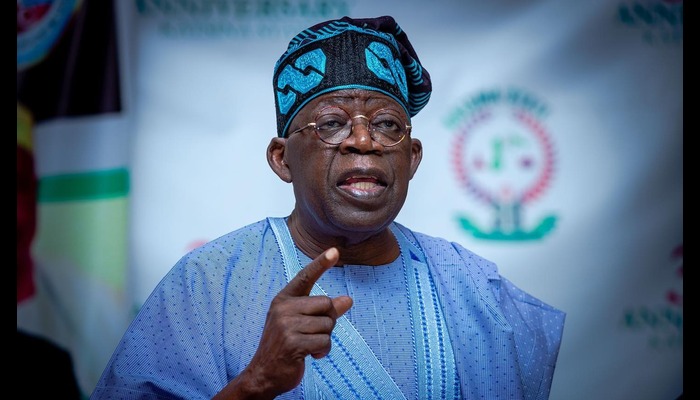
President Bola Ahmed Tinubu has directed Nigeria’s financial and capital market regulators to intensify oversight of stablecoins and digital currencies, warning that the rapid shift away from traditional banking poses emerging risks that must be addressed proactively.
The President, represented by the Minister of Finance and Coordinating Minister of the Economy, Wale Edun, gave the directive on Tuesday at the 18th Annual Banking and Finance Conference of the Chartered Institute of Bankers of Nigeria (CIBN) in Abuja.
“There is a digital revolution. So many people now are not using the banking system to make payments. They’ve turned to stablecoins, they’ve turned to digital currency. To this end, I have directed capital market and banking authorities to get hold of this narrative and track it whilst it is still evolving,” Tinubu said.
Read Also:
Wike Appoints Acting Head of Service for FCT Administration
Engr. Ganduje’s Mega Empowerment Transforms Lives of Kano Youths
Aminu Kano Teaching Hospital Launches Free Emergency Ambulance System
The Securities and Exchange Commission (SEC) has already begun tightening regulation under the Investment and Securities Act 2025, which classifies digital assets as securities. The law empowers the SEC to license and supervise Virtual Asset Service Providers—including exchanges and custodians—under strict Know Your Customer (KYC) and Anti-Money Laundering (AML) rules.
Beyond regulation, Tinubu stressed the need for Nigeria to reinvent its economy through digital adoption, artificial intelligence, and open banking to drive industrialisation and job creation.
“Yes, our GDP is growing, but the industrial contribution from manufacturing is not where it should be to create the jobs we need. Innovation is key for adopting digital, AI, and open banking to enhance efficiency,” he noted.
The President also reiterated his administration’s commitment to harnessing Nigeria’s youthful population, projected to become the world’s largest workforce by 2050.
“Our young population is an asset. By 2050, Nigeria will provide the largest workforce in the world. That is why we are investing in education, infrastructure, and digital skills to prepare them for the opportunities of tomorrow,” he affirmed.
On fiscal reforms, Tinubu pointed to measures linking state accounts with the Central Bank of Nigeria (CBN) to boost transparency and revenue.
“That linkage with the Central Bank now gives us full visibility on government finances, and that will yield dividends by increasing government revenue,” he said.
He emphasised that financial inclusion must be tied to job creation, particularly for young Nigerians.
“Inclusion means jobs—quality, attractive jobs, especially for our young men and women. Households must have reliable access to affordable financial services and reputable loans,” he added.
Tinubu pledged that his administration will continue to stabilise the economy, reduce poverty, and attract private investment.
“Those that innovate, that reform, that collaborate, will thrive. This is the path that Nigeria is firmly committed to,” he declared.
Meanwhile, CBN Governor Olayemi Cardoso announced plans to attract at least $1bn in monthly diaspora remittances by 2026.
“The Nigerian diaspora is one of the most vibrant in the world. If we are able to harness even a fraction of their earnings and direct them into our economy, the impact will be transformative,” he said.
Cardoso revealed that partnerships with banks such as Access Bank and Zenith Bank have already helped boost inflows.
“When we started, remittances stood at $250m a month. We set a target to double that to $500m. Now, we are at $600m,” he noted.
CIBN President and Council Chairman, Prof. Pius Olanrewaju, highlighted the significance of the conference in shaping economic policy, noting that listed banks have raised N2.5tn since 2024 and non-oil exports generated $3.23bn in the first half of 2025.
He also lauded Tinubu’s approval of four tax reform bills consolidating over 100 tax agencies into the Nigeria Revenue Service, which will take effect in January 2026.
The conference attracted stakeholders from banking, finance, and technology, focusing on digital innovation, policy reforms, and private investment as drivers of inclusive growth and economic transformation.

Why The Sun will honour Ganduje with lifetime achievement award

Idris assures NIPR of FG support for 2026 World PR forum
NECO releases 2026 SSCE results, 58.67% record five credits including English, Maths

Pantami’s PDP ticket nullified as court orders fresh Gombe primary

Ganduje calls for commitment to nation-building, democratic sustainability
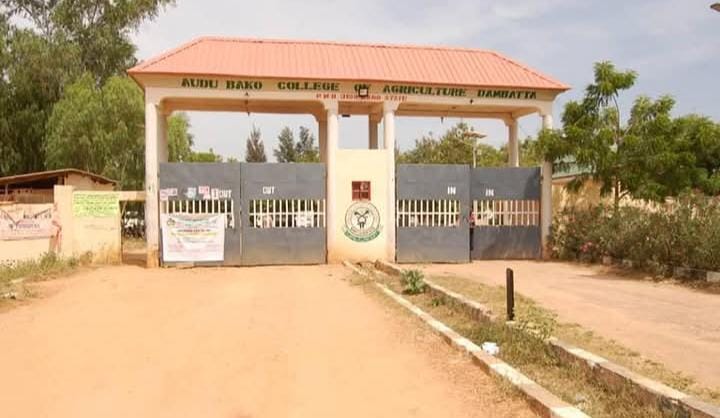
ABCOAD Unveils Journal, Bids Farewell to Provost

Nigerian Army Begins DSSC 29/2026 Recruitment, Outlines Eligibility Criteria
2027: NDC Releases Full List of Consensus Candidates in Kano

Gaya Polytechnic Opens Recruitment, Advertises 46 Academic, Non-Academic Positions