Abuja
Tracking Dr. Mariya Mahmoud Bunkure’s Growing Role in Abuja’s Transformation

By Umar Idris Shuaibu
The transformation of Nigeria’s Federal Capitala Territory (FCT) over the past two years has been reflected not only in the kilometres of roads constructed or the number of projects commissioned, but also in renewed efforts to extend development beyond Abuja’s city centre to satellite towns and underserved communities.
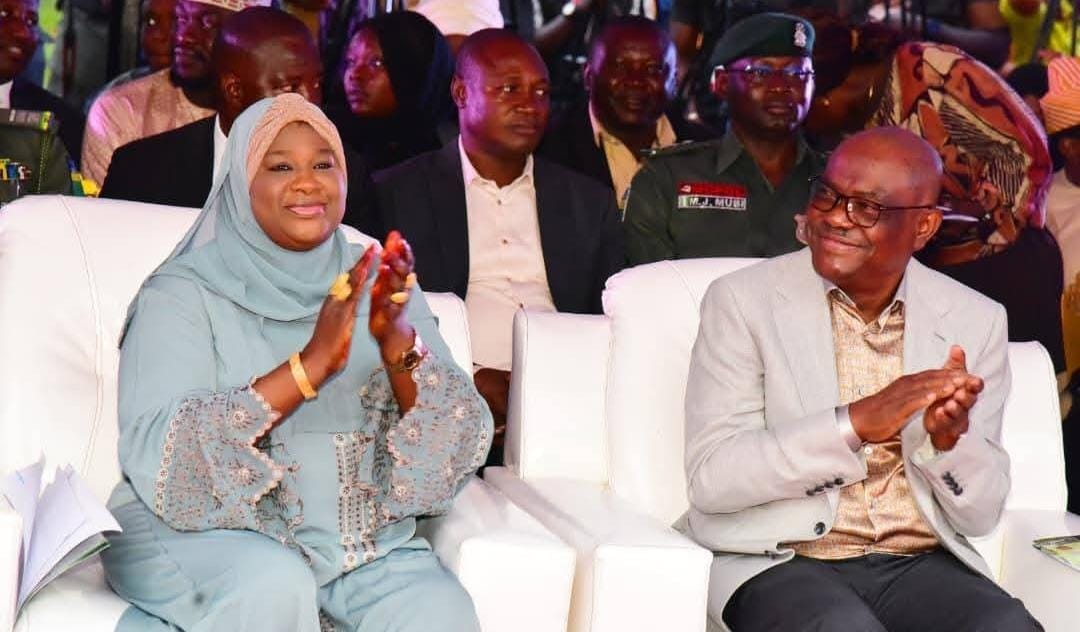
While much of the public attention has naturally focused on the Minister of the Federal Capital Territory, Barrister Nyesom Wike, another official has increasingly assumed a visible role in supporting the implementation of the administration’s development agenda. As Minister of State for the Federal Capital Territory, Dr. Mariya Mahmoud Bunkure has become a familiar presence at project inspections, commissioning ceremonies, stakeholder engagements and policy forums, reinforcing the administration’s commitment to the Renewed Hope Agenda of President Bola Ahmed Tinubu.
Her role within the FCT Administration has largely been complementary, reflecting a governance approach built on collaboration and shared responsibility. Working alongside the FCT Minister, she has consistently emphasised teamwork, institutional coordination and collective accountability in delivering projects across the territory.
Perhaps no sector illustrates this effort more clearly than road infrastructure.
Speaking during a media briefing, Dr. Mariya disclosed that the Federal Capital Territory Administration has completed more than 200 road construction projects under President Tinubu’s administration. According to her, many of the projects were inherited in an unfinished state but were prioritised for completion while new projects were initiated across the six Area Councils and the 62 political wards of the territory.
Read Also:
Ganduje Settles APC Councillors’ Disputes, Groups Merge, Back Tinubu-Shettima
Kano Invests ₦55.48bn in Education, Healthcare, Roads, Rural Development
FCT Pilgrims Board Opens Registration for 2027 Hajj, Sets September 25 Deadline
“The administration met some unfinished projects. But the Hon. Minister, Nyesom Wike, and myself have been working hard to ensure their completion,” she said.
According to the administration, the projects reflect a deliberate effort to complete inherited infrastructure while expanding the road network to support mobility, economic activities and urban development across the Federal Capital Territory.
The administration has also maintained that infrastructure development is intended to improve residents’ quality of life by reducing travel time, improving access to communities and creating opportunities for investment and commerce.
Like many rapidly growing capital cities, Abuja continues to experience increasing pressure on transportation, housing and public services as its population expands. The FCT Administration has argued that ongoing investments in infrastructure are aimed at addressing some of these long-standing challenges while preparing the city for future growth.
This approach has become particularly evident in satellite communities.
For many years, residents outside Abuja’s city centre frequently complained of inadequate road networks and limited public infrastructure despite rapid population growth. Under the current administration, however, communities such as Gwagwalada, Karu, Bwari, Tungan Madaki and neighbouring settlements have increasingly become beneficiaries of major infrastructure projects.
Among them is the construction of the strategic access road linking Bill Clinton Drive to Tungan Madaki Settlement, complete with a four-span bridge designed to improve connectivity, strengthen security and stimulate economic activities.
According to Dr. Mariya, the project will provide an alternative route bypassing the airport’s second runway while opening surrounding communities to new socio-economic opportunities.
“The inclusion of a four-span bridge demonstrates the administration’s determination to ensure resilience and durability in our infrastructure while guaranteeing seamless connectivity for motorists and residents,” she explained.
She also described the commencement of the Outer Southern Expressway linking Ring Road I to Ring Road II as another important intervention expected to ease congestion along the Apo–Wasa corridor and improve transportation across rapidly expanding districts of the capital.
Road infrastructure, however, represents only one aspect of the administration’s development programme.
Access to clean and reliable water has equally received attention through the expansion of regional water supply projects. During the commissioning of the Karu Water Supply Network, which comprises more than 194 kilometres of secondary and tertiary pipelines serving Karu, Orozo, Kurudu, Jikwoyi and adjoining communities, Dr. Mariya described the project as a major step toward improving public health and expanding access to potable water.
She also participated in the commissioning of the Bwari Water Supply Scheme, reinforcing the administration’s position that satellite towns should enjoy the same level of public investment as the city centre.
Beyond physical infrastructure, Dr. Mariya has emerged as one of the administration’s leading advocates for citizen engagement.
Representing the FCT Administration at a two-day Government-Citizen Engagement Programme organised by the Sir Ahmadu Bello Memorial Foundation in Kaduna, she argued that governance should no longer operate as a one-way relationship between government and citizens. Instead, she maintained that residents should actively participate in policy formulation, project implementation and service delivery.
“Our mission remains to ensure transparent governance, promote accountability and maintain open communication channels with Nigerians,” she said.
Her emphasis on transparency and public participation reflects a broader recognition that sustainable development depends not only on government investment but also on citizens’ confidence and involvement in governance.
Dr. Mariya has also promoted investment and urban renewal as important components of the FCT’s long-term development strategy.
During the unveiling of the Abuja City Walk Development Sales and Experience Centre, she described private-sector participation as essential for sustainable economic growth, noting that improved infrastructure creates the foundation for business expansion, tourism and real estate development.
Similarly, she participated in the commissioning of the remodelled Abuja City Gate, describing the project as part of broader efforts to modernise the capital city’s landscape while preserving its identity as Nigeria’s administrative centre.
Her responsibilities have also extended beyond domestic engagements.
At the inauguration of the new ECOWAS Commission Headquarters in Abuja, attended by Vice President Kashim Shettima and regional leaders, she described the facility as a symbol of regional cooperation and shared development, noting that stronger regional institutions contribute to peace, integration and economic progress across West Africa.
Throughout her public engagements, one consistent theme has been her emphasis on teamwork.
Whether addressing journalists, inspecting projects or engaging stakeholders, she has consistently credited President Tinubu for providing policy direction while acknowledging the leadership of the FCT Minister in implementing projects across the territory. Rather than presenting achievements as individual accomplishments, she has repeatedly described them as collective efforts of the Federal Capital Territory Administration.
Her public advocacy has also included appeals for continued support for the administration, expressing the view that sustained cooperation between government and citizens would further accelerate development across the country.
As Abuja continues to witness investment in roads, bridges, water infrastructure and urban renewal projects, Dr. Mariya Mahmoud Bunkure’s responsibilities within the Federal Capital Territory Administration continue to evolve.
From project supervision and stakeholder engagement to policy advocacy and institutional representation, she has become an increasingly visible member of the team implementing the administration’s development agenda.
Ultimately, Abuja’s ongoing transformation is not solely the story of new infrastructure but also of the institutions and public officials responsible for implementing government policies. Within that broader effort, Dr. Mariya Mahmoud Bunkure has established herself as an important partner in supporting project delivery, encouraging citizen engagement and advancing the administration’s vision for the Federal Capital Territory. Her growing public profile reflects the role that complementary leadership can play in translating government policies into visible outcomes for residents.

Bandits demand N30m ransom for six Zamfara Imams

The AI Race: Can Humanity Agree Before it Loses Control?

2027: INEC to apply lessons from bye-elections

Forex Trading: BYB Forex Urges Youths to Prioritise Knowledge, Risk Management

Danjuma pre-wedding draws Aisha Buhari, Seyi Tinubu, Fintiri, Dino Melaye
ABCOAD Unveils Journal, Bids Farewell to Provost

Nigerian Army Begins DSSC 29/2026 Recruitment, Outlines Eligibility Criteria
2027: NDC Releases Full List of Consensus Candidates in Kano

Gaya Polytechnic Opens Recruitment, Advertises 46 Academic, Non-Academic Positions