Feature
Before the “settler” label: How Fulani communities took root in southern Kaduna

By Umar Idris Shuaibu
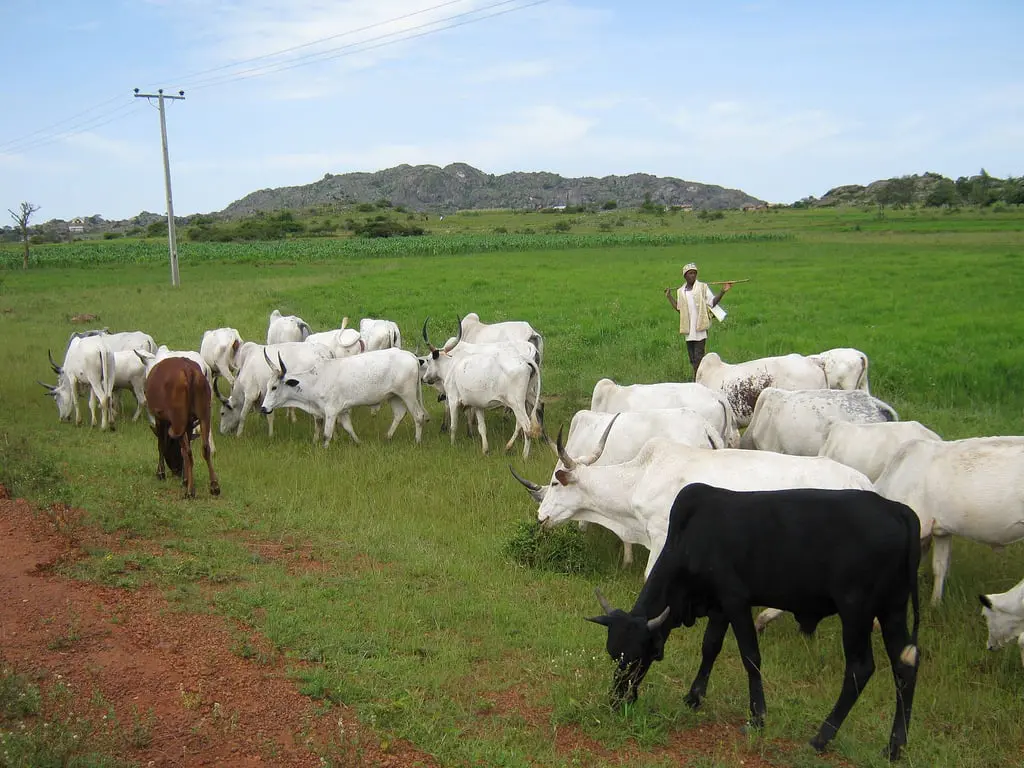
The fertile valleys and rolling hills of Southern Kaduna spanning the old chiefdoms and modern hubs of Kwoi, Daddu, Kafanchan, Kubacha, Jema’a, Lere and the expansive Ladduga grazing reserve hold a complex history of migration, trade, pastoralism, political transformation and social interaction. For centuries, these green pastures attracted distinct waves of Fulani migration. The earliest arrivals included nomadic Fulanin Daji, including a significant number of Gorkaji or Gorkanko’en, the Fulfulde name associated with their clan, who migrated from the Garko area of present-day Kano State and moved southward from the drier Sahel and other northern territories in search of lush grazing land and reliable water sources for their cattle and sheep. Over generations, some seasonal pastoral routes developed into permanent settlements, while other Fulani communities retained their pastoral mobility. By the turn of the 19th century, another wave of Fulanin Gida (settled Fulani) had established deeper roots in different parts of the region, transforming the demographic landscape and intertwining their identity with the local geography.
The history, however, was not uniform across Southern Kaduna. The Fulani presence around Jema’a, Lere, Kafanchan, Kwoi, Daddu, Kubacha and Ladduga emerged through different historical processes and at different periods. It is therefore more accurate to speak of several layers of Fulani settlement and interaction rather than one single migration that occupied the entire region.
The early nineteenth century marked a pivotal structural shift in parts of the region with the founding of the Jema’a Emirate. Historical research places the establishment of Jema’a Daroro around 1810 under Malam Usman, a Fulani Muslim preacher who became associated with the political transformation accompanying the Sokoto jihad movement and received a flag of authority. Jema’a subsequently became a vassal state of Zazzau, or Zaria, and developed into an important centre of political and religious authority. This development represented more than the arrival of cattle herders; it created a permanent Fulani-led political institution whose influence extended across parts of the surrounding territory.
The establishment of the Jema’a Emirate, however, should not be described as a simple peaceful migration or as evidence that the entire Southern Kaduna region became Fulani territory. The nineteenth-century transformation also involved political expansion, tribute relationships, warfare and displacement, and indigenous communities retained their own ancestral institutions and identities. Historical accounts of the wider Southern Kaduna area describe communities such as the Ham/Jaba moving southwards in response to pressure and conflict associated with the expansion of Zazzau and other political powers. This is one of the reasons why indigenous memories of the period can differ sharply from Fulani memories of settlement and political authority.
Read Also:
Lere: A Historic Fulani Settlement and Cultural Crossroads in Kaduna
Fulani livestock traders return to Falgore market after leaving Anchau
Kaduna 2027: Gov Uba Sani Drops Deputy, Picks KADIRS Chairman as Running Mate
The significance of Jema’a is nevertheless undeniable. The new emirate drew Fulani pastoralists, scholars, administrators and other Muslim populations into a more permanent political and economic network. It created institutions through which taxation, administration, Islamic learning and trade could be organised. Fulani communities were therefore no longer simply passing pastoralists in the area; some became permanent residents whose descendants remained connected to the region for generations.
This deep historical timeline is exactly why many Hausa-Fulani communities strongly reject the “settler” label in modern socio-political discourse. Representatives of such communities argue that two centuries or more of continuous lineage, permanent residence and civic contribution invalidate the description of their families as temporary outsiders. They maintain that almost all ethnic groups in Nigeria possess histories of migration and settlement, and that centuries of shared existence, economic contribution and political participation create a profound attachment to the communities where they live.
From their perspective, labelling a family whose ancestors were born, lived and died in a particular community for generations as merely a “settler” is historically incomplete. Their argument is that there is a difference between the original migration of an ancestor and the present-day reality of a community whose descendants have spent generations in the same locality.
Conversely, the indigenous ethnic groups of Southern Kaduna hold a fundamentally different historical memory that shapes their understanding of who belongs. Groups such as the Ham of Jaba, Koro, Bajju, Atyap, Fantswam, Ninzo and other indigenous communities look to ancestral ties that predate the nineteenth-century Islamic political transformations. They view the expansion of Zazzau and the establishment of emirates such as Jema’a not simply as settlement, but also as a period of political expansion and, in some cases, subjugation and displacement of native populations.
For these indigenous communities, land ownership and cultural identity are inextricably linked to ancient ancestral heritage. Consequently, they may categorise Fulani communities as historic migrants or settlers, arguing that longevity of residence does not erase the historical reality of later arrival or the political changes that accompanied nineteenth-century expansion.
But the history becomes even more complicated when the story moves from Jema’a to Kafanchan.
Unlike Jema’a Daroro, whose historical importance is closely associated with the early nineteenth-century emirate, modern Kafanchan developed substantially later as a railway and commercial centre. The construction of the railway transformed the area into a major commercial and transportation hub and attracted populations from different parts of Nigeria. The town consequently became increasingly cosmopolitan, bringing together indigenous communities, Hausa, Fulani, Igbo, Yoruba and other groups.
The Fulani presence in Kafanchan also has a connection with Jema’a Daroro. Historical accounts indicate that in 1933, during the colonial period, the British authorities encouraged the movement of a Hausa-Fulani community from Jema’a Daroro to Kafanchan, where a settlement known as Jema’a Sarari was established. The episode demonstrates that the Fulani history of Kafanchan contains both an older connection with the Jema’a political system and a later colonial urban-settlement history.
The story becomes even more complicated when we move towards Kwoi and Daddu in present-day Jaba Local Government Area.
Kwoi is the headquarters of Jaba Local Government Area and the centre of the Ham people, whose language is Hyam. Historical sources identify the Ham as an established population of the area long before modern administrative boundaries were drawn. Early twentieth-century records also describe the Jaba/Ham as having historical connections to territories north of their present location and record movements southward following conflict and pressure from Zaria.
That history matters because it demonstrates that Southern Kaduna itself has never been a static demographic space. Communities moved, expanded, contracted, sought refuge and established new settlements in response to warfare, political pressure, trade and environmental circumstances.
Daddu, likewise, is one of the districts of Jaba Local Government Area, with communities such as Kuryas and Kuryas Daddu forming part of the wider local settlement pattern. The existence of Fulani communities in the broader Jaba area should, however, not automatically be interpreted as proof that every Fulani family in Kwoi, Daddu or Kuryas descended directly from the original Jema’a settlement. Such claims require specific family genealogies, oral histories, colonial district records and land-settlement evidence.
What can be established more confidently is that the wider Jaba–Jema’a frontier has experienced centuries of interaction between indigenous communities, Fulani pastoralists, Hausa traders, Muslim settlements and other populations.
Kubacha and the Koro area
Kubacha provides another useful illustration of the complexity.
Today, Kubacha is the headquarters of the Koro Chiefdom in Kagarko Local Government Area. It lies within a region historically associated with indigenous communities but which has also experienced migration and settlement by Hausa, Fulani and other populations.
The existence of Fulani settlements in and around the Kubacha area demonstrates that pastoral and settled Fulani communities became part of the region’s social and economic landscape. But it would be historically unsafe to claim, without specific archival evidence, that the entire Kubacha area was founded by Fulani. Nor should the existence of an indigenous Koro political institution be interpreted to mean that every other community that has lived there for generations is necessarily a recent outsider.
The more defensible historical conclusion is that Kubacha represents another frontier of interaction where indigenous territorial institutions existed alongside later settlements, pastoral communities, trading populations and other migrants.
Lere: A Fulani political institution with an older history
The history of Lere introduces another major Fulani political institution into the Southern Kaduna story.
The Lere Emirate was established in 1808 by a branch of the Toronkawa Fulani known as the Fulanin Wunti-Gyamzo under the leadership of Malam Muhammadu Dabo Titi. Historical accounts trace the group to the wider Bauchi-Zaria area, where Dabo Titi had established himself before the emergence of the Sokoto Caliphate’s political order. During the jihad era, he became associated with the political transformation of the region and subsequently transferred his allegiance from Bauchi to Zazzau. The Shehu Usman Dan Fodio granted this arrangement, leading to the creation of Lere as a Zazzau vassal state in 1808.
Lere’s historical territory was considerably larger than the boundaries of present-day Lere Local Government Area. The old vassal state extended across parts of territories that are today within Kaduna, Bauchi, Plateau and other neighbouring areas. The emirate operated as one of the vassal states connected to Zazzau and maintained a hereditary ruling institution.
The political importance of Lere demonstrates that the Fulani presence in the wider Southern Kaduna and adjoining areas was not simply a twentieth-century development. By the early nineteenth century, Fulani political institutions had already become established and were exercising authority over extensive territories.
The Lere Fulani therefore have a historical argument of their own. Their position is that centuries of residence, economic activity, political administration and cultural development make it misleading to describe the Fulani of Lere simply as outsiders. Their history includes the creation of a recognised emirate, hereditary traditional leadership, agricultural and pastoral activity, trade and interaction with neighbouring communities.
The traditional institution itself is associated historically with the Fulanin Wunti-Gyamzo ruling lineage descended from Malam Muhammadu Dabo Titi. The throne is not private property in the ordinary sense; rather, it is a traditional institution whose succession is associated with the recognised ruling family and regulated within the traditional and statutory framework governing traditional institutions in Kaduna State.
The history of Lere therefore provides another important distinction in the debate. A community can have arrived in a territory through migration and subsequently develop a political institution that becomes several generations old. The original migration may be historically documented, while the later community can simultaneously possess a deep local history of its own.
Ladduga: Pastoral settlement that became a permanent community
No narrative on the demographic tapestry of Southern Kaduna is complete without examining the Kachia Grazing Reserve, widely known among its Fulani inhabitants as Ladduga, in present-day Kachia Local Government Area.
Unlike Jema’a and Lere, the origin of Ladduga belongs principally to a much later government policy of pastoral settlement. The grazing reserve system emerged in Nigeria during the 1960s as part of a government strategy to modernise livestock production, provide pastoralists with more secure access to grazing land, encourage sedentarisation and reduce friction between pastoralists and crop farmers.
The Kachia Grazing Reserve was established by the Kaduna State Ministry of Animal and Forest Resources in 1967, with developmental work beginning around the end of that decade. It was subsequently re-officialised in 1988 following further development and intervention, while the reserve was formally gazetted by the Kaduna State Government in 1996. It would therefore be historically inaccurate to say that Ladduga was formally gazetted in the late 1980s. Rather, 1988 was an important stage in its re-officialisation and development, while the formal gazetting came later.
The reserve covered a large expanse of land and was created specifically to encourage the settlement and development of pastoral communities. Its facilities included roads, dams, boreholes, veterinary services, livestock infrastructure, health services and educational facilities. The reserve was conceived as an institutional response to the difficulties surrounding pastoral mobility and farmer-pastoralist relations.
Over the decades, what began as a government-designated grazing area gradually developed into a much more permanent Fulani community. Research on the reserve has described its population as overwhelmingly Fulani pastoralists, with settlement areas organised around different clans and village heads. The headquarters and trading centre, Tampol, became an important commercial point within the reserve.
Government records now describe the reserve as divided into six blocks and identify Ladduga as a district under the Ikulu Chiefdom, with a district head and several village heads. The same official brief reports approximately 22,000 people and extensive livestock populations within the reserve, while noting that population levels fluctuate with seasonal movement. It also lists schools, a community health facility, veterinary clinics, boreholes, earth dams and other infrastructure.
This metamorphosis of Ladduga from a public agricultural and livestock reserve into a concentrated Fulani settlement represents a unique micro-ecosystem within the wider Southern Kaduna indigene-settler debate.
For many Fulani residents, Ladduga represents something different from an ordinary migrant settlement. The community did not emerge solely through individuals entering privately owned farmland; it developed within a government-created grazing reserve whose purpose was to encourage pastoral settlement and provide services to pastoral communities.
The Fulani residents can therefore point to decades of residence, government investment, schools, health facilities, markets, traditional leadership structures and participation in civic life as evidence of a deep connection with the land. For families whose children and grandchildren were born there, Ladduga is not experienced as a temporary camp but as home.
The reserve has also absorbed Fulani pastoralists whose movements were influenced by insecurity and changing pastoral conditions elsewhere. This contributed to the gradual growth and concentration of the population, although claims about the exact number of internally displaced persons who subsequently settled there require separate demographic documentation.
The historical reality, however, remains that Ladduga was created by government policy as a grazing reserve rather than as an ancestral Fulani homeland in the same sense as an old indigenous chiefdom. Its legitimacy as a government-created reserve and the later attachment of its residents to the land are therefore separate historical questions.
Conversely, for indigenous communities surrounding the reserve, including communities associated with the Ikulu and Adara areas, Ladduga remains a deeply sensitive historical and political issue. Indigenous perspectives have raised concerns about how government acquisition and designation of land for grazing affected ancestral territories, agricultural access and traditional political boundaries.
From this perspective, the establishment of a large Fulani settlement through a state-backed grazing policy can be understood not simply as natural migration, but as a government intervention that altered the demographic and economic landscape.
This is where Ladduga adds a particularly important dimension to the debate. Unlike the nineteenth-century emirates, the reserve was not created through a pre-colonial jihad-era political settlement. It was a twentieth-century government livestock policy. Yet after decades of residence and investment, the people who live there have developed a local history that cannot be dismissed simply as temporary pastoral migration.
Why, then, are Fulani called “Settlers”?
This is where history and Nigerian political terminology begin to diverge.
The word “settler” in contemporary Southern Kaduna politics is not necessarily being used to mean that every Fulani person currently living in the region arrived recently. Instead, it often derives from a particular understanding of indigeneity: the distinction between ethnic communities regarded as original inhabitants of a particular territory and communities whose ancestors migrated into that territory later.
From the perspective of many Southern Kaduna indigenous communities, their claim is based on ancestral attachment to the land that they believe predates the nineteenth-century expansion of Zazzau and the establishment of emirates such as Jema’a and Lere. They therefore distinguish between the indigenous peoples of the territory and Hausa-Fulani populations who became established through migration, pastoralism, trade or emirate administration.
That historical memory is particularly strong because the nineteenth-century political order was not simply a story of peaceful migration. It involved political expansion, warfare, tribute relationships, taxation and, in some areas, displacement and enslavement. Historical accounts of communities in Southern Kaduna record experiences of pressure from expanding political powers, helping to explain why indigenous memories of the period remain different from Fulani narratives of settlement.
Consequently, when some indigenous Southern Kaduna communities call Hausa-Fulani populations “settlers,” they are often invoking a historical distinction between who occupied the land before the nineteenth-century political expansion and who arrived or established political authority later.
But does centuries-long residence mean they are no longer settlers?
This is the more difficult question.
Historically, there is a strong argument that a Fulani family whose ancestors settled permanently in Southern Kaduna generations ago cannot reasonably be described as a temporary migrant in the ordinary meaning of the word.
A family that has lived in Jema’a, Lere, Kafanchan, Kwoi, Daddu, Kubacha or Ladduga for several generations may have been born there, buried parents and grandparents there, established farms and businesses, attended local schools, contributed to local institutions and participated in the political and economic life of the community.
That is a genuine historical attachment.
But it does not automatically erase the separate historical claim of indigenous peoples that their ancestors inhabited the territory before the later arrival of Fulani or Hausa populations.
Both statements can therefore be historically true at the same time:
An indigenous Ham, Koro, Fantswam, Bajju, Atyap, Kagoro, Ninzo or other Southern Kaduna community can have an ancestral claim that predates a later Fulani settlement; and a Fulani family whose ancestors have lived continuously in the region for many generations can simultaneously have a deep and legitimate historical attachment to the same land.
The real difficulty arises when these two forms of belonging are treated as mutually exclusive.
The problem with treating southern Kaduna as one historical story
Southern Kaduna is not a single ethnic territory with one migration story. It is a historical mosaic.
The Ham around Kwoi have their own history. The Koro communities around Kubacha have theirs. The communities around Kafanchan have theirs. The Jema’a Emirate has a distinct history connected to Fulani settlement and the Zazzau political system. Lere developed as another Fulani-led vassal state under the Toronkawa Wunti-Gyamzo ruling lineage. Ladduga emerged much later through a government-sponsored grazing reserve policy. Hausa traders and Muslim communities have their own history of movement into the area. Fulani pastoralists followed grazing and water routes that connected Southern Kaduna with wider parts of northern Nigeria.
The colonial period then introduced another layer.
British indirect rule did not simply preserve the pre-colonial political map. It reorganised territories, recognised some traditional institutions, altered administrative boundaries and incorporated different populations into new structures. The history of Southern Kaduna therefore cannot be understood only through the question of “who arrived first”; it must also consider how colonial administration transformed older political relationships.
The story of Kafanchan demonstrates this clearly. Railway construction brought a new wave of commercial migration. Jema’a Daroro provided an existing Hausa-Fulani connection. Indigenous communities maintained their ancestral claims. The result was a town that became increasingly cosmopolitan.
Ladduga tells another story: government policy deliberately created a designated space for pastoral settlement, after which the population developed its own institutions and civic identity.
Lere and Jema’a tell yet another story: Fulani political institutions were established during the nineteenth-century political transformations associated with the Sokoto jihad and the Zazzau system.
Kwoi, Daddu and Kubacha demonstrate still another layer, where indigenous political institutions and ancestral communities interacted over generations with pastoral, commercial and migrant populations.
A history older than the “Indigene–Settler” argument
The most important lesson from this history is that the present political argument is much younger than the communities themselves.
Fulani pastoralists were moving into the region centuries ago. Muslim scholars and settlers established communities. Jema’a developed into a Fulani-led emirate around the beginning of the nineteenth century. Lere emerged as another Fulani vassal state under the Wunti-Gyamzo ruling lineage in 1808. Hausa traders established commercial connections. Indigenous communities maintained their ancestral territories and, in some cases, resisted external political authority. The British subsequently conquered the region and reorganised its political institutions. Railway construction later transformed Kafanchan into a major cosmopolitan centre. Decades afterwards, government livestock policy created the Kachia Grazing Reserve, which gradually developed into the permanent Fulani community widely known as Ladduga.
All of these processes contributed to the Southern Kaduna that exists today.
The historical record therefore does not support a simplistic conclusion that “the Fulani are strangers who recently arrived in Southern Kaduna.” Nor does it support an equally simplistic claim that the establishment of the Jema’a or Lere emirates means that the entire Southern Kaduna region historically belonged to the Fulani.
The evidence points instead to different layers of belonging.
There is ancestral indigeneity.
There is centuries-old settlement.
There is pastoral mobility.
There is political incorporation.
There is government-sponsored settlement.
There is urban migration.
There is intermarriage and cultural interaction.
And there is the modern Nigerian political distinction between indigene and non-indigene.
These are not identical concepts.
The question Nigeria still has to answer
Perhaps the deeper question is not whether the Fulani of Southern Kaduna are “settlers” or “indigenes” in a simplistic historical sense.
The deeper question is whether a Nigerian citizen whose family has lived in a particular community for generations should continue to be treated as an outsider because his ancestors migrated there at a particular point in history.
That question cannot be answered by history alone because modern citizenship, constitutional rights, traditional authority and political indigeneity are different legal and political concepts.
History can establish that Fulani communities have had a long presence in Southern Kaduna. It can establish that some settlements are connected to the nineteenth-century Jema’a and Lere political systems, that others developed through pastoral and commercial migration, and that Ladduga emerged through a twentieth-century government grazing-reserve policy. It can also establish that indigenous Southern Kaduna peoples possess much older ancestral traditions and that some experienced political subordination, warfare and displacement during the nineteenth century.
But history should not be converted into a weapon for denying the humanity or citizenship of either community.
The story of Jema’a, Lere, Kafanchan, Kwoi, Daddu, Kubacha and Ladduga is ultimately a story of people moving, settling, resisting, trading, governing, adapting and surviving together across generations.
That history is complicated.
And perhaps precisely because it is complicated, it deserves to be told beyond the simple labels of “indigene” and “settler.”

Bandits demand N30m ransom for six Zamfara Imams

The AI Race: Can Humanity Agree Before it Loses Control?

2027: INEC to apply lessons from bye-elections

Forex Trading: BYB Forex Urges Youths to Prioritise Knowledge, Risk Management

Danjuma pre-wedding draws Aisha Buhari, Seyi Tinubu, Fintiri, Dino Melaye
ABCOAD Unveils Journal, Bids Farewell to Provost

Nigerian Army Begins DSSC 29/2026 Recruitment, Outlines Eligibility Criteria

2027: NDC Releases Full List of Consensus Candidates in Kano

Gaya Polytechnic Opens Recruitment, Advertises 46 Academic, Non-Academic Positions