Feature
PFIPC Scandal: How Senate Blocked N1.3bn Budget Probe; ‘History ’ll Judge Us’ – Kawu Sumaila

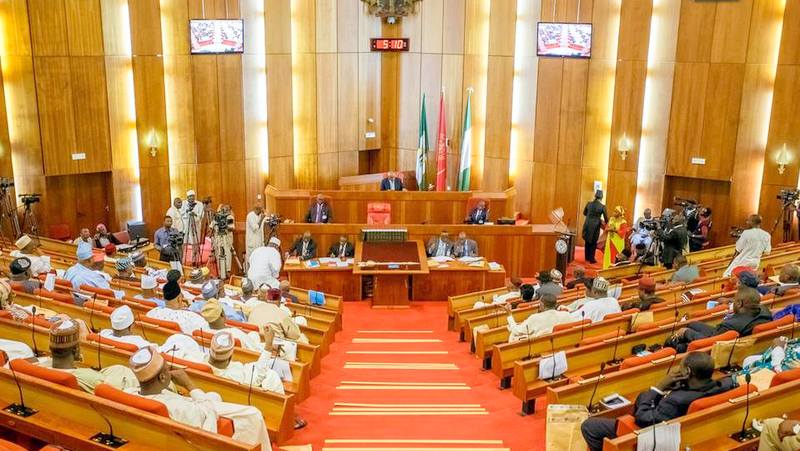
The controversy surrounding the alleged Presidential Foreign Intervention Promotion Council (PFIPC) took another dramatic turn as the Senate stepped down a motion seeking a comprehensive investigation into the controversial body, despite mounting questions over its inclusion in the 2026 Appropriation Act with a budgetary allocation of over N1.3 billion.
The decision followed the intervention of the Deputy President of the Senate, Senator Barau Jibrin, who ruled that the Red Chamber should await the outcome of an executive investigation already ordered by President Bola Tinubu.
The PFIPC scandal, which has dominated national discourse in recent weeks, revolves around the activities of the self-acclaimed Director-General of the council, Prince Adeniyi Adeyemi Matthew, and allegations of forgery, budget padding and possible administrative complicity within government institutions.
The controversy intensified after it emerged that the Presidency had disowned the PFIPC, insisting that the council was never established by the Federal Government. Despite this position, budget documents revealed that the disputed body was allocated N1,302,978,784 in the 2026 Appropriation Act.
Read Also:
NDC demands Gbajabiamila’s removal over PFIPC scandal
Fake presidential agency: Why Nigerians deserve full transparency
Why PCACC is Investigating Kano’s Former Head of Service
A review of pages 50 and 51 of the approved budget showed that the Presidential Economic Advisory Council/Presidential Foreign Intervention Promotion Council was captured under Budget Code 0111062001.
The budget breakdown indicated that N1,002,978,784 was earmarked for recurrent expenditure, while N300,000,000 was allocated for capital expenditure.
Further details of the controversial allocation showed that N573,260,187 was budgeted for personnel salaries, N229,718,596 for allowances and social contributions, N182,500,000 for logistics for the proposed World Investment Summit 2026, N11,000,000 for strategic negotiations for investment professionals, and N10,000,000 for negotiation and leadership training.
The revelations triggered widespread public outrage, particularly following allegations that Prince Adeyemi had operated the council from office space within the Federal Secretariat in Abuja, where he reportedly hosted diplomats, foreign ambassadors and international partners while presenting the PFIPC as a legitimate federal agency.
Questions Over Budget Process
Authoritative legislative sources further alleged that the budget proposals for the PFIPC never passed through the mandatory budget defence process before the Senate Committee on Establishment and Public Service Matters, chaired by Senator Cyril Oluwole Fasuyi (APC, Ekiti North).
Under the Senate Standing Orders 2023 (as amended), the committee is constitutionally responsible for scrutinising annual budget estimates submitted by agencies under its jurisdiction before they are considered for approval.
Ordinarily, after the President presents the Appropriation Bill, it passes first and second readings before being referred to the Appropriations Committees of both chambers. Thereafter, relevant sub-committees invite ministers and heads of agencies to defend their budget proposals, examine previous budget performance and evaluate proposed expenditures before recommendations are presented for final legislative approval.
However, sources alleged that the PFIPC’s budget estimates neither underwent the mandatory scrutiny nor appeared before the appropriate Senate committee before the allocation was approved.
The allegation has fuelled demands for lawmakers to explain how the agency found its way into the national budget despite the Presidency’s insistence that it does not legally exist.
Kawu Demands Senate Probe
Against this backdrop, Senator Suleiman Abdulrahman Kawu Sumaila (APC, Kano South) raised a motion under Orders 9 and Rule 9(c) of the Senate Standing Orders, seeking an urgent investigation into the circumstances surrounding the inclusion of the PFIPC in the 2026 budget.
Titled “Urgent Need to Safeguard the Integrity of the Senate and the Federal Government,” the motion urged the Senate to investigate how an agency publicly described by the Presidency as fake, fictitious and unauthorised secured more than N1.3 billion in public funds.
“The public space has been inundated with allegations, controversies and counter-accusations,” Kawu told the Senate.
“While senior officials of the Presidency have publicly disowned the PFIPC, disturbing revelations suggest that the agency penetrated our financial and budgetary processes.”
The lawmaker warned that allowing such an allocation to pass without scrutiny could undermine public confidence in the National Assembly’s constitutional oversight responsibilities and expose Nigeria to international embarrassment over its fiscal governance.
Kawu therefore prayed the Senate to mandate its Committees on Ethics, Code of Conduct and Public Petitions, alongside the Committee on Appropriations, to conduct a comprehensive investigation into the matter.
He urged the committees to determine who facilitated the insertion of the N1.3 billion allocation into the national budget, whether any funds had already been released, which accounts received the money and the identities of the authorised signatories.
Senate Steps Down Motion
However, before debate on the motion could progress further, Deputy Senate President Barau Jibrin, who presided over plenary, ruled that the Senate should refrain from initiating a parallel investigation pending the conclusion of the executive probe.
Barau informed lawmakers that President Bola Tinubu had already directed the Independent Corrupt Practices and Other Related Offences Commission (ICPC) to investigate the controversy.
“The Presidency has taken up this matter by directing the ICPC to investigate fully how this came to be, and I think the ICPC has already commenced its investigation,” Barau said.
“I believe what we need to do at this stage is to wait for the report of the ICPC, and thereafter the Senate can act based on its findings.”
His ruling effectively halted further debate on Kawu’s motion.
‘History Will Judge Us’
Despite the Senate’s decision, Kawu maintained that the National Assembly has an independent constitutional responsibility to investigate its own appropriation process regardless of the executive investigation.
Addressing journalists shortly after plenary, the Kano South senator clarified that his concern was not necessarily about the establishment of the PFIPC itself, but about preserving the integrity of the country’s budgeting process.
“We are constitutionally empowered to consider and approve the national budget,” he said.
“Therefore, we must determine who facilitated the inclusion of that agency’s budget. If the proposal came from the Executive, that is one issue. If it originated from within the National Assembly, Nigerians equally deserve to know.”
Kawu also insisted that lawmakers owe Nigerians explanations regarding whether any public funds had already been released to the disputed agency and, if so, through which accounts and authorised signatories.
“We need to know whether there were any releases, to which account the money was paid and who the signatories are.
“We are all Nigerians. History will judge whether we discharged our constitutional responsibilities in accordance with the law,” he stated.
Controversy Persists
The PFIPC controversy has continued to generate widespread public attention following the Presidency’s denial of the council’s existence and allegations that its self-acclaimed Director-General operated from office accommodation within the Federal Secretariat while engaging diplomats and foreign investors.
The Presidency has since directed relevant security and anti-corruption agencies to investigate the matter and identify those responsible for facilitating the activities of the disputed body.
As both executive and legislative institutions navigate the unfolding controversy, Nigerians continue to await the outcome of ongoing investigations into how a body publicly disowned by the Federal Government secured over N1.3 billion in the nation’s 2026 budget and whether those responsible will ultimately be held accountable.

2027: Kano Governor Names Former Education Commissioner Kiru Campaign Spokesperson II

Sa’adatu Rimi College of Education Hosts NCCE Training as Experts Push Practical Agricultural Education

Atiku to Tinubu: Protect Nigerians, not just your billboards

Drug Abuse: Kano Government Boosts NDLEA’s Operations with Equipment

PDP defunct: Ganduje revisits Nigeria’s political history
ABCOAD Unveils Journal, Bids Farewell to Provost

Nigerian Army Begins DSSC 29/2026 Recruitment, Outlines Eligibility Criteria
2027: NDC Releases Full List of Consensus Candidates in Kano

Gaya Polytechnic Opens Recruitment, Advertises 46 Academic, Non-Academic Positions