Kano
What Garo’s early role says about Kano’s power dynamics

By Umar Idris Shuaibu, Kano
Politics is often interpreted through appointments, alliances, and public statements. Yet, sometimes, the clearest insight into a government’s internal dynamics comes from observing who is entrusted with responsibility.
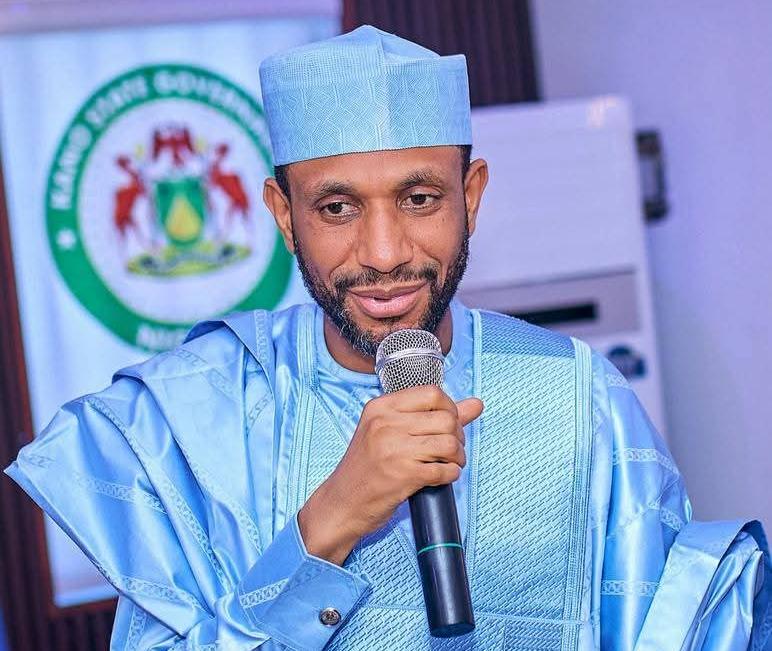
In Kano State, the first 47 days of Deputy Governor Murtala Sule Garo’s tenure have offered a subtle but important perspective on the evolving power structure within the administration of Governor Abba Kabir Yusuf.
Since assuming office, Garo has represented the Governor at numerous official engagements spanning diplomacy, regional cooperation, healthcare, infrastructure, security, sports development, and traditional institution affairs. Such a pattern may appear administrative on the surface, but politically it carries deeper meaning.
Within executive governance, representation is rarely random. Governors typically delegate sensitive assignments to individuals they trust to communicate government positions accurately, engage stakeholders effectively, and safeguard the administration’s image.
Read Also:
Ganduje family celebrates granddaughter’s graduation in Abuja
APC’s By-Election Triumph Reflects Public Confidence, Says Governor Yusuf
Kano moves to restore pioneer science schools following alumni intervention
The frequency with which Garo has been entrusted with these responsibilities suggests that the Governor sees him not merely as a constitutional deputy but as a dependable partner in advancing government objectives.
This is significant because deputy governors across Nigeria often operate under varying circumstances. In some states, deputies maintain highly visible roles within government operations; in others, their functions remain largely ceremonial. Kano’s current experience appears closer to the former model.
The pattern emerging from Garo’s early days indicates an administration seeking cohesion rather than competition within its top leadership structure. It reflects a governance style in which responsibilities are shared and institutional representation is distributed across key officials.
For Kano’s political class, this carries implications beyond routine governance. A deputy governor who is consistently entrusted with major assignments naturally becomes more visible to stakeholders, development partners, traditional institutions, and the wider public. Over time, such visibility can strengthen political relevance and reinforce institutional influence.
At the same time, the development highlights Governor Yusuf’s apparent determination to maintain a functional working relationship with his deputy from the outset. In political systems where tensions between principals and deputies sometimes attract headlines, the Kano experience has thus far projected a different image.
While it remains early in the tenure, Garo’s first weeks in office suggest that the administration recognizes the strategic value of the deputy governorship as a governance asset rather than merely a constitutional requirement.
Viewed from this perspective, Garo’s early role offers more than a record of official engagements. It provides a window into Kano’s current power dynamics that is shaped by trust, cooperation, delegation, and an apparent commitment to executive harmony.
As the administration continues to evolve, the extent to which this relationship is sustained may well become one of the defining features of governance in Kano State over the coming years.

CITAD plants 625 trees in 1 million tree campaign, flags seedling shortage

FG declares Thursday public holiday

AHIP trains stakeholders on risks of irregular migration

PCACC arrests suspect over sale of Kano Govt horse stable

Katsina takes governance to 361 wards with community development programme

ABCOAD Unveils Journal, Bids Farewell to Provost

Nigerian Army Begins DSSC 29/2026 Recruitment, Outlines Eligibility Criteria

2027: NDC Releases Full List of Consensus Candidates in Kano

Gaya Polytechnic Opens Recruitment, Advertises 46 Academic, Non-Academic Positions