The Historica Nigeria

Kano

Kano, News

Governor Yusuf Warns Commissioners, Advisers Against Poor Performance

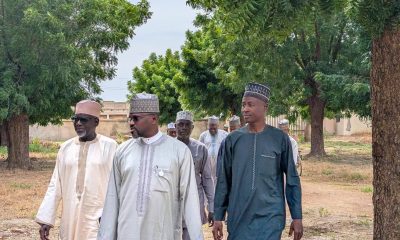
Kano State Governor, Alhaji Abba Kabir Yusuf, has issued a stern warning to commissioners and special advisers in his administration, urging them to justify the confidence reposed in them through effective service delivery and commitment to governance. The governor gave the warning during the Hawan Nasarawa Sallah homage held in Kano, according to a statement issued on Friday by his spokesperson, Sunusi Bature Dawakin Tofa. Governor Yusuf stressed that his administration would not tolerate negligence, poor performance, lack of commitment, or disloyalty from any political appointee, insisting that accountability and measurable results remain key pillars of his government. He called on members of the State Executive Council and political aides to rededicate themselves to the service of the people and support the administration’s development agenda. Read Also: Associate Professor Amina Ganduje’s Quiet March into Nigeria’s Intellectual Elite Peter Obi picks Kwankwaso as running mate for 2027 presidential race Ganduje breaks silence on Kwankwaso remarks, recalls 1998 Kano primaries The governor stated that any appointee who fails to meet expectations should either improve their performance or be prepared to vacate office. According to him, the people of Kano entrusted the administration with a mandate to deliver good governance, adding that every appointee must contribute meaningfully toward achieving that objective. Governor Yusuf reiterated his administration’s commitment to rewarding dedication, competence, loyalty, and excellence in public service. He urged all government officials to remain focused on policies and programmes aimed at improving the welfare of the people and accelerating the state’s development. The governor further assured residents that his administration would continue to uphold transparency, accountability, and efficient service delivery across all sectors.

Feature, Kano, Politics

The Politics of Promises Kept: Analyzing the People-Centered Governance Style of Governor Abba Kabir Yusuf

By Mohammed Babagana Abubakar Political analyst Larry Sabato once observed that politics is a good deal like religion in that everyone should have some, but it should be the right kind. For many years in Nigeria’s most populous commercial nerve center, the dominant style of politics was deeply transactional defined by entrenched godfatherism, conditional patronage, and a persistent gulf between campaign promises and governmental action. However, as the administration of marks its third anniversary, Kano State is witnessing a profound philosophical shift in governance. The celebrations currently unfolding across the state’s 44 Local Government Areas are not merely acknowledgments of completed infrastructure projects, they are endorsements of a distinct people-centered leadership model that prioritizes human development over political theatrics. To analyze the politics of promises kept under Governor Yusuf is to understand how deliberate populist policies, fiscal discipline, and strategic political courage can converge to redefine the relationship between government and the governed. At the heart of people centered governance lies a simple principle, public resources must produce maximum public value. In a state as demographically significant and economically dynamic as Kano, governance cannot remain an elite driven exercise detached from grassroots realities. Governor Yusuf’s governing philosophy popularly known as the Gida Gida administration has gained traction because it redirected state priorities from prestige driven spending toward human capital development. When a government consistently aligns public expenditure with the immediate concerns of ordinary citizens, political legitimacy is no longer enforced through patronage, it is naturally earned through trust and visible impact. Read Also: Associate Professor Amina Ganduje’s Quiet March into Nigeria’s Intellectual Elite One defining characteristic of visionary leadership is the willingness to adequately fund public commitments. Nowhere is this more evident than in Kano’s education sector. By declaring a State of Emergency on education and allocating approximately 31 percent of the state budget to the sector surpassing the UNESCO benchmark the administration transformed education policy from campaign rhetoric into measurable institutional action. Comprehensive renovation and upgrading of public primary and secondary school classrooms across the state. Recruitment, regularization, and strategic deployment of qualified teachers to improve classroom to teacher ratios. Revival of foreign postgraduate scholarship schemes for outstanding graduates, opening global academic opportunities for talented but vulnerable students. These interventions reflect a long term investment strategy aimed at repositioning education as the foundation of sustainable economic and social advancement In healthcare delivery, the administration abandoned the traditional overconcentration on metropolitan tertiary facilities. Instead, it prioritized the revitalization and equipping of Primary Healthcare Centres (PHCs) in rural and underserved communities. This decentralized healthcare strategy directly addresses maternal and infant mortality rates at the grassroots level, where healthcare vulnerability is often most severe. Beyond healthcare, the administration has also extended its reform agenda into the justice sector. Through legal and institutional reforms, the government has sought to expand access to legal aid services, strengthen pro bono legal networks, and accelerate the handling of prolonged detention cases. These reforms reinforce a broader philosophy that justice should not be determined by wealth, social status, or political influence. A critical examination of Governor Yusuf’s leadership style reveals a government that is both adaptive and politically independent. Over the last three years, the Governor has consistently demonstrated that he views his electoral mandate as one entrusted directly by the people not as a proxy arrangement controlled by political godfathers. His administrative choices have frequently emphasized competence, institutional effectiveness, and public accountability over narrow political loyalty. Equally significant is the administration’s pragmatic approach to national political engagement. Strategic collaboration with federal institutions and broader national governance structures reflects a sophisticated understanding of Kano’s economic and geopolitical importance within Nigeria and the wider West African sub region. As the Governor himself has repeatedly emphasized, Kano is too strategically important to isolate itself from national opportunities. By maintaining constructive engagement with the center, the administration has created a more stable environment for commerce, infrastructure development, investment attraction, and security coordination. Ultimately, leadership is validated not by political slogans but by the economic realities experienced by ordinary citizens. Under Governor Yusuf’s administration, Kano State’s Internally Generated Revenue (IGR) reportedly rose from earlier baselines of approximately ₦37 to ₦40 billion to over ₦100 billion by the close of the 2025 fiscal year. Significantly, this growth was achieved not through excessive taxation of petty traders and small-scale market operators, but through tighter fiscal controls, improved revenue administration, and the systematic elimination of financial leakages. The expansion in state revenue has directly supported a welfare centered governance agenda: The administration has maintained consistent and uninterrupted salary payments, helping to sustain purchasing power and stabilize household incomes across the state. Thousands of retirees have benefited from aggressive interventions aimed at clearing long-standing pension and gratuity backlogs. For many households, these payments have represented both economic relief and the restoration of dignity after years of uncertainty. In the final analysis, the politics of promises kept represents one of the highest forms of democratic legitimacy. Political power becomes meaningful only when it is deliberately used to confront the fundamental realities of human existence poverty, illiteracy, disease, unemployment, and structural exclusion. As the third-anniversary activities continue to showcase the administration’s achievements, the celebrations across Kano are not merely orchestrated political ceremonies. They reflect the sentiments of a population that increasingly feels recognized, included, and valued within the governance process. Through a combination of fiscal courage, administrative humility, strategic foresight, and grassroots engagement, Governor Abba Kabir Yusuf has demonstrated that when leaders protect the mandate of the people, the people, in turn, protect the legacy of leadership. Kano State appears firmly positioned on a path toward sustainable development, and its future remains exceptionally promising. Mohammed Babagana Abubakar The Unifier Project Coordinator Kano State

Feature, Kano, Politics

Abba Kabir’s 3 years beyond roads and projects

Sufyan Lawal Kabo (Sefjamil) sefjamil3@gmail.com Some governments build roads, renovate schools and commission projects. Others go beyond physical development to rebuild public confidence, restore institutional trust and reconnect governance with ordinary citizens. That is the deeper story gradually unfolding in Kano under Governor Abba Kabir Yusuf. Three years ago, many expected another routine administration. What emerged instead was a government whose speed, visibility and emotional connection with the people have continued to redefine political expectations across Kano. Today, the discussion is no longer whether Abba Kabir Yusuf is working. The real conversation is how far Kano may go if this pace continues beyond 2027. Because beyond roads and contracts, Kano is witnessing something deeper. The state is gradually witnessing the return of public belief in governance. Read Also: Associate Professor Amina Ganduje’s Quiet March into Nigeria’s Intellectual Elite Tinubu says states no longer struggle to pay salaries as governors float N100,000 minimum wage proposal Ganduje breaks silence on Kwankwaso remarks, recalls 1998 Kano primaries Before 2023, many citizens had psychologically disconnected from governance. Pensioners protested repeatedly over unpaid entitlements. Foreign scholarship students cried publicly over abandonment. Young people increasingly believed politics only served a privileged few. But gradually, the atmosphere changed. Governance stopped being something citizens merely heard on radio. It became something physically visible. The administration aggressively launched major road and urban renewal projects including interventions around Tal’udu, Dan Agundi, Lodge Road, Court Road and several township roads across Kano metropolis. Yet politically, the most important thing was not merely the projects themselves. It was the speed, visibility and energy behind them. For many citizens, the government projected urgency and seriousness from the very beginning. The foreign scholarship programme became one of the strongest emotional symbols of the administration. Under the previous administrations, Kano foreign students in countries including India and Uganda repeatedly cried out over unpaid tuition fees and near academic collapse. Several parents and advocacy groups publicly accused the government of neglecting the students. Upon assumption of office, Governor Abba Kabir Yusuf approved billions of naira to settle outstanding liabilities and restore over 1000 Kano students back to classrooms abroad. For many affected families, the intervention was not merely educational. It was emotional rescue. In interviews aired by Freedom Radio Kano and other local stations between late 2023 and early 2024, several students narrated how they had nearly abandoned their academic dreams before the intervention arrived. One beneficiary in India reportedly described the intervention as “the difference between disgrace and dignity.” Politically, the move projected the administration as a government willing to confront inherited crises directly instead of merely offering excuses. Abba’s administration also declared a state of emergency in education and initiated massive school renovation exercises across the state. Thousands of students benefited from NECO registration support, while recruitment processes for teachers and investments in learning infrastructure expanded. But beyond statistics, the interventions carried deeper political meaning.The government projected education as a pathway for poor children to compete again. Within public discussions, many citizens increasingly interpreted the reforms as attempts to restore Kano’s historic educational reputation in Northern Nigeria. Perhaps the most emotionally sensitive intervention involved pensioners. For years before 2023, retired civil servants repeatedly protested over unpaid gratuities and pension arrears. Elderly pensioners were frequently seen struggling through verification exercises while many openly lamented hardship and neglect. Several pensioners reportedly died while waiting for entitlements. The issue became more than an administrative problem. It became a moral issue. Governor Abba Kabir Yusuf’s administration later announced multiple releases running into tens of billions of naira for settlement of pension backlogs and gratuities inherited from previous administrations. Thousands of retirees reportedly benefited through various payment phases coordinated by the Kano State Pension Trustees. What changed public perception most were the emotional reactions from beneficiaries themselves. Elderly pensioners openly praised the governor in interviews across Kano media platforms after receiving payments many had lost hope of ever seeing. The Kano Internal Revenue Service also intensified reforms around revenue collection, compliance and digital restructuring. Economic observers increasingly linked improved revenue confidence not only to enforcement, but to growing public belief that government activities were becoming visible again. The logic became simple: Visibility created confidence. Confidence encouraged cooperation. Citizens are more willing to support government financially when they believe governance itself is functioning. Another remarkable development is Kano’s gradually changing political atmosphere. For years, Kano politics was dominated by rivalries and factional tensions involving major actors such as Senator Barau I. Jibrin, Senator Kawu Sumaila, Hon. Kabiru Alhassan Rurum and others across APC and NNPP blocs. Yet recent years increasingly witnessed conversations around reconciliation, engagement and political coexistence. The growing understanding between Senator Rabiu Musa Kwankwaso and some APC interests attracted national attention because many observers previously considered such political softening impossible. That perception of political maturity carries major implications for stability, governance and investor confidence in Kano. Because Kano is not just another state politically. It is one of the major political nerve centres in Northern Nigeria. Beyond the emotional and political dimensions of the administration, the scale of physical and institutional development witnessed across Kano within the last three years has equally remained difficult to ignore. From massive road construction and urban renewal projects to aggressive interventions in education, healthcare, agriculture, water resources, youth empowerment, transportation, sanitation, civil service reform, pension settlement, housing, security support and revenue generation, the administration projected unusual speed and visibility across virtually all sectors of governance. In education alone, foreign scholarship restoration, school rehabilitation, teacher recruitment and examination support programmes changed public conversations around learning and opportunity. In healthcare, general hospitals, primary healthcare centres and medical support services witnessed renewed government attention. In agriculture, farmers benefited from inputs, support initiatives and renewed emphasis on food production across rural communities. In infrastructure, major roads, drainage systems and metropolitan renewal projects transformed several strategic parts of Kano. In social welfare, pension payments and salary interventions restored confidence among retired and serving workers. In governance and revenue administration, institutional reforms and digital restructuring strengthened public

Feature, Kano, Politics

Three Years of Governor Abba Kabir Yusuf: Restoring Confidence Through People-Centered Governance

By Tijjani Sarki Leadership earns its true value when it restores public confidence, inspires hope, and remains connected to the everyday realities of the people. As the administration of His Excellency, Governor Abba Kabir Yusuf, marks three years in office, Kano State stands at an important moment of reflection on a journey defined by resilience, grassroots engagement, and renewed commitment to social development. For many citizens, the emergence of Governor Abba Kabir Yusuf represented more than political change, it symbolized the return of inclusive governance and people-oriented leadership. Despite the economic and political challenges facing the nation, the administration has continued to demonstrate commitment toward improving education, healthcare, infrastructure, and social welfare across the state. Particularly commendable is the renewed attention given to public education through school rehabilitation, scholarship support, and investment in learning facilities. Equally significant are efforts toward reviving abandoned projects and strengthening public service delivery in ways that directly affect ordinary citizens. Politically, the administration has also shown stability and resilience amid intense opposition and legal distractions. Yet, Governor Abba Kabir Yusuf continues to maintain strong grassroots connection, especially among young people and supporters who see the government as reflective of their aspirations for fairness, development, and responsive leadership. Read Also: Associate Professor Amina Ganduje’s Quiet March into Nigeria’s Intellectual Elite Tinubu says states no longer struggle to pay salaries as governors float N100,000 minimum wage proposal Ganduje breaks silence on Kwankwaso remarks, recalls 1998 Kano primaries Like every administration, challenges remain. Economic hardship, unemployment, and growing public expectations continue to demand greater commitment and innovative solutions. Nevertheless, constructive engagement and collective responsibility remain essential in sustaining progress and ensuring that governance continues to serve the interests of the people. As Kano gradually approaches another political phase, the priority should remain the consolidation of developmental gains, strengthening of institutions, and promotion of policies capable of improving the living standards of citizens across the state. At this significant milestone, it is important to appreciate the efforts made so far in promoting people-centered governance and restoring confidence in public leadership. While history will continue to judge every administration by its impact, the commitment to public engagement and social development shown within these three years deserves recognition. I congratulate His Excellency, Governor Abba Kabir Yusuf, on this three-year anniversary in office and pray that Almighty Allah grants him wisdom, strength, good health, and greater success in his continued service to the people of Kano State. Tijjani Sarki Good Governance Advocate and Public Policy Analyst Zawaciki, Kano State

Kano, News

Kano workers applaud Abba Yusuf for approving sallah support package

The Joint Public Service Negotiating Council (JNC), Kano State Council, has expressed appreciation to Governor Abba Kabir Yusuf for approving the payment of a N20,000 Sallah Support Package to civil servants on Grade Levels 01 to 14 ahead of the Eid-el-Kabir celebration. In a statement issued on behalf of the council, the Chairman of JNC Kano State, Comrade Hashim A. Saleh, congratulated the Kano State Government, the Secretary to the State Government, the Head of Civil Service, and civil servants across the state on the occasion of Eid-el-Kabir. The council described the approval of the support package as a thoughtful gesture aimed at easing the burden on workers during the festive period. According to the statement, the union deeply appreciates Governor Yusuf for prioritising the welfare of civil servants and demonstrating commitment to their well-being. Read Also: Associate Professor Amina Ganduje’s Quiet March into Nigeria’s Intellectual Elite Tinubu says states no longer struggle to pay salaries as governors float N100,000 minimum wage proposal Ganduje breaks silence on Kwankwaso remarks, recalls 1998 Kano primaries The JNC prayed for Allah’s guidance, protection and continued support for the governor and his administration, as well as peace and progress for Kano State and Nigeria as a whole. The council also reaffirmed its commitment to sustaining a cordial working relationship between the government and civil servants through constructive engagement and dialogue. It further called on workers across the state to reciprocate the government’s efforts by remaining dedicated, productive and committed to efficient service delivery. The statement was signed by the Public Relations Officer of the JNC Kano State Council, Comrade Haladu Musa.

Kano, News, Politics

Ganduje breaks silence on Kwankwaso remarks, recalls 1998 Kano primaries

The immediate past National Chairman of the All Progressives Congress (APC) and Chairperson of the Board of the Federal Airports Authority of Nigeria (FAAN), Dr. Abdullahi Umar Ganduje, has responded to recent comments credited to Senator Rabiu Musa Kwankwaso, declaring that the former Kano State governor was once his political boy too. Ganduje made the remarks while reacting to statements allegedly made by Kwankwaso during a recent political engagement in Kano. In a statement issued on Friday by his Chief of Staff, Comrade Muhammad Garba, the former APC National Chairman, who is currently in the Holy Land for the Hajj pilgrimage, said there was no need for politicians to distort history or reduce long-standing political relationships to “boy-master” narratives. According to the statement, politics is built on support, sacrifice, mentorship and mutual relationships, stressing that many political leaders rose through the encouragement and assistance of others. Read Also: Associate Professor Amina Ganduje’s Quiet March into Nigeria’s Intellectual Elite The statement recalled that Ganduje was among the politicians who supported Kwankwaso’s early political rise, especially during the National Assembly election that eventually produced him as Deputy Speaker of the House of Representatives. “At that time, Ganduje could confidently have referred to Kwankwaso as his political boy, having supported him morally, financially and stood by him during that period,” the statement noted. Ganduje further recalled that while serving as a senior civil servant in the Federal Capital Territory (FCT) and later as Commissioner for Works, Housing and Transport in Kano State, Kwankwaso frequently visited his offices in Abuja and Kano. “It is therefore unnecessary and immaterial for leaders to introduce such narratives into contemporary political discussions, especially at a time when citizens expect attention to be focused on governance and progressive politics,” the statement added. The former Kano governor also revisited the events surrounding the 1998 governorship primaries in Kano State, maintaining that several political stakeholders at the time were aware that he won the contest. However, according to the statement, senior political figures and elders persuaded him to step down in the interest of party unity and accept the position of deputy governorship candidate alongside Kwankwaso. Despite the political developments at the time, Ganduje noted that both leaders later worked together successfully between 1999 and 2003, and again from 2011 to 2015, describing their relationship as one rooted in friendship and commitment to Kano’s development. The statement also referenced Governor Abba Kabir Yusuf, noting that although he once served as Kwankwaso’s Personal Assistant, he is now the duly elected governor of Kano State and deserves respect and dignity associated with the office he occupies. “Politics should not be about who is superior to the other. A father can nurture a child who eventually becomes greater in status and influence. That is the natural progression of leadership and human relationships,” the statement quoted Ganduje as saying. He urged political actors in Kano State to avoid divisive remarks capable of creating tension, while calling on supporters across political divides to remain calm and focus on peaceful coexistence and development in the state.

Kano, Politics, Tarauni

Tarauni Kwankwasiyya at a crossroads: Is the movement still for genuine loyalists or for a select few?

By Yasmeen Barewa There comes a time in every political movement when difficult questions must be asked not to destroy the structure, but to save it from collapsing under the weight of silence, favoritism, and unchecked influence. Today, that moment has arrived for the Kwankwasiyya movement in Tarauni. For years, ordinary supporters defended the movement with passion, sacrifice, and loyalty. Young people stood under the sun during campaigns. Women mobilized communities without expecting rewards. Grassroots loyalists endured intimidation because they believed Kwankwasiyya represented fairness, inclusion, and justice for the common man. Read Also: Associate Professor Amina Ganduje’s Quiet March into Nigeria’s Intellectual Elite NDC: Kwankwaso Settles for Aminu Abdussalam in Kano, Gawuna Gets Kano Central Ticket Why Tarauni Remains a Pillar of Kano’s Metropolitan Development But recent events in Tarauni have left many asking a painful question: Has the movement been hijacked by powerful individuals who now decide who rises and who is buried politically? The growing outrage surrounding the emergence of Abdullahi Maikano as the State Assembly candidate and the re-emergence of Hon. Mukhtar Umar Yarima as the House of Representatives candidate has exposed what many insiders describe as a dangerous concentration of power within a small political circle. Across Tarauni, whispers have now turned into open complaints. Party loyalists are no longer hiding their anger. Many believe that the process was not only unfair but carefully engineered to favor allies connected to Hon. Mukhtar Umar Yarima, whose influence within the caucus is said to have become too powerful to challenge. The allegation shaking the political atmosphere in Kano is simple but explosive: that delegates, strategic support groups, and even key structures tied to the Kwankwasiyya movement in Tarauni have gradually fallen under the control of one political camp. And if that perception continues to grow unchecked, the consequences could be devastating. What makes this situation even more sensitive is the belief among many grassroots supporters that Hon. Mukhtar Umar Yarima’s closeness to the leadership of the Kwankwasiyya movement has created a system where dissenting voices are ignored while loyalists are rewarded repeatedly. The emergence of Abdullahi Maikano has further intensified suspicion. Many supporters are asking whether competence, popularity, and loyalty to the movement still matter or whether political survival now depends solely on proximity to powerful individuals. These are dangerous conversations for any political movement heading into a critical political season. The real threat here is not opposition parties. The real threat is internal frustration. History has shown repeatedly in Kano politics that when grassroots supporters begin to feel betrayed, political earthquakes happen unexpectedly. This is why the silence of respected leaders at this moment could be interpreted as approval. Senator Rabi’u Musa Kwankwaso built Kwankwasiyya as a movement of the people, not a private political empire for a handful of individuals. That is why many loyalists now expect him to pay close attention to the growing discontent in Tarauni before the anger spreads beyond control. Because if ordinary supporters begin to believe that some individuals are untouchable within the movement, then the moral foundation that made Kwankwasiyya powerful may slowly begin to crack. This is no longer just about Tarauni. It is now a test of whether Kwankwasiyya still belongs to the people or to those who have mastered the art of controlling the system from within.

Kano, News, Politics

NDC: Kwankwaso Settles for Aminu Abdussalam in Kano, Gawuna Gets Kano Central Ticket

By Umar Idris Shuaibu, Kano Leader of the Kwankwasiyya Movement and former Kano State Governor, Senator Rabi’u Musa Kwankwaso, has reportedly settled for former Deputy Governor of Kano State, Comrade Aminu Abdussalam Gwarzo, as the governorship candidate of the Nigeria Democratic Congress (NDC) in Kano State ahead of the 2027 general election. The development also saw former Kano State Deputy Governor and 2023 APC governorship candidate, Alhaji Nasiru Yusuf Gawuna, emerging as the party’s preferred senatorial candidate for Kano Central Senatorial District. Sources within the Kwankwasiyya Movement disclosed that the decision followed a series of consultations among party leaders and key political stakeholders across the state. Comrade Aminu Abdussalam Gwarzo, a prominent figure within the Kwankwasiyya political structure, is said to have secured the confidence of the movement’s leadership based on his loyalty, commitment, and contributions to the political bloc over the years. Read Also: Associate Professor Amina Ganduje’s Quiet March into Nigeria’s Intellectual Elite APC National Chairman’s Chief of Staff, Mustapha Bala Dawaki, Defects to NDC Kano emirates bow to police order, suspend eid processions Alhaji Nasiru Yusuf Gawuna, who recently aligned with the Kwankwasiyya Movement and the NDC, was also said to have accepted the Kano Central senatorial ticket in support of the movement’s broader political calculations ahead of the 2027 polls. The arrangement is believed to be part of ongoing efforts by the Kwankwasiyya Movement to strengthen its political structure and consolidate support across Kano State as preparations intensify for the next general election. Although official confirmation from the NDC leadership was still being awaited at the time of filing this report, party supporters across Kano have continued to react to the emerging political development.

Kano, News

Kano emirates bow to police order, suspend eid processions

The 15th and 16th Emirs of Kano, Aminu Ado Bayero and Muhammadu Sanusi II, have suspended their planned Sallah durbar activities following a directive issued by the Kano State Police Command. The development followed earlier announcements by both emirates indicating plans to hold separate eid durbar celebrations, including the Hawan Daushe and Hawan Nasarawa processions. The Kano State Police Command, citing security concerns and the need to maintain peace, directed both traditional institutions to suspend the parallel durbar activities as part of proactive security measures during the eid festivities. Announcing the suspension on behalf of Emir Aminu Ado Bayero, Sarkin Dawaki Babba, Alhaji Aminu Babba Dan’agundi, said the decision was taken in compliance with police directives aimed at ensuring peace and stability in Kano State. Read Also: Associate Professor Amina Ganduje’s Quiet March into Nigeria’s Intellectual Elite Aminu Bayero Moves to Hold Eid-el-Kabir Durbar in Kano Former APC National Chairman Ganduje Embarks on Hajj Pilgrimage He stated that the emirate remains law-abiding and fully committed to cooperating with security agencies in the interest of maintaining public peace. Similarly, speaking on behalf of Emir Muhammadu Sanusi II, Matawallen Kano, Alhaji Aliyu Ibrahim, disclosed that the emirate council received security reports indicating that some individuals were planning to exploit the durbar celebrations to disrupt public peace and create tension within the state. According to him, the decision to suspend the planned activities was necessary to prevent any breakdown of law and order and to preserve the peaceful atmosphere during the eid celebrations. The suspension comes amid heightened security concerns surrounding the planned parallel durbar celebrations, with the police urging both emirates to prioritise peace, stability, and public safety across Kano State during the Sallah festivities.

Kano, News, Politics

Gawuna declines alternative offer as Kwankwaso backs Aminu Abdussalam for Kano governorship race

Leader of the Kwankwasiyya Movement, Senator Rabi’u Musa Kwankwaso, is reportedly set to unveil former Kano State Deputy Governor, Comrade Aminu Abdussalam, as the consensus governorship candidate of the Nigeria Democratic Congress (NDC) in Kano State ahead of the 2027 general election. The development, according to sources familiar with the matter, followed a series of closed-door consultations within the Kwankwasiyya movement and among key political allies of the former governor. Comrade Aminu Abdussalam had resigned as deputy governor in March, weeks after the Kano State House of Assembly reportedly served him with an impeachment notice. Sources disclosed that former APC governorship candidate in the 2023 election, Alhaji Nasiru Yusuf Gawuna, was initially considered a strong contender for the governorship ticket. Read Also: Associate Professor Amina Ganduje’s Quiet March into Nigeria’s Intellectual Elite APC National Chairman’s Chief of Staff, Mustapha Bala Dawaki, Defects to NDC NUJ Kano commends Journalists, offers special prayers for pilgrims However, after extensive consultations, Kwankwaso was said to have finally settled for Comrade Aminu Abdussalam as the preferred consensus candidate. According to insiders, Kwankwaso subsequently proposed either the deputy governorship slot or the Kano Central Senatorial ticket to Alhaji Nasiru Yusuf Gawuna as part of ongoing political arrangements within the movement. The former APC governorship candidate reportedly declined both offers but assured Kwankwaso of his commitment to the success and stability of the party. Sources further revealed that Alhaji Nasiru Yusuf Gawuna told the Kwankwasiyya leader that his decision to join the movement was unconditional and not tied to personal political positions. “He made it clear that he would not abandon the movement simply because he did not secure the governorship ticket,” one of the sources disclosed. Reports also indicate that the rejection of the alternative offers by Alhaji Nasiru Yusuf Gawuna delayed the formal announcement of Comrade Aminu Abdussalam on Wednesday, amid mounting pressure from some influential figures within the movement urging Kwankwaso to reconsider his decision. Those backing Alhaji Nasiru Yusuf Gawuna’s candidacy reportedly argued that the ideal candidate to challenge Governor Abba Kabir Yusuf should emerge from Kano Central Senatorial District. According to one insider, “Gawuna enjoys strong political support in Kano Central where the highest concentration of votes is located. Since Governor Abba Kabir Yusuf is also from Kano Central and currently serving his first term, many believe the zone should retain the governorship slot in order not to feel politically shortchanged.” The source further noted that the argument mirrors the political zoning principle adopted nationally by the NDC in allocating its presidential ticket to the South while a southern president remains in office. Meanwhile, supporters of Comrade Aminu Abdussalam insist that the former deputy governor deserves the ticket based on what they described as his loyalty, sacrifices and longstanding commitment to the Kwankwasiyya Movement. As of the time of filing this report, neither the Kwankwasiyya movement nor the NDC leadership in Kano State had issued an official statement regarding the development. (SOLACEBASE)

Scroll to Top